
Delta Air Lines Diversifies Long-Haul Fleet Strategy With Major Boeing 787 Order, Breaking Years of Airbus Preference
Breaking airline news and aviation industry updates for 2026.

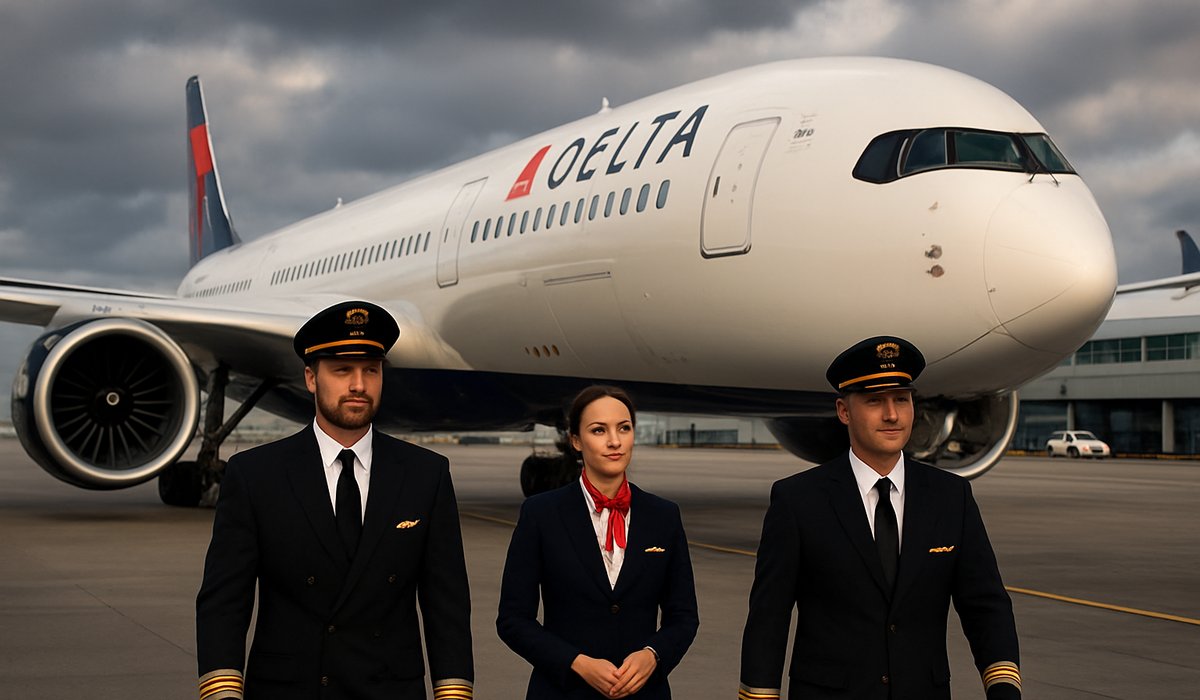
Image generated by AI
Delta Air Lines Diversifies Long-Haul Fleet Strategy With Major Boeing 787 Order, Breaking Years of Airbus Preference
The Atlanta-based carrier departs from its traditional widebody strategy, signaling broader shifts in aircraft procurement across US aviation
Boeing 787 Order Marks Strategic Pivot for Delta
Delta Air Lines has broken with its established long-haul aircraft strategy by placing a substantial order for 30 Boeing 787-10 jets, with an additional 30 aircraft on option, the carrier confirmed in January 2026. The decision represents a significant departure from the airline's decade-long reliance on Airbus for widebody expansion, fundamentally reshaping how the industry's third-largest US carrier will operate transoceanic routes for the next decade.
The 787-10 variant, favored for mid-range international operations, directly competes with Delta's existing Airbus A330-900 fleet—a model that has formed the backbone of the airline's intermediate-haul strategy. The move comes as American Airlines and United Airlines continue cementing their commitments to Boeing's 777 and 787 families for widebody operations, creating a notable divergence in procurement philosophies across the "Big Three" US carriers.
Why Boeing Over Airbus Now?
Delta's historic preference for Airbus widebodies, particularly the A330-900 and A350, has positioned the carrier as Europe's planemaker's strongest supporter within North America's major airline sector. However, mounting pressures—including jet fuel price volatility, shifting demand patterns, and supply chain considerations—have prompted the Atlanta-based carrier to reassess its diversification strategy.
Industry analysts suggest the order signals Delta's confidence in Boeing's 787 program recovery following years of production disruptions and safety scrutiny. The 787-10's proven fuel efficiency and cabin flexibility align with Delta's operational efficiency targets during a period when aviation fuel costs remain subject to geopolitical uncertainty and volatile commodity markets.
"The decision reflects broader industry trends where carriers are increasingly hedging their bets across multiple manufacturers," according to aviation procurement specialists monitoring fleet modernization across major US carriers.
Implications for the Aviation Industry
Delta's move creates ripple effects across the commercial aerospace sector. The order potentially signals Boeing's strengthening competitive position against Airbus in the lucrative widebody market, despite Airbus's dominance in narrowbody deliveries. For Delta specifically, operating mixed widebody fleets from both manufacturers requires significant training, maintenance infrastructure, and supply chain investments.
The procurement shift also reflects ongoing airline fee restructuring and cost management strategies, as carriers balance premium capacity deployment with operational expense reduction during uncertain economic conditions.
FAQ: Understanding Delta's Aircraft Strategy and Airline Industry Trends
Why would Delta abandon its Airbus widebody strategy after years of commitment? Delta is diversifying its long-haul fleet across multiple manufacturers to mitigate supply chain risks, optimize fuel efficiency for different route types, and leverage Boeing's recovery in the widebody market. The 787-10 offers comparable capability to the A330-900 for intermediate-haul routes.
How do jet fuel prices influence airline fleet purchasing decisions? Volatile fuel costs directly impact operating expenses, prompting carriers to prioritize newer, more efficient aircraft like the 787-10, which consumes approximately 20% less fuel than comparable older widebodies, significantly reducing long-term airline fees and operational costs.
What competitive advantage does the 787-10 offer Delta compared to the A330-900? The Boeing 787-10 features advanced avionics, superior fuel economy, and greater cabin flexibility, enabling Delta to optimize revenue management while reducing per-seat operating costs on transoceanic routes.
Are other US airlines following Delta's multi-manufacturer strategy? American and United maintain focused Boeing strategies, while Delta's diversified approach stands unique among US legacy carriers, though international carriers increasingly operate mixed fleets.
How will this impact Delta's maintenance and operational complexity? Operating both Airbus and Boeing widebodies requires dual training programs, separate spare parts inventories, and specialized maintenance expertise, increasing complexity but providing long-term flexibility and negotiating leverage with suppliers.
Related Travel Guides
Flight Delay Compensation Guide 2026
Understanding Airline Route Changes
Airport Security Process Updated (2026)
External Resources
Disclaimer
This article is for informational and educational purposes only. It does not constitute legal, financial, or professional advice. While we strive to provide accurate and up-to-date information, travel policies, regulations, and conditions change rapidly. Always verify information with official sources before making travel decisions. Nomad Lawyer makes no representations about the accuracy, reliability, completeness, or suitability of the information provided. Readers should consult qualified professionals for advice specific to their circumstances. The views expressed in this article are those of the author and do not necessarily reflect the views of Nomad Lawyer.
Kunal K Choudhary
Co-Founder & Contributor
A passionate traveller and tech enthusiast. Kunal contributes to the vision and growth of Nomad Lawyer, bringing fresh perspectives and driving the community forward.
Learn more about our team →