
Delta Flight Diverts in Fuel Emergency After Runway Closure at Albuquerque Airport
Breaking airline news and aviation industry updates for 2026.

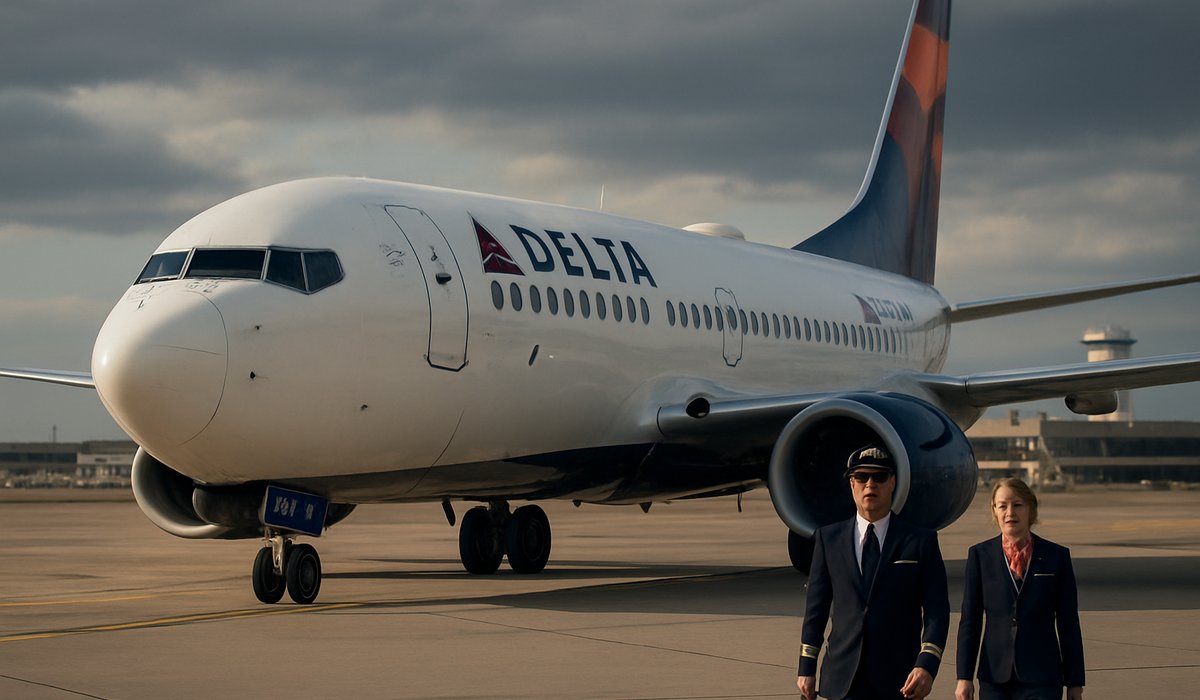
Image generated by AI
Delta Flight Diverts in Fuel Emergency After Runway Closure at Albuquerque Airport
A disabled aircraft forces operational chaos across New Mexico airspace, highlighting critical gaps in airport infrastructure and fuel management protocols
Unexpected Diversion Forces 178 Passengers to Alternative Landing
A Delta Air Lines flight carrying nearly 180 passengers encountered a fuel crisis Friday when runway congestion at Albuquerque International Sunport Airport forced an emergency diversion to a regional alternative. Delta Flight 1109, operating with 178 passengers and six crew members aboard, abandoned its approach to Albuquerque after discovering insufficient fuel reserves to sustain holding patterns while airport operations remained compromised.
The decision to redirect the aircraft to Farmington Four Corners Regional Airport—approximately 150 miles northeast of the original destination—underscores the cascading operational vulnerabilities that plague major U.S. aviation hubs when infrastructure failures occur.
Mechanical Failure Triggers Airport Shutdown
The diversion stemmed from a disabled aircraft occupying the runway at Albuquerque International Sunport, effectively rendering the facility's primary landing surface temporarily unavailable. With DL1109 approaching on approach descent and fuel margins narrowing, Delta flight operations determined that circling the airport while awaiting runway clearance posed unacceptable safety risks.
Airport authorities worked to remove the disabled aircraft and restore normal operations, but the delay proved sufficient to force the rerouting decision. The incident highlights the thin operational margins that characterize commercial aviation, where mechanical disruptions at one airport can cascade into diversions across multiple flight paths.
Industry Context: Growing Infrastructure Pressures
The diversion reflects broader challenges confronting U.S. aviation infrastructure. With commercial flight volumes rebounding to pre-pandemic levels at major Southwest hub airports, operational redundancies have contracted significantly. A single runway outage—particularly at mid-sized facilities like Albuquerque—can compress fuel reserves for multiple inbound aircraft within minutes.
Delta officials confirmed that the diversion resulted from infrastructure constraints rather than mechanical issues with DL1109 itself. The airline's fuel management protocols prioritized passenger safety over schedule adherence, adhering to Federal Aviation Administration guidelines governing minimum reserve fuel requirements.
Aftermath and Passenger Accommodations
Passengers aboard Delta 1109 experienced substantial delays as ground transportation arrangements were coordinated from Farmington to Albuquerque. The incident raised questions about airport capacity planning and whether secondary regional airports maintain adequate ground support infrastructure for unscheduled diversions of this magnitude.
Delta representatives stated that all passengers reached their intended destination safely, though specific timeline details and compensation arrangements remained undisclosed. The carrier did not comment on operational costs associated with the diversion or whether fuel surcharges might be adjusted in response.
FAQ: Aviation Diversions and Fuel Management
What causes commercial aircraft to divert due to fuel concerns? Aircraft must maintain minimum fuel reserves mandated by the FAA for safety. When holding patterns extend beyond these reserves—typically caused by runway closures or air traffic delays—pilots must divert to alternative airports to ensure safe landing margins.
How does a single disabled aircraft impact multiple flights? Runway closures eliminate landing capacity, forcing air traffic control to direct all approaching aircraft into holding patterns. This rapidly depletes fuel reserves across multiple flights, potentially triggering cascading diversions.
What are typical diversion costs for airlines? Diversions cost carriers thousands in fuel burns, ground handling fees, passenger accommodations, and schedule disruptions. A single diversion can exceed $50,000 in direct operational expenses.
How common are fuel-related diversions in U.S. aviation? While exact statistics vary seasonally, hundreds of diversions occur annually due to runway closures, weather, and air traffic congestion—making fuel reserves critical operational factors.
Can passengers claim compensation for diversions? U.S. regulations do not mandate automatic compensation for diversions caused by airport infrastructure failures, though airlines may offer accommodations at their discretion.
Related Travel Guides
Disclaimer
This article is for informational and educational purposes only. It does not constitute legal, financial, or professional advice. While we strive to provide accurate and up-to-date information, travel policies, regulations, and conditions change rapidly. Always verify information with official sources before making travel decisions. Nomad Lawyer makes no representations about the accuracy, reliability, completeness, or suitability of the information provided. Readers should consult qualified professionals for advice specific to their circumstances. The views expressed in this article are those of the author and do not necessarily reflect the views of Nomad Lawyer.
Raushan Kumar
Founder & Lead Developer
Full-stack developer with 11+ years of experience and a passionate traveller. Raushan built Nomad Lawyer from the ground up with a vision to create the best travel and law experience on the web.
Learn more about our team →