
Business Class Evolution Takes Heavier Turn as Airlines Compete for Premium Market Dominance
Breaking airline news and aviation industry updates for 2026.

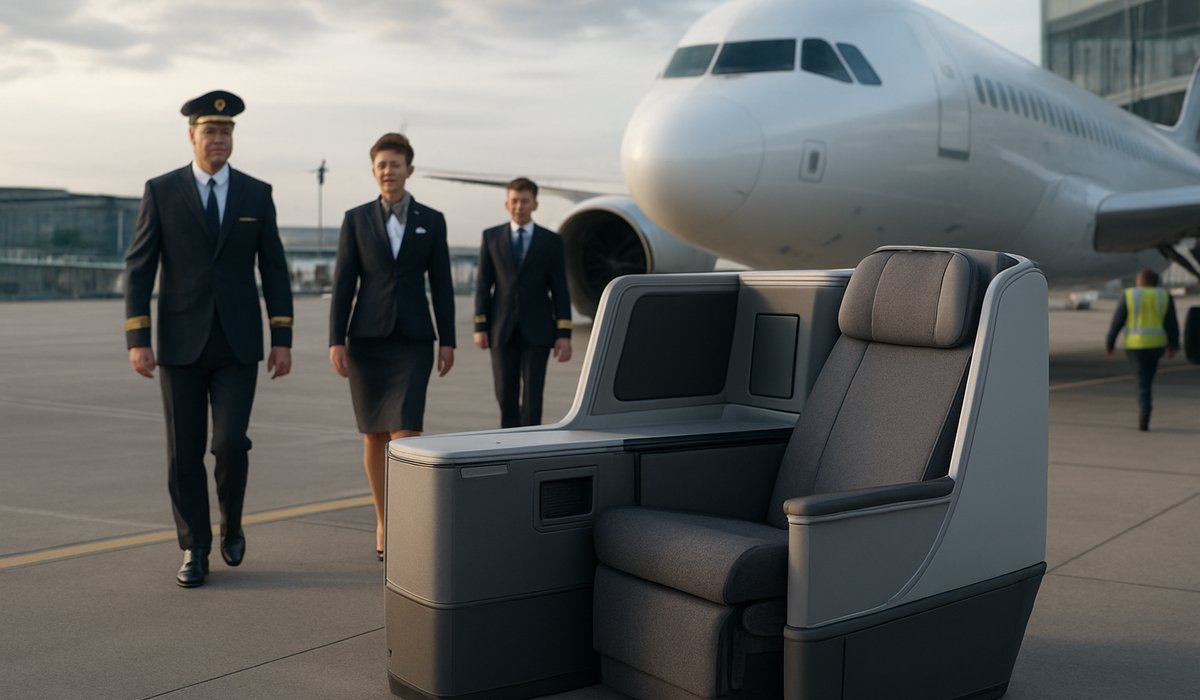
Image generated by AI
Business Class Evolution Takes Heavier Turn as Airlines Compete for Premium Market Dominance
The aviation industry's race to enhance premium cabin experiences is driving seat design toward greater weight and complexity, marking a strategic shift in cabin architecture
Premium Travel Boom Fuels Competitive Redesign
The business class market is experiencing unprecedented expansion, with carriers worldwide intensifying their battle for premium passengers through increasingly sophisticated seat engineering. New aircraft deliveries throughout 2024 showcase this transformation, as manufacturers and airlines prioritize comfort and amenities over lightweight cabin solutions—a fundamental departure from decades of industry weight-reduction strategies.
The figures underscore aviation's premium shift: business class cabins expanded by 11.8% in 2024, welcoming 116.9 million passengers into premium sections globally. What makes this growth particularly significant is its composition. Business travel—traditionally the backbone of premium cabin revenue—now shares space with leisure travelers deliberately purchasing premium fares, a phenomenon industry analysts describe as "the democratization of premium travel." This structural change has fundamentally altered airline revenue models and competitive priorities.
Strategic Investment in Heavier, More Complex Seats
Rather than pursuing the lightweight seat designs that dominated cabin retrofit strategies for decades, manufacturers are now engineering heavier business class products equipped with expanded functionality. Next-generation seats feature integrated technology, enhanced storage solutions, larger recline mechanisms, and premium materials that collectively increase aircraft weight per passenger in premium cabins.
This counterintuitive approach reflects market realities: airlines recognize that premium passengers—whether corporate travelers or high-spending leisure flyers—prioritize comfort, privacy, and amenities over operational fuel efficiency metrics. The competitive pressure to differentiate premium products has superseded weight-saving considerations that once drove cabin design.
Industry-Wide Competition Reshapes Capacity Planning
The transformation carries broader implications for airline economics and fuel consumption patterns. Heavier seat installations increase per-aircraft operating costs and fuel burn, potentially offsetting margin gains from premium ticket sales. However, carriers are calculating that premium fare premiums justify these additional operational expenses.
Airlines competing on long-haul routes—particularly those serving transpacific and transatlantic markets—are investing billions in business class reconfiguration. Carriers including major international operators are either retrofitting existing widebody fleets or prioritizing premium-heavy configurations on new aircraft deliveries.
The shift also reflects geopolitical factors affecting airline profitability. While jet fuel prices have stabilized from pandemic-era peaks, volatile energy markets and ongoing supply chain pressures mean that seat weight remains an operational consideration. Yet premium revenue potential has emerged as the dominant decision factor in contemporary cabin planning.
Looking Ahead
As business class penetration continues expanding beyond traditional corporate segments, manufacturers and airlines will likely continue prioritizing premium experience over lightweight cabin solutions. This trend will shape aircraft orders, retrofit strategies, and ultimately, the cost structure of international aviation for the next decade.
Frequently Asked Questions
Why are airlines making business class seats heavier instead of lighter? Airlines are prioritizing passenger comfort and premium amenities over weight reduction because business class premium fares generate substantially higher revenues than economy seats. The additional operational costs from heavier seats are offset by premium ticket pricing power.
How much did business class passenger numbers grow in 2024? Business class cabins experienced 11.8% growth in 2024, reaching 116.9 million premium passengers globally, including both corporate travelers and leisure passengers purchasing premium fares.
What is the "democratization of premium travel" in aviation? This refers to the increasing trend of leisure travelers—not just corporate executives—purchasing business class tickets, expanding the traditional premium market beyond frequent business flyers.
Does heavier aircraft seating increase jet fuel costs? Yes, heavier seat installations increase per-aircraft weight and fuel consumption, raising operational expenses. However, airlines justify these costs through higher premium fare revenues.
Which airlines are investing most heavily in next-generation business class products? Major international carriers on long-haul routes—particularly those serving transpacific and transatlantic markets—are leading business class investment through fleet retrofits and new aircraft configurations prioritizing premium cabins.
Related Travel Guides
- Breaking Airline News: Chinese Aviation Network Battles Terrifying Travel Chaos as Air China and China Eastern Violently Cancel 176 Flights
- Breaking Airline News: Severe Weather Triggers Massive Travel Chaos at Washington Dulles, Paralyzing United, Delta, and Global Carriers
- Romanian AnimaWings Launches Bucharest to Milan Airbus A220 Route Amid $200 Oil Shock and Strait of Hormuz Blockade: How US-Iran Conflict Volatility Accelerates Transition to Ultra-Efficient Regional Fleets
Disclaimer
This article is for informational and educational purposes only. It does not constitute legal, financial, or professional advice. While we strive to provide accurate and up-to-date information, travel policies, regulations, and conditions change rapidly. Always verify information with official sources before making travel decisions. Nomad Lawyer makes no representations about the accuracy, reliability, completeness, or suitability of the information provided. Readers should consult qualified professionals for advice specific to their circumstances. The views expressed in this article are those of the author and do not necessarily reflect the views of Nomad Lawyer.
Kunal K Choudhary
Co-Founder & Contributor
A passionate traveller and tech enthusiast. Kunal contributes to the vision and growth of Nomad Lawyer, bringing fresh perspectives and driving the community forward.
Learn more about our team →