
Spain Cancels San Juan Festival Across Barcelona, Valencia, Alicante as Extreme Heatwave Exceeds 40°C
Spain's iconic San Juan festival faces mass cancellations in Barcelona, Valencia, and Alicante as AEMET issues extreme heat alerts with temperatures exceeding 40°C and critical wildfire risks.

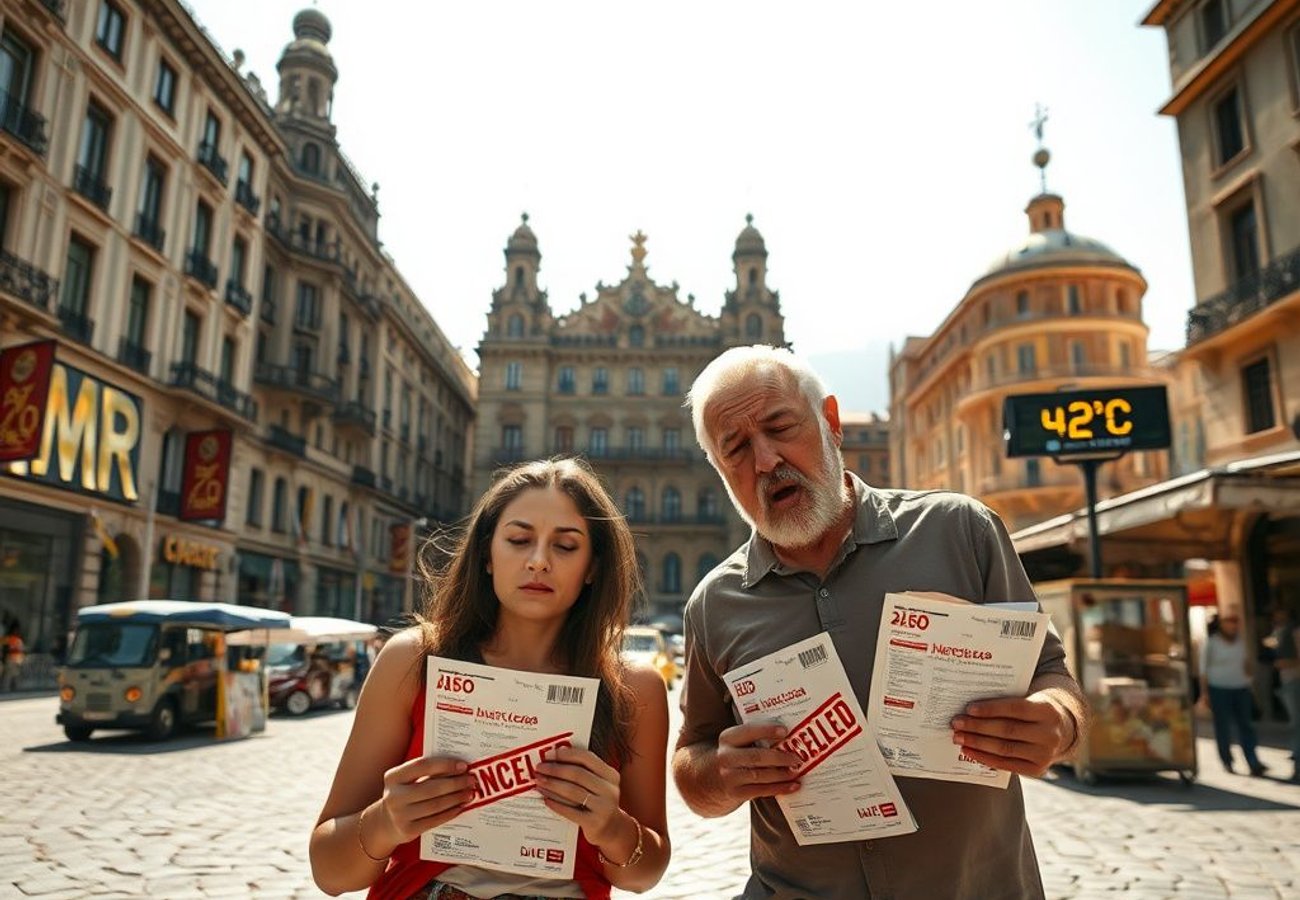
Image generated by AI
Spain's Most Anticipated Summer Festival Grinds to a Halt
The iconic San Juan festival — one of Europe's most vibrant coastal celebrations — is facing unprecedented mass cancellations across Spain's primary tourism destinations. The Spanish State Meteorological Agency (AEMET) has issued critical extreme heat alerts, forcing authorities in Barcelona, Valencia, Alicante, and San Sebastián to suspend traditional bonfire celebrations that typically draw thousands of domestic and international visitors.
Temperatures are climbing beyond 40°C, with wildfire risk conditions deemed critical. Public safety has officially trumped cultural tradition.
The AEMET Alert That Changed Everything
On June 23, 2026, AEMET escalated its warning system across multiple Spanish regions to orange and red alert status — the highest designations for extreme weather risk. A scorching air mass originating from North Africa is driving unprecedented heat penetration into Mediterranean coastal zones.
The agency has specifically warned of:
- Temperatures consistently exceeding seasonal norms by 8-12°C
- Elevated ignition risk in vegetation zones adjacent to tourist areas
- Prolonged exposure danger to daytime beachgoers
Regional and municipal authorities acted swiftly. Large public gatherings were deemed uninsurable liability during fire season.
Reddit: "My family had flights booked for Valencia's San Juan week. Just got the cancellation notice. Part of me understands the safety call, but this is our only vacation." — r/travel
How One Festival Cancellation Decimates Coastal Tourism Revenue
The economic blow is staggering. San Juan traditionally generates substantial revenue streams for Spain's Mediterranean economy during late June:
- Hotel occupancy across coastal cities typically reaches 85-90% during festival week
- Restaurant and bar revenues spike 35-40% above baseline
- Beach nightlife venues operate at near-maximum capacity
- Local artisan vendors and cultural operators depend on seasonal tourism inflows
Valencia, Alicante, and San Sebastián are experiencing the most severe disruption. These cities rely disproportionately on cultural tourism events to drive summer booking momentum.
Tourism operators report cancellations cascading across:
- Beachfront hotel bookings
- Night entertainment and club reservations
- Organized beach gathering permits
- International visitor group packages
Government tourism departments are now monitoring the cumulative economic impact while civil protection units enforce fire prevention protocols across coastal zones.
Wildfire Prevention: When Safety Overrides Heritage
Spain's civil protection agencies have prioritized wildfire risk mitigation over cultural continuity. The decision reflects the continent's growing climate vulnerability.
Restrictions now in place include:
- Complete ban on beach bonfires in high-risk vegetation zones
- Cancellation of all fireworks and pyrotechnic displays
- Closure of forest-adjacent tourist trails and access points
- Restricted entry to certain coastal event areas during peak heat hours
These aren't abstract warnings. Recent European wildfire seasons have caused billions in damages, with Spain experiencing some of the continent's most destructive fire outbreaks. AEMET's decision reflects hardened institutional lessons.
"Wildfire prevention becomes the primary operational objective when temperatures exceed 40°C in coastal vegetation zones," a civil protection spokesperson confirmed.
How Coastal Tourism Operators Are Pivoting Strategy
Spain's tourism businesses aren't accepting passive decline. Hotels, tour operators, and entertainment venues are aggressively restructuring their offerings:
Indoor Cultural Experiences are now prioritized — museums, galleries, and climate-controlled attractions are reporting increased daytime bookings as visitors shift from beaches.
Evening-Only Activities are being promoted — guided city tours, restaurant experiences, and cultural performances now operate exclusively during cooler hours.
Water-Based Recreation is being repositioned as the safe alternative — swimming pools, water sports facilities, and coastal water activities that don't involve fire are experiencing booking surges.
Hoteliers in Barcelona, Málaga, and Alicante confirm that tourist behavior has fundamentally shifted. Midday beach activity has plummeted while demand for air-conditioned indoor attractions has spiked significantly.
Tour operators are systematically rescheduling excursions to early morning (6-10 AM) and late evening (7 PM onward) windows to avoid peak heat exposure between 12 PM and 6 PM.
The Broader European Context
Spain's crisis is not isolated. A wider European heatwave is simultaneously impacting France, Italy, Germany, and the United Kingdom. Official European meteorological bodies confirm widespread red alerts and extreme temperature conditions across southern and western Europe.
This broader crisis is affecting:
- Cross-border tourism flows and travel patterns
- International flight schedules and operational capacity
- Regional hotel occupancy and booking patterns
- Infrastructure strain in high-tourism destinations
Spain, as one of Europe's top summer tourism destinations, is experiencing concentrated pressure. The convergence of peak summer travel season with extreme climate conditions is exposing structural vulnerabilities in Mediterranean tourism infrastructure.
European tourism bodies are now coordinating emergency response measures to maintain visitor safety across high-risk regions.
Long-Term Adaptation: From Crisis to Climate-Resilient Tourism
Tourism analysts suggest that while immediate visitor numbers will decline, Spain's tourism sector is positioned to emerge with strengthened climate resilience frameworks.
Expected adaptation trends include:
- Climate-adjusted festival scheduling (shifting San Juan celebrations to cooler months or alternative dates)
- Increased investment in indoor tourism infrastructure
- Heat-resilient tourism marketing strategies emphasizing shoulder seasons
- Emergency weather response integration into standard tourism planning protocols
"Short-term disruption is the price of long-term sustainability," according to regional tourism authority statements. Recovery timelines depend directly on weather stabilization and institutional commitment to climate risk management.
Spain's Tourism Identity at the Climate Crossroads
The San Juan festival cancellation crystallizes a defining challenge for Mediterranean tourism: how to preserve cultural authenticity while adapting to climate extremes.
Spain's tourism sector has historically built its global brand on guaranteed summer heat, coastal reliability, and vibrant cultural festivals. That foundational assumption is now destabilized.
AEMET's ongoing extreme heat warnings signal that this isn't a one-time disruption. Tourism authorities across Barcelona, Valencia, San Sebastián, and Alicante are confronting the reality that traditional summer festival calendars may require fundamental restructuring.
The immediate priority remains clear: visitor safety and wildfire prevention. The longer-term challenge involves rebuilding tourism strategies that honor Spain's cultural heritage while acknowledging climate realities.
Spain's summer tourism identity is being rewritten by forces beyond any festival organizer's control.
Related Travel Guides
Disclaimer
This article is for informational and educational purposes only. It does not constitute legal, financial, or professional advice. While we strive to provide accurate and up-to-date information, travel policies, regulations, and conditions change rapidly. Always verify information with official sources before making travel decisions. Nomad Lawyer makes no representations about the accuracy, reliability, completeness, or suitability of the information provided. Readers should consult qualified professionals for advice specific to their circumstances. The views expressed in this article are those of the author and do not necessarily reflect the views of Nomad Lawyer.
Preeti Gunjan
Contributor & Community Manager
A passionate traveller and community builder. Preeti helps grow the Nomad Lawyer community, fostering engagement and bringing the reader experience to life.
Learn more about our team →