
Breaking Airline News: Western Sydney International Airport Deploys 24/7 Curfew-Free Hub to Combat Massive East Coast Travel Chaos
Breaking airline news: Amidst a terrifying era of severe regional hub congestion, the brand-new Western Sydney International Airport launches curfew-free operations, offering travelers a vital shield against peak domestic travel chaos.

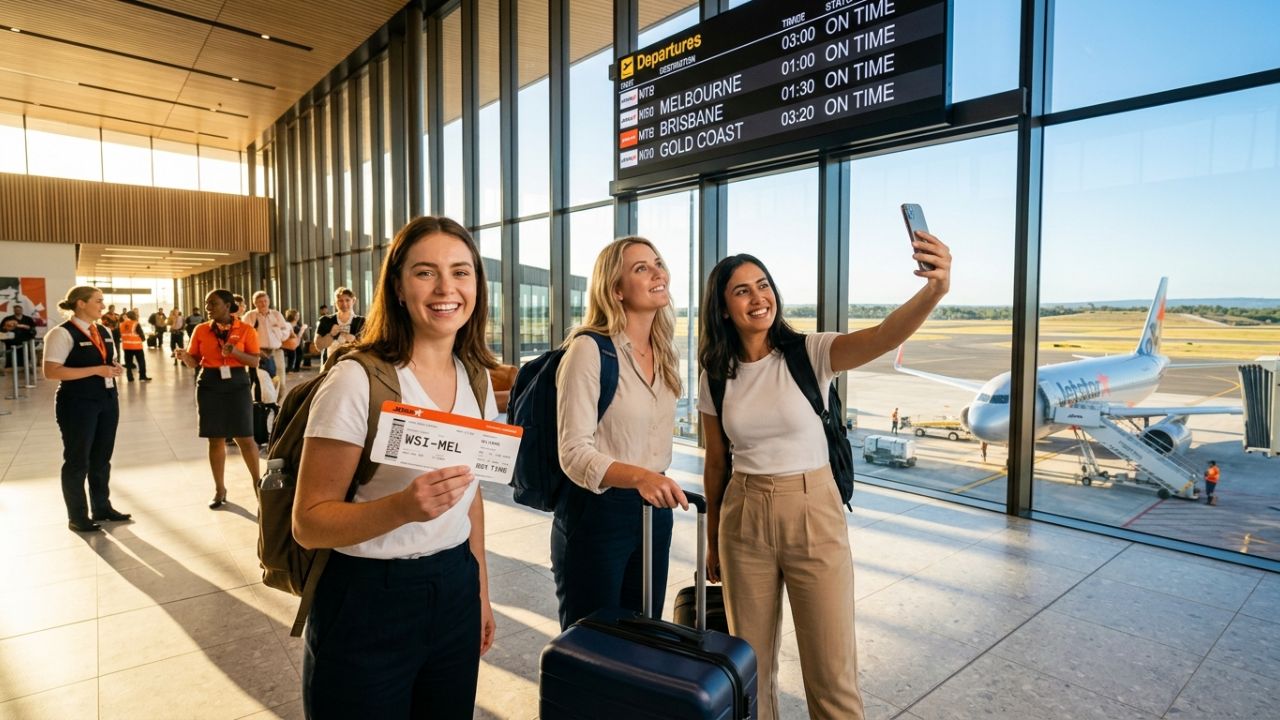
Image representing the intense strategic battle as Australian aviation authorities desperately deploy a massive new 24/7 airport hub to combat severe transit friction and bypass paralyzing curfew-induced flight cancellations.
Breaking Airline News: Western Sydney International Airport Deploys 24/7 Curfew-Free Hub to Combat Massive East Coast Travel Chaos
As paralyzing terminal congestion, terrifying connection delays, and severe domestic seat shortages violently threaten to completely choke Australia’s east coast transit grid, aviation planners have executed a brilliant high-stakes infrastructural maneuver. In a desperate bid to physically and psychologically rescue commuters from the terrifying threat of extreme travel chaos triggered by legacy airport curfews, Western Sydney International Airport (WSI) has aggressively announced its massive commercial launch. Officially opening for full passenger operations on October 25, 2026, Australia’s newest aviation mega-hub is aggressively injecting massive capacity directly into the Sydney-Melbourne corridor. By eliminating the severe logistical nightmares traditionally associated with Sydney’s restrictive night-time curfews—where a single delayed evening departure guarantees an immediate flight cancellation—this massive infrastructural deployment allows furious corporate travelers and vacationing families to completely bypass the threat of terminal strandings. This operational paradigm shift is transforming modern Australian logistics, proving that actively deploying a 24/7, curfew-free fortress hub is the absolute ultimate defense against the agonizing misery historically defining major airport disruptions.
In a harrowing display of modern aviation vulnerability, the sheer logistical nightmare of attempting to navigate the essential Sydney–Melbourne corridor during peak travel seasons has historically forced passengers into terrifying transit scenarios. For decades, enduring a late-afternoon weather delay at legacy hubs meant staring at departure boards with intense anxiety, fully aware that the looming 11:00 PM curfew would violently transform a simple delay into a massive, multi-day stranding. However, Western Sydney International Airport is aggressively fighting back against this structural paralysis. Recognizing that forcing millions of passengers through heavily congested, curfew-constrained traditional gateways creates a massive, highly stressed captive audience, the authorities are introducing a highly resilient, 24/7 operational buffer. By offering round-the-clock flying capabilities and cheaper fares, WSI is offering travelers the absolute freedom to physically shield themselves from the devastating effects of paralyzed transport networks, ensuring that navigating Australia’s east coast is no longer a high-risk gamble.
Expanded Overview: The Massive Scale of the Transit Shield
The terrifying crisis of overwhelming passenger stress currently gripping complex domestic itineraries brutally exposes the severe limitations of flying through saturated hubs without an operational buffer. Recognizing that aggressively forcing travelers to compete for limited, curfew-restricted gate seating leads directly to severe psychological friction, WSI has fundamentally rewritten the capacity rules for the late 2026 travel season. The sheer scale of this infrastructural realignment is immense. The Australian Travel Industry Association (ATIA) has officially declared this launch an urgent, strategic expansion of the aviation landscape. By operating completely without a night-time curfew, WSI absorbs delayed flights that would otherwise be violently cancelled, acting as a massive pressure release valve for the entire national network and shielding passengers from systemic operational meltdowns.
Section-Wise Breakdown: The Operational Realignment
Deploying the Jetstar Shield: October 2026 Launch
To survive the terrifying surge in domestic travel demand without triggering immediate terminal meltdowns, Jetstar Airways is forcefully injecting massive capacity into WSI on opening day. Official flight data confirms that Jetstar will execute the very first commercial passenger flight on October 25, 2026, deploying an Airbus A320 aircraft at precisely 11:00 a.m. bound for the Gold Coast. Following this inaugural launch, Jetstar will aggressively stabilize the east coast grid by operating up to 14 weekly flights to Melbourne, directly attacking the nation's busiest domestic corridor. The carrier will also deploy four weekly services to the Gold Coast and three weekly flights to Brisbane, offering travelers significantly cheaper fares and a direct escape from legacy airport congestion.
The QantasLink Reinforcement: March 2027 Deployment
Looking beyond the immediate October launch, the program executes a massive secondary defense strategy. The Qantas Group has officially confirmed that QantasLink will aggressively deploy regional capacity from WSI starting March 28, 2027. Operating a fleet of agile Embraer E190 jets, QantasLink will inject four weekly flights to Melbourne and four weekly flights to Brisbane. This phased rollout heavily protects travelers by providing a broader choice of carriers and flight times, ensuring the hub can seamlessly absorb massive passenger volumes without suffering localized bottlenecks.
Securing Ground Access and Freight Lifelines
A mega-hub cannot function if the ground access is choked. Anticipating massive passenger volume, authorities have aggressively completed critical surface infrastructure, including the direct M12 Motorway link and massive capacity upgrades to The Northern Road. While the Sydney Metro – Western Sydney Airport rail line remains under heavy construction (slated to open post-launch), the road networks are fully operational. Furthermore, WSI's 24/7 operational model has secured massive logistics contracts; Qantas Freight has already confirmed heavy cargo operations, while highly anticipated international flights to Auckland and Singapore will launch shortly after the domestic debut.
WSI Domestic Flight Capacity Matrix
To fully comprehend the massive logistical and strategic fallout of this new network integration, corporate travel managers and affected tourists must review the exact operational metrics defining the WSI expansion. The following matrix provides a granular breakdown of the specific, officially verified flight data driving this massive disruption mitigation effort.
| Airline Operator / Launch Date | Destination Hub | Weekly Flight Frequency | Aircraft Type |
|---|---|---|---|
| Jetstar Airways (Oct 25, 2026) | Melbourne | Up to 14 weekly flights | Airbus A320 |
| Jetstar Airways (Oct 25, 2026) | Gold Coast | 4 weekly services | Airbus A320 |
| Jetstar Airways (Oct 25, 2026) | Brisbane | 3 weekly flights | Airbus A320 |
| QantasLink (Mar 28, 2027) | Melbourne | 4 weekly flights | Embraer E190 |
| QantasLink (Mar 28, 2027) | Brisbane | 4 weekly flights | Embraer E190 |
Passenger Impact: Surviving the Domestic Jump
For the millions of tourists attempting to navigate the rapidly expanding domestic transit corridors, this massive infrastructural deployment represents a highly anticipated lifeline against severe operational delays. The brutal reality of enduring a terrifyingly sudden cancellation because an aircraft missed a strict 11:00 PM curfew inflicts intense psychological stress and completely destroys meticulously planned itineraries—forcing travelers to purchase exorbitant next-day tickets. By aggressively booking out of WSI, passengers drastically reduce their exposure to these terrifying, curfew-induced cancellations.
Survival Guide for Transit Travelers
Travelers desperately preparing to navigate the modernized Australian network must immediately execute the following survival protocols:
- Leverage Curfew-Free Departures: Passengers booking late-evening flights must actively target WSI departures. If severe weather strikes the east coast, a delayed flight out of WSI will still legally depart at 1:00 AM, whereas the exact same flight out of Sydney Kingsford Smith will be violently cancelled due to curfew laws.
- Exploit Early Promotional Fares: To aggressively capture market share, Jetstar and QantasLink will flood the market with highly competitive pricing. Booking these inaugural October routes immediately physically shields your travel budget from the inflated pricing algorithms governing legacy airports.
- Acknowledge Ground Transit Timelines: Travelers must heavily rely on the M12 Motorway upon initial launch, as the rapid transit rail link will not be active on day one. Plan surface transit times aggressively to avoid terminal bottlenecks.
Industry Analysis: The Economics of Tactical Route Surges
From a strategic aviation perspective, the travel turmoil currently threatening legacy hubs highlights the terrifying vulnerability of relying on curfew-restricted airports. Industry analysts confirm that WSI's massive 24/7 capability is a highly aggressive, tactical response that directly combats the threat of network failure. Extensive testing, including emergency response drills and air traffic control simulations, guarantees that WSI is heavily fortified against operational meltdowns. By injecting tens of thousands of jobs and opening round-the-clock freight operations, this airport acts as a massive economic shield, guaranteeing that Australia's supply chains and tourism sectors are no longer paralyzed by a ticking clock.
Conclusion: A Strategic Retreat to Ensure Aviation Survival
As the extremely critical 2026 travel season accelerates, the massive launch of Western Sydney International Airport represents a massive warning to legacy hubs attempting to force passengers onto highly restricted, curfew-bound flight schedules. The aggressive maneuvering proves that capturing market dominance requires terrifyingly swift and highly optimized infrastructure deployments, connecting passengers directly to their final destinations while shielding them from the brutal reality of regulatory flight cancellations. For the modern wandering family booking their tickets, utilizing this new 24/7 hub offers an incredibly reliable, highly insulated way to execute east coast travel. By acting aggressively to leverage WSI’s operational freedom, travelers can successfully survive intense travel surges and completely avoid the paralyzing threat of curfew-induced travel chaos.
Key Takeaways
- Massive Tactical Bypass: Western Sydney International Airport (WSI) officially launches domestic passenger flights on October 25, 2026, operating completely free of night-time curfews.
- Crushing the Domestic Gridlock: Jetstar Airways leads the launch, deploying Airbus A320s at 11:00 a.m. and executing up to 14 weekly flights to Melbourne.
- Strategic QantasLink Extraction: QantasLink joins the WSI fortress hub on March 28, 2027, deploying Embraer E190 jets to forcefully inject 8 additional weekly flights to Melbourne and Brisbane.
- Curfew-Free Shield: WSI’s 24/7 operating model completely eradicates the terrifying threat of late-night flight cancellations caused by legacy airport curfews, protecting passengers from severe travel chaos.
- Traveler Advisory: Passengers must aggressively book these new routes to secure cheaper promotional fares and utilize the newly completed M12 Motorway for rapid ground access to the terminal.
Related Travel Guides
Disclaimer
This article is for informational and educational purposes only. It does not constitute legal, financial, or professional advice. While we strive to provide accurate and up-to-date information, travel policies, regulations, and conditions change rapidly. Always verify information with official sources before making travel decisions. Nomad Lawyer makes no representations about the accuracy, reliability, completeness, or suitability of the information provided. Readers should consult qualified professionals for advice specific to their circumstances. The views expressed in this article are those of the author and do not necessarily reflect the views of Nomad Lawyer.
Kunal K Choudhary
Co-Founder & Contributor
A passionate traveller and tech enthusiast. Kunal contributes to the vision and growth of Nomad Lawyer, bringing fresh perspectives and driving the community forward.
Learn more about our team →