
Delta Air Lines Pivots Strategy: New Austin-San Jose Route Launches as Carrier Abandons Memphis and New Orleans Services
Breaking airline news and aviation industry updates for 2026.

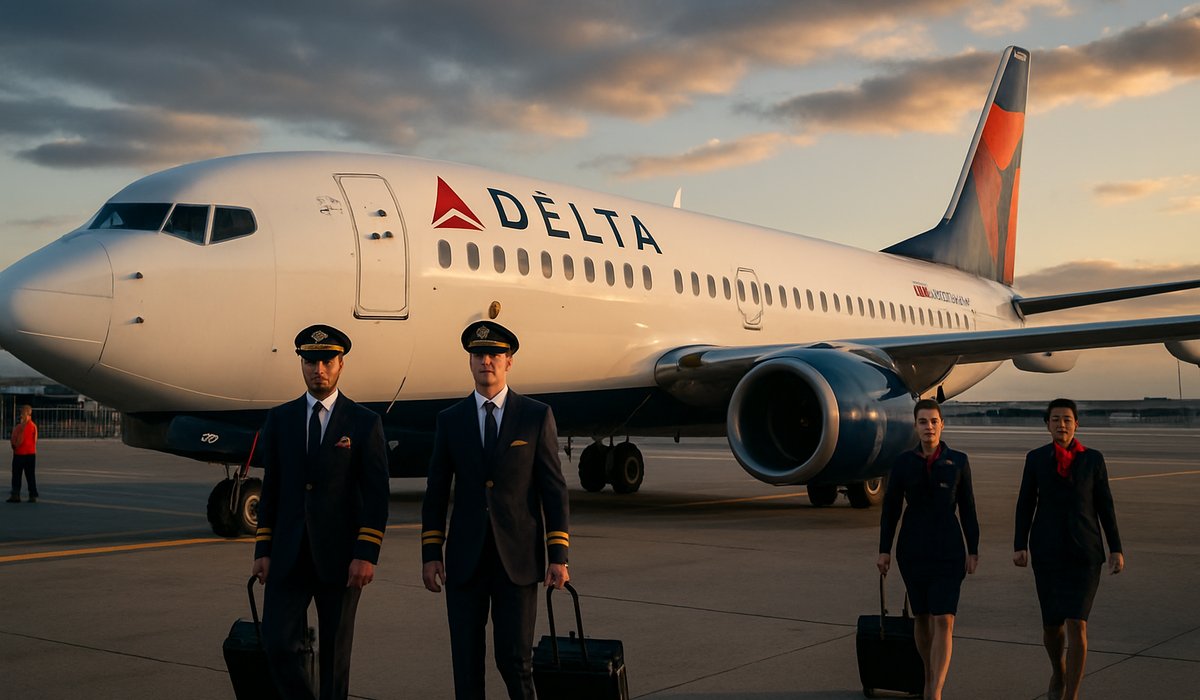
Image generated by AI
Delta Air Lines Pivots Strategy: New Austin-San Jose Route Launches as Carrier Abandons Memphis and New Orleans Services
Major U.S. airline realigns network amid evolving demand patterns, signaling shift in regional aviation priorities
Rapid Route Restructuring Signals Major Network Shift
Delta Air Lines is executing a swift strategic pivot in its domestic route network, announcing a new daily service between Austin and San Jose just 24 hours after discontinuing flights to Memphis and New Orleans. The unexpected move underscores the SkyTeam carrier's aggressive repositioning to capitalize on high-growth technology and business travel corridors in the Southwest, while withdrawing from traditional hub markets in the South.
The new Austin-San Jose route will launch on October 6, operated by an Airbus A319 aircraft on a daily schedule. The timing of these simultaneous announcements—expansion coupled with contraction—reveals Delta's calculated approach to network optimization as carriers across the aviation industry reassess route profitability in an uncertain economic environment.
Market Opportunity Drives California Expansion
Delta's decision to enter the Austin-San Jose corridor reflects broader industry trends favoring technology hubs and business travel markets. Austin has emerged as a critical growth market for major carriers, driven by the concentration of tech companies, venture capital activity, and corporate relocations from the coasts. The route positions Delta to compete directly for business travelers between Texas's innovation center and Silicon Valley's established tech ecosystem.
The deployment of a 150-seat Airbus A319 on daily service suggests the carrier views the market as sustainable for regular operations, though not requiring the capacity of larger narrow-body or wide-body aircraft. This aircraft selection balances operational efficiency with market demand expectations.
Consolidation Reflects Broader Industry Pressures
The simultaneous abandonment of Memphis and New Orleans services marks a notable retreat from secondary markets where Delta historically maintained significant operations. Memphis, in particular, has represented an important regional hub for the carrier. The decision to withdraw from these markets suggests profitability challenges outweigh strategic considerations in these markets.
Industry analysts point to multiple factors influencing such route rationalization decisions: fluctuating jet fuel prices, changing post-pandemic travel patterns, labor cost pressures, and intensifying competition on regional routes. Airlines increasingly rely on sophisticated revenue management systems to identify underperforming routes and reallocate aircraft to higher-yield markets.
Implications for Regional Aviation and Travelers
The moves highlight the competitive realities facing smaller U.S. markets dependent on major carrier service. Passengers in Memphis and New Orleans will face reduced options and potentially higher fares as alternative carriers adjust schedules. Meanwhile, Texas-to-California travelers gain additional capacity and scheduling flexibility on the new Delta service.
For the broader aviation industry, Delta's announcement reinforces the pattern of hub consolidation and selective network pruning adopted by major carriers seeking margin improvement amid volatile operating conditions.
FAQ: Delta Airlines Route Changes and Aviation Industry Impact
Why is Delta Air Lines cutting flights to Memphis and New Orleans? Airlines regularly rationalize underperforming routes based on profitability metrics and demand forecasts. Delta's withdrawal likely reflects insufficient load factors, competitive pressure, or revenue challenges in these secondary markets compared to high-demand corridors like Austin-San Jose.
What does the new Austin-San Jose route mean for business travelers? The daily Airbus A319 service provides business travelers between Austin's tech sector and Silicon Valley with direct connectivity, potentially offering competitive pricing and scheduling advantages while reducing reliance on connecting flights through major hubs.
How do airline baggage fees and jet fuel prices impact route decisions? Operating costs—including fuel surcharges and labor—directly influence route profitability calculations. High jet fuel prices compress margins on less-traveled routes, making regional service less viable. Airlines offset costs through ancillary fees (baggage charges, seat selection), making premium routes more attractive financially.
Is Delta the only carrier abandoning secondary markets? No. Major U.S. carriers including American, United, and Southwest periodically exit underperforming routes. This consolidation trend has accelerated post-pandemic as the industry reassesses network efficiency and cost structure.
When will the Austin-San Jose route begin operations? Delta's new daily service launches on October 6, featuring continuous operations between the two markets with an Airbus A319 aircraft.
Related Travel Guides
-
Thousands Grounded in Australia: 88 Flight Cancellations, 1,230 Delays Across Major Hubs
-
US Air Force Keeps Boeing 707 Fleet Operational Into 2026 Despite Aircraft's 70-Year Legacy
-
Ethiopian Airlines Moves to JFK's New Terminal One — Africa Travel Transformed
External Resources
Disclaimer
This article is for informational and educational purposes only. It does not constitute legal, financial, or professional advice. While we strive to provide accurate and up-to-date information, travel policies, regulations, and conditions change rapidly. Always verify information with official sources before making travel decisions. Nomad Lawyer makes no representations about the accuracy, reliability, completeness, or suitability of the information provided. Readers should consult qualified professionals for advice specific to their circumstances. The views expressed in this article are those of the author and do not necessarily reflect the views of Nomad Lawyer.
Preeti Gunjan
Contributor & Community Manager
A passionate traveller and community builder. Preeti helps grow the Nomad Lawyer community, fostering engagement and bringing the reader experience to life.
Learn more about our team →