
West Midlands Metro Implements 'Buy Before You Board' Rules With £100 Fines in 2026
West Midlands Metro is transitioning to a strict 'Buy Before You Board' ticketing system in September 2026, introducing £100 penalty fares for passengers boarding without valid tickets.

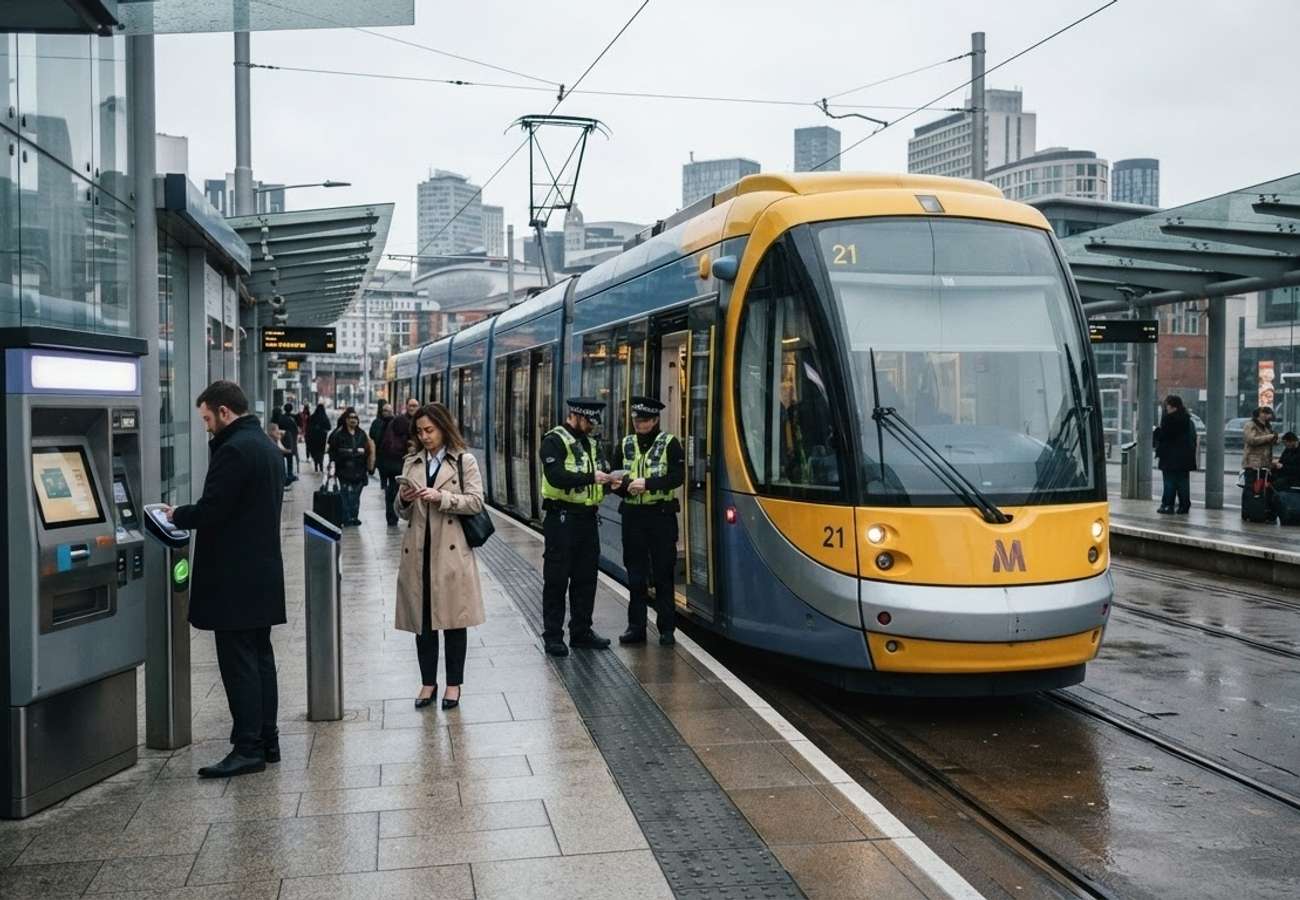
Image generated by AI
West Midlands Metro is ending the long-standing practice of onboard ticket sales, transitioning to a mandatory "Buy Before You Board" system that carries heavy financial penalties for non-compliance.
The shift represents a fundamental change in how passengers access the tram network connecting Wolverhampton and Birmingham. Starting in September, the ability to purchase fares from conductors after boarding will be eliminated. Passengers must now possess a valid ticket or pass before stepping onto the vehicle.
This policy change is part of a broader modernization strategy designed to curb revenue loss and tighten fare enforcement across the network.
Implementation Timeline and Enforcement
The transition began in August with an awareness phase encouraging early adoption. While conductors will remain available for a short window to sell tickets, the "Buy Before You Board" model will become fully operational by mid-September, with complete network-wide enforcement by the end of the month.
Once the system is live, the financial stakes for fare evasion increase significantly. Passengers who board without a valid ticket—provided they had a reasonable opportunity to purchase one—face a £100 penalty fare. This enforcement extends to passengers who have just exited a tram and are still on the platform.
Authorized Payment Methods
To facilitate this transition, the network is emphasizing four primary purchasing channels:
- Station Ticket Machines: Located at tram stops and accepting both cash and card payments.
- MyMetro App: A digital solution for purchasing tickets and passes via smartphone.
- Swift Smart Cards: Valid season tickets and eligible products loaded onto Swift cards remain accepted.
- Concessionary Passes: Regional transport authority passes remain valid.
Notably, the network does not yet support a full contactless "tap-in" system using bank cards or mobile devices. While ticket validators are being installed at stops to build future infrastructure for this technology, they are not currently operational for payment.
Shift in Staff Roles: From Sales to Protection
The operational role of Metro staff is undergoing a significant pivot. Conductors will no longer serve as onboard sales agents. Instead, they are being redeployed into revenue protection roles.
These teams will utilize handheld technology to conduct spot checks on platforms and onboard. To increase the deterrent effect, these revenue protection teams will operate in coordination with transport security organizations and policing partners across the West Midlands network.
Ticketing Requirements Summary
| Method | Status | Requirement |
|---|---|---|
| Onboard Cash/Card | Discontinued | No longer available after mid-September |
| Ticket Machines | Active | Must be used before boarding |
| MyMetro App | Active | Must be purchased before boarding |
| Swift Card | Active | Must be pre-loaded/valid |
| Contactless Tap-In | Unavailable | Infrastructure under development |
| Penalty Fare | £100 | Applied if no valid ticket is held upon boarding |
Why This Matters: Analysis of the Shift
From a logistical perspective, this is a move toward the "closed" or "semi-closed" ticketing models common in London or mainland Europe. For the average commuter, the real impact is the removal of the "boarding first, paying second" safety net.
Our analysis of the network indicates that the £100 fine is a high-friction deterrent intended to force a behavioral shift. By moving conductors from sales to enforcement, the Metro is signaling that it no longer views onboard sales as a viable revenue stream, but rather as a loophole for fare evasion.
For tourists or occasional visitors, this creates a significant "friction point." Unlike buses where the driver often handles payment, the Metro now requires proactive planning. If a ticket machine is out of order, the burden of proof falls on the passenger to show they attempted to pay via the app or another machine; otherwise, the £100 penalty remains a high risk.
Industry Outlook
The West Midlands Metro's move suggests a wider trend in UK regional transport toward aggressive revenue protection to fund infrastructure repairs and network expansion.
The next critical milestone will be the rollout of the contactless validators. Until a seamless "tap-and-go" system is implemented, the network may see a spike in penalty fares as passengers struggle with the transition from a legacy "onboard" culture to a rigid "pre-paid" requirement. Expect increased visibility of policing partners on platforms throughout the remainder of 2026.
The era of the onboard ticket is over; plan your fare or pay the price.
Related Travel Guides
Disclaimer
This article is for informational and educational purposes only. It does not constitute legal, financial, or professional advice. While we strive to provide accurate and up-to-date information, travel policies, regulations, and conditions change rapidly. Always verify information with official sources before making travel decisions. Nomad Lawyer makes no representations about the accuracy, reliability, completeness, or suitability of the information provided. Readers should consult qualified professionals for advice specific to their circumstances. The views expressed in this article are those of the author and do not necessarily reflect the views of Nomad Lawyer.
Kunal K Choudhary
Co-Founder & Contributor
A passionate traveller and tech enthusiast. Kunal contributes to the vision and growth of Nomad Lawyer, bringing fresh perspectives and driving the community forward.
Learn more about our team →