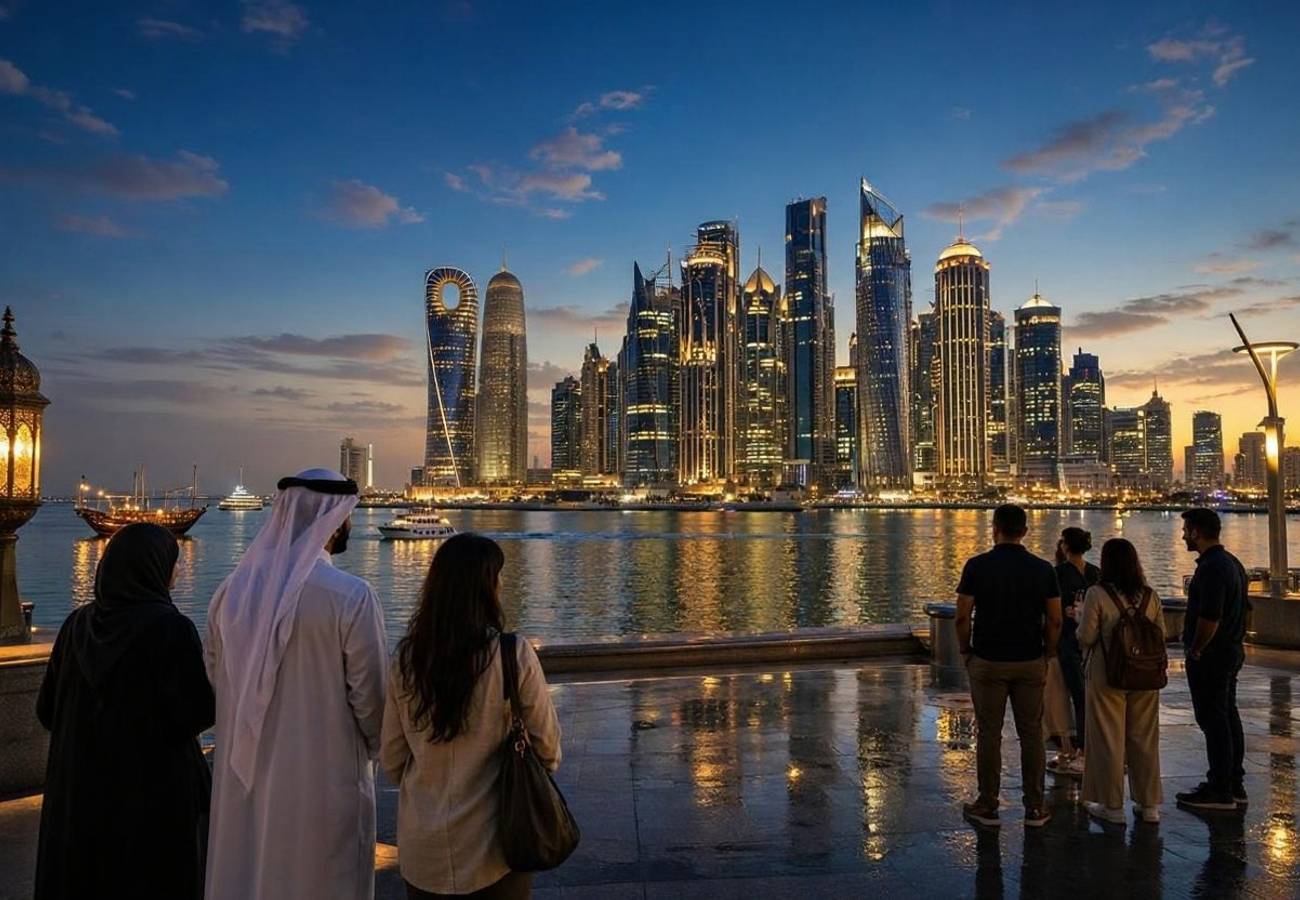
Greece and Eight Global Partners Supercharge EU Sustainable Tourism Strategy Through Data Alignment

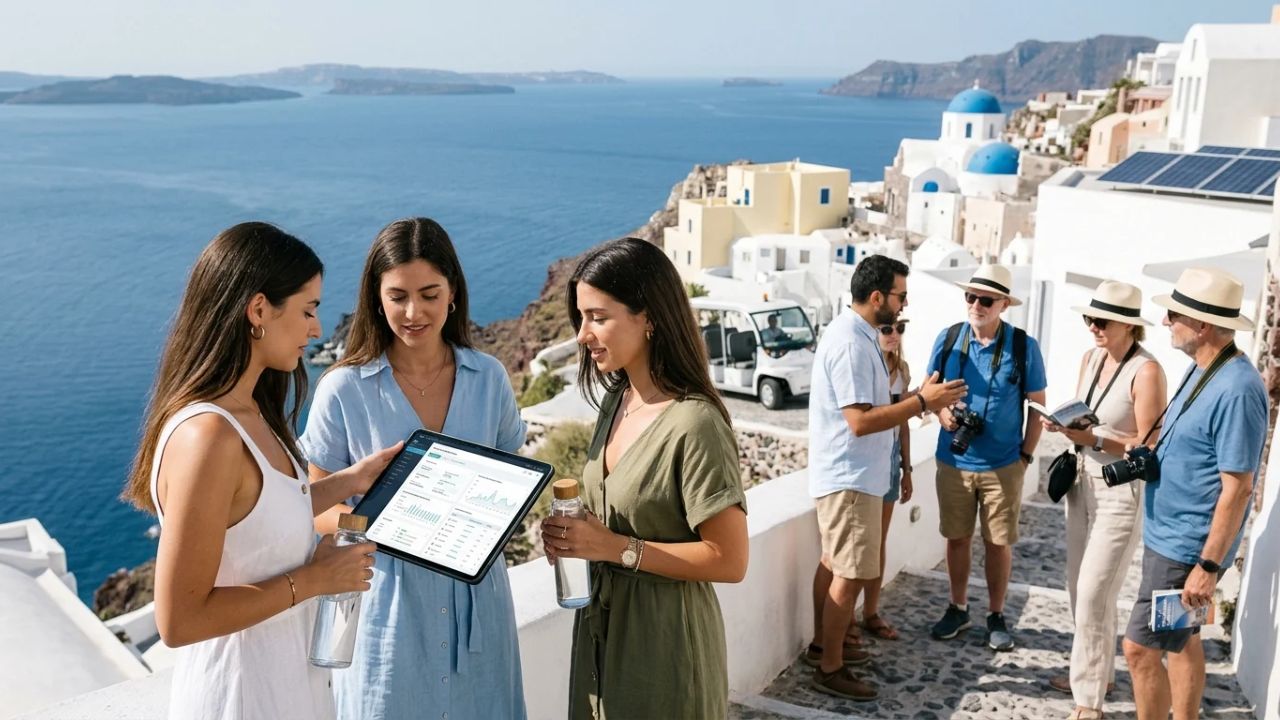
ATHENS / BRUSSELS — In a historic milestone that fundamentally redefines the governance of European travel, the European Commission has formally adopted its long-awaited Sustainable Tourism Strategy, establishing an integrated policy architecture designed to reconcile economic prosperity with ecological carrying capacities and community well-being.
Formally enacted in Brussels on November 4, 2026, the landmark framework arrives at a decisive turning point for the continent’s visitor economy. Tourism stands as one of Europe’s primary economic engines, supporting over 20 million direct and indirect livelihoods across 5 million enterprises—99 percent of which are small and medium-sized family businesses (SMEs)—and generating approximately 10.1 percent of the European Union’s total gross value added.
However, mounting systemic pressures, including acute hospitality labor shortages, intensifying summer heat waves, water scarcity across Mediterranean coastlines, and global competition, made a unified, future-proof doctrine indispensable.
At the vanguard of this continental transformation is Greece. Serving as the Mediterranean anchor of the new European policy, the Hellenic Republic has leveraged its deep maritime and hospitality heritage to build a high-level coalition uniting eight other strategic partner nations.
Spanning the Adriatic-Ionian basin to East Asia and the Arabian Gulf, this nine-nation alliance—comprising Greece, Italy, Croatia, Albania, Japan, India, the United Arab Emirates, Saudi Arabia, and Qatar—is supercharging the European Union’s sustainable roadmap through unprecedented cross-border data alignment, joint workforce academies, and synchronized green investment pipelines.
       THE NINE-NATION SUSTAINABLE TOURISM COALITION AT A GLANCE

  [ European Union Vanguard (Athens Anchor) ]
  * Greece: Policy Architect; bidding for European Tourism Academy HQ
  * Italy: Cultural heritage crowd-prediction & SME green-finance models
  * Croatia: EUSAIR Pillar 4 Lead; national-to-EU data grid standardization
  * Albania: EUSAIR Co-coordinator; greenfield ecotourism & rural agritourism

  [ Strategic Asian & Gulf Global Partners ]
  * Japan: High-speed rail mobility analytics & high-yield cultural flows
  * India: Bilateral agreements channeling outbound demand into off-peak seasons
  * UAE: Aviation resilience bridge; SAF integration & transit flow telemetry
  * Saudi Arabia: Cross-border ESG capital alignment for hospitality modernization
  * Qatar: Crisis preparedness frameworks & mega-event visitor legacy planning
The Architectural Blueprint: Deconstructing the EU Sustainable Tourism Strategy
The strategy’s enactment represents the first major legislative accomplishment of the newly confirmed European Commissioner for Sustainable Transport and Tourism, Apostolos Tzitzikostas.
A seasoned regional administrator who previously served as Governor of Central Macedonia and President of the European Committee of the Regions, Tzitzikostas brought a distinct place-based perspective to the European Commission, arguing that sustainable travel cannot be imposed top-down from Brussels without empowering municipal authorities and small-scale business operators.
THE FOUR TRANSFORMATIVE PILLARS OF THE EU STRATEGY
| Column 1 |
|---|
| 1. THE EUROPEAN ACADEMY OF TOURISM |
| - Pan-European educational hub to professionalize hospitality careers |
| - Standardizing cross-border qualifications and ending seasonal shortages |
| 2. THE CENTRAL EU TOURISM OBSERVATORY |
| - Centralized, high-tech digital intelligence clearinghouse |
| - Real-time tracking of visitor density, environmental loads, & local yield |
| 3. SME EMANCIPATION & GREEN FINANCING |
| - Targeted capital facilities to accelerate zero-emission retrofits |
| - Slashing administrative reporting burdens for small family guesthouses |
| 4. THE MULTI-LEVEL EU TOURISM ALLIANCE |
| - Institutional brain-trust bridging EU directors, mayors, & trade bodies |
| - Coordinating regional carrying-capacity limits with international marketing |
The strategy rests on four operational pillars designed to future-proof the European visitor economy through 2035:
- The European Academy of Tourism: A continent-wide educational institution designed to resolve chronic structural labor shortages across the hospitality sector. The academy establishes unified, pan-European vocational qualification standards, provides subsidized training in digital hotel management and green operations, and creates formal career pathways that elevate hospitality from precarious seasonal employment into a respected, well-remunerated profession.
- The Central EU Tourism Observatory: A state-of-the-art digital data repository that integrates real-time mobility telemetry from telecommunications networks, smart highway sensors, airport passenger flows, and municipal utility meters. By aggregating anonymized data across all member states, the observatory enables destination management organizations (DMOs) to anticipate visitor bottlenecks days in advance, activating mitigation protocols before physical carrying capacities are breached.
- SME Emancipation and Green Capital Access: Recognizing that small family-owned enterprises cannot absorb complex regulatory compliance costs, the strategy introduces simplified administrative frameworks and targeted green transition grants. Small hotels, independent tour operators, and regional transport providers gain direct access to European Union funding to install solar microgrids, upgrade wastewater recycling systems, and adopt paperless booking software.
- The EU Tourism Alliance: A permanent governance platform uniting national tourism ministers, regional governors, municipal mayors, and private industry federations. The alliance ensures that European environmental mandates are executed with direct input from the local communities that host international travelers.
Greece: The Mediterranean Architect Leading the Green Transition
Greece’s proactive posture following the strategy’s formal adoption reflects years of domestic preparation. Under the leadership of the Association of Greek Tourism Enterprises (SETE) and its President, Agapi Sbokou, the Greek hospitality sector has consistently argued that Europe’s preeminence in global travel depends on protecting the cultural character of host communities rather than chasing unchecked arrival volume.
SETE characterized the November 4 adoption as a watershed victory for the Mediterranean. For Greek tourism operators, the strategy mirrors domestic priorities established through the analytical research of the Institute of the Association of Greek Tourism Enterprises (INSETE) and the targeted storytelling campaigns of Marketing Greece.
       GREECE'S THREE-TIERED LEADERSHIP OFFENSIVE IN BRUSSELS

  [ Policy Architecture ]             [ Institutional Hosting ]        [ Budgetary Lobbying ]
  SETE & INSETE data frameworks       Official Hellenic bid to host   Lobbying European Parliament
  shape EU carrying-capacity          the physical headquarters of    for dedicated tourism funding
  and spatial dispersal rules.        the European Tourism Academy.   in 2028-2034 EU MFF budget.
Greece has advanced three decisive initiatives to solidify its leadership:
1. Bidding for the European Academy of Tourism
In an ambitious diplomatic initiative, the Greek Ministry of Tourism formally submitted a bid to host the physical headquarters of the newly created European Academy of Tourism in Greece.
Highlighting the country’s ancient philosophical tradition of hospitality (philoxenia), alongside established tourism faculties in Athens and Thessaloniki, the Hellenic government proposed establishing the academy’s central campus in Greece, supported by regional satellite campuses across Southern and Eastern Europe.
The proposal emphasizes specialized curricula in climate-resilient resort management, island water conservation, and Mediterranean cultural gastronomy.
2. Lobbying for Dedicated MFF Budgetary Allocations
Recognizing that European policy directives remain ineffective without dedicated financial backing, the Greek delegation in Brussels launched an aggressive legislative campaign within the European Parliament.
Greek representatives are spearheading a multi-state coalition demanding that the European Commission carve out a specific, autonomous budget line for sustainable tourism within the upcoming Multiannual Financial Framework (MFF) for 2028–2034.
Currently, tourism projects must compete for fragmented grants dispersed across regional development, transport, and agricultural funds; a dedicated MFF tourism instrument would guarantee multi-billion-euro funding streams directly accessible to local municipalities and tourism SMEs.
3. Scaling the Decarbonized Island Blueprint
On the ground, Greece is providing the European Union with proven operational laboratories through its pioneering GR-Eco Islands initiative.
On remote Aegean outposts like Astypalea and Chalki, Greece partnered with clean mobility providers and renewable energy developers to replace fossil-fueled ground transport with shared electric vehicle fleets, construct localized solar microgrids, and implement automated smart-waste recycling.
These decarbonized islands now serve as primary case studies within Commissioner Tzitzikostas’s framework, illustrating how remote European island communities can achieve energy autonomy while offering tranquil, low-impact luxury to international vacationers.
| Country | Strategic Alliance Role | Primary Technical Contribution to EU Strategy | Core Focus Region |
|---|---|---|---|
| Greece | Strategy Architect & Vanguard | Proposing Academy HQ; lobbying 2028–2034 MFF funding | Aegean & Ionian Archipelagos |
| Italy | Heritage & Green Transition Lead | Advanced digital ticketing & SME green-finance models | Venice, Florence, & Adriatic Coast |
| Croatia | EUSAIR Pillar 4 Technical Lead | Standardizing municipal data for EU Observatory | Continental Slavonia & Dalmatia |
| Albania | EUSAIR Co-coordinator | Developing zero-emission ecotourism & agritourism | Vjosa Valley & Albanian Riviera |
| Japan | High-Tech Mobility Partner | Bullet train crowd analytics & high-yield visitor flows | Bilateral EU–Japan transit lanes |
| India | Strategic Outbound Market | Off-peak tour packaging & secondary destination routing | Indian outbound demographic corridor |
| UAE | Aviation & Telemetry Bridge | SAF infrastructure & global transit data integration | Dubai / Abu Dhabi intercontinental hubs |
| Saudi Arabia | Cross-Border Capital Partner | Aligning Vision 2030 hospitality funds with EU ESG rules | Transnational green hotel investments |
| Qatar | Crisis Preparedness Partner | Mega-event crowd management & aviation corridor safety | Middle East–EU resilient transit routes |
The Adriatic-Ionian Triangle: Italy, Croatia, and Albania Build Regional Cohesion
To ensure the strategy’s operational success across Southern Europe, Greece has anchored its regional efforts within the EU Strategy for the Adriatic and Ionian Region (EUSAIR), forging a tight cooperative triangle with Italy, Croatia, and Albania.
       EUSAIR ADRIATIC-IONIAN SUSTAINABLE TOURISM TRIANGLE

                     [ CROATIA: PILLAR 4 COORDINATOR ]
                     Standardizing municipal open data;
                     rerouting visitors to Continental Slavonia
                                    / \
                                   /   \
                                  /     \
                                 /       \
  [ ITALY: HERITAGE & SMES ]    /         \    [ ALBANIA: ZERO-EMISSION ECOTOURISM ]
  Digital crowd-prediction     +-----------+   Greenfield nature trails; Vjosa Valley;
  algorithms in Venice & Rome;                 preserving traditional Mediterranean diet;
  green financing for family agriturismi.       avoiding high-density coastal mistakes.
Each partner contributes distinct structural strengths to the Adriatic-Ionian basin:
1. Italy: Heritage Crowd Modeling and Green SME Financing
Sharing the central Mediterranean basin with Greece, Italy serves as a foundational pillar of the EUSAIR alliance. Italy’s primary contribution focuses on resolving the acute challenges of over-concentration across world-famous cultural monuments.
Municipal authorities in Venice, Florence, and Rome have deployed advanced predictive crowd algorithms and timed digital reservation systems that feed directly into the central EU Tourism Observatory.
These platforms monitor foot-traffic density across historic bridges and museum plazas, providing automated alerts that allow local police to redirect tour groups before bottlenecks occur.
Simultaneously, Italy’s vast network of family-owned rural estates (agriturismi) is serving as the primary test bed for the European Union’s new green-financing mechanisms.
Supported by capital allocations from the National Recovery and Resilience Plan (PNRR), hundreds of historic Italian properties are implementing closed-loop geothermal heating, on-site rainwater harvesting, and zero-kilometer farm-to-table dining programs, establishing that ancient heritage hospitality can operate on a carbon-neutral footprint.
2. Croatia: Standardizing the Transnational Data Grid
Acting as the formal coordinator for EUSAIR’s "Pillar 4 – Sustainable Tourism," Croatia provides the technical and analytical backbone of the regional partnership.
Historically, tourism data collection across the Western Balkans and Adriatic coast was severely hindered by incompatible municipal software and fragmented methodology.
Croatia has led a comprehensive project to harmonize local reporting standards, creating an open-source digital data protocol that feeds municipal hotel registrations, ferry boarding counts, and national park entries directly into the European Observatory.
Using this synchronized data, the Croatian Ministry of Tourism is actively solving the chronic challenge of coastal seasonality.
By tracking micro-movements in traveler preferences, Croatia launched targeted campaigns that steer international visitors away from congested summer hotspots along the Dalmatian coast (such as Dubrovnik and Split) into the tranquil rolling hills, thermal spas, and vineyards of Continental Croatia (Slavonia and Zagorje), spreading economic prosperity into historically overlooked rural provinces.
3. Albania: Greenfield Ecotourism and Agro-Heritage
Co-coordinating EUSAIR Pillar 4 alongside Croatia, Albania occupies a unique and advantageous position within the European tourism landscape.
As an emerging destination experiencing unprecedented double-digit growth in international arrivals, Albania is not burdened by decades of outdated, high-density concrete resort infrastructure. Instead, the country possesses the rare opportunity to construct a sustainable tourism model entirely from scratch.
Albania is utilizing European Union sustainability benchmarks to protect its pristine wilderness areas, most notably along the Vjosa River National Park—Europe’s first wild river national park.
The Albanian government is directing international public-private investment into rural agritourism circuits across Gjirokastër, Berat, and the northern Accursed Mountains.
By promoting traditional organic agricultural heritage, family-owned guesthouses, and the authentic Mediterranean diet, Albania is establishing a national brand centered on slow, low-impact travel that avoids the destructive hyper-commercialization experienced by older Mediterranean resorts.
Global Strategic Alliances: Expanding Europe's Horizon to Asia and the Middle East
Commissioner Tzitzikostas and the Greek leadership recognized from the outset that Europe cannot construct a sustainable tourism fortress in isolation.
With international long-haul travelers accounting for significant high-yield expenditure across the continent, the EU strategy forged formal strategic dialogues with five pivotal global partners across East Asia, South Asia, and the Arabian Gulf.
       EUROPE'S STRATEGIC INTERCONTINENTAL SUSTAINABILITY BRIDGES

    [ Global Powerhouse ]              [ Strategic Contribution to EU Tourism ]
  * JAPAN (East Asia)          ====>  * Bullet-train mobility tech & respectful cultural flows
  * INDIA (South Asia)         ====>  * Directing massive outbound volume into off-peak seasons
  * UAE (Gulf Transit Hub)     ====>  * SAF infrastructure & global passenger flight telemetry
  * SAUDI ARABIA (Investment)  ====>  * Aligning Vision 2030 capital with EU zero-carbon rules
  * QATAR (Geopolitical Calm)  ====>  * Mega-event crowd logistics & resilient air corridors
The five intercontinental partnerships address distinct strategic imperatives:
1. Japan: Advanced Mobility and Conscientious Cultural Tourism
Japan represents a premier technology and high-yield visitor partner for the European Union. With Commissioner Tzitzikostas conducting high-level bilateral dialogues with Tokyo’s Ministry of Land, Infrastructure, Transport and Tourism (MLIT), the partnership focuses on technical exchange and visitor quality.
European planners are actively studying Japan’s mastery of high-speed Shinkansen passenger logistics, smart station wayfinding, and automated crowd dispersal at sensitive historical shrines in Kyoto and Nara.
Additionally, Japanese outbound vacationers represent the ideal demographic for Europe’s new strategy: conscientious, culturally curious travelers who prioritize museum preservation, respect local customs, and travel extensively during the temperate spring and autumn shoulder seasons.
2. India: Managing the World's Fastest-Growing Outbound Engine
With India’s middle class expanding rapidly and millions of Indian travelers embarking on international journeys, Europe must prepare to welcome this demographic wave without straining saturated urban infrastructure.
Through bilateral dialogues spearheaded by the EU-India Trade and Technology Council, Indian travel conglomerates and outbound tour operators are collaborating with European tourism authorities to design sustainable itineraries.
Instead of packaging traditional, frantic seven-day summer bus tours through overcrowded capitals, Indian operators are introducing specialized packages highlighting regional cultural routes, off-peak autumn travel, and secondary European destinations in Central and Southern Europe.
This alignment guarantees that Indian tourism capital flows directly into provincial economies while mitigating summer congestion in major metropolitan hubs.
3. The United Arab Emirates: Aviation Decarbonization and Transit Intelligence
The United Arab Emirates serves as the primary intercontinental aviation crossroads connecting Europe with the Asia-Pacific and African continents. Home to global mega-carriers Emirates and Etihad, the UAE plays an indispensable role in ensuring that long-haul travel to Europe operates on sustainable foundations.
Under the partnership, UAE aviation authorities are collaborating with European regulators to accelerate the commercial production, distribution, and bunkering of Sustainable Aviation Fuels (SAF) along key intercontinental flight corridors.
Simultaneously, UAE airport hubs are sharing anonymized passenger transit telemetry with the EU Tourism Observatory.
This global data pipeline allows European destination managers to forecast incoming long-haul traveler volumes weeks in advance, enabling municipal airports and rail operators to adjust transport schedules dynamically.
4. Saudi Arabia: Aligning Capital Mega-Flows with European Green Standards
As the Kingdom of Saudi Arabia executes its sweeping Vision 2030 economic transformation, Saudi sovereign wealth and private investment funds have emerged as major financial backers of European hospitality real estate.
Through direct bilateral dialogues between Brussels and Riyadh, Saudi investment authorities have agreed to align their European hotel acquisitions and resort developments with the European Union’s strict Corporate Sustainability Due Diligence Directive (CSDDD) and Energy Performance of Buildings standards.
Capital deployed by Saudi investors across European properties is being earmarked for deep geothermal retrofits, rooftop solar installations, and zero-emission HVAC systems, modernizing historic European hotel assets without placing financial burdens on local municipal taxpayers.
5. Qatar: Mega-Event Logistics and Resilient Aviation Corridors
Rounding out the global coalition, Qatar contributes world-class expertise in managing massive international passenger influxes, acquired during the successful execution of global sporting spectacles and international diplomatic summits.
Qatari authorities are sharing comprehensive operational frameworks with the EU Tourism Alliance, detailing crowd-control telemetry, rapid-transit deployment algorithms, and legacy infrastructure repurposing.
Additionally, high-level diplomatic cooperation between the European Union and Doha ensures the maintenance of safe, stable, and resilient civil aviation corridors between the Middle East and Europe, insulating the continental travel industry from regional airspace disruptions.
       THE SYNERGISTIC IMPACT OF TRANSNATIONAL COLLABORATION

  Shared Data Feeds (EU Observatory)  ===> Predicts arrival surges 14 days early
                 +
  Standardized Vocational Curricula   ===> Eliminates seasonal hotel labor shortages
                 +
  Cross-Border Green Micro-Loans      ===> Accelerates zero-emission SME transitions
                 +
  Intercontinental Flight Telemetry   ===> Insulates Europe against geopolitical shocks
                 |
                 v
  [ The Result: A Resilient, High-Yield, Sustainable European Tourism Economy ]
Operational Synergy: How the Coalition Translates Policy into Concrete Action
The collaboration between Greece and its eight international partners is distinguished by its practical operational focus. Rather than issuing vague diplomatic communiqués, the coalition has established binding technical working groups executing specific deliverables:
- Eliminating Administrative Border Friction: Within the Adriatic-Ionian basin, Italy, Croatia, and Albania have dismantled legacy regulatory barriers that historically prevented cross-border environmental management. Joint maritime patrols and unified environmental monitoring systems now protect shared marine habitats across the Ionian and Adriatic seas, ensuring that international yachting and cruise operations adhere to strict greywater discharge bans.
- Harmonizing Digital Databases: By adopting open API architectures, participating nations are feeding real-time tourism statistics into the central EU Tourism Observatory. This transparent data mesh provides European policymakers with unprecedented visibility into regional economic health, enabling the European Commission to deploy emergency support funds swiftly to areas impacted by localized climate events or travel slowdowns.
- Establishing Multinational Apprenticeships: Building upon Greece’s bid to host the European Academy of Tourism, the partner nations have drafted reciprocal vocational exchange programs. Under this framework, hospitality students and culinary apprentices from Albania, Croatia, and Italy will undergo specialized dual-education training modules in Greece, earning standardized European Union certifications that guarantee equitable wages and professional mobility across all member states.
- Insulating the Travel Economy from Shocks: By maintaining active data dialogues with transit hubs in Tokyo, Dubai, and Doha, the European travel ecosystem no longer operates in an information silo. Anticipating international booking trends and geopolitical disruptions months in advance allows European airlines, national railways, and hotel federations to adjust capacity smoothly, preventing the catastrophic revenue crashes that characterized previous decades.
Practical Travel Guidance: Navigating Europe's Sustainable Landscape in 2026/2027
For holidaymakers, cultural heritage enthusiasts, and corporate travelers planning journeys to Greece and its European partner nations, understanding the new regulatory and operational landscape is essential to enjoying rewarding, low-friction vacations.
       ACTIONABLE TRAVEL PLAYBOOK: THE SUSTAINABLE EUROPEAN JOURNEY

  [ Destination Selection & Dispersal ]
  * Explore secondary green hubs: Epirus (Greece), Slavonia (Croatia), Berat (Albania)
  * Book certified sustainable properties: Look for the EU Ecolabel or GSTC badges
  * Experience cultural monuments during off-peak morning or twilight windows

  [ Mobility & Low-Carbon Transit ]
  * Utilize integrated rail grids: Connect from high-speed trains to electric shuttles
  * Support car-free islands: Experience e-mobility on Astypalea or Chalki
  * Avoid domestic short-haul flights where direct high-speed trains operate

  [ Responsible Community Engagement ]
  * Prioritize locally owned family agriturismi, tavernas, and artisan workshops
  * Register early for digital monument access passes (Venice, Athens Acropolis)
  * Support regional culinary heritage by choosing seasonal, locally sourced dining
1. Prioritizing Emerging Ecotourism Corridors
Travelers seeking authentic cultural immersion while avoiding crowded tourist bottlenecks should consider the innovative secondary destinations highlighted by the coalition:
- In Greece, venture beyond Santorini and Mykonos to explore the mountain villages of Zagori in Epirus, the ancient archaeological landscapes of the Peloponnese, or the sustainable Aegean outposts of Astypalea and Chalki.
- In Croatia, combine visits to coastal Zadar with explorations of the pristine vineyards, castles, and thermal spas of Zagorje and Slavonia.
- In Albania, experience the historic Ottoman architecture of Gjirokastër, hike through the untouched alpine valleys of Theth, or explore the wild rapids of the Vjosa River.
2. Utilizing Seamless Low-Carbon Transport
Travelers are strongly encouraged to align their itineraries with Europe’s expanding green transport infrastructure.
When visiting Italy, utilize high-speed Frecciarossa and Italo electric trains to move between cultural capitals; in Greece, take advantage of inter-island electric ferry connections and subsidized electric vehicle rentals; and when traveling overland through the Western Balkans, utilize regional express coach networks linking Tirana, Podgorica, and Zagreb.
3. Respecting Carrying-Capacity Reservations
To guarantee entry to world-famous cultural landmarks, travelers must adapt to digitized slot-management systems.
Visitors planning to ascend the Acropolis in Athens, enter the Colosseum in Rome, or tour the Doge’s Palace in Venice must reserve timed digital entry tickets weeks in advance through official government portals, ensuring compliance with local carrying-capacity limits and avoiding fraudulent third-party ticket scalpers.
The formal adoption of the EU Sustainable Tourism Strategy on November 4, 2026, marks the dawn of a mature, responsible era for European travel.
Through the visionary leadership of Greece and the collective strength of its eight global partners, the European continent is demonstrating that a world-class tourism industry does not require the sacrifice of local communities or delicate ecosystems.
By grounding policy in empirical data, investing in the hospitality workforce, and building bridges across continents, Greece and its allies are safeguarding Europe’s cultural and natural heritage for generations to come.
Related Travel Guides
- Spain and 42 European Nations Break Global Tourism Records with 5% Surge in Overnight Visitors
- Latin America Deploys Coordinated Tech and Police Crackdown on Street Crime and Phone Snatching Across Major Tourist Hubs
- Thailand Pushed by Vietnam in Tourism Race as Visa Shake-Ups and Escalating In-Country Costs Erode Bangkok Dominance
- Austria and European Allies Pioneer Continental Model for Balanced Regional Dispersal and Anti-Overtourism
This article is for informational purposes. Flight routes, passenger regulations, visa rules, and transit advisories are subject to change by airlines and aviation authorities. Readers are advised to verify schedules and travel documentation with relevant carriers and border agencies before departure.
Related Stories
Thailand, Japan, and Cambodia Brace for Winter Tourism Setback as Chinese Group Travel Plunges Amid Safety Concerns

Argentina Outpaces the United States to Drive Brazil's Record €1.74 Billion Corporate Travel Milestone in 2026