
Washington State Declares Emergency as Spokane Wildfires Destroy 700 Structures in 2026
Massive wildfires in eastern Washington have forced 60,000 evacuations and destroyed over 700 buildings, prompting a statewide emergency declaration through September 2026.

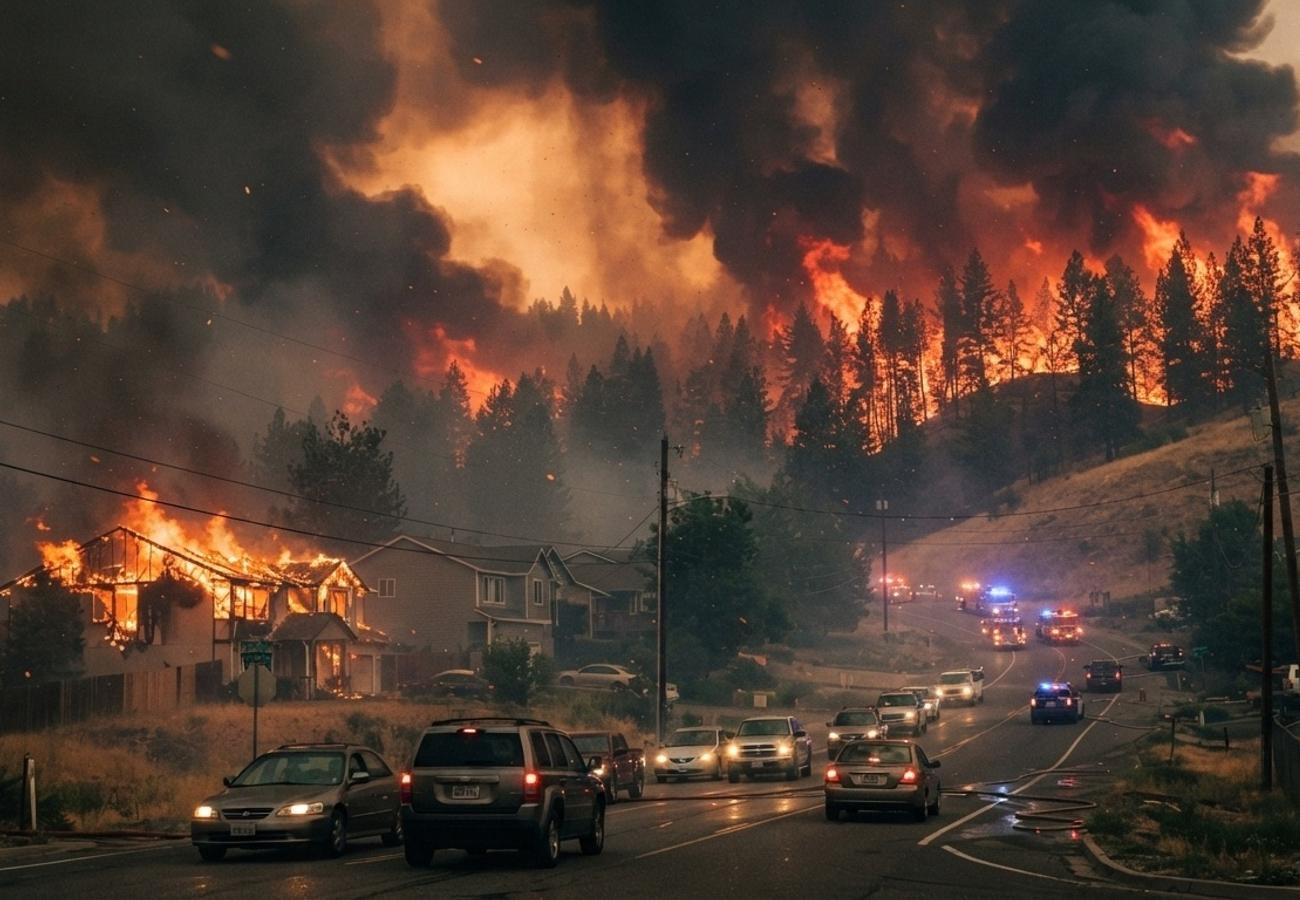
Image generated by AI
A statewide emergency is now in effect across Washington as ferocious wildfires obliterate hundreds of homes and force 60,000 residents to flee their communities. With over 700 structures destroyed, the region faces a critical infrastructure crisis and severe travel disruptions.
The Pacific Northwest is currently battling a series of explosive blazes that have converged on Spokane and surrounding cities. This emergency represents one of the most significant fire events the region has seen in years, driven by a lethal combination of prolonged drought and high-velocity winds.
For travelers and residents, the situation has created a volatile environment where road closures, air quality degradation, and sudden evacuation orders are becoming the norm.
Mass Evacuations and Structural Loss in Eastern Washington
The scale of the displacement is immense. Approximately 60,000 people were ordered to evacuate their homes as fires surged through Spokane and Stevens counties. Due to the speed of the flames, many residents had only minutes to escape before their neighborhoods became untenable.
The destruction is concentrated in residential areas, with initial assessments confirming that at least 700 structures have been damaged or destroyed. While the majority of these are homes, the fires also claimed businesses and storage facilities.
Despite the catastrophic property loss, authorities have reported no confirmed fatalities, a result attributed to the aggressive speed of evacuation orders and the efficiency of emergency response teams.
Analysis of the Primary Fire Zones
Three specific blazes have driven the majority of the destruction. These fires were fueled by critically low humidity and dry vegetation, allowing them to jump natural barriers.
- Old Trails Fire: The most destructive of the three, this blaze consumed roughly 3,600 acres northwest of Spokane. In a significant escalation, the fire crossed the Spokane River before infiltrating residential communities.
- Fairview Fire: A fast-moving blaze that threatened multiple community hubs.
- Autumn Lane Fire: Another rapid-growth fire that contributed to the regional emergency.
Collectively, these three fires have burned nearly 8,000 acres. While the causes of the Fairview and Autumn Lane fires remain under investigation, authorities have made a breakthrough regarding the Old Trails Fire. Aaron Farinacci, 37, has been arrested and charged with first-degree arson following witness reports of suspicious behavior at the fire's origin.
Critical Infrastructure and Public Health Impacts
The fires have moved beyond the perimeter of forests and grasslands, impacting essential urban services and healthcare.
The Mann-Grandstaff Veterans Affairs Medical Center was forced to evacuate patients as a precautionary measure when the fire threat neared the facility. Simultaneously, the regional power grid suffered significant hits; transmission lines were damaged by the heat, leaving thousands of customers in the dark.
The environmental impact extends far beyond the burn zones. Massive smoke plumes are drifting across the Pacific Northwest, creating hazardous air quality levels. This poses a direct risk to:
- Travelers with respiratory conditions.
- Elderly populations and young children.
- Outdoor enthusiasts planning hiking or camping trips in the region.
The Meteorological Catalyst: A "Perfect Storm" for Fire
The 2026 wildfire season in Washington has been abnormally aggressive. The state is currently enduring its fourth consecutive statewide drought, exacerbated by a winter with significantly below-average snowpack.
Meteorologists note that fuel conditions in early August are currently mirroring what is typically expected in late August or September. This "advanced" drying of the landscape has extended the window of vulnerability.
The National Weather Service issued a rare "Particularly Dangerous Situation Red Flag Warning" for central and eastern Washington. This high-level alert was triggered by:
- Sustained Winds: Westerly winds of 20 to 30 mph.
- Extreme Gusts: Peaks reaching approximately 45 mph.
- Low Humidity: Critically dry air that stripped moisture from vegetation.
The broader statistics for the year are sobering: more than 1,000 wildfires have already burned approximately 425,000 acres across Washington in 2026, the highest acreage since 2021.
Impact Summary and Fire Data
The following table outlines the primary fire events contributing to the current state of emergency.
| Fire Name | Estimated Acres Burned | Primary Impact Area | Status/Cause |
|---|---|---|---|
| Old Trails Fire | ~3,600 | Northwest Spokane / Residential | Arson Arrest Made |
| Fairview Fire | Included in 8k total | Eastern Washington | Under Investigation |
| Autumn Lane Fire | Included in 8k total | Eastern Washington | Under Investigation |
| Statewide Total | ~425,000 | Across Washington State | Multiple Causes |
Key Takeaways for Travelers and Residents
- Emergency Status: Washington is under a statewide wildfire emergency through September 2026.
- Travel Alerts: Expect road closures and restricted access in Spokane and Stevens counties.
- Air Quality: Monitor local air quality indexes (AQI) before visiting the Pacific Northwest, as smoke is widespread.
- Safety First: Follow all official evacuation orders immediately; the speed of these fires leaves zero margin for delay.
Authorities warn that if the current dry weather persists, high-risk wildfire activity could continue through October.
Related Travel Guides
Disclaimer
This article is for informational and educational purposes only. It does not constitute legal, financial, or professional advice. While we strive to provide accurate and up-to-date information, travel policies, regulations, and conditions change rapidly. Always verify information with official sources before making travel decisions. Nomad Lawyer makes no representations about the accuracy, reliability, completeness, or suitability of the information provided. Readers should consult qualified professionals for advice specific to their circumstances. The views expressed in this article are those of the author and do not necessarily reflect the views of Nomad Lawyer.
Raushan Kumar
Founder & Lead Developer
Full-stack developer with 11+ years of experience and a passionate traveller. Raushan built Nomad Lawyer from the ground up with a vision to create the best travel and law experience on the web.
Learn more about our team →