
Washington Dulles Terminal Gridlock: United, Delta, and British Airways Suffer Massive Flight Delays, Stranding Passengers in Travel Chaos
As severe operational bottlenecks paralyze Washington Dulles International Airport, 46 flight delays and 3 targeted cancellations violently strand thousands of passengers, triggering massive travel chaos.

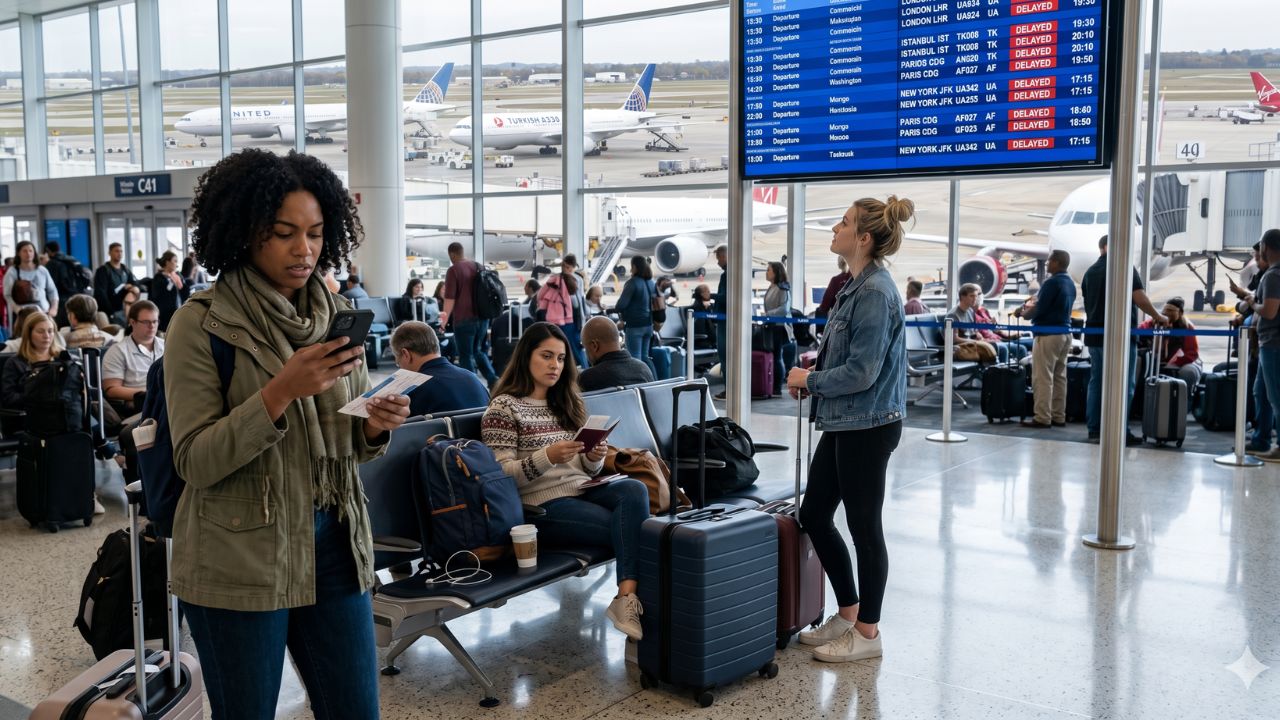
Image generated by AI
A Massive Operational Collapse Triggers D.C. Terminal Panic
While massive sectors of the global passenger network frequently battle highly unpredictable extreme weather events, synchronized logistical bottlenecks, and horrific commercial fleet constraints, the sudden, unmanageable collapse of the United States capital's primary transit hub remains the absolute most terrifying catalyst for cascading airport disruptions. Delivering highly urgent, breaking airline news, verified U.S. aviation trackers confirm that a massive operational disaster has actively detonated, completely exposing vulnerable domestic commuters, federal executives, and international tourists to severe travel chaos across the highly congested Washington D.C. aviation network. Today, June 4, 2026, highly alarming operational news forcefully emerged confirming that an unprecedented wave of sudden flight delays and targeted flight cancellations has completely paralyzed Washington Dulles International Airport (IAD), violently isolating thousands of passengers.
While desperate travelers usually attempt to navigate terrifying terminal gridlock caused by isolated regional failures, these exclusive aviation updates reveal a highly systemic, incredibly dangerous logistical meltdown actively destroying flight schedules connecting Washington to New York, London, Istanbul, and other major global cities. Official data compiled from airport movement logs and government-verified sources confirms that the massive airport violently recorded a staggering total of 46 flight delays alongside 3 absolute flight cancellations today. The sheer scale of this disruption has immediately plunged Dulles’ departure halls into an absolute state of emergency. With legacy carriers like United Airlines, Delta Air Lines, and British Airways frantically struggling to maintain basic operational integrity, thousands of highly vulnerable passengers are currently trapped inside overflowing terminals, facing totally ruined itineraries.
Expanded Overview: The Scale of the Domestic and International Disruption
The sudden, highly publicized execution of this massive nationwide operational shutdown serves as an undeniable example of how rapidly complex continental logistics can collapse into extreme transit pressure. Washington Dulles serves as an absolutely critical, high-capacity global gateway heavily utilized by business and government travelers. When a simultaneous disruption of this magnitude strikes, it completely shatters the entire passenger pipeline. For a massive corporate and leisure corridor heavily reliant on incredibly robust, high-frequency flight schedules, this massive wave of flight delays heavily exposes the entire network to terrifying bottlenecks, severe travel safety concerns, and massive economic damage to the region’s vital tourism cycle.
The terrifying reality of the current transit crisis is found in the sheer volume of high-capacity aircraft abruptly grounded across the Dulles hub. While absolute cancellations were limited to 3 flights, the staggering volume of 46 delays—accounting for a massive 94% of today's total disturbances—highlights a complete failure in operational sequencing. This clearly indicates deep systemic operational bottlenecks rather than outright service terminations. Because delays are broadly distributed across almost all carriers feeding the hub, the localized feeder networks and major transatlantic corridors are instantly poisoned. By actively failing to process routine passenger traffic, airlines are forced to heavily delay subsequent departures, creating a highly destructive ripple effect that completely ruins connecting flights across the Eastern Seaboard and Europe.
Section-Wise Breakdown of the Dulles Terminal Gridlock
Local Feeder Collapse and Cancellations
The regional operational strain at Dulles is currently buckling under massive pressure. Jazz Aviation (operating for Air Canada) suffered the most severe structural failure, reporting 2 absolute flight cancellations (representing an astonishing 20% of its scheduled departures) alongside 1 severe delay (10%). American Airlines also completely failed to maintain its schedule, logging 1 cancellation (8%) and 1 delay (8%). While the dominant hub carrier, United Airlines, managed to avoid massive outright cancellations, it suffered an agonizing 14 flight delays, impacting 5% of its entire operation at Dulles. Its regional partner, CommuteAir, added 4 vital delays (3%) to the chaos.
Severe International Route Contagion
The contagion aggressively spread to the primary international carriers, heavily compromising major transatlantic and Middle Eastern corridors. Massive global operators like Turkish Airlines and Virgin Atlantic were severely crippled, each posting a horrific 50% delay rate on their respective Dulles schedules. Furthermore, a wide range of premium international carriers, including Icelandair, Korean Air, Qatar Airways, Royal Jordanian, and Saudia, recorded devastating delays heavily affecting between 25% and 100% of their flights into or out of IAD. British Airways and Ethiopian Airlines also registered highly disruptive delays, completely stranding international tourists.
Systemic Bottlenecks Overpower Carriers
Other domestic operators simply could not escape the cascading gridlock. Contour Airlines experienced the highest proportional delay volume overall, with 5 flights delayed—a massive 62% disruption rate relative to its scheduled departures. Legacy carrier Delta Air Lines, alongside United partners Mesa and GoJet, all registered significant delays without cancellations. The disruptions were widely spread across diverse originating and destination airports (from New York to London to Istanbul), proving that this issue was not confined to a single weather-impacted gateway but represents deep, systemic nationwide schedule pressures crushing the capital's aviation infrastructure.
Verified Aviation Disruption and Delay Data
To fully comprehend the massive operational scale and strategic deployment dictating this highly destructive capacity crisis, the following tables explicitly detail the exact flight metrics and the resulting passenger disruptions heavily impacting Washington Dulles today:
IAD Overall Disruption Metrics
| Disruption Category | Verified Total Flights Affected | Impact Assessment |
|---|---|---|
| Total Flight Delays | 46 Delays (94% of total) | Massive terminal congestion; cascading missed connections. |
| Total Flight Cancellations | 3 Cancellations | Severe itinerary destruction. |
Carrier-Specific Operational Collapse
| Affected Airline / Operator | Delayed Flights | Cancelled Flights | Proportion of Schedule Disrupted |
|---|---|---|---|
| United Airlines | 14 Delays | 0 | 5% of schedule severely delayed. |
| Jazz Aviation (for Air Canada) | 1 Delay | 2 Cancellations | 20% Cancelled / 10% Delayed. |
| Contour Airlines | 5 Delays | 0 | Massive 62% disruption rate. |
| CommuteAir (for United) | 4 Delays | 0 | 3% of schedule delayed. |
| American Airlines | 1 Delay | 1 Cancellation | 8% Cancelled / 8% Delayed. |
| Turkish Airlines | Multiple Delays | 0 | 50% of IAD schedule delayed. |
| Virgin Atlantic | Multiple Delays | 0 | 50% of IAD schedule delayed. |
| Icelandair, Qatar, Saudia | Multiple Delays | 0 | Disruption rates up to 100%. |
| Mesa, British Airways, Delta | Multiple Delays | 0 | Operational bottlenecks recorded. |
Passenger Impact: Navigating the Terminal Gridlock
For the modern commuter attempting to navigate this highly volatile D.C. network, the passenger impact of this massive operational meltdown is completely terrifying. Reliable, on-time flights are the absolute backbone of federal business and summer tourism, and this hub collapse completely destroyed that promise.
- Endure Severe Terminal Isolation: Because Dulles is severely bottlenecked, thousands of passengers are subjected to intense fear and confusion, physically isolated in holding areas with zero clarity on when their aircraft will be cleared for departure to New York or London.
- The Threat of Ruined Tourism: Summer tourists arriving to view federal landmarks and museums are now violently stranded, facing missed hotel reservations and inflated accommodation costs due to forced overnight stays in the capital region.
- Survive the Rebooking Gridlock: Rather than celebrating a smooth journey, federal executives and leisure travelers are aggressively urged to demand immediate re-accommodation as they battle extreme customer service queues and severely elevated terminal wait times.
Conclusion: A Highly Destructive Aviation Meltdown
The massive, highly publicized collapse of flight schedules across Washington Dulles International Airport represents a severe, incredibly dangerous wake-up call for the North American aviation sector. By actively demonstrating that deep systemic congestion can instantly overwhelm a primary capital gateway with 46 delays, this incident completely shatters passenger confidence. As executive leadership across United, American, and international carriers frantically scramble to diagnose the logistical failures and appease thousands of isolated passengers, D.C. tourists are heavily urged to aggressively monitor their flight status via airline dashboards, actively prepare for sudden flight delays, and fully expect this unprecedented disaster to trigger massive regional travel chaos.
Key Takeaways
- Massive Dulles Meltdown: Washington Dulles International Airport (IAD) recorded a devastating total of 46 flight delays and 3 flight cancellations on June 4, 2026.
- United Airlines Hub Friction: The dominant carrier, United Airlines, suffered 14 severe delays, while its partner CommuteAir suffered 4 delays.
- International Gridlock: Turkish Airlines and Virgin Atlantic reported horrific 50% delay rates, severely disrupting long-haul routes to Europe and the Middle East.
- High Proportional Impact: Contour Airlines saw 62% of its flights delayed, and Jazz Aviation cancelled 20% of its departures entirely.
- Passenger Survival Tactics: Travelers caught in the disruption are aggressively urged to check the FAA tracker constantly, plan alternate means of travel, and expect massive, unpreventable terminal delays impacting D.C. tourism.
Disclaimer: The specific flight cancellation metrics, airport delay data, and carrier impact assessments presented in this report are based on verified aviation tracking data from FlightAware and government-verified sources regarding operations on June 4, 2026. Official airline technical reports, terminal congestion levels, and air traffic control clearances are highly volatile and subject to continuous, real-time update based on active operational shifts. Prospective passengers are urgently advised to fiercely monitor their specific booking status and verify active flight schedules directly via the airline's official portal prior to airport arrival.
Disclaimer
This article is for informational and educational purposes only. It does not constitute legal, financial, or professional advice. While we strive to provide accurate and up-to-date information, travel policies, regulations, and conditions change rapidly. Always verify information with official sources before making travel decisions. Nomad Lawyer makes no representations about the accuracy, reliability, completeness, or suitability of the information provided. Readers should consult qualified professionals for advice specific to their circumstances. The views expressed in this article are those of the author and do not necessarily reflect the views of Nomad Lawyer.
Kunal K Choudhary
Co-Founder & Contributor
A passionate traveller and tech enthusiast. Kunal contributes to the vision and growth of Nomad Lawyer, bringing fresh perspectives and driving the community forward.
Learn more about our team →