Wales Elevates Outdoor Travel and Wild Landscapes: Complete Guide to Twelve Distinctive Destinations Across Cymru

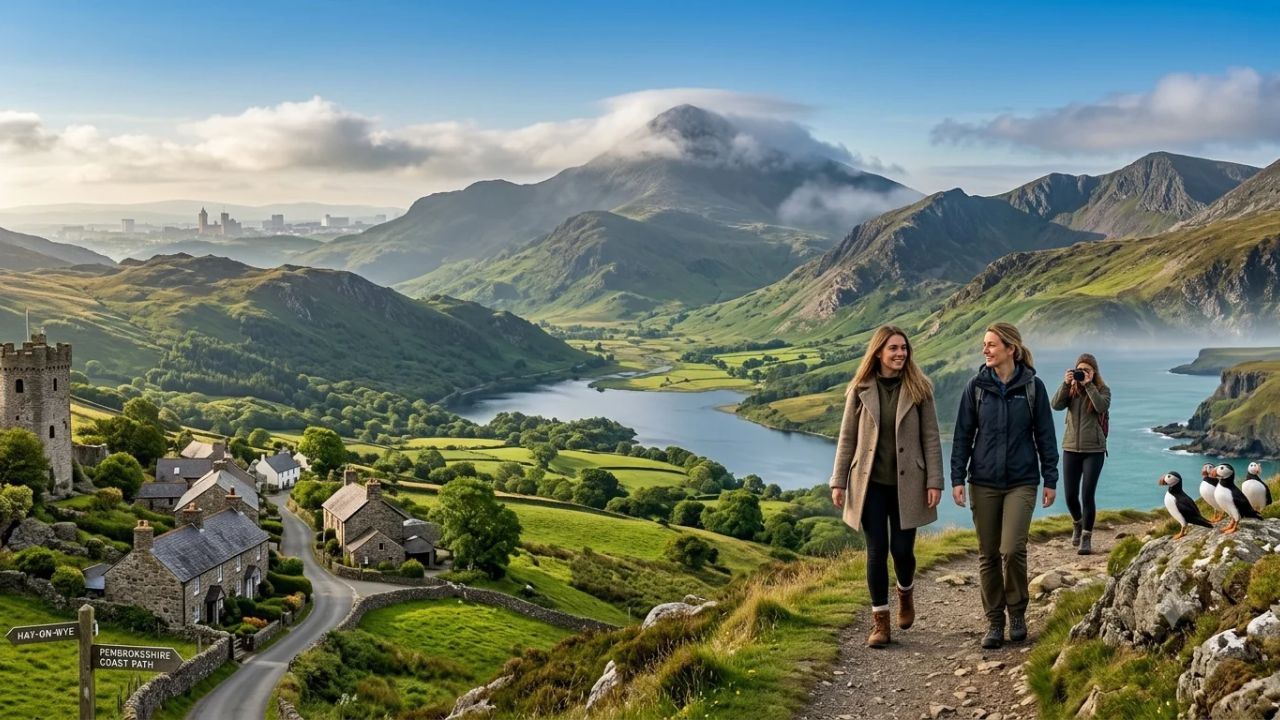
Wales has established itself as one of the premier outdoor discovery and cultural heritage destinations in the British Isles, offering a concentrated geography where dramatic mountain peaks, remote seabird sanctuaries, UNESCO industrial landscapes, and historic Celtic settlements coexist within accessible travel corridors. From the alpine heights of Yr Wyddfa in Eryri to the tidal shores of Ynys Llanddwyn and the engineering wonder of Pontcysyllte Aqueduct, the nation provides an expansive year-round canvas for hikers, cultural travelers, and wildlife enthusiasts.
Positioned along the western flank of Great Britain between England and the Irish Sea, Wales—known natively in the Welsh language as Cymru—presents travelers with an extraordinary diversity of environments across a remarkably compact territory. According to Visit Wales, the official tourism agency of the Welsh Government, international and domestic visitors are increasingly drawn to destinations that pair active outdoor adventure with authentic living culture. The living presence of the Welsh language (Cymraeg), visible across bilingual signage, community traditions, and place names, enriches every journey with a distinctive national identity.
Rather than confining visits to a single city break or coastal resort, modern itineraries link diverse regional ecosystems. Travelers can hike glacial mountain ridgelines in the morning, tour medieval castles or underground coal collieries in the afternoon, and savor coastal seafood along protected marine shores by dusk. The following comprehensive guide examines twelve defining destinations that showcase the breadth, beauty, and historical depth of Welsh travel.
========================================================================================
WALES (CYMRU) GEOGRAPHIC & TOURISM MOSAIC
========================================================================================
Regional Territory                   Geographic Profile                Signature Tourism Assets
----------------------------------------------------------------------------------------
North Wales (Gwynedd & Conwy)        High alpine peaks, slate quarries,Eryri National Park, Yr Wyddfa,
                                     rugged coastlines, island straits.Ynys Môn, castles of Edward I.
----------------------------------------------------------------------------------------
Mid & Border Wales (Powys & Wye)     Rolling moorlands, river valleys, Hay-on-Wye book town, Wye Valley,
                                     historic market towns, priories.  Llanthony Priory, Gospel Pass.
----------------------------------------------------------------------------------------
Southwest Wales (Pembrokeshire)      Limestone cliffs, sandy coves,    Pembrokeshire Coast Path, Skomer
                                     offshore islands, Celtic sites.   puffins, Preseli Hills bluestones.
----------------------------------------------------------------------------------------
South Wales (Glamorgan & Valleys)    Capital metropolis, industrial    Cardiff Castle, Cardiff Bay,
                                     mining valleys, scenic peninsulas.Gower AONB, Big Pit Blaenavon.
========================================================================================
Eryri National Park (Snowdonia): Alpine Drama and Dark Sky Sanctuaries
Situated in northwest Wales, Eryri National Park (traditionally known in English as Snowdonia) represents the mountainous crown of the country. Established in 1951 as the first national park in Wales, Eryri spans 823 square miles of jagged volcanic peaks, deep glacial cirques, cascading waterfalls, and mirror-still mountain lakes (llynoedd).
========================================================================================
ERYRI NATIONAL PARK: KEY SUMMITS & HIKING CORRIDORS
========================================================================================
Mountain Peak / Landmark             Elevation                         Trail Profile & Distinctive Feature
----------------------------------------------------------------------------------------
Yr Wyddfa (Snowdon)                  1,085 Metres (3,560 Feet)         Highest peak in Wales; accessible via
                                                                       Llanberis Path, PYG Track, or Railway.
----------------------------------------------------------------------------------------
Cader Idris                          893 Metres (2,930 Feet)           Dramatic southern peak; glacial cirque
                                                                       lake Llyn Cau; Arthurian legends.
----------------------------------------------------------------------------------------
Glyder Fawr & Glyder Fach            1,001 Metres (3,284 Feet)         Shattered rock scree; Cantilever Stone;
                                                                       accessed via the Devil's Kitchen.
----------------------------------------------------------------------------------------
Tryfan                               917 Metres (3,009 Feet)           Iconic scrambling peak; twin summit
                                                                       monoliths "Adam and Eve".
----------------------------------------------------------------------------------------
Ogwen Valley                         Glacial Valley Floor              World-class bouldering; basecamp for
                                                                       ascents into the Glyderau range.
========================================================================================
The park’s defining focal point is Yr Wyddfa (Mount Snowdon), the highest peak in England and Wales at 1,085 metres. The mountain can be ascended through several historic walking paths of varying difficulty, including the gradual Llanberis Path, the scenic Miners' Track past Llyn Llydaw, and the rugged PYG Track. For visitors seeking mountain panoramas without strenuous exertion, the historic Snowdon Mountain Railway has transported passengers from Llanberis to the summit station since 1896 aboard vintage steam and diesel locomotives.
Beyond its primary peak, Eryri offers dramatic hiking across the Ogwen Valley. Here, scramblers tackle the craggy spine of Tryfan or ascend through Twll Du (The Devil’s Kitchen), a dramatic chasm cleaving the cliffs beneath Glyder Fawr. In the south of the park, Cader Idris (893 metres) rises above the Mawddach Estuary, steeped in Welsh folklore that claims anyone who sleeps on its summit awakens either a poet or a madman.
Eryri is also designated as an International Dark Sky Reserve, one of only a handful globally. Thanks to minimal artificial light pollution, stargazers on clear nights can observe the arc of the Milky Way, distant nebulae, and major constellations glowing brightly above the silhouetted peaks.
Bannau Brycheiniog National Park (Brecon Beacons): Glacial Ridges and Market Towns
Covering 520 square miles across southern and mid-Wales, Bannau Brycheiniog National Park (formerly known as the Brecon Beacons) presents a landscape of sweeping Old Red Sandstone escarpments, expansive moorland plateaus, and forested river gorges.
========================================================================================
BANNAU BRYCHEINIOG: SUMMITS & NATURAL ATTRACTIONS
========================================================================================
Landmark / Location                  Geographic Setting                Key Experience & Heritage
----------------------------------------------------------------------------------------
Pen-y-Fan                            Central Beacons Escarpment        Highest peak in South Wales (886m);
                                                                       iconic flat-topped sandstone summit.
----------------------------------------------------------------------------------------
Llyn-y-Fan Fach                      Black Mountain (Western Range)    Glacial tarn beneath sheer cliffs;
                                                                       home of the mythical "Lady of the Lake".
----------------------------------------------------------------------------------------
Crug Hywel (Table Mountain)          Above Crickhowell                 Prominent Iron Age hill fort with
                                                                       panoramic views over Usk Valley.
----------------------------------------------------------------------------------------
The Blorenge                         Near Abergavenny                  Expansive plateau overlooking the
                                                                       industrial valleys & Severn Estuary.
----------------------------------------------------------------------------------------
Waterfall Country (Ystradfellte)     Southern Limestone Belt           Deep wooded gorges; walking trails
                                                                       passing behind cascading falls.
========================================================================================
The park’s highest summit, Pen-y-Fan (886 metres), features a distinctive twin-peaked profile formed by prehistoric glacial carving. The ascent along the classic horseshoe ridge from Pont ar Daf rewards walkers with sweeping views northward toward the Cambrian Mountains and southward across the South Wales valleys.
In the western reaches of the park lies the remote Black Mountain (Y Mynydd Du), where the glacial tarn of Llyn-y-Fan Fach rests beneath amphitheater cliffs. The lake is celebrated in Welsh folklore as the dwelling of the Lady of the Lake, who married a local youth and whose sons became the legendary Physicians of Myddfai, pioneers of herbal medicine in medieval Europe.
The park is bordered by welcoming historic market towns. Abergavenny, celebrated as the culinary capital of Wales, hosts an internationally renowned food festival each September. Crickhowell, situated in the fertile Usk Valley, offers independent shops, historic coaching inns, and access to the ancient Iron Age earthworks atop Crug Hywel. Like Eryri, Bannau Brycheiniog holds International Dark Sky Reserve accreditation, offering magnificent stargazing opportunities from viewpoints across the Usk and Brecon uplands.
Pembrokeshire Coast National Park: Sea Cliffs, Coves, and Cathedral Heritage
Established in 1952, Pembrokeshire Coast National Park is the UK’s only national park designated primarily for its marine and coastal environment. Spanning 243 square miles of southwest Wales, the park encompasses dramatic sea cliffs, natural arches, sea caves, and pristine sand beaches.
========================================================================================
PEMBROKESHIRE COAST: SIGNATURE DESTINATIONS
========================================================================================
Coastal Location                     Landscape Profile                 Visitor Highlights
----------------------------------------------------------------------------------------
St Davids                            St Brides Bay Peninsula           Smallest city in Britain; historic
                                                                       12th-century cathedral and ruins.
----------------------------------------------------------------------------------------
Whitesands Beach                     St David's Head                   Wide expanse of golden sand; premier
                                                                       surfing and coastal walking base.
----------------------------------------------------------------------------------------
Tenby (Dinbych-y-pysgod)             Carmarthen Bay Coast              Picturesque pastel-colored harbor,
                                                                       medieval town walls, and sandy bays.
----------------------------------------------------------------------------------------
Solva                                Deep Glacial Fjord Valley         Historic coastal trading harbor,
                                                                       artisan galleries, and fresh crab dining.
----------------------------------------------------------------------------------------
Stackpole & Barafundle Bay           Southern Limestone Coast          Sheltered sand beach framed by dunes
                                                                       and historic landscaped lily ponds.
========================================================================================
The park is traversed by the 186-mile Pembrokeshire Coast Path, a National Trail running from St Dogmaels in the north to Amroth in the south. The trail passes remarkable geological features, including the Green Bridge of Wales (a massive natural limestone arch) and the Elegug Stacks, where thousands of guillemots and razorbills nest on vertical rock pillars.
At the western tip of the peninsula lies St Davids, officially the smallest city in the United Kingdom by virtue of its magnificent cathedral. Founded in the sixth century by Saint David, the patron saint of Wales, the settlement became one of Christendom’s great medieval pilgrimage centers. The purple sandstone cathedral, hidden in a sheltered valley beneath the town, stands adjacent to the atmospheric ruins of the 14th-century Bishop’s Palace.
Further south, the fortified harbor town of Tenby captivates visitors with its pastel-washed Georgian townhouses perched above picturesque sandy beaches. Regional transit is facilitated by Haverfordwest’s rail connection, supported by seasonal coastal bus services—such as the "Poppit Rocket" and "Coastal Cruiser"—designed to shuttle long-distance hikers between trailheads.
Skomer Island: Atlantic Puffins and Pelagic Wildlife Sanctuaries
Lying less than a mile off the western coast of Pembrokeshire, Skomer Island is one of the most significant marine bird sanctuaries in the North Atlantic. Managed by the Wildlife Trust of South and West Wales, the national nature reserve is protected under stringent conservation guidelines to safeguard fragile burrow-nesting habitats.
========================================================================================
SKOMER ISLAND: AVIAN POPULATION & WILDLIFE CALENDAR
========================================================================================
Avian Species                        Breeding Population Tally         Observation Window & Setting
----------------------------------------------------------------------------------------
Atlantic Puffin (Fratercula arctica) Over 40,000 Breeding Birds        April to Early August;
                                                                       The Wick cliffside burrows.
----------------------------------------------------------------------------------------
Manx Shearwater                      Over 350,000 Breeding Pairs       World's largest colony;
                                                                       Nocturnal arrivals after sunset.
----------------------------------------------------------------------------------------
Common Guillemot & Razorbill         Thousands of Pairs                May to July; crowded cliff ledges
                                                                       and sheer vertical rock stacks.
----------------------------------------------------------------------------------------
Atlantic Grey Seal                   Hundreds of Resident Seals        Autumn pupping season (Sept–Nov);
                                                                       sheltered rocky coves and beaches.
----------------------------------------------------------------------------------------
Red-Billed Chough                    Resident Breeding Pairs           Year-round; aerial acrobatics
                                                                       along coastal cliff margins.
========================================================================================
Visitors embark on a passenger boat from Martin’s Haven, undertaking a 15-minute crossing across the turbulent waters of Jack Sound. Upon landing, a four-mile perimeter walking trail allows travelers to explore the plateau landscape.
The headline attraction between May and July is the Atlantic puffin. Unlike many remote colonies globally where birds nest on inaccessible ocean cliffs, Skomer’s puffins have excavated burrows directly adjacent to the footpath network, particularly around The Wick. Visitors can sit quietly along marked boundaries and watch puffins waddle within feet of their boots, bills packed with glistening sandeels gathered to feed underground chicks.
Skomer also hosts the largest breeding colony of Manx shearwaters on the planet, with over 350,000 pairs. Because shearwaters are vulnerable to predatory gulls on land, they return to their burrows exclusively under cover of total darkness, filling the midnight island air with surreal, haunting vocalizations. Due to high visitor interest, daily landing permits are strictly limited, making advance online booking essential.
Ynys Môn (Anglesey) and the Preseli Hills: Ancient Celtic Landscapes
Wales contains an extraordinary concentration of prehistoric and megalithic monuments, with two regions offering particularly deep encounters with antiquity: Ynys Môn (Anglesey) in the north and the Preseli Hills in the southwest.
========================================================================================
PREHISTORIC & CELTIC MONUMENTS ACROSS WALES
========================================================================================
Monument / Site Name                 Location                          Archaeological & Mythological Status
----------------------------------------------------------------------------------------
Pentre Ifan                          Preseli Hills (Pembrokeshire)     Largest Neolithic portal dolmen in Wales;
                                                                       massive 16-foot capstone balanced delicately.
----------------------------------------------------------------------------------------
Bryn Celli Ddu                       Ynys Môn (Anglesey)               Neolithic passage tomb aligned with
                                                                       the rising sun on the summer solstice.
----------------------------------------------------------------------------------------
Carn Goedog & Craig Rhos-y-felin     Preseli Hills (Pembrokeshire)     Identified geological quarry source
                                                                       for the inner bluestones of Stonehenge.
----------------------------------------------------------------------------------------
Ynys Llanddwyn                       Ynys Môn (Anglesey)               Tidal island sanctuary dedicated to
                                                                       Saint Dwynwen, Welsh patron of lovers.
----------------------------------------------------------------------------------------
The Golden Road                      Preseli Ridge (Pembrokeshire)     Seven-mile ancient trackway running past
                                                                       Bronze Age burial cairns and hill forts.
========================================================================================
Separated from the North Wales mainland by the Menai Strait, Ynys Môn was the historic sanctuary of the Celtic Druids prior to the Roman conquest in 60 CE. Today, the island’s 130-mile coastline features pristine expanses like Traeth Lligwy and Traeth Mawr. At Ynys Llanddwyn, accessible at low tide, travelers discover the romantic ruins of a 16th-century church dedicated to Saint Dwynwen, surrounded by pine forests, maritime dunes, and panoramic views across the waters of Caernarfon Bay to the peaks of Eryri.
In northern Pembrokeshire, the wild heather moorlands of the Preseli Hills hold a profound archaeological mystery. Geological research has confirmed that the spotted dolerite "bluestones" forming the inner circle of Stonehenge were quarried here over 4,500 years ago and transported more than 140 miles to Wiltshire. Hikers along The Golden Road, an ancient ridgeway trail spanning seven miles across the spine of the hills, encounter remarkable monuments such as Pentre Ifan, a 5,000-year-old Neolithic burial chamber whose 16-foot capstone balances with delicate grace upon three slender upright stones.
Swansea and the Gower Peninsula: Coastal Splendor and Literary Legacy
The southern coast around Swansea presents an engaging union of urban industrial regeneration, literary history, and coastal beauty.
========================================================================================
SWANSEA & GOWER PENINSULA: HIGHLIGHTS & ATTRACTIONS
========================================================================================
Asset / Location                     Category                          Key Heritage & Coastal Profile
----------------------------------------------------------------------------------------
5 Cwmdonkin Drive (Swansea)          Literary Birthplace               Birthplace and childhood home of poet
                                                                       Dylan Thomas; restored 1914 interior.
----------------------------------------------------------------------------------------
National Waterfront Museum           Industrial Maritime Heritage      Interactive maritime history celebrating
                                                                       Welsh coal, copper, and shipping trade.
----------------------------------------------------------------------------------------
Rhossili Bay & Worm's Head           Coastal Panorama                  Three-mile golden sand sweep; tidal
                                                                       promontory resembling a sea dragon.
----------------------------------------------------------------------------------------
Oxwich Bay                           Marine Recreation & Nature        Broad sandy bay bordered by saltmarsh,
                                                                       dune reserves, and maritime woodland.
----------------------------------------------------------------------------------------
The Gower Coast Path                 Long-Distance Walking             39-mile trail linking coastal villages,
                                                                       hidden limestone coves, and headlands.
========================================================================================
Swansea is indelibly linked to the legacy of poet and dramatist Dylan Thomas, who famously described his hometown as an "ugly, lovely town." Visitors can tour Thomas’s birthplace at 5 Cwmdonkin Drive in the Uplands district, explore manuscripts at the Dylan Thomas Centre, and stroll through the revitalized Maritime Quarter.
Directly west of Swansea lies the Gower Peninsula, designated in 1956 as the United Kingdom’s very first Area of Outstanding Natural Beauty (now designated a National Landscape). The peninsula features dramatic limestone sea cliffs, sheltered inlets like Brandy Cove, and vast sandy sweeps like Oxwich Bay.
At Gower's westernmost tip, Rhossili Bay consistently ranks among the finest beaches in Europe. Stretching for three miles of unspoiled sand, the bay terminates at Worm's Head, a long tidal island resembling a resting sea dragon that can only be crossed on foot during a two-and-a-half-hour window on either side of low tide. The 39-mile Gower Coast Path links Mumbles lighthouse with the northern saltmarshes of Crofty, providing exceptional walking through diverse coastal habitats.
Wye Valley and Hay-on-Wye: River Landscapes and the World’s Book Capital
Straddling the border between Wales and England, the Wye Valley was the birthplace of modern British tourism. During the late eighteenth century, when the Grand Tour of continental Europe was disrupted by warfare, wealthy travelers embarked on the "Wye Tour," navigating the lower River Wye by boat to admire picturesque ruins and dramatic river gorge scenery.
========================================================================================
WYE VALLEY & HAY-ON-WYE: CULTURAL & SCENIC HIGHLIGHTS
========================================================================================
Landmark / Town                      Location & Setting                Significance & Experience
----------------------------------------------------------------------------------------
Hay-on-Wye (Y Gelli Gandryll)        Upper Wye (Powys Border)          The world's original "Book Town";
                                                                       over 30 independent second-hand bookshops.
----------------------------------------------------------------------------------------
Hay Festival of Literature & Arts    Hay-on-Wye                       Global cultural gathering in late May;
                                                                       Nobel laureates, authors, and thinkers.
----------------------------------------------------------------------------------------
Tintern Abbey                        Lower Wye Valley                  Magnificent 12th-century Cistercian ruins;
                                                                       immortalized by William Wordsworth.
----------------------------------------------------------------------------------------
Symonds Yat Rock                     Wye Gorge Overlook                Limestone crag 120m above river;
                                                                       premier peregrine falcon nesting site.
----------------------------------------------------------------------------------------
Llanthony Priory                     Vale of Ewyas (Black Mountains)   Haunting Augustinian priory ruins;
                                                                       remote valley hiking basecamp.
========================================================================================
At the northern edge of the valley lies Hay-on-Wye, universally celebrated as the world's premier "Town of Books." Established in the 1960s by bibliophile Richard Booth, the town houses more than thirty independent bookshops specializing in antiquarian manuscripts, poetry, science, and rare literature. Each May, the town hosts the world-famous Hay Festival of Literature & Arts, drawing hundreds of thousands of readers, writers, and cultural enthusiasts for ten days of intellectual exchange.
Downstream in the Lower Wye Valley, the soaring roofless shell of Tintern Abbey stands beside the tidal river, surrounded by wooded valley slopes. Founded by Cistercian monks in 1131, the abbey was dissolved during the reign of Henry VIII, its atmospheric Gothic arches later immortalized by Romantic poet William Wordsworth. Walkers can ascend through ancient woodlands to the Devil’s Pulpit, a limestone pinnacle offering breathtaking elevated views across the abbey and river loop.
Blaenavon and Llangollen: Industrial Powerhouses and Engineering Marvels
Wales was a primary engine of the global Industrial Revolution, supplying the coal, iron, and slate that built international infrastructure across five continents. Two destinations celebrate this heritage through UNESCO World Heritage status.
========================================================================================
WELSH INDUSTRIAL & ENGINEERING HERITAGE LANDMARKS
========================================================================================
Historic Site                        Location                          Preserved Heritage & Experience
----------------------------------------------------------------------------------------
Big Pit National Coal Museum         Blaenavon (South Wales Valleys)   Authentic colliery (1880–1980);
                                                                       underground mining descent to 300 feet.
----------------------------------------------------------------------------------------
Blaenavon Ironworks                  Blaenavon                         Preserved 18th-century blast furnaces;
                                                                       early cast-iron steam engine housing.
----------------------------------------------------------------------------------------
Pontcysyllte Aqueduct                Llangollen (Dee Valley)           UNESCO masterpiece designed by Thomas
                                                                       Telford; iron trough 38m above River Dee.
----------------------------------------------------------------------------------------
Llangollen Steam Railway             Dee Valley (Llangollen to Corwen) Standard-gauge heritage steam train
                                                                       running ten scenic miles through valley.
========================================================================================
At Blaenavon, in the South Wales Valleys, the landscape preserves the complete ecosystem of an early industrial mining community. The centerpiece is the Big Pit National Coal Museum, a former working coal mine that operated from 1880 to 1980. Visitors don miner's helmets, battery belts, and cap lamps to board a mining cage that drops 300 feet down the shaft into the coal seams. Guided by former professional miners, tours lead through pitch-black subterranean workings, explaining the physical demands, hazards, and social camaraderie of the men, women, and pit ponies who fueled global industry.
In northeast Wales, the picturesque town of Llangollen is framed by the dramatic Pontcysyllte Aqueduct, constructed between 1795 and 1805 by civil engineering pioneer Thomas Telford. Standing 38 metres above the River Dee and spanning 307 metres, the aqueduct carries the Llangollen Canal within a cast-iron trough supported by eighteen slender masonry pillars. Visitors can cross the structure on foot along a narrow railed walkway or aboard a canal narrowboat, floating high above the valley canopy.
Llangollen also serves as a hub for outdoor recreation along the River Dee, including whitewater rafting and canoeing, while each July it hosts the International Musical Eisteddfod, bringing performers from over fifty nations together in song and dance.
Cardiff (Caerdydd): Capital Culture, Castles, and Waterfront Regeneration
As the capital city of Wales, Cardiff offers an engaging urban contrast to the country’s wild countryside. Once the greatest coal-exporting seaport in the world, contemporary Cardiff has transformed its maritime and industrial assets into a vibrant cultural capital.
========================================================================================
CARDIFF URBAN & CULTURAL LANDMARKS
========================================================================================
City Landmark                        Setting & Location                Visitor Highlights
----------------------------------------------------------------------------------------
Cardiff Castle                       City Center                       Roman fort walls, Norman shell keep,
                                                                       lavish Victorian Gothic palace interiors.
----------------------------------------------------------------------------------------
Bute Park & Arboretum                Adjacent to Castle (River Taff)   130 acres of landscaped historic gardens;
                                                                       national tree collections & riverside path.
----------------------------------------------------------------------------------------
National Museum Cardiff              Civic Center (Cathays Park)       World-renowned Impressionist art;
                                                                       archaeology and natural history galleries.
----------------------------------------------------------------------------------------
Wales Millennium Centre              Cardiff Bay Waterfront            Iconic performing arts venue clad in
                                                                       Welsh slate; home to Welsh National Opera.
----------------------------------------------------------------------------------------
The Senedd                           Cardiff Bay Waterfront            Transparent glass and timber home of the
                                                                       Welsh Parliament (Welsh legislative body).
========================================================================================
In the heart of the city stands Cardiff Castle, a complex that illustrates two millennia of history. Visitors can inspect Roman defensive masonry, climb the steep earthen mound to the 12th-century Norman keep, and tour the opulent Victorian Gothic palace apartments created for the Third Marquess of Bute by eccentric architect William Burges, featuring gilded ceilings, intricate woodcarvings, and stained-glass murals.
Behind the castle, Bute Park provides 130 acres of green arboretum parkland along the River Taff, leading directly to the National Museum Cardiff, which houses one of Europe’s finest collections of Impressionist and Post-Impressionist paintings, including masterworks by Monet, Renoir, and Cézanne.
To the south, the former Bute Docks have been transformed into Cardiff Bay, a scenic freshwater lagoon enclosed by the Cardiff Bay Barrage. The waterfront is anchored by the Wales Millennium Centre, an architectural marvel constructed from Welsh slate, copper, and timber that hosts major touring theatrical productions and the Welsh National Opera. Water taxis link the city center with the bay, allowing travelers to transition smoothly between historic shopping arcades and waterfront dining.
Comparing the Twelve Defining Destinations of Wales
The following comprehensive synthesis outlines the primary attractions and recommended experiences across the twelve iconic Welsh destinations:
========================================================================================
THE TWELVE PILLAR DESTINATIONS OF WALES TRAVEL
========================================================================================
Destination          Primary Attraction                Recommended Experience
----------------------------------------------------------------------------------------
Wales (National)     Living Celtic & Linguistic Heritage Bicultural country touring & historic castle visits
Swansea & Gower      Rhossili Bay & Dylan Thomas Lore  Coastal hiking, beach surfing, & literary exploration
Eryri National Park  Yr Wyddfa (1,085m) & Alpine Peaks Mountain scrambling, hiking, & dark sky stargazing
Hay-on-Wye           Thirty Independent Bookshops      Book collecting, literary festivals, & river paddling
Blaenavon            Big Pit National Coal Museum      Underground mine shaft descent & ironworks touring
Bannau Brycheiniog   Pen-y-Fan (886m) & Glacial Tarns  Ridge hiking, waterfall walking, & dark sky viewing
Ynys Môn (Anglesey)  Traeth Llanddwyn & Coastal Path   Coastal beach holidays, coastal walks, & druid archaeology
Skomer Island        Atlantic Puffin Breeding Colonies Wildlife photography & seabird observation
Wye Valley           Tintern Abbey Ruins & River Gorge Scenic hiking, historic abbey visits, & falcon viewing
Preseli Hills        Stonehenge Bluestone Quarries     Prehistoric archaeology & Golden Road ridge hiking
Pembrokeshire Coast  186-Mile Coastal Trail & Cliffs   Long-distance trekking, sea kayaking, & cathedral visits
Cardiff Capital      Cardiff Castle & Waterfront Bay   Urban sightseeing, world-class museums, & arts performances
Llangollen           Pontcysyllte Aqueduct (UNESCO)    Canal narrowboat cruising, steam rail, & music festivals
========================================================================================
Seasonal Travel Intelligence and Responsible Tourism in Wales
Effective travel planning in Wales requires an understanding of regional weather patterns, public transportation networks, and environmental stewardship guidelines.
========================================================================================
SEASONAL TRAVEL MATRIX FOR WALES
========================================================================================
Season & Months      Climatic Dynamics                 Optimal Activities & Planning Note
----------------------------------------------------------------------------------------
Spring               Mild temperatures, blooming gorse Coastal hiking, historic garden touring,
(March to May)       and heather, active lambing.      spring festivals; avoid peak holiday crowding.
----------------------------------------------------------------------------------------
Summer               Long daylight hours (16+ hours),  Peak puffin viewing on Skomer; warm beach
(June to August)     warmest coastal sea temperatures. swimming; advance accommodation bookings vital.
----------------------------------------------------------------------------------------
Autumn               Golden forest foliage, changing   Wye Valley and Beacons forest walking;
(September to Nov)   moorland hues, crisp hiking air.  Abergavenny food festival; packing waterproofs.
----------------------------------------------------------------------------------------
Winter               Snowcapped mountain summits,      Museum visits, cozy pub fires, stargazing;
(December to Feb)    frosty ridges, short daylight.    checking mountain passes and rail schedules.
========================================================================================
Navigating the Welsh Transit Spine
While major highways connect coastal South Wales (M4) and coastal North Wales (A55), the rural interior is characterized by scenic, narrow secondary roads and single-track mountain lanes with passing places. Drivers should budget ample journey times and exercise caution around wandering hill sheep.
For travelers utilizing public transit, Transport for Wales (TfW) operates an extensive railway network. Iconic rail journeys include the Cambrian Coast Line, which hugs the coastline between Machynlleth and Pwllheli, and the Heart of Wales Line, which cuts through rural farmland between Shrewsbury and Swansea. The integrated TrawsCymru long-distance express bus network bridges rail gaps, linking northern and southern regional hubs reliably.
========================================================================================
PRACTICAL VISITOR PLANNING GUIDELINES FOR WALES
========================================================================================
Planning Domain      Action Item                       Operational Detail
----------------------------------------------------------------------------------------
Mountain Safety      Check Met Office mountain forecasts;Weather changes rapidly on peaks;
                     carry map, compass, and layers.   carry sturdy waterproof boots and emergency gear.
----------------------------------------------------------------------------------------
Island Reservations  Pre-book Skomer boat tickets via  Daily quotas are strictly enforced;
                     Wildlife Trust portal in spring.  crossings depend on favorable sea conditions.
----------------------------------------------------------------------------------------
Rail Connectivity    Download Transport for Wales app; Advance fares save up to 50%;
                     purchase flexible regional passes.Rover passes cover combined bus and rail networks.
----------------------------------------------------------------------------------------
Cultural Engagement  Learn basic Welsh greetings;      Welsh is widely spoken in northwestern
                     respect bilingual signage.        communities; "Diolch" means thank you.
----------------------------------------------------------------------------------------
Environmental Care   Follow the Countryside Code;      Keep dogs on leads near farm livestock;
                     stick to marked trail paths.      pack out all waste to protect sensitive habitats.
========================================================================================
Heritage Conservation and Responsible Tourism
The sustainability of Welsh tourism depends on the preservation of its fragile natural habitats and ancient monuments. High visitor footfall on mountain routes like Yr Wyddfa and Pen-y-Fan causes soil erosion; walkers are urged to remain strictly within established trail margins to prevent hillside scarring. In wildlife reserves like Skomer Island, visitors must maintain respectful distances from burrows and avoid obstructing puffin flight paths.
By supporting independent village guesthouses, local pubs, and regional food producers, travelers contribute directly to the economic vitality of Welsh-speaking rural communities, ensuring that the ancient culture and wild majesty of Cymru continue to thrive for generations to come.
Related Travel Guides
- Vietnam Airlines Expands India Footprint with Daily Hanoi Flights from Delhi and Bengaluru Starting December 2026
- North Carolina Blends NASCAR Racing Heritage with Yadkin Valley Wine Tourism: How Childress Vineyards Captures International Travel Inflows in 2026
- Tunisia Welcomes Nine Million Visitors as Tourism Receipts Reach 7.15 Billion Dinars: Mediterranean Expansion and 2030 Strategic Roadmap
- Zurich Secures Second Place Globally as Safest City for International Tourists in 2027: Leads Worldwide Rankings in Public Transit Safety and Urban Connectivity
This article is for informational purposes. Flight routes, passenger regulations, visa rules, and transit advisories are subject to change by airlines and aviation authorities. Readers are advised to verify schedules and travel documentation with relevant carriers and border agencies before departure.
Related Stories

France and European Source Markets Drive Tunisia Tourism Receipts to $2.38 Billion as Long-Haul Corridors Expand in 2026

US and Canada Drive South Africa Overseas Air Travel as September 2026 Arrivals Reveal Critical Gateway Hub Dynamics