
Virgin Australia, Korean Air, and HK Express Adjust Fares: Fuel Surcharges Squeeze Travel Budgets
Korean Air and HK Express introduce selective international fuel surcharge hikes in October 2026 while Virgin Australia signals domestic fare increases amid a 3% capacity cut monitored by the ACCC.

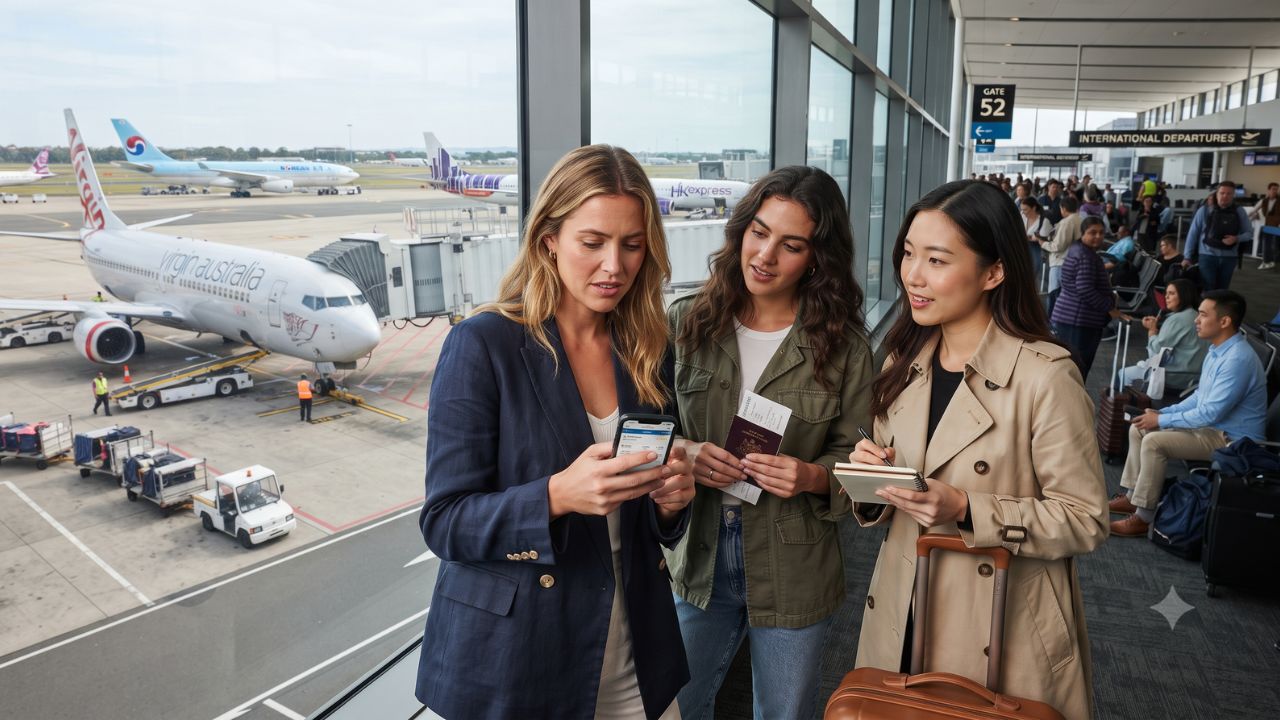
With domestic airfares in Australia already tracking 4% higher year-on-year and international fuel surcharges jumping by up to KRW 12,000 per sector across key holiday routes, Asia-Pacific airlines are quietly tightening pricing mechanisms for October 2026. Rather than issuing across-the-board base fare revisions, carriers are deploying targeted adjustments tailored to specific distance bands, departure markets, and ticketing windows. In Australia, Virgin Australia notified travel trade partners on Friday, 9 October 2026, of impending domestic airfare increases to offset persistent aviation turbine fuel expenses, following an August operational forecast to trim domestic seat capacity by 3% through 31 December 2026.
Simultaneously, North Asian carriers are recalibrating ancillary tariffs. Flag carrier Korean Air adjusted its distance-based international fuel surcharges for tickets issued between 1 and 31 October 2026, pushing up one-way levies on popular leisure corridors to Southeast Asia while unexpectedly trimming surcharges on select long-haul European and Australian sectors. Across regional budget networks, low-cost carrier HK Express enacted sector-level surcharge increases of KRW 9,000 for departures out of South Korea and PHP 340 for journeys originating in the Philippines. For consumers, these selective adjustments demonstrate how modern yield management separates headline ticket prices from the final out-of-pocket invoice.
Asymmetric Cost Pressures: Jet Fuel Volatility and Departure Market Surcharges
Commercial airlines across the Asia-Pacific region are navigating uneven operating environments shaped by refined jet fuel price volatility, foreign exchange swings, and resilient leisure passenger traffic. In Australia, the regulatory baseline documented by the Australian Competition and Consumer Commission (ACCC) highlights an ongoing upward trend in baseline travel costs. The competition watchdog reported that average Australian domestic airfares were 3.5% higher year-on-year in May 2026 and 4.0% higher in June, before showing slight moderation in July. This macro trend follows a roughly 5% cumulative rise across economy and business class airfares tracked by the ACCC since March 2026.
Virgin Australia's latest move to raise fares follows an earlier strategic decision to curb domestic flying capacity by 3% across the second half of 2026. By withdrawing available seat kilometers while demand across corporate and leisure corridors remains firm, carriers create an artificial floor under average yields. Under these tight supply conditions, airlines can pass elevated fuel procurement expenses onto passengers without risking empty passenger cabins.
In East Asia, the surcharge modifications reveal an increasingly fragmented approach to passenger cost recovery. Instead of altering base published tariffs—which often require formal government tariff filings or regulatory approvals—airlines adjust variable fuel surcharges month by month. Crucially, these adjustments are not uniform. Korean Air's October tariff schedule raised surcharges on medium-haul leisure routes linking Seoul Incheon with Thailand, Singapore, and Indonesia, while simultaneously lowering surcharges on long-haul routes to Sydney, London, and Paris. This divergence confirms that airlines apply surcharges strategically based on route-level passenger price sensitivity rather than purely on mathematical fuel burn.
Surcharge Revisions and Capacity Adjustments: Airline Breakdown
Understanding the practical impact of these adjustments requires examining specific route classifications, currency denominations, and regulatory parameters across the three carriers.
| Airline Operator | Route Sector / Market | Previous Fee Level | October 2026 Fee Level | Net Adjustment | Regulatory & Booking Parameter |
|---|---|---|---|---|---|
| Korean Air | Incheon (ICN) – Bangkok / Singapore | KRW 153,000 | KRW 162,400 | +KRW 9,400 | One-way surcharge; applies to tickets issued 1–31 Oct 2026 |
| Korean Air | Incheon (ICN) – Jakarta / Denpasar | KRW 156,000 | KRW 168,000 | +KRW 12,000 | Reflects elevated leisure holiday demand into Southeast Asia |
| Korean Air | Incheon (ICN) – Sydney / London / Paris | KRW 325,500 | KRW 322,000 | -KRW 3,500 | Long-haul band reduction; counters softening intercontinental yields |
| HK Express | South Korea Departure Origin | KRW 65,000 | KRW 74,000 | +KRW 9,000 | Per-sector fuel surcharge effective 1 October 2026 |
| HK Express | Philippines Departure Origin | PHP 1,505 | PHP 1,845 | +PHP 340 | Per-sector fuel surcharge effective 1 October 2026 |
| HK Express | Hong Kong Departure Origin | Unchanged | Unchanged | No change | Hong Kong point-of-sale departures protected from October rise |
| Virgin Australia | Australian Domestic Network | Base Fare Baseline | Unspecified Increase | Upward Revision | Trade notification issued 9 Oct; follows 3% capacity cut |
| Australian Market | All Domestic Carriers (ACCC Data) | 2025 Fare Baseline | +3.5% (May) / +4.0% (Jun) | Positive Yield | Monitored under federal ACCC mandate extended to Dec 2029 |
Expert Analysis: Origin Arbitrage, The Ticketing Date Shield, and ACCC Capacity Scrutiny
For travelers booking itineraries across the Asia-Pacific network, the direct consequence of localized surcharge restructuring is point-of-origin price arbitrage. Under HK Express's October pricing framework, a passenger purchasing a round-trip ticket originating in Seoul or Manila pays significantly higher fuel surcharges than a passenger booking the exact same aircraft seats originating in Hong Kong. Airlines exploit differences in local consumer demand elasticity and varying civil aviation regulatory oversight across jurisdictions. Travelers can occasionally circumvent these directional surcharges by booking open-jaw itineraries or ticketing international journeys as separate point-of-origin sectors in lower-cost markets.
The pricing pressure this creates means holidaymakers must pay strict attention to the ticketing date shield. Under international tariff rules governing Korean Air's October notice, the applicable fuel surcharge is locked at the precise moment the electronic ticket is issued, irrespective of whether the physical flight takes place in November, December, or early 2027. Furthermore, Korean Air's binding conditions explicitly confirm that subsequent monthly surcharge increases cannot be collected retroactively on tickets that have already been fully issued. Conversely, travelers holding un-ticketed reservations or saved agent quotes remain vulnerable to overnight price jumps if ticketing occurs after monthly tariff adjustments take effect.
In Australia, the intersection of airline capacity discipline and rising airfares has triggered intensified regulatory oversight. The Australian Federal Government confirmed in its 2026–27 Budget that the ACCC's dedicated airline competition monitoring program will be formally extended through December 2029. The watchdog specifically warned that domestic capacity cuts—such as Virgin Australia's 3% scheduled reduction through the final six months of 2026—place immediate upward pressure on ticket prices when passenger volumes remain stable.
For consumers, the cumulative financial impact becomes pronounced on multi-sector family bookings. While a KRW 12,000 or PHP 340 surcharge adjustment appears modest on a single one-way ticket, the expense multiplies rapidly across a family of four traveling on a multi-leg itinerary. When layered on top of unbundled baggage fees, seat selection charges, and booking administration penalties, discretionary travel budgets are absorbed before ground transportation and lodging expenses are incurred.
Key Takeaways
- Korean Air increased October international fuel surcharges by up to KRW 12,000 on Southeast Asian routes like Bali and Bangkok, while reducing long-haul charges to Sydney and London by KRW 3,500.
- HK Express raised fuel surcharges for flights originating in South Korea (KRW 74,000) and the Philippines (PHP 1,845), but kept Hong Kong departure surcharges unchanged.
- Virgin Australia notified travel agents on 9 October 2026 of impending domestic airfare hikes to counter elevated jet fuel expenses, following an earlier 3% capacity cut.
- ACCC monitoring confirmed Australian domestic airfares ran 4.0% higher year-on-year in June 2026, prompting the federal government to extend airline price surveillance until December 2029.
- Fuel surcharges apply strictly based on the date of ticket issuance, protecting passengers who hold fully ticketed reservations against retroactive price increases.
FAQ: Asia-Pacific Flight Surcharges and Fares October 2026
Did Korean Air increase fuel surcharges on all international flights in October 2026?
No. Surcharges increased on medium-haul leisure routes to Southeast Asia, including Bangkok, Singapore, Jakarta, and Bali, but decreased by KRW 3,500 on long-haul routes connecting Incheon with Sydney, London, and Paris.
Can an airline charge an additional fuel fee if the surcharge rises after booking?
No. Under international ticketing regulations, once an airline ticket is issued and paid for, the carrier cannot retroactively collect additional fuel surcharges, even if surcharge rates increase before the departure date.
Why is Virgin Australia raising airfares while reducing seat capacity?
Virgin Australia is raising airfares to offset elevated aviation fuel costs. Reducing domestic seat capacity by 3% tightens available inventory, allowing the carrier to sustain higher passenger yields and protect operating profit margins.
Does the HK Express fuel surcharge increase apply to flights departing Hong Kong?
No. The October surcharge hike applies exclusively to flights originating in South Korea and the Philippines. Surcharges for flights originating in Hong Kong remained unchanged from September levels.
Scrutinizing point-of-origin fee schedules and locking in ticket issuance dates remain the most dependable strategies for shielding travel budgets against selective airline surcharge increases.
Related Travel Guides
Disclaimer
This article is for informational and educational purposes only. It does not constitute legal, financial, or professional advice. While we strive to provide accurate and up-to-date information, travel policies, regulations, and conditions change rapidly. Always verify information with official sources before making travel decisions. Nomad Lawyer makes no representations about the accuracy, reliability, completeness, or suitability of the information provided. Readers should consult qualified professionals for advice specific to their circumstances. The views expressed in this article are those of the author and do not necessarily reflect the views of Nomad Lawyer.
Preeti Gunjan
Contributor & Community Manager
A passionate traveller and community builder. Preeti helps grow the Nomad Lawyer community, fostering engagement and bringing the reader experience to life.
Learn more about our team →