
Virgin Australia Cuts 3% of Domestic Flights in 2026 Amid Record Profits and Fuel Spikes
Virgin Australia is reducing domestic capacity by 3% to offset rising jet fuel costs, despite reporting double-digit EBIT growth and record passenger volumes across its network.

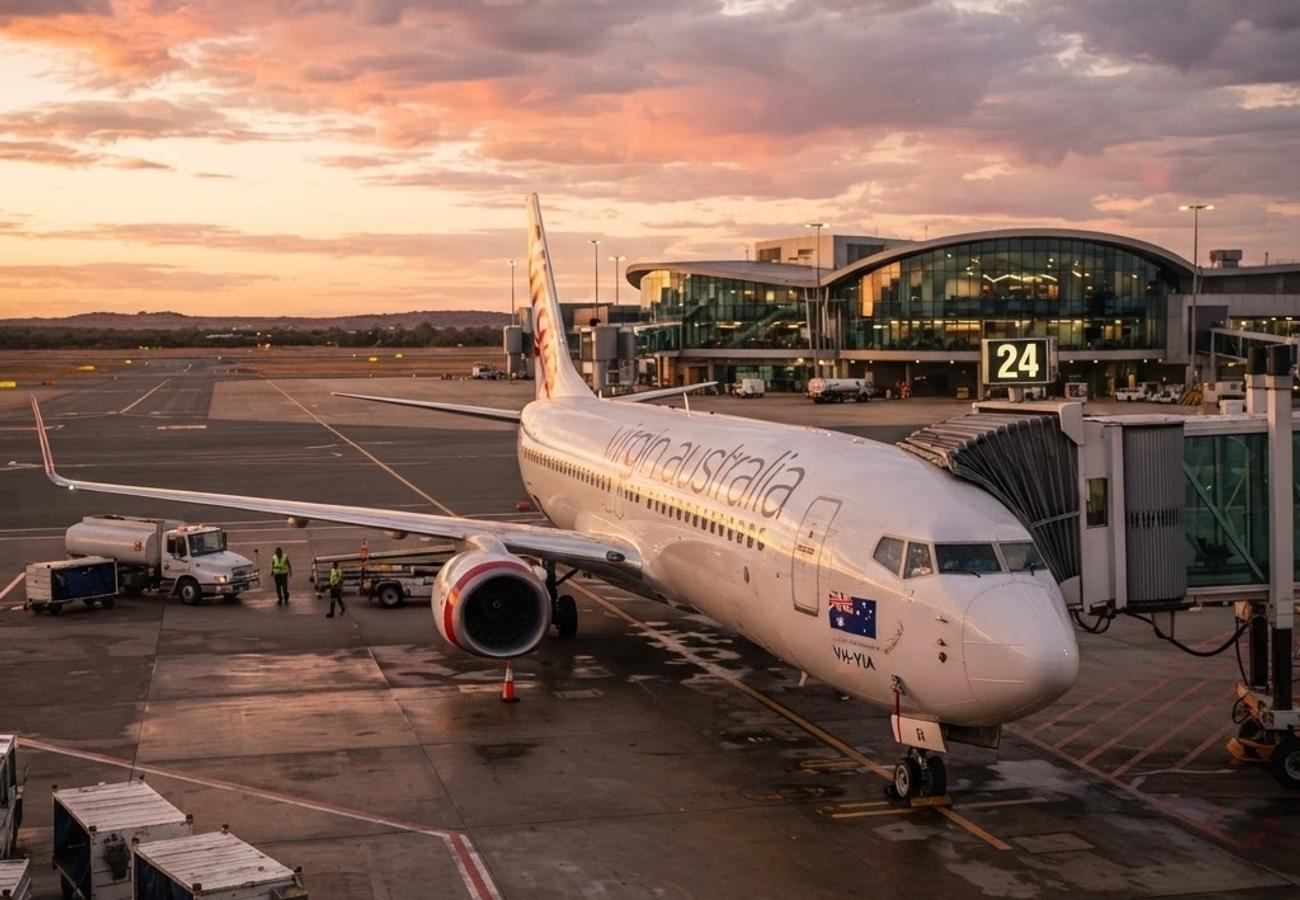
Image generated by AI
Strong leisure demand and a double-digit increase in underlying EBIT have pushed Virgin Australia to a decisive financial turnaround, yet the carrier is now trimming domestic capacity by 3% to shield margins from volatile global oil markets.
The Strategic Shift in Domestic Capacity
Virgin Australia is implementing a targeted reduction in its domestic flight schedule, cutting capacity by approximately 3% over the coming months. This move primarily affects high-frequency trunk routes and specific regional services. This follows a previous 1% reduction during the June quarter of 2026, signaling a cautious approach to capacity management in the face of soaring jet fuel costs.
While the cut represents a small fraction of the airline's roughly 3,000 weekly domestic and international services, the impact is most acute on busy corridors. By removing flights where alternative time slots are available, the airline aims to maintain essential connectivity while increasing yields per seat. This strategy mirrors a broader trend in the Australian market, where major carriers are tightening domestic supply to redeploy assets toward higher-yielding international markets.
Profitability Amidst Market Volatility
The decision to trim flights comes during a period of significant financial recovery. Financial reports for the 2024 and 2025 financial years reveal back-to-back underlying earnings before interest and tax (EBIT) in the hundreds of millions of dollars. For the first half of the 2026 financial year, the core airlines segment reported a double-digit increase in underlying EBIT compared to the previous year.
This surge is driven by several factors:
- Revenue Growth: A solid rise in revenue per available seat kilometre.
- Demand Drivers: High leisure demand and event-driven travel.
- Market Dynamics: The Australian Competition and Consumer Commission (ACCC) notes that limited competition, following the downsizing of smaller rivals, has underpinned elevated fares.
- Fiscal Milestone: Virgin Australia has fully utilized its historic tax losses and returned to a tax-paying position.
The New Normal for Australian Air Travel
Domestic travel in Australia is currently operating at or near record levels. Government transport statistics show that by late 2024 and into 2025, passenger volumes on major routes—such as Sydney to Melbourne—returned to or surpassed pre-pandemic levels. December 2024 specifically marked one of the busiest months on record for the carrier.
However, seat capacity has lagged behind this demand surge. The withdrawal of Tigerair and the financial instability of other low-cost challengers have reduced competitive pressure. Consequently, even a modest 3% capacity reduction can lead to higher ticket prices and fewer last-minute bargains, particularly during school holidays and long weekends.
Navigating Fuel Costs and Passenger Experience
The immediate catalyst for these cuts is the volatility of the global oil market, exacerbated by conflict in the Middle East. Virgin Australia expects its fuel expenditure to increase by tens of millions of dollars this financial year, despite extensive hedging strategies.
To protect profit margins, the airline has combined capacity cuts with fare increases across economy and business classes. While this may result in higher costs for the traveler, there is a potential upside: a less stretched schedule. Company data from 2024 and 2025 indicates that on-time performance and completion rates improved as the airline focused on disciplined growth rather than over-expansion.
Visitor Insider Tips for Australia 2026
For those navigating the current high-fare, low-capacity environment, a few strategic adjustments can save significant costs and stress:
- The "Mid-Week Pivot": Avoid flying on Sundays and Mondays, which are now heavily skewed toward corporate travel and high-yield pricing. Tuesday and Wednesday afternoons currently offer the best chance for lower fares on trunk routes.
- Regional Alternatives: With high-frequency city pairs seeing capacity cuts, look for "hidden" regional hubs. Sometimes flying into a secondary airport and taking a short coach transfer can be 20-30% cheaper during peak periods.
- Booking Windows: The "last-minute deal" is largely extinct in the current market. For peak 2026 travel, the optimal booking window has shifted to 4-6 months in advance to avoid the steep price hikes associated with limited seat availability.
- Loyalty Leverage: Utilize partner-linked routes. With the expanded cooperation between Virgin Australia and Qatar Airways, travelers can often find better value by bundling international and domestic legs into a single itinerary.
Tourism Outlook
Despite short-term trims, the long-term trajectory remains bullish. Virgin Australia expects domestic capacity to increase again in the second half of the 2026 financial year and into early 2027. The focus is shifting toward a "measured pace" of growth to avoid oversupply while continuing to capitalize on the durable travel boom.
The integration of international traffic into domestic networks, supported by strategic partnerships, suggests that Australia's aviation sector is moving toward a high-value, high-efficiency model. For the traveler, this means that while the era of ultra-cheap domestic flights may be over, the reliability and quality of service are expected to stabilize.
The Australian skies are getting crowded, but the airlines are finally making it pay.
Related Travel Guides
Disclaimer
This article is for informational and educational purposes only. It does not constitute legal, financial, or professional advice. While we strive to provide accurate and up-to-date information, travel policies, regulations, and conditions change rapidly. Always verify information with official sources before making travel decisions. Nomad Lawyer makes no representations about the accuracy, reliability, completeness, or suitability of the information provided. Readers should consult qualified professionals for advice specific to their circumstances. The views expressed in this article are those of the author and do not necessarily reflect the views of Nomad Lawyer.
Raushan Kumar
Founder & Lead Developer
Full-stack developer with 11+ years of experience and a passionate traveller. Raushan built Nomad Lawyer from the ground up with a vision to create the best travel and law experience on the web.
Learn more about our team →