
Lightning Strike and Flash Flooding Disrupt Operations at London Luton Airport in August 2026
A sudden lightning strike on air traffic control systems and airfield flooding caused flight suspensions and passenger chaos at London Luton Airport during the 2026 summer peak.

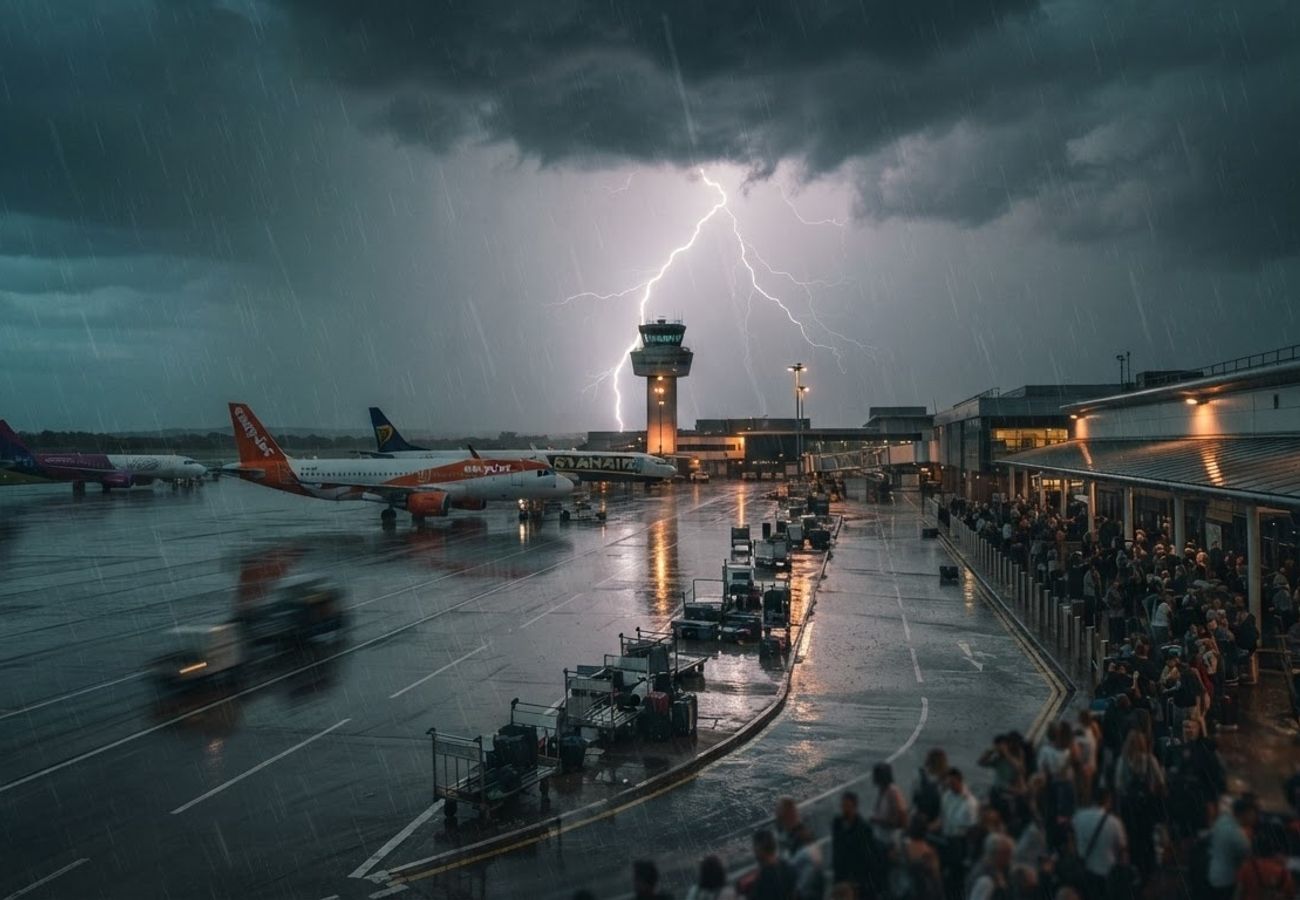
Image generated by AI
A sudden lightning strike on air traffic control (ATC) equipment combined with flash flooding on the airfield forced London Luton Airport to suspend flight operations on August 28, 2026, leaving thousands of summer holidaymakers stranded.
The disruption occurred during a period of intense thunderstorms, hitting the airport at the height of the summer travel season. The combination of technical failures and hazardous ground conditions triggered an immediate halt to arrivals and departures, creating a logistical bottleneck for budget carriers and leisure travelers.
Lightning Strike Paralyzes Air Traffic Control at Luton
Reports indicate that flights at London Luton Airport were grounded for over an hour after a lightning strike directly impacted air traffic control systems. The incident took place during a window of severe weather, characterized by frequent lightning and torrential rain. Because the strike affected the critical infrastructure used to manage aircraft movements, safety protocols mandated a total suspension of operations while systems were inspected and verified.
The timing of the strike was particularly damaging, as the airport was operating at peak capacity with dense schedules of short-haul flights to European destinations. According to industry observers, the immediate result was a wave of diversions, with several inbound aircraft forced to land at other UK airports. Simultaneously, outbound services were cancelled, leaving passengers who had booked package holidays or city breaks in a state of uncertainty.
Aviation safety guidelines dictate that when lightning is detected in the immediate vicinity of an airfield, ground operations must be restricted to protect personnel and equipment. While modern commercial aircraft are engineered to withstand lightning strikes during flight, the infrastructure on the ground—specifically ATC towers and navigation aids—is more vulnerable. Industry data from air navigation providers suggests that even a brief system outage can lead to hours of recovery time as aircraft are repositioned and schedules are rebuilt.
Flash Flooding Complicates Airfield Recovery
The technical failure caused by the lightning strike was compounded by severe flash flooding. Intense downpours led to significant water accumulation on parts of the airfield and critical access roads, hindering the airport's ability to resume normal operations quickly. Reports from the scene described standing water in operational zones and degraded surface conditions that made ground movement hazardous.
This incident mirrors a growing trend of weather-related airport closures. For example, in 2023, Fort Lauderdale-Hollywood International Airport experienced similar flooding that temporarily shut down operations. These events demonstrate that even if a runway remains structurally sound, the accumulation of water on service roads and taxiways can effectively paralyze an airport by blocking fuel trucks, baggage tugs, and emergency vehicles.
Passenger accounts shared via social media and local news outlets depicted scenes of chaos, with massive queues forming at check-in counters and departure gates. Many travelers reported a total lack of communication regarding whether their flights would be delayed by a few hours or cancelled entirely.
Ground Safety Protocols Freeze Ramp Activity
Beyond the ATC failure, the presence of lightning triggered "red alert" safety protocols for ground crews. According to aviation safety briefings, when lightning strikes within a specific radius of the airfield, all ramp workers, refuelling teams, and baggage handlers must evacuate the apron and seek shelter immediately.
This creates a paradoxical situation where aircraft may have landed safely and are sitting on the tarmac, but passengers remain trapped on board. Because no ground staff can safely operate jet bridges or guide planes to their gates, aircraft are left idling on the apron. In similar incidents across North America and Europe, passengers have reported waiting for over an hour after landing because ground handling was paused for safety.
At a hub like London Luton, which serves a high volume of low-cost carriers, these pauses are devastating to the "quick turnaround" model. When baggage cannot be offloaded and aircraft cannot be refuelled, the tight schedules of budget airlines collapse, leading to a ripple effect of delays that can last long after the storm has passed.
Network-Wide Ripple Effects and Residual Delays
The intersection of lightning, flooding, and peak summer demand is expected to create residual disruptions across the broader airline network. Industry analysis shows that short-term suspensions often lead to long-term instability due to crew duty-time limitations and aircraft being out of position.
When a flight is diverted from Luton to another UK airport, the aircraft and its crew are no longer where they need to be for their next scheduled leg. This often results in "knock-on" cancellations for passengers who were not even affected by the original storm. Furthermore, the increase in airport dwell times forces many passengers into unplanned overnight stays, adding significant financial and emotional stress to their journeys.
For those on complex itineraries—such as those connecting to cruises or onward international flights—a few hours of disruption at Luton can result in missed transfers and shortened vacations. Aviation bodies continue to warn that while airlines build small buffers into their schedules, localized "extreme weather events" frequently exceed these margins.
Why This Matters: The Reality for the Modern Traveler
For the traveler, the events at London Luton Airport highlight a critical vulnerability in the modern aviation ecosystem: the reliance on "just-in-time" scheduling. Most budget airlines operate with razor-thin margins of time between flights. When a lightning strike or flash flood removes even 60 minutes of operational capacity, the system does not simply "catch up"; it cascades into a state of failure.
From a legal and logistical standpoint, this creates a complex environment for passenger rights. While "extraordinary circumstances" (like severe weather) often exempt airlines from paying certain compensation, the lack of communication during the event remains a primary pain point. Travelers should be aware that ground safety protocols—which keep staff off the apron during lightning—are non-negotiable for safety, but they are the primary reason why you may find yourself stuck on a plane that has already landed.
As climate patterns shift toward more frequent and intense rainfall events, the likelihood of these "short-notice" disruptions is increasing. Travelers can no longer assume that a clear forecast at their destination means a smooth departure from their origin.
The Luton incident serves as a stark reminder that in the face of extreme weather, the most advanced aviation hubs remain fragile.
Related Travel Guides
Disclaimer
This article is for informational and educational purposes only. It does not constitute legal, financial, or professional advice. While we strive to provide accurate and up-to-date information, travel policies, regulations, and conditions change rapidly. Always verify information with official sources before making travel decisions. Nomad Lawyer makes no representations about the accuracy, reliability, completeness, or suitability of the information provided. Readers should consult qualified professionals for advice specific to their circumstances. The views expressed in this article are those of the author and do not necessarily reflect the views of Nomad Lawyer.
Naina Thakur
Contributor & Travel Specialist
Travel enthusiast and legal writer covering visa regulations, responsible tourism, and cultural journeys across global destinations.
Learn more about our team →