
Virgin Atlantic Recalibrates Heathrow Capacity as Transatlantic Flight Strategies Shift
Virgin Atlantic is modifying long-haul flight frequencies from London Heathrow to North America and India to prioritize profitability and aircraft utilization.
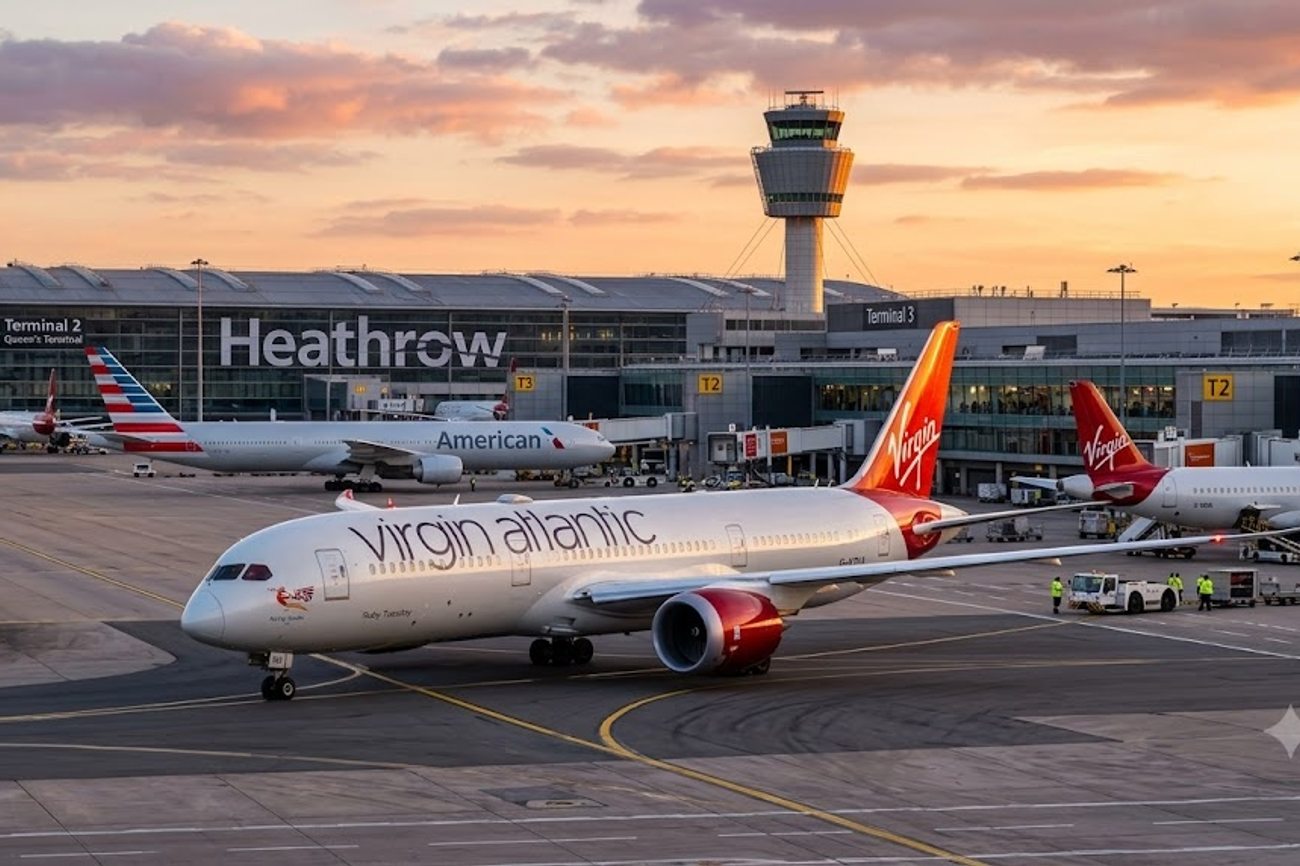
Image generated by AI
London Heathrow Operations Undergo Strategic Realignment
[London, September 5, 2026] — Virgin Atlantic is fundamentally altering its approach to long-haul capacity, implementing a series of schedule adjustments that impact its primary hub at London Heathrow. The airline has modified the frequency of several services connecting the UK to North America and India, reflecting a broader industry trend where aircraft utilization and revenue performance now outweigh the goal of simple network growth.
These operational shifts have sparked discussions regarding the future of transatlantic travel, though industry observers indicate these changes are not a withdrawal from these markets. Instead, they represent a calculated effort to balance business expansion with operational efficiency. Passengers traveling between the United Kingdom, the United States, and India are now seeing modified flight timings as the carrier seeks a more sustainable equilibrium in its global operations.
Shift Toward Precision Capacity Planning in Long-Haul Aviation
The recent adjustments to Virgin Atlantic’s network reveal a transformation in how international carriers manage their fleets. The era of rapid, unchecked expansion has been replaced by a model of "precision capacity," where flight numbers are dictated by real-time data rather than fixed annual schedules.
London Heathrow remains the epicenter of the carrier's global reach, offering access to the world's most lucrative international corridors. However, the hub is characterized by extreme competition and high operating costs. To maintain viability, airlines must navigate limited airport slots and intense pressure from Middle Eastern, European, and North American competitors.
According to operational data, Virgin Atlantic is now adjusting its frequencies based on several volatile factors:
- Fluctuating seasonal passenger demand
- Real-time aircraft availability and maintenance cycles
- Crew scheduling and regulatory requirements
- Strict airport slot management at LHR
- Route-specific market profitability
- Synergies with partner airlines
Internal operational bulletins confirm that schedules for key destinations, including New York, Miami, Los Angeles, and Seattle, have undergone temporary adjustments during specific windows. These modifications are standard network management practices designed to align supply with actual market demand.
Impact of Reduced Long-Haul Frequencies on Transatlantic Travel
Reports indicating the reduction of five long-haul services have created apprehension among frequent flyers. Given that North America is a cornerstone of Virgin Atlantic’s business model, any dip in frequency can have a ripple effect on pricing and availability.
The airline's transatlantic network serves as a vital artery for several distinct travel segments:
- Corporate Travel: High-yield business trips between financial hubs.
- Leisure Tourism: Vacationers heading to US resorts and cities.
- VFR (Visiting Friends and Relatives): Consistent demand for family connectivity.
- Academic Travel: Students and faculty moving between UK and US universities.
- International Trade: Supporting bilateral business links.
While a reduction in frequency may limit direct options during peak travel windows, these moves are categorized as frequency calibrations rather than market exits. Virgin Atlantic continues to operate an extensive international footprint, bolstered significantly by its strategic alliance with Delta Air Lines. This partnership allows for coordinated capacity, ensuring that passengers often have alternative routing options through partner networks even when the carrier's own flight frequency decreases.
Core North American Markets Maintain Strategic Importance
Despite the capacity adjustments, the United States remains a critical destination for UK-based travelers. The transatlantic corridor supports millions of annual journeys, and several key city-pairs remain indispensable to the carrier's revenue stream.
| Key Destination | Primary Market Driver | Strategic Role |
|---|---|---|
| New York | Finance & Culture | One of the world's strongest city-pair markets |
| Boston | Education & Tech | Hub for university and healthcare connectivity |
| Miami | Leisure & Cruises | Primary gateway to Florida and the Caribbean |
| Las Vegas | Entertainment | High-volume leisure and hospitality demand |
| San Francisco | Technology | Key link for Silicon Valley business travel |
The continued focus on these cities underscores that while the number of flights may fluctuate, the importance of these markets remains unchanged. The airline is simply optimizing how it serves these hubs to ensure each flight operates at maximum efficiency.
Why This Matters: The Evolution of the Passenger Experience
For the modern traveler, these shifts signal a move away from the "blanket schedule" era. From a logistical standpoint, this means that flight availability will become more volatile and highly seasonal. Travelers can no longer assume that a flight operating in July will have the same frequency in November.
From a pricing perspective, reduced capacity often leads to higher yields per seat. When an airline removes underperforming frequencies, the remaining flights often see higher load factors, which can drive up ticket prices during peak periods.
Furthermore, the increasing reliance on partnerships (such as the Virgin Atlantic-Delta link) means the "single-airline loyalty" model is evolving. Passengers are now encouraged to view their journey as a network experience rather than a point-to-point service. The ability to switch between partner carriers to find availability is becoming a necessary skill for the international traveler.
Ultimately, these changes reflect a maturation of the aviation industry. The focus has shifted from capturing market share at any cost to maximizing the profit potential of every single seat and flight hour.
Related Travel Guides
Disclaimer
This article is for informational and educational purposes only. It does not constitute legal, financial, or professional advice. While we strive to provide accurate and up-to-date information, travel policies, regulations, and conditions change rapidly. Always verify information with official sources before making travel decisions. Nomad Lawyer makes no representations about the accuracy, reliability, completeness, or suitability of the information provided. Readers should consult qualified professionals for advice specific to their circumstances. The views expressed in this article are those of the author and do not necessarily reflect the views of Nomad Lawyer.