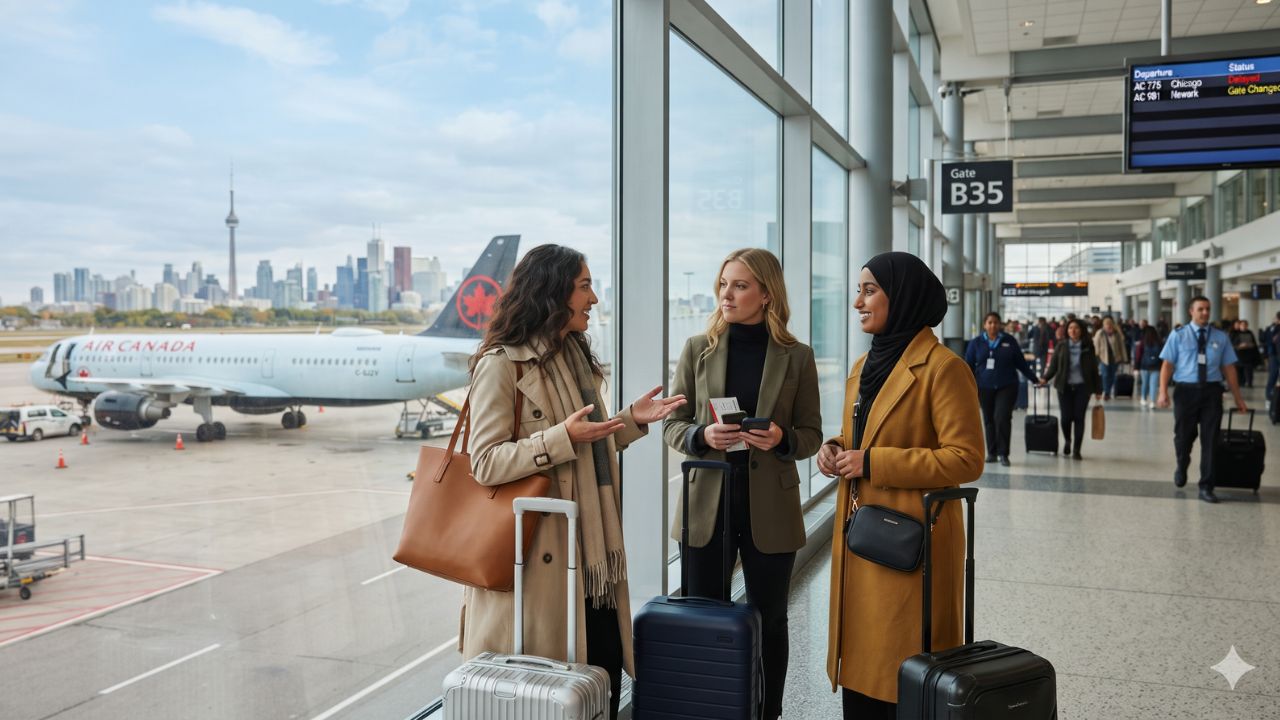
Mumbai's Dual-Airport Era: Airlines Prepare to Shift 5 Million International Passengers to Navi Mumbai


Image generated by AI
For more than eight decades, every commercial flight touching India's financial capital landed on the exact same cross-runway airfield in suburban Santacruz—making Mumbai the planet’s most heavily congested single-runway aviation system. That historic geographic monopoly is officially coming to an end. Following extensive consultations with representatives of more than 35 airlines on 28 October 2026, Mumbai International Airport Limited (MIAL) issued a firm 3 November 2026 deadline requesting carriers to present phased operational plans to shift five million annual international passengers across the harbor to Navi Mumbai International Airport (NMIA). Codenamed NMI, the new greenfield gateway will handle high-frequency Gulf and Asian routes, clearing airside space for the demolition and reconstruction of aging Terminal 1B at Chhatrapati Shivaji Maharaj International Airport (CSMIA / BOM).
The Infrastructure Pivot: Decoupling Flights for Terminal 1B Reconstruction
The transition to a multi-airport metropolitan system is driven by structural necessity. Starting in January 2027, MIAL will initiate the physical redevelopment of the northern section of Terminal 1B at CSMIA. The aging domestic terminal, originally constructed decades ago, requires comprehensive engineering overhauls to address safety standards and eliminate chronic tarmac choke points. By temporarily relocating international traffic equivalent to five million passengers per year, the airport operator avoids a total shutdown of domestic operations.
When completed, the wider expansion will increase Terminal 1’s annual handling volume from approximately 15 million to 20 million travelers. Across the entire CSMIA complex, combined upgrades to Terminals 1 and 2 will lift total annual capacity from 55 million to 65 million passengers. However, implementing this transition has sparked intense commercial negotiations. Foreign carriers have voiced serious concerns regarding slot redistribution and aircraft utilization, prompting the Ministry of Civil Aviation to intervene earlier in October to guarantee fair stakeholder consultations. MIAL’s 3 November deadline represents a structured coordination effort ahead of the summer 2027 timetable, rather than an immediate overnight flight migration.
The airline shift centers heavily on high-density West Asian and Southeast Asian corridors. Low-cost giant IndiGo and Adani Airport Holdings have confirmed a phased migration of 12 daily international departures to Navi Mumbai between February and July 2027. The destinations earmarked for NMI include primary expatriate corridors: Bahrain, Riyadh, Dammam, Jeddah, Madinah, Kuwait, Ras Al Khaimah, Fujairah, Muscat, Dhaka, and Jakarta, alongside a daily service to Kathmandu. Concurrently, Air India Express is preparing a phased rollout, introducing four daily domestic services from NMIA in December 2026, followed by selected international services to Jeddah, Riyadh, Dammam, Doha, Muscat, and Sharjah starting in January 2027.
Two Cities, Two Codes: Contrasting Old Sahar with the Ulwe Waterfront
Experiencing aviation in Mumbai will soon depend entirely on which side of Thane Creek your flight touches down, dividing travel between two distinct urban environments.
Departing from BOM at CSMIA immerses travelers in the quintessential heart of suburban Mumbai. Terminal 2, renowned for its monumental multi-tiered white roof and thousands of pieces of curated Indian traditional art, sits directly inside the dense urban fabric of Sahar and Andheri. The approach roads wind through century-old neighborhoods where roadside stalls steam with vada pav, coastal auto-rickshaws buzz along the Western Express Highway, and five-star luxury hotels line the perimeter. The terminal represents decades of Mumbai's commercial soul, overseen by Chhatrapati Shivaji Maharaj International Airport.
Across the bay, Navi Mumbai International Airport introduces a radically different, open coastal setting. Situated in the Ulwe-Panvel belt in Raigad district, NMIA is bordered by tidal estuaries, mangroves, and the rolling green ridges of the Western Ghats. The passenger terminal, designed with sweeping aerodynamic curves inspired by the national lotus flower, features expansive glass facades that look out over coastal waterways rather than crowded city tenements. Nearby, planned township nodes like Belapur and Kharghar offer wide boulevards, quiet residential avenues, and dockside seafood restaurants serving fresh Maharashtrian surmai fry and coastal crab curry, highlighting the regional tourism potential promoted by the Maharashtra Tourism Development Corporation.
Route Transitions, Airport Relocation Timelines, and Capacity Milestones
The operational schedule, capacity targets, and confirmed airline migrations defining Mumbai's dual-airport transition are outlined in the verified table below:
| Milestone / Strategic Component | Operational Target or Metric |
|---|---|
| Old Airport Identifier | Chhatrapati Shivaji Maharaj International Airport (CSMIA / BOM) |
| New Airport Identifier | Navi Mumbai International Airport (NMIA / NMI) |
| Airlines Consulted by MIAL | Over 35 domestic and foreign carriers on 28 October 2026 |
| Transition Plan Submission Deadline | 3 November 2026 |
| Initial Passenger Relocation Volume | ~5 million international passengers annually shifted to NMI |
| Terminal 1B Construction Commencement | Scheduled for January 2027 (Northern section demolition) |
| CSMIA Terminal 1 Capacity Expansion | Expanding from ~15 million to 20 million passengers annually |
| CSMIA Total Overall Capacity Expansion | Expanding from ~55 million to 65 million passengers annually |
| Air India Express Domestic Launch | 4 daily domestic flights from NMIA starting December 2026 |
| Air India Express International Launch | Selected Gulf flights (Jeddah, Riyadh, Dammam, etc.) from Jan 2027 |
| IndiGo International Shift Window | 12 daily departures migrating progressively Feb – July 2027 |
| IndiGo Relocated Destinations | Bahrain, Riyadh, Dammam, Jeddah, Madinah, Kuwait, UAE, Muscat, Dhaka, Jakarta, Kathmandu |
Visitor Insider Tips for Navigating Mumbai's Two-Airport Era
As airlines begin splitting flights across BOM and NMI, travelers must adopt new planning habits to avoid costly transit errors:
- Verifying Three-Letter Airport Codes: Always check the three-letter IATA code printed on your booking confirmation before heading out. BOM indicates the existing Santacruz/Sahar airport, while NMI denotes Navi Mumbai. Because distance between the two facilities exceeds thirty-five kilometers through heavy urban traffic, arriving at the incorrect airport will almost certainly result in a missed flight.
- The Atal Setu Express Transit Hack: When traveling between South Mumbai (Colaba, Fort, Marine Drive) and the new Navi Mumbai Airport (NMI), bypass the notoriously congested Sion-Panvel Highway. Instruct your taxi to take the Mumbai Trans Harbour Link (MTHL / Atal Setu) from Sewri. The 21.8-kilometer sea bridge sweeps across Mumbai Bay in roughly twenty minutes, providing spectacular views of migrating pink flamingos in the Sewri mudflats during winter months.
- Connection Buffers Between Split Terminals: If you hold a self-transferred domestic connection arriving at BOM and an international departure leaving from NMI, do not book layovers under four hours. Factoring in baggage collection, highway traffic across the harbor, and security screening, transit between the two airfields requires substantial time buffers.
- Dining and Lodging Bases in Navi Mumbai: If departing early from NMI, consider staying overnight in the CBD Belapur or Vashi sectors rather than South or Western Mumbai. Modern business hotels in Navi Mumbai cost roughly half the rate of luxury properties near Sahar, and local Konkani seafood restaurants along the Palm Beach Road offer exceptional local dining away from tourist crowds.
Cultural and Environmental Context: Coastal Estuaries, Flamingos, and Urban Expansion
The creation of Navi Mumbai International Airport is one of the most complex infrastructure undertakings in modern Indian history. Constructed on reclaimed land near the confluence of the Panvel and Amba rivers, the project required leveling hills, diverting river channels, and clearing coastal mudflats.
The region around Thane Creek is a globally recognized wetland habitat, designated as a Ramsar site for hosting hundreds of thousands of lesser and greater flamingos that feed on intertidal algae between November and May. To safeguard this delicate ecosystem, regional development authorities have established mangrove conservation zones and mandated strict environmental monitoring of aircraft approach paths to minimize bird-strike risks and acoustic disturbance. For travelers, the opening of NMI symbolizes Mumbai's eastward expansion, shifting economic gravity away from the cramped colonial peninsula of South Mumbai toward a planned coastal metropolis integrated with electric metro lines and sustainable mass transit.
FAQ: Mumbai and Navi Mumbai Airport Transition 2026–2027
Will all international flights move to Navi Mumbai Airport? No. Only selected international services—initially totaling approximately five million annual passengers, predominantly high-frequency Gulf and South Asian routes—are shifting to NMI. Primary long-haul European and North American routes will continue operating from CSMIA Terminal 2.
When do commercial passenger flights begin at Navi Mumbai Airport? Air India Express plans four daily domestic flights starting in December 2026, with international services following in January 2027. IndiGo will progressively shift twelve daily international flights between February and July 2027.
How do I travel between Mumbai Airport (BOM) and Navi Mumbai Airport (NMI)? The airports are linked via road corridors including the Atal Setu (MTHL) and the Sion-Panvel Highway. Pre-paid taxis, app-based cabs, and dedicated electric express buses connect the two facilities, requiring sixty to ninety minutes depending on traffic.
Why is Terminal 1 at CSMIA undergoing major reconstruction? Terminal 1B is an aging facility with structural and safety limitations. Demolishing and rebuilding its northern section will expand Terminal 1’s annual capacity from 15 million to 20 million passengers, modernizing domestic operations.
Whether boarding beneath the peacock ceilings of Sahar or lifting off across the sunlit tidal creeks of Navi Mumbai, the spirit of India's commercial capital continues to reach boldly across the horizon.
Related Travel Guides
The 10 Best Coastal Seafood Spots in Navi Mumbai, According To Reddit
This article is for informational purposes. Flight routes, passenger regulations, visa rules, and transit advisories are subject to change by airlines and aviation authorities. Readers are advised to verify schedules and travel documentation with relevant carriers and border agencies before departure.
Related Stories
Aviation Gridlock Sweeps Asia with 320 Cancellations and 2,010 Delays Across Mumbai, Jakarta, and Delhi

American Airlines Issues Profit Warning as Fuel Costs Surge: What It Means for 2027 International Travelers