Vietnam’s Ta Xua Wins Asia’s Leading Emerging Destination at World Travel Awards 2026 as Mountain Tourism Surges

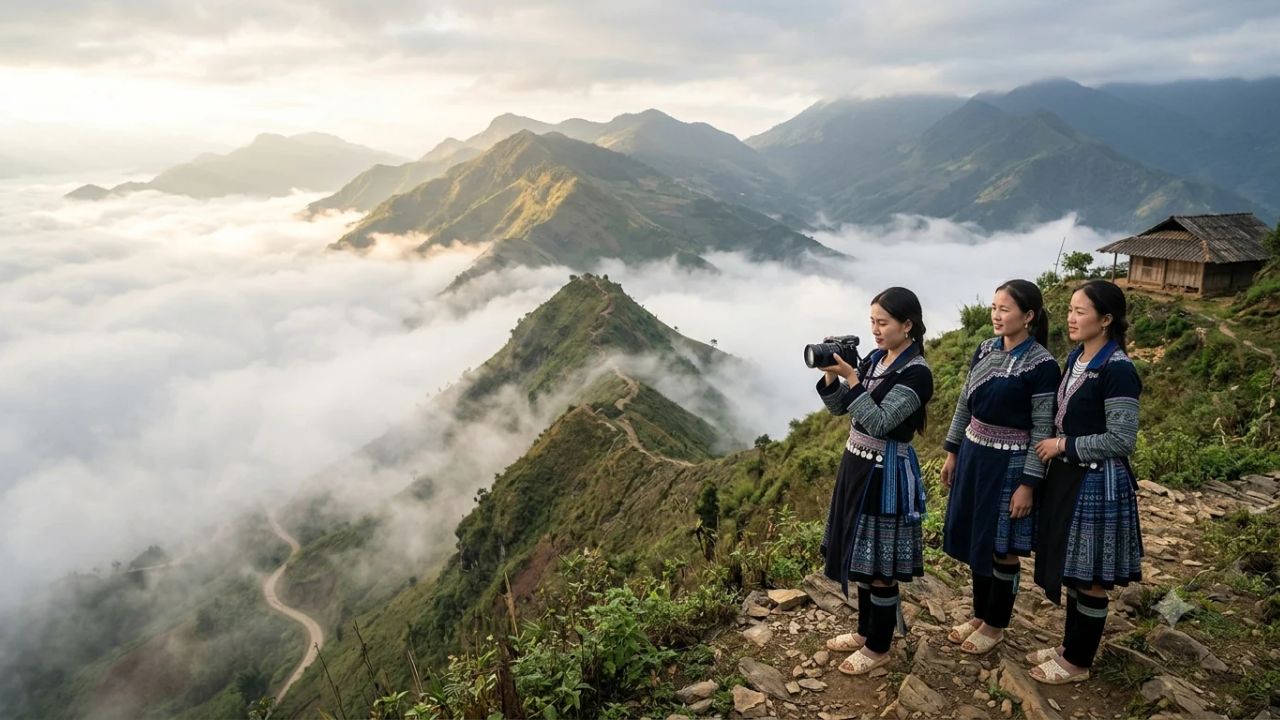
SON LA — In a landmark triumph for Vietnam’s high-altitude eco-tourism sector, the remote mountain commune of Ta Xua in Son La province has been crowned Asia’s Leading Emerging Tourism Destination at the World Travel Awards (WTA) 2026 gala ceremony in the Maldives. Entering the competitive category for the first time, the highland enclave—perched more than 1,500 meters above sea level along the southern fringes of the Hoang Lien Son range—outpaced prominent regional nominees, including Thailand’s Koh Kood, Malaysia’s historic Melaka, Japan’s Morioka, Indonesia’s Sumba Island, and fellow Vietnamese nominee Ninh Binh. The international accolade puts global focus on Ta Xua’s ethereal seas of clouds, living Mong ethnic heritage, and community homestay economy, while accelerating a national conversation regarding sustainable infrastructure, carrying capacities, and highland environmental conservation.
The international recognition marks a turning point in Vietnam’s regional development strategy for the rugged Northwest (Tây Bắc) corridor. For generations, the mountainous commune in Bac Yen district was characterized by isolated subsistence agriculture, steep terrain, and economic vulnerability. Today, its dramatic meteorological phenomena—where dense oceanic cloud inversions fill mountain valleys between autumn and spring—have transformed the once-sleepy farming outpost into one of Southeast Asia's most coveted destinations for nature photographers, adventure trekkers, and cultural travelers. However, with visitor numbers accelerating and commercial developers eyeing the ridgelines, provincial authorities and community elders face the delicate task of converting international acclaim into durable, equitable economic growth without eroding the pristine ecology and indigenous identity that define Ta Xua's appeal.
       TA XUA TOPOGRAPHY AND CLOUD-INVERSION PROFILE (2026)

  ALTITUDE (METERS)
    3,000m +-----------------------------------------------------------+
           |                                                           |
    2,865m |                    [ TA XUA HIGH PEAK ]                   |
           |                     Dense Ancient Forest                  |
    2,000m |                /                            \             |
           |   [ DINOSAUR SPINE ]                   [ WINDY PEAK ]     |
    1,600m |   (Narrow Ridge Trek)                 (Viewpoint Hub)     |
           |----------+-----------------------------------+------------+
    1,500m |          |  TA XUA VILLAGE & HOMESTAYS (88)  |            |
           |==========+===================================+============|
           | ~ ~ ~ ~ ~ ~ ~ ~ ~ ~ ~ ~ ~ ~ ~ ~ ~ ~ ~ ~ ~ ~ ~ ~ ~ ~ ~ ~ ~ |
      800m | ~ ~ ~ ~ ~ SEA OF CLOUDS (BIỂN MÂY) INVERSION LAYER ~ ~ ~ ~|
           | ~ ~ ~ (Trapped High-Moisture Fog from Da River Valley) ~ ~|
      400m | ~ ~ ~ ~ ~ ~ ~ ~ ~ ~ ~ ~ ~ ~ ~ ~ ~ ~ ~ ~ ~ ~ ~ ~ ~ ~ ~ ~ ~ |
           +-----------------------------------------------------------+
               BAC YEN BASIN & DA RIVER TRIBUTARIES (VALLEY FLOOR)
Outpacing Regional Heavyweights at the World Travel Awards
The World Travel Awards, established in 1993 and recognized globally as an authoritative benchmark of travel excellence, held its 2026 Asia, Oceania, and Indian Ocean Gala Ceremony in the Maldives, gathering hundreds of hospitality leaders, ministers of tourism, and destination planners. Ta Xua’s victory in the category of Asia’s Leading Emerging Tourism Destination represents an extraordinary achievement for a destination that lacked paved vehicular access and basic telecommunications networks little more than a decade ago.
What distinguished Ta Xua among its competitors was its combination of raw, uncommercialized nature and authentic community engagement. While nominees like Thailand's Koh Kood offer polished luxury beach resorts and Melaka provides urban colonial heritage, Ta Xua delivered an untouched mountain narrative. In contrast to overdeveloped mass-market mountain resorts across the region, Ta Xua has retained its organic scale, where tourism is driven by indigenous Mong families operating timber-framed homestays rather than international corporate hotel conglomerates.
The award elevates the profile of Son La province within Vietnam’s broader tourism portfolio. Historically, international travelers visiting northern Vietnam concentrated their itineraries in Hanoi, Halong Bay, and Sapa in Lao Cai province. The emergence of Ta Xua creates a complementary western loop, connecting the tea plantations of Moc Chau, the mountain passes of Bac Yen, the hot springs of Tram Tau in Yen Bai, and the historical valleys of Dien Bien Phu. This geographic dispersion helps alleviate acute overtourism pressures in Sapa while distributing tourist spending into remote ethnic minority communities.
                  NORTHWEST VIETNAM REGIONAL TOURISM CIRCUIT

   [ HANOI CAPITAL GATEWAY ]
              |
              v
   [ MOC CHAU HIGHLANDS ] --------> Green Tea Hills & Plum Blossom Valleys
              |
              v
   [ TA XUA (BAC YEN) ] ----------> 1,500m Cloud Inversions & Mong Homestays
              |
              +----------------------------+
              |                            |
              v                            v
   [ TRAM TAU (YEN BAI) ]       [ DIEN BIEN PHU VALLEY ]
   Thermal Springs & Terraces   Historic Battlefield & Cultural Sites
Topography of the Cloud-Hunting Capital: The Meteorology of Biển Mây
Situated along the southern tail of the Hoang Lien Son range, Ta Xua encompasses three primary mountain peaks forming a massive natural amphitheater that shelters deep, steep-sided river valleys. The highest summit reaches 2,865 meters above sea level, ranking among the ten highest peaks in Vietnam. The commune’s global reputation rests primarily on its extraordinary meteorological conditions, which produce what Vietnamese travelers term biển mây—literal oceans of rolling clouds.
This cloud phenomenon is the result of microclimatic topography. The deep valleys below Ta Xua collect massive volumes of moisture evaporated from the nearby Da River (Black River) and surrounding rainforest canopies. Between October and April, cold continental air masses descending from the north collide with humid valley air, creating an atmospheric temperature inversion. Dense stratus clouds become physically trapped within the mountain basin, unable to rise above the surrounding granite ridges.
From vantage points along the peaks, travelers look down upon an unbroken, billowy white cloud deck that stretches across the horizon, with isolated forested mountain summits protruding through the mist like islands in an ocean. The cloud sea often remains stable for several consecutive hours after sunrise, creating magical lighting conditions as early dawn transitions from deep indigo to warm golden hues.
Beyond its cloudscapes, Ta Xua features spectacular geological formations that challenge trekking enthusiasts:
- The Dinosaur Spine (Sống lưng khủng long): Located in Hang Dong village, this geological wonder is a razor-thin mountain ridge protruding into a vast valley. Measuring barely one to two meters in width with steep precipices dropping hundreds of meters on either side, the trail resembles the scaly vertebrae of a prehistoric reptile. Hikers walking the 1.5-kilometer path are surrounded on three sides by mist and open sky.
- Turtle Rock (Mỏm cá heo and Mỏm đá rùa): Natural cantilevered granite outcrops projecting horizontally over sheer abysses, providing dramatic framing for landscape photography.
- The Lonely Tree (Cây cô đơn): A solitary, wind-sculpted tree standing on a high knoll overlooking the winding Suoi Sap riverbed, silhouetted against alpine skies.
- Ancient Shan Tuyet Tea Forests: Centuries-old tea trees (Camellia sinensis var. assamica) growing wild on misty ridges above 1,600 meters. Covered in white moss and lichens, these gnarled trees yield high-grade Shan Tuyet tea, celebrated for its honeyed amber liquor, floral aroma, and delicate white downy buds.
       SOCIO-ECONOMIC METRICS: TA XUA TOURISM TRANSFORMATION

  INDICATOR                          2024 BASELINE     2025 RECORDED     H1 2026 (JAN-JUN)
  +--------------------------------+-----------------+-----------------+-------------------+
  | Annual Visitor Arrivals        | ~85,000 Guests  | 130,000 Guests  | 56,000 Guests     |
  | Gross Tourism Receipts (VND)   | 42 Billion VND  | 75 Billion VND  | 54 Billion VND    |
  | Gross Tourism Receipts (USD)   | $1.65 Million   | $2.95 Million   | $2.12 Million     |
  | Certified Local Homestays      | 45 Households   | 88 Households   | 96 Households     |
  | Commune Poverty Rate           | 37.00%          | 33.64%          | 31.80% (Est.)     |
  | Average Spend per Visitor      | 494,000 VND     | 576,000 VND     | 964,000 VND       |
  +--------------------------------+-----------------+-----------------+-------------------+
Economic Transformation: From Subsistence Farming to Community Tourism
The rapid expansion of tourism has transformed the economic landscape of Ta Xua. Historically, the local economy was constrained by rugged geography, thin mountain soils, and cold winter frosts, forcing Mong households to rely on shifting cultivation of highland maize, upland rice, and small-scale livestock rearing. Food insecurity was widespread, and the commune suffered from high poverty rates.
The emergence of community-based tourism (CBT) has unlocked alternative livelihood opportunities that generate cash income directly within village hamlets. By the conclusion of 2025, Ta Xua welcomed approximately 130,000 visitors, generating an estimated VND 75 billion (roughly US$2.9 million) in tourism revenue. This influx of capital contributed directly to poverty alleviation, with the commune’s official poverty rate dropping from 37% in 2024 to 33.64% by late 2025.
During the first six months of 2026, the upward trajectory accelerated. The commune hosted approximately 56,000 visitors, generating VND 54 billion in tourism receipts. A critical economic trend revealed by these figures is a notable increase in average visitor spending: travelers spent roughly VND 964,000 per person in early 2026, compared to VND 576,000 in 2025. This 67% increase in per-capita spending indicates that visitors are staying longer, booking higher-quality wooden bungalows, hiring local trekking guides, and purchasing regional specialty products.
The primary engine of this economic democratization is the community homestay model. By mid-2026, 88 local households had registered certified homestays and guesthouses, providing direct employment for hundreds of local youth as lodge hosts, kitchen cooks, housekeeping staff, and motorcycle taxi drivers (xe ôm). Family farmers who previously earned modest seasonal incomes from corn harvesting now generate steady monthly revenues by catering to domestic and international travelers, enabling families to invest in improved home sanitation, education for their children, and solar-assisted water heating systems.
Cultural Guardianship: Mong Heritage and Indigenous Traditions
A central dimension of Ta Xua’s appeal is its cultural integrity. The Mong ethnic group constitutes more than 95% of the commune's permanent population, belonging primarily to the Black Mong (Mong Đen) and White Mong (Mong Trắng) subgroups. Unlike lowland commercial tourist towns where ethnic identity is often reduced to staged evening performances, in Ta Xua, Mong culture remains an active, daily reality embedded in the landscape.
Traditional Mong residential architecture is constructed using local materials engineered to endure severe mountain weather. Houses feature timber frameworks with thick rammed-earth walls (nhà trình tường) that provide natural thermal insulation, keeping interiors cool during summer and warm during winter freezes. Roofs are traditionally tiled with split cedar or pơ mu (Fokienia hodginsii) wood shingles, which age into a soft silver-gray patina that blends into the surrounding pine and bamboo forests.
       MONG ETHNIC CULTURAL & ARTISANAL VALUE CHAIN IN TA XUA

   [ RAW MOUNTAIN BOTANICALS & FIBERS ]
   * Mountain Flax Plants (Lanh) Harvested & Stripped for Thread
   * Natural Indigo Bushes (Chàm) Fermented in Wooden Vats
   * Pure Forest Beeswax Gathered from Wild Honeycomb
                         |
                         v
   [ ANCESTRAL ARTISANAL CRAFTSMANSHIP ]
   * Hemp Fabric Hand-Woven on Traditional Wooden Looms
   * Intricate Geometric Batik Patterns Drawn with Hot Beeswax
   * Multi-Stage Indigo Dyeing Cycles Imparting Deep Lapis Hues
                         |
                         v
   [ SUSTAINABLE COMMUNITY COMMERCE ]
   * High-Value Ethical Textiles Sold Directly to Visitors
   * Authentic Cultural Workshops (Textile Dyeing & Khèn Music)
   * Direct Financial Retention by Indigenous Female Artisans
Textile craftsmanship is particularly sophisticated among Ta Xua’s female artisans. Women cultivate natural hemp (lanh) on mountain hillsides, stripping the fiber, spinning thread on hand spindles, and weaving durable fabric on backstrap looms. Intricate geometric motifs—representing mountains, bird eyes, and celestial bodies—are drawn onto the cloth using melted wild beeswax applied with copper-tipped pens (bút vẽ sáp ong). The fabric is then dipped repeatedly into wooden vats of fermented natural indigo dye before being boiled to melt away the wax, revealing crisp, off-white patterns against a deep lapis-blue background.
Music and oral traditions also remain central to communal life. The khèn—a polyphonic wind instrument crafted from six bamboo pipes connected to a carved hardwood air chamber—is played by Mong men during seasonal festivals, courtship rituals, and ancestral celebrations. Its haunting, resonant melodies echo across the valleys, reinforcing communal solidarity and cultural continuity across generations.
Environmental Pressures and Infrastructure Vulnerabilities
Despite its prestigious international award, Ta Xua’s rapid tourism ascent has created acute environmental, infrastructural, and social challenges. The fragile high-altitude ecosystem, once protected by its remote geography, is experiencing mounting pressure from uncoordinated tourism growth.
The primary physical bottleneck is transportation infrastructure. Access to Ta Xua relies on Provincial Highway DT112, a narrow, serpentine mountain road connecting the commune with the town of Bac Yen. The road features steep gradients, blind hairpin turns, and unstable cliff faces prone to destructive landslides and rockfalls during the summer monsoon season (June to September). On peak cloud-hunting weekends in winter, thousands of tourist passenger cars, sleeper buses, and motorbikes converge on the narrow road, triggering multi-hour traffic gridlocks along mountain ridges with zero shoulder space for emergency vehicles.
       TA XUA INFRASTRUCTURE & ENVIRONMENTAL RISK MATRIX

   CHALLENGE SECTOR           OBSERVED VULNERABILITY           POLICY MITIGATION MANDATE
  +-------------------------+--------------------------------+----------------------------+
  | Road Access & Safety    | Narrow DT112 highway prone to  | Widen passing bays, install|
  |                         | landslides & traffic gridlock  | rockfall barriers & safety |
  +-------------------------+--------------------------------+----------------------------+
  | Ridgeline Architecture  | Spontaneous metal homestays    | Strict zoning, height caps |
  |                         | eroding natural cliff vistas   | and traditional materials  |
  +-------------------------+--------------------------------+----------------------------+
  | Solid Waste Management  | Plastic litter along trails,   | Municipal collection hubs, |
  |                         | no central sanitary landfill   | plastic ban & trash buyback|
  +-------------------------+--------------------------------+----------------------------+
  | Wastewater Treatment    | Direct runoff from guesthouses | Mandatory multi-chamber    |
  |                         | threatening river headwaters   | septic tanks and bio-filters|
  +-------------------------+--------------------------------+----------------------------+
  | Cultural Integrity      | Outside commercial operators   | Community land protections |
  |                         | leasing land from locals       | and local guide licensing  |
  +-------------------------+--------------------------------+----------------------------+
Unregulated construction represents a severe aesthetic and environmental hazard. In the rush to capitalize on surging visitor demand, some landowners have erected multi-story concrete structures and corrugated iron shacks on steep hillsides and scenic overlooks, directly marring the natural panoramas that tourists travel to see. Around the sensitive Dinosaur Spine in Hang Dong, commercial kiosks and makeshift camping platforms have encroached onto the knife-edge ridge, increasing the risk of soil destabilization and catastrophic slope failure.
Wastewater and solid waste management systems remain underdeveloped. In remote village hamlets, many homestays rely on rudimentary single-chamber septic pits that risk leaching untreated wastewater into mountain aquifers and pristine streams that feed the Da River basin. In addition, the surge in single-use plastic bottles, snack wrappers, and beverage cans discarded by visitors along popular viewpoints has overwhelmed local collection capacities, requiring volunteer clean-up campaigns to remove refuse from steep ravines.
Strategic Governance: Politburo Resolution No. 26-NQ/TW
To resolve these growing pains, the Vietnamese government has established a clear strategic roadmap for destination management. At the national level, the guiding blueprint is Politburo Resolution No. 26-NQ/TW, issued on August 22, 2026. The landmark resolution mandates a decisive transition in national tourism planning: shifting away from the pursuit of raw visitor volume toward the development of high-value, sustainable tourism centered on environmental preservation and ethnic cultural identity.
Applying this national directive to Ta Xua, the People’s Committee of Son La Province and Bac Yen District have formulated a comprehensive master zoning and conservation framework:
- Strict Ecological Protection Zones: Banning all permanent commercial construction along the ridgeline of the Dinosaur Spine, Windy Peak, and high-altitude natural forests above 1,800 meters. These areas are designated as protected ecological reserves where only low-impact pedestrian trails and wooden safety railings are permitted.
- Vernacular Architectural Standards: Codifying building regulations that restrict maximum building heights to two stories and mandate the use of traditional materials—including native timber, local stone foundations, rammed earth finishes, and dark shingle roofs. Modern corrugated metal roofs must be painted forest green or replaced with natural thatch to eliminate visual glare across mountain valleys.
- Mandatory Environmental Standards: Requiring all commercial homestays and restaurants to install certified three-stage anaerobic septic filtration tanks to treat blackwater and greywater before discharge. Additionally, the district is establishing centralized waste transfer stations in Bac Yen to collect sorted recyclables and municipal trash.
- Community Capacity Building and Licensing: Providing subsidized vocational training for local Mong youths in hospitality management, food hygiene, foreign languages, and professional wilderness guiding. Under new regulations, outside commercial tour operators must partner with licensed local Mong guides to lead trekking excursions, ensuring that economic benefits remain anchored within village households.
Key Tourism Indicators and Sustainable Benchmarks
The following table synthesizes recorded operational data and official strategic planning benchmarks for Ta Xua’s visitor economy through 2027:
| Measurement Metric | 2024 Actual Baseline | 2025 Recorded Results | H1 2026 Recorded | 2027 Strategic Target |
|---|---|---|---|---|
| Annual Visitor Arrivals | 85,000 Visitors | 130,000 Visitors | 56,000 Visitors | 180,000 Visitors (Cap) |
| Gross Tourism Revenue | VND 42 Billion | VND 75 Billion | VND 54 Billion | VND 120 Billion |
| Average Length of Stay | 1.1 Days (Day Trips) | 1.4 Days | 1.8 Days | 2.5 Days |
| Certified Homestay Units | 45 Properties | 88 Properties | 96 Properties | 120 Eco-Lodges (Max) |
| Local Commune Poverty Rate | 37.00% | 33.64% | ~31.80% | Under 25.00% |
| Solid Waste Recycling Rate | Under 15% | 22% | 30% | 65% Diversion |
| Local Guide Employment | ~30 Certified Guides | 65 Certified Guides | 85 Certified Guides | 150 Guides |
By enforcing an intentional cap on total annual arrivals (projected at 180,000 visitors by 2027), provincial authorities aim to increase overall economic yield through extended lengths of stay and higher-value services, rather than allowing unchecked mass tourism to degrade the fragile highland environment.
Strategic Advisory: Planning an Expedition to Ta Xua
For independent travelers, photographers, and trekkers planning a journey to Vietnam's emerging cloud capital, thoughtful logistical preparation is essential to ensure personal safety and a rewarding cultural experience. The following advisory outlines practical guidance for navigating Ta Xua:
                  PRACTICAL EXPEDITION ACTION CHECKLIST

 [ STEP 1: TIME YOUR EXPEDITION WITH OPTIMAL CLOUD CYCLES ]
 * Peak Cloud-Hunting Season: October through April
 * Monitor real-time weather: Cold fronts paired with valley humidity
 * Avoid summer monsoon months (June-August) due to high landslide risks
                          |
                          v
 [ STEP 2: COORDINATE MULTIMODAL TRANSPORTATION FROM HANOI ]
 * Book comfortable overnight sleeper bus from Hanoi (My Dinh) to Bac Yen (~5 hrs)
 * Hire experienced local mountain motorbike taxi (Xe Ôm) or 4WD for the 15km pass
 * Self-riding motorbikes recommended only for experienced mountain riders
                          |
                          v
 [ STEP 3: SELECT RESPONSIBLE COMMUNITY-OPERATED HOMESTAYS ]
 * Reserve authentic wooden homestays in Ta Xua village or Hang Dong hamlet
 * Confirm presence of heated water and thermal bedding during winter months
 * Respect communal silence and avoid loud music after 21:00 in village zones
                          |
                          v
 [ STEP 4: ADHERE TO HIGHLAND SAFETY & CULTURAL ETIQUETTE ]
 * Wear sturdy, lugged-sole hiking boots for narrow ridges on the Dinosaur Spine
 * Never step over family hearths or enter sacred ancestral rooms in Mong homes
 * Always request permission prior to photographing village elders and children
- Select the Optimal Seasonal Window for Cloud Hunting: The prime period for viewing sea-of-clouds inversions runs from October through April. During these months, nighttime temperatures drop, creating the thermal conditions necessary for valley fog to form. Monitor local meteorological forecasts: the best cloud conditions occur immediately following light rain or drizzle when a cold front moves in, followed by calm winds and clear morning sunshine. Avoid the peak rainy season between June and August, when heavy monsoonal rains make mountain roads treacherous and cloud inversions are rare.
- Navigate Mountain Access Routes with Caution: Ta Xua is located approximately 210 kilometers northwest of Hanoi. Travelers should take an express sleeper bus from Hanoi's My Dinh or Yen Nghia bus stations to Bac Yen town (a journey of four to five hours). From Bac Yen, travelers must ascend a steep, 15-kilometer mountain road (DT112) to reach Ta Xua commune. If you are not an expert motorcyclist with extensive experience on steep mountain switchbacks, avoid renting automatic scooters; instead, hire a skilled local xe ôm (motorbike taxi driver) riding a semi-automatic or manual motorcycle, or arrange private four-wheel-drive transfers through your homestay.
- Choose Community-Operated Homestays and Verify Amenities: Support indigenous livelihoods by booking accommodations directly with local Mong families or verified community-based eco-lodges in Ta Xua village, Hang Dong, or Sim Vang. Winter temperatures between December and February can drop close to freezing (0°C to 5°C), and mountain cabins rarely feature central heating. Ensure your selected lodge provides thick duvets, electric heated blankets, and reliable hot water systems. Book weekend accommodations at least three to four weeks in advance during the peak winter season.
- Prepare Specialized Gear for High-Altitude Hiking: The trails along the Dinosaur Spine and surrounding mountain peaks consist of narrow, exposed dirt tracks that become slick when damp with morning dew. Wear sturdy, ankle-supporting hiking boots with deep rubber treads. Dress in breathable thermal layers, including a windproof and waterproof outer jacket, a fleece mid-layer, and a warm beanie for early morning cloud viewing. Carry a headlamp for pre-dawn ascents, a compact dry bag for electronics, and trekking poles to maintain balance along knife-edge ridges.
- Observe Cultural Respect in Indigenous Hamlets: When staying in traditional Mong villages, remember that you are a guest in an ancestral community. Do not touch sacred spirit posts located at the center of traditional houses, avoid whistling inside village boundaries at night (believed to summon wandering forest spirits), and never point feet directly toward household altars or cooking hearths. Always ask permission before photographing local residents, particularly elderly women and young children. Support the local economy by purchasing authentic hand-woven indigo textiles and Shan Tuyet tea directly from village cooperatives.
Ta Xua’s victory at the World Travel Awards 2026 validates Vietnam’s immense potential as a premier destination for high-altitude eco-tourism and cultural exploration. By uniting visionary environmental conservation, strict architectural zoning, and empowering community-led tourism models, this highland commune can ensure that its breathtaking cloud-draped peaks remain a sanctuary of natural wonder and cultural dignity for generations to come.
Related Travel Guides
- Mexico Launches México Invita App with 290 Routes Across 32 States
- Netherlands Integrates Live Station Lift Alerts into Rail Itineraries Across Northern Europe
- La Capitale Marks 10 Years at Four Seasons Hotel Amman as Chef Sacha Enjalbert Takes the Helm
- YOTEL Debuts in Thailand at Cloud 11 Bangkok with Hilton Honors Loyalty Integration
- Lisbon and Porto Lead Portugal Cruise Revolution with Shore Power and Regional Dispersion by 2027
This article is for informational purposes. Flight routes, passenger regulations, visa rules, and transit advisories are subject to change by airlines and aviation authorities. Readers are advised to verify schedules and travel documentation with relevant carriers and border agencies before departure.
Related Stories

Bolivia Emerges as a Global Corporate Incentive Powerhouse: Inside the Shift from Sterile Ballrooms to Andean Singularity

Indonesia Pioneers the Global Regenerative Tourism Revolution: Inside the High-Yield Shift from Mass Footprint to Ecological Restoration