
Vietnam Restructures National Rail for 1,541 km High-Speed Railway Expansion by 2035
Vietnam is transforming its state railway operator into an integrated national group to support a 67.3 billion USD high-speed rail spine connecting Hanoi and Ho Chi Minh City.

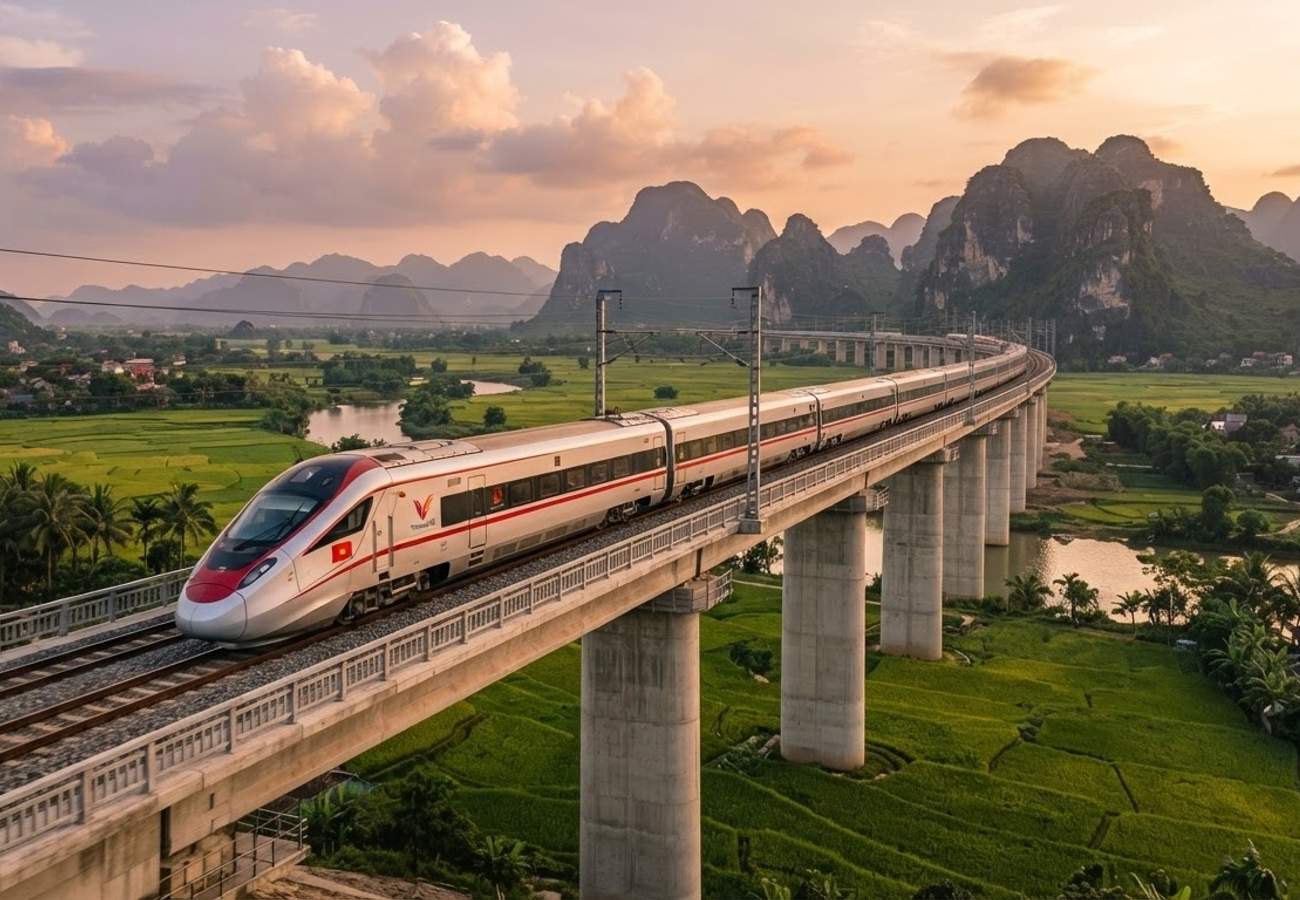
Image generated by AI
Vietnam is transitioning its legacy railway system into an integrated national group to facilitate a 1,541 km high-speed corridor. This 67.3 billion USD investment aims to slash travel time between Hanoi and Ho Chi Minh City from 30 hours to just 5 to 6 hours.
The Vietnamese government is executing a comprehensive restructuring of its national railway sector, shifting from the legacy Vietnam Railways model toward a "national railway group." This organizational pivot is designed to decouple infrastructure management from train operations, creating a corporate framework that allows for private investment in rolling stock, station development, and service operations while maintaining state oversight of the mainline network.
This structural shift is the prerequisite for the flagship North–South high-speed railway, a project approved in late 2024. The new system will run parallel to the existing 1,726 km single-track line, which will be repurposed to prioritize freight and low-speed passenger services, ensuring that the high-speed corridor remains dedicated to rapid transit.
North-South High-Speed Rail Specifications
The centerpiece of the restructuring is a double-track, standard-gauge line designed to meet international electrification and signaling standards. The project is estimated to cost 67.3 billion USD, representing approximately 1 percent of Vietnam's projected GDP annually during the primary construction phase.
| Parameter | Specification |
|---|---|
| Total Length | 1,541 km |
| Design Speed | 350 km/h |
| Passenger Stations | 23 |
| Freight Stations | 5 |
| Axle Load | 22.5 tonnes |
| Estimated Investment | 67.3 billion USD |
| Construction Timeline | 2027 – 2035 (Phased) |
| Projected Travel Time | 5 to 6 hours (Hanoi to HCM City) |
| Target Fare Pricing | ~75% of domestic airfare |
Traveler Logistics Guide: Navigating the Transition
From a ground-level perspective, the transition from the legacy "Reunification Express" to a high-speed network will require a shift in how travelers plan domestic itineraries.
Booking and Connections Once the phased rollout begins in 2027, travelers should prioritize the Hanoi–Vinh and Ho Chi Minh City–Nha Trang segments, as these are the first priority corridors. For those booking multi-city trips, the integration of high-speed rail with urban metro systems will be the primary efficiency gain. In Hanoi, the Ngoc Hoi terminus will serve as the primary gateway, while southern travelers will interface with Thu Thiem and Long Thanh hubs.
Optimal Layover and Transit Strategy To maximize efficiency, travelers should align their rail arrivals with the new urban rail interfaces. Avoid relying on private car transfers at the main termini, as the restructured group is designing these stations as multimodal hubs.
Digital Transit Policies While Vietnam has not yet implemented a system identical to India's Digi Yatra, the move toward a "national railway group" suggests a shift toward centralized digital ticketing and biometric boarding to support the 350 km/h throughput. Travelers should expect a transition to fully digital, app-based ticketing integrated with national ID systems.
Infrastructure Impact and Regional Connectivity
The restructuring extends beyond the North-South spine. The national railway group is prioritizing east–west routes and cross-border connections, specifically linking Hanoi to Lao Cai and China. This is intended to transform Vietnam into a primary rail-connected hub for mainland Southeast Asia.
The impact on secondary cities will be substantial. Destinations such as Hue, Da Nang, Quy Nhon, and Nha Trang—which currently rely on slower rail or expensive short-haul flights—will become viable for day-trips or short stays. This connectivity is expected to redistribute tourism traffic away from the primary hubs and into the coastal and highland regions.
Furthermore, the integration of high-speed rail termini with the Long Thanh international airport project in the south will create a seamless transition for international arrivals moving toward the interior of the country.
Investment and Partnership Model
The financing of the 67.3 billion USD project relies on a hybrid model. The central government will provide core funding and state-backed loans, but the restructured corporate framework allows for Public-Private Partnerships (PPPs). This opens the door for international suppliers to provide signaling, telecommunications, and rolling stock. By clarifying revenue streams from track access charges and station-area real estate, the government aims to attract institutional investors through multi-decade concessions.
Vietnam's rail evolution marks a definitive shift from colonial-era infrastructure to a 21st-century logistics powerhouse.
Related Travel Guides
Disclaimer
This article is for informational and educational purposes only. It does not constitute legal, financial, or professional advice. While we strive to provide accurate and up-to-date information, travel policies, regulations, and conditions change rapidly. Always verify information with official sources before making travel decisions. Nomad Lawyer makes no representations about the accuracy, reliability, completeness, or suitability of the information provided. Readers should consult qualified professionals for advice specific to their circumstances. The views expressed in this article are those of the author and do not necessarily reflect the views of Nomad Lawyer.
Preeti Gunjan
Contributor & Community Manager
A passionate traveller and community builder. Preeti helps grow the Nomad Lawyer community, fostering engagement and bringing the reader experience to life.
Learn more about our team →