
Vietjet and Thales Boost Vietnam Aviation With New MRO, AI and Digital Transformation Deal
Vietjet and Thales Boost Vietnam Aviation With New MRO, AI and Digital Transformation Deal

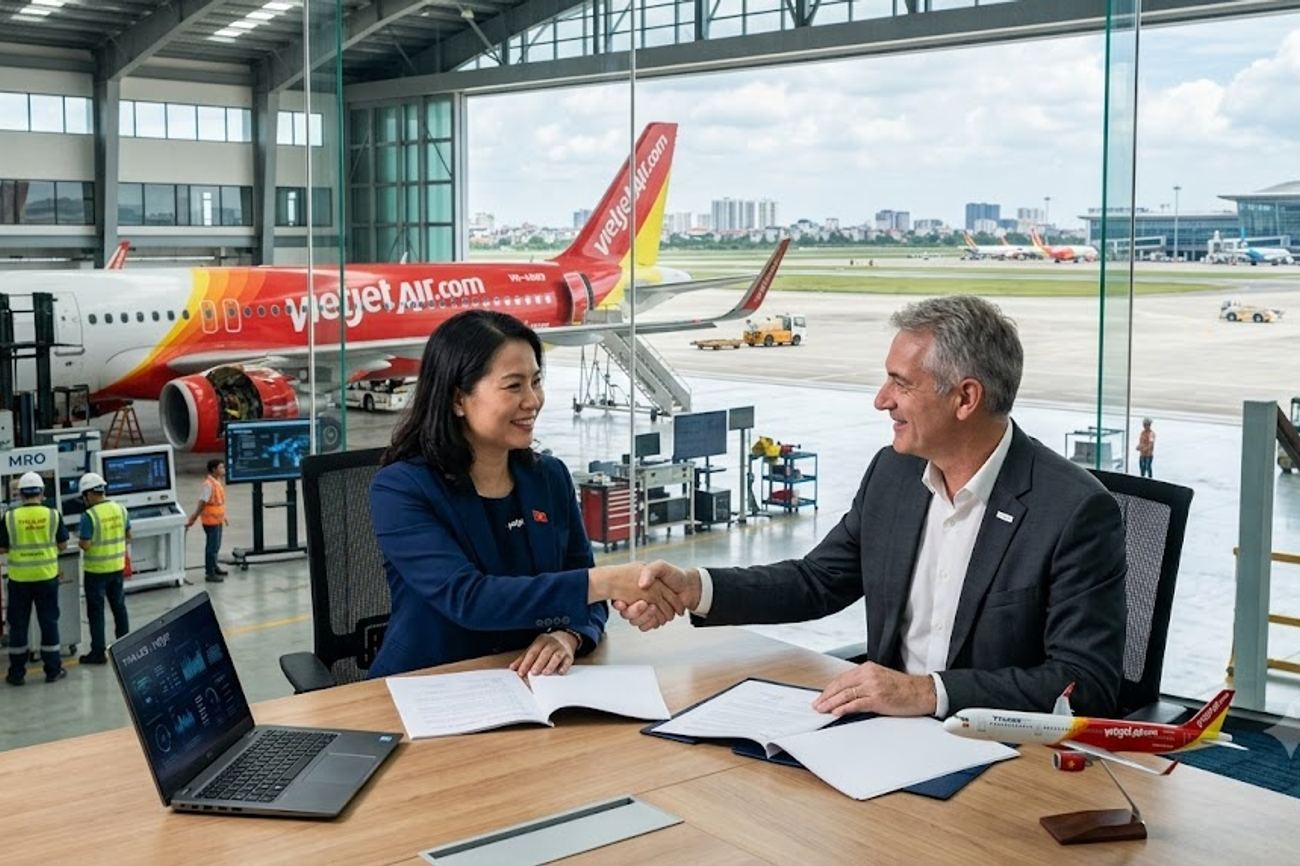
Image generated by AI
title: Vietjet and Thales Group Ink Major Aviation Tech and Maintenance Deals date: 2024-10-25 category: Aviation tags: [Vietjet, Thales Group, Airbus A320, Airbus A330, Vietnam-France Aviation 2024]
[Paris, October 2024] — Vietjet and Thales Group have entered into multiple strategic agreements to overhaul the technical support, digital infrastructure, and maintenance protocols for the Vietnamese carrier's fleet. The deals, signed during a high-level Vietnamese delegation visit to France, integrate advanced French aviation technology into Vietjet's operational framework to increase fleet reliability and accelerate digital transformation.
The partnership centers on two primary tracks: a comprehensive "Repair-By-The-Hour" (RBTH) maintenance contract and a Memorandum of Understanding (MoU) focused on the deployment of artificial intelligence, cybersecurity, and connected aircraft services. This collaboration aligns with the Comprehensive Strategic Partnership established between France and Vietnam in October 2024, designating aviation as a priority sector for bilateral cooperation.
The Maintenance Mandate
The immediate catalyst for this partnership is the need for optimized aircraft availability and reduced long-term operational overhead. Under the RBTH contract, Thales Group will assume responsibility for the component maintenance of Vietjet’s Airbus A320 and A330 aircraft. This "pay-as-you-fly" model shifts the burden of component reliability to the provider, ensuring that critical parts are serviced and replaced with minimal disruption to flight schedules.
By leveraging Thales' global maintenance network, Vietjet aims to mitigate the risks of technical delays and aircraft-on-ground (AOG) scenarios. The agreement is designed to streamline the supply chain for avionics and technical components, ensuring that the airline's narrow-body and wide-body fleets maintain peak operational readiness. This move is part of a broader strategy to stabilize operational costs while expanding the airline's reach across Asia and beyond.
Impacted Fleet and Operations
The scope of the Thales agreement covers the core of Vietjet's current operational capacity. The following aircraft models and operational areas are directly affected:
- Airbus A320 Family: These narrow-body aircraft, which form the backbone of Vietjet's domestic and short-haul international network, will receive upgraded component maintenance and technical support.
- Airbus A330 Fleet: The wide-body aircraft used for long-haul routes will be integrated into the RBTH framework to ensure reliability on extended flight durations.
- Avionics Systems: All critical flight deck and navigation systems across these models will fall under the new technical support umbrella.
- Digital Infrastructure: The airline's backend operations, including data management and flight efficiency tools, will undergo a digital overhaul via the MoU.
What This Means for Travelers
For the average passenger booking a flight with Vietjet, these corporate contracts translate into several tangible improvements in the travel experience. While the changes occur largely behind the scenes in hangars and data centers, the passenger-facing impact is significant.
Reduced Flight Disruptions The shift to a "Repair-By-The-Hour" model means that technical faults are addressed more proactively. Passengers can expect a decrease in flight cancellations or delays caused by "technical issues," as Thales' maintenance guarantees ensure that replacement parts and expert technicians are available more rapidly.
Enhanced In-Flight Connectivity The MoU specifically targets "connected aircraft services." This suggests that future upgrades to the A320 and A330 fleets will include better onboard Wi-Fi, more stable connectivity, and improved digital interfaces for passengers, bringing Vietjet closer to the standards of global full-service carriers.
Increased Safety Assurance The integration of AI-powered predictive maintenance means the airline can identify potential component failures before they occur. For the traveler, this represents a higher layer of safety and operational resilience, as the aircraft are monitored by advanced analytics that predict wear and tear with higher precision than traditional scheduled maintenance.
Modernized Ground Operations The focus on AI-powered airline operations typically extends to scheduling and turnaround efficiency. Passengers may notice smoother boarding processes and more accurate real-time flight tracking as the airline implements Thales' decision-support tools.
The Digital Transformation Roadmap
Beyond the physical maintenance of aircraft, the partnership establishes a blueprint for the "digital airline" of the future. The MoU focuses on five critical pillars: avionics, connectivity, cybersecurity, AI-powered operations, and secure cloud technologies.
Thales will assist Vietjet in deploying predictive maintenance analytics. Unlike traditional maintenance, which happens at set intervals, predictive maintenance uses real-time data from the aircraft to determine exactly when a part needs replacing. This reduces unnecessary downtime and prevents unexpected failures during flight.
Cybersecurity is a central component of the agreement. As aircraft become more connected to the internet and ground-based clouds, the risk of cyber-interference increases. Thales will implement secure cloud technologies to protect critical aviation systems from external threats, ensuring that flight data and passenger information remain encrypted and secure.
Furthermore, the collaboration emphasizes "knowledge transfer." This means Thales will not simply provide the technology but will invest in technical training for Vietnamese engineers. This effort aims to build a local ecosystem of aviation expertise in Vietnam, reducing the country's reliance on foreign technicians for routine high-tech repairs.
FAQ: Vietjet-Thales Partnership 2024
Will this partnership increase ticket prices? No. The "Repair-By-The-Hour" contract is specifically designed to optimize operational costs and reduce long-term spending. These efficiencies are intended to stabilize the airline's finances rather than increase fares for passengers.
How does AI improve flight safety in this deal? AI is used for predictive maintenance. By analyzing data from the Airbus fleet, the system can alert engineers to a failing component before it actually breaks, allowing for replacement during scheduled ground time.
When will passengers see the "connected aircraft" upgrades? The MoU is a framework for cooperation, meaning upgrades will be rolled out incrementally. Passengers can expect to see improvements in connectivity and digital services as aircraft undergo their next scheduled heavy maintenance checks.
What is the "Repair-By-The-Hour" (RBTH) model? RBTH is a service agreement where the airline pays a fixed fee based on flight hours. In exchange, the provider (Thales) guarantees the availability and maintenance of specific components, absorbing the risk of unexpected part failures.
A strategic leap toward a digitally integrated sky for Vietnam.
Related Travel Guides
- Japan Airlines Boosts Hong Kong Operations as HAECO Extends Aircraft Support Deal to 2031
- Beyond the Metropolises: How Vietnam, Klook, and Regional Creators Are Reshaping Southeast Asian Travel
- The Modern Silk Road Takes Flight: How Uzbekistan Airways and Lufthansa Technik Elevate Central Asian Travel
Disclaimer
This article is for informational and educational purposes only. It does not constitute legal, financial, or professional advice. While we strive to provide accurate and up-to-date information, travel policies, regulations, and conditions change rapidly. Always verify information with official sources before making travel decisions. Nomad Lawyer makes no representations about the accuracy, reliability, completeness, or suitability of the information provided. Readers should consult qualified professionals for advice specific to their circumstances. The views expressed in this article are those of the author and do not necessarily reflect the views of Nomad Lawyer.
Naina Thakur
Contributor & Travel Specialist
Travel enthusiast and legal writer covering visa regulations, responsible tourism, and cultural journeys across global destinations.
Learn more about our team →