
The Modern Silk Road Takes Flight: How Uzbekistan Airways and Lufthansa Technik Elevate Central Asian Travel
Uzbekistan Airways extends its component support agreement with Lufthansa Technik through 2035, anchoring Boeing 787 Dreamliner and A320neo reliability while opening smooth skies to Samarkand, Bukhara, and Tashkent.

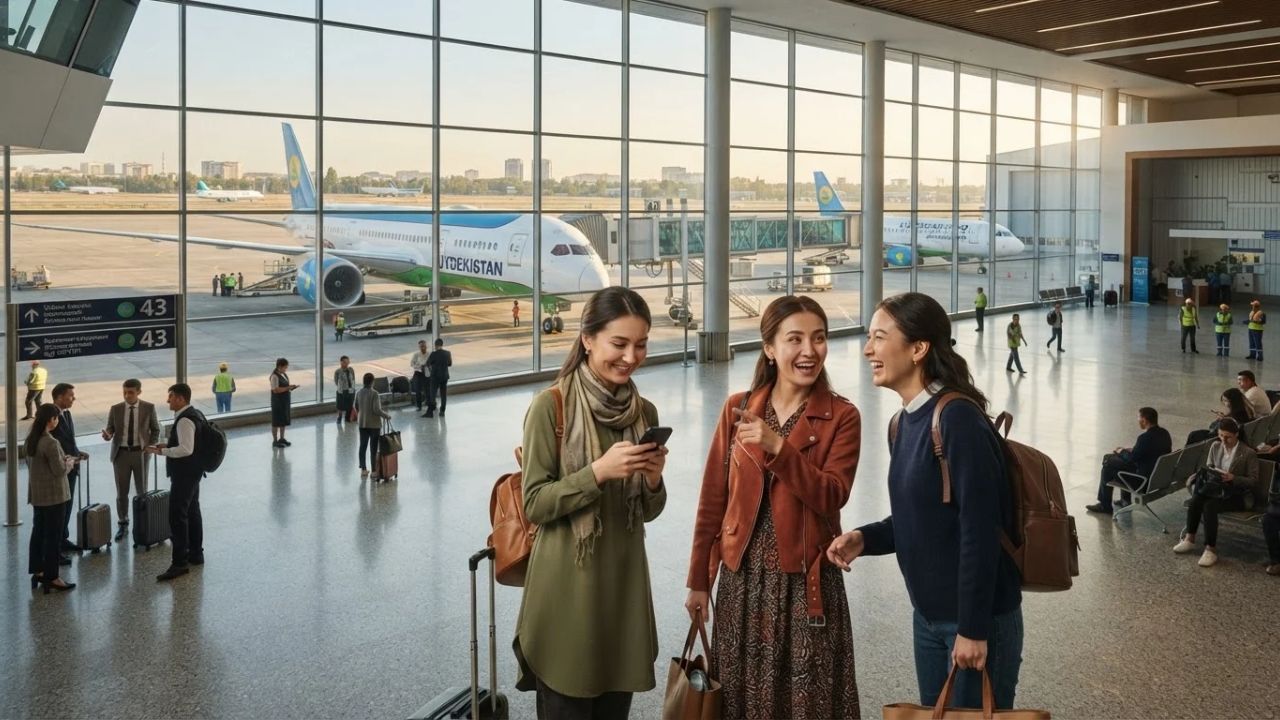
Uzbekistan Airways secures long-term fleet support through 2035 with Lufthansa Technik, bolstering Central Asia's premier aviation gateway
While medieval merchants once spent upwards of six grueling months guiding camel caravans across the arid Kyzylkum sands to trade silks beneath the turquoise domes of Samarkand, modern voyagers can now reach the ancient oasis capitals of Uzbekistan aboard Boeing 787 Dreamliners backed by one of the most advanced engineering agreements in commercial aviation. Building on a technical alliance that spans more than three decades, national carrier Uzbekistan Airways has signed an extensive component support contract with Lufthansa Technik that secures fleet maintenance through 2035. The long-term pact covers the airline's Boeing 787 Dreamliner and Airbus A320ceo/neo fleets, guaranteeing streamlined access to global component pools, rapid spare parts logistics, and maintenance reliability. As Uzbekistan accelerates its transformation into Central Asia's primary aviation crossroads, this extended partnership ensures that the country’s aerial corridors operate with modern dependability, connecting international travelers directly to the fabled cities of the Silk Road.
The technical agreement marks a pivotal milestone for Central Asian connectivity. Founded in 1992 following national independence, Uzbekistan Airways initiated its relationship with Lufthansa Technik in 1993 when it introduced its first Airbus A310-300, becoming one of the earliest carriers in the region to transition to Western commercial aircraft. Over the ensuing thirty years, that technical cooperation evolved from basic maintenance assistance into an integrated engineering partnership. Shukhrat Khudaykulov, Chairman of the Board of Uzbekistan Airways, affirmed that the agreement provides vital support for the carrier's fleet modernization and expansion as Uzbekistan consolidates its position as an international transit and tourism hub.
Wings of the Silk Road: Inside the 2035 Lufthansa Technik Fleet Alliance
Modern airline competition is decided as much on hangar floors as in booking engines. The Boeing 787 Dreamliner serves as the backbone of Uzbekistan Airways’ long-haul network, operating direct routes connecting Tashkent with London, Frankfurt, New York, and East Asia. Meanwhile, the fuel-efficient Airbus A320neo family handles high-frequency regional corridors across Central Asia, the Middle East, and Europe. Maintaining these sophisticated aircraft requires immediate access to thousands of certified parts, from digital cockpit displays to precision hydraulic actuators.
Under the agreement, Lufthansa Technik provides Uzbekistan Airways with round-the-clock component pooling, predictive maintenance logistics, and direct supply-chain integration. This infrastructure minimizes the risk of aircraft remaining grounded due to parts shortages—an operational hazard that has challenged airlines worldwide since recent global supply-chain disruptions.
Equally important is the development of domestic self-reliance. Through knowledge transfer and technical training, the partnership continues to empower Uzbekistan Airways Technics, the airline’s in-house maintenance division based at Tashkent International Airport. Today, local engineers and avionics technicians conduct complex overhauls not only for the national flag carrier but also for regional airlines across Central Asia, anchoring high-tech aerospace careers directly within the country.
What Makes Uzbekistan the Eternal Cultural Heart of Eurasia
Beyond the airport gates and technical hangars lies an astonishing architectural legacy. Uzbekistan is the historical crucible where Greek, Persian, Turkic, and Islamic civilizations merged to shape the arts, sciences, and trade of Eurasia.
Travelers usually begin in Tashkent, a sprawling metropolis that surprises visitors with its leafy public squares, Soviet modernist monuments, and ornate subway stations. Beneath the streets, the Tashkent Metro features stations designed like underground palaces, from the alabaster columns of Alisher Navoiy to the ceramic murals honoring space exploration at Kosmonavtlar. Above ground, the Hazrati Imam complex preserves the seventh-century Quran of Caliph Uthman, written on deer parchment, while the cavernous Chorsu Bazaar invites travelers beneath its giant turquoise dome to sample mountain almonds, dried figs, and warm disks of freshly stamped non bread.
From Tashkent, high-speed rail and regional flights fan outward to the imperial jewels of the Silk Road. In Samarkand, celebrated under the UNESCO World Heritage Centre as Samarkand – Crossroad of Cultures, the monumental Registan Square dominates the city. Its three towering madrasas—Ulugh Beg, Sher-Dor, and Tilya-Kori—feature intricate azure tile mosaics that glow under the desert sun. Nearby, the Shah-i-Zinda necropolis forms a breathtaking blue-tiled corridor of royal tombs ascending a sacred hillside.
Further west, Bukhara offers two millennia of living history. The town is dominated by the Po-i-Kalyan complex and the forty-eight-meter Kalyan Minaret, an architectural marvel so striking that even Genghis Khan spared it from destruction. In the evening, travelers gather beside the central Lyabi-Hauz pool, sipping green tea under the shade of ancient mulberry trees while watching local elders play chess. In Khiva, the intact mud-brick walls of the Itchan Kala fortress enclose an open-air museum where turquoise minarets rise above hand-carved elm-wood palace pillars.
Visitor Insider Tips
Experiencing Uzbekistan with authentic insight requires mastering regional transport connections and understanding local customs:
- Riding the Afrosiyob High-Speed Train: While domestic flights link Tashkent with Urgench (the gateway to Khiva), the best way to travel between Tashkent, Samarkand, and Bukhara is the Spanish-built Afrosiyob high-speed train. The sleek train connects Tashkent to Samarkand in just two hours and fifteen minutes. Purchase tickets exactly forty-five days in advance via the official railway website, as passenger seats sell out within hours of release.
- The Bread Etiquette of Uzbekistan: Bread (non) is deeply sacred in Uzbek culture. Never place a loaf of bread upside down on the table, and never cut it with a knife; always tear it gently by hand. When visiting markets like Chorsu in Tashkent or the Siab Bazaar in Samarkand, stallholders will happily let you break off a warm edge to taste before buying.
- The Midday Plov Tradition: Plov is the undisputed national culinary masterpiece, but timing is everything. In Tashkent, head to the Central Asian Plov Centre (Besh Qozon) at 11:45 to watch master chefs (oshpaz) tend to colossal iron cauldrons (qozons) layered with yellow carrots, tender beef, chickpeas, raisins, and quail eggs. By 13:30, the pots are entirely empty. In Samarkand, plov is cooked in distinct non-mixed layers and served alongside fresh tomato-onion salad (achichuk).
- Dawn Walks at Registan: To experience the architectural grandeur of Samarkand without hundreds of tour groups, arrive at Registan Square at 06:30 as the first morning light strikes the turquoise domes. The square is peaceful, allowing you to appreciate the intricate geometric tilework in absolute quiet.
- Visa and Cultural Resources: Check current visa exemption policies and cultural festival listings through the national tourism portal at Uzbekistan.travel.
Cultural and Environmental Context
Uzbekistan’s expanding aviation footprint and growing international tourism profile intersect with important conservation responsibilities. Preserving ancient adobe brickwork and delicate ceramic glazes against weather extremes requires constant vigilance. The Ministry of Culture works alongside international heritage teams to ensure restorations utilize traditional mineral glazes and lime mortars rather than damaging synthetic materials.
Simultaneously, Central Asia contends with serious ecological realities. The historical desiccation of the Aral Sea in northern Karakalpakstan serves as an enduring reminder of environmental vulnerability. In response, Uzbekistan is actively investing in sustainable regional tourism. Travelers visiting desert zones around Lake Aydarkul stay in solar-powered yurt camps and support rural artisan cooperatives that preserve traditional Suzani embroidery and natural vegetable-dyed carpet weaving.
On an economic level, the long-term collaboration between Uzbekistan Airways and Lufthansa Technik embodies sustainable development. By creating specialized aviation training academies and maintenance infrastructure at Tashkent International Airport, the country fosters homegrown engineering talent. This technological self-sufficiency guarantees that as tourism brings millions of visitors to ancient Silk Road sanctuaries, modern technical expertise remains firmly rooted in the local community.
FAQ: Visiting Uzbekistan in 2026
Do international travelers need a visa for Uzbekistan?
Citizens from more than ninety countries, including the European Union, the United Kingdom, Canada, and Australia, enjoy visa-free entry for stays up to thirty days, while others can obtain a fast electronic visa online.
How do travelers travel between Tashkent, Samarkand, and Bukhara?
The modern Afrosiyob high-speed train connects Tashkent to Samarkand in two hours and fifteen minutes, continuing to Bukhara in an additional ninety minutes.
What is the recommended dress code for historic and religious sites?
While Uzbekistan is a secular and welcoming country, modest attire is recommended when visiting active mosques and shrines; shoulders and knees should be covered, and slip-on shoes make entry easy.
What is the ideal season to visit Uzbekistan?
Spring (April to June) and autumn (September to November) provide ideal travel weather, with pleasant daytime temperatures, clear desert skies, and colorful seasonal fruit harvests.
Beneath minarets that have guided travelers across the sands for a thousand years, Uzbekistan proves that the spirit of the Silk Road burns as brightly today in jet-fueled skies as it ever did along camel caravan trails.
Related Travel Guides
- Cross-Continental Air Corridors: How LATAM’s Customer Day Deals Unlock the Wild Contrasts of Brazil
- The Iberian Atlantic Wave: Inside Portugal’s Record-Breaking Summer Aviation Boom and Travel Guide
- From the Rockies to Mount Royal: How American Express and Aspire Reshape Canadian Airport Hospitality
Disclaimer
This article is for informational and educational purposes only. It does not constitute legal, financial, or professional advice. While we strive to provide accurate and up-to-date information, travel policies, regulations, and conditions change rapidly. Always verify information with official sources before making travel decisions. Nomad Lawyer makes no representations about the accuracy, reliability, completeness, or suitability of the information provided. Readers should consult qualified professionals for advice specific to their circumstances. The views expressed in this article are those of the author and do not necessarily reflect the views of Nomad Lawyer.
Raushan Kumar
Founder & Lead Developer
Full-stack developer with 11+ years of experience and a passionate traveller. Raushan built Nomad Lawyer from the ground up with a vision to create the best travel and law experience on the web.
Learn more about our team →