Velana International Airport Terminal 1 vs Terminal 2: 2026 Passenger Navigation Guide

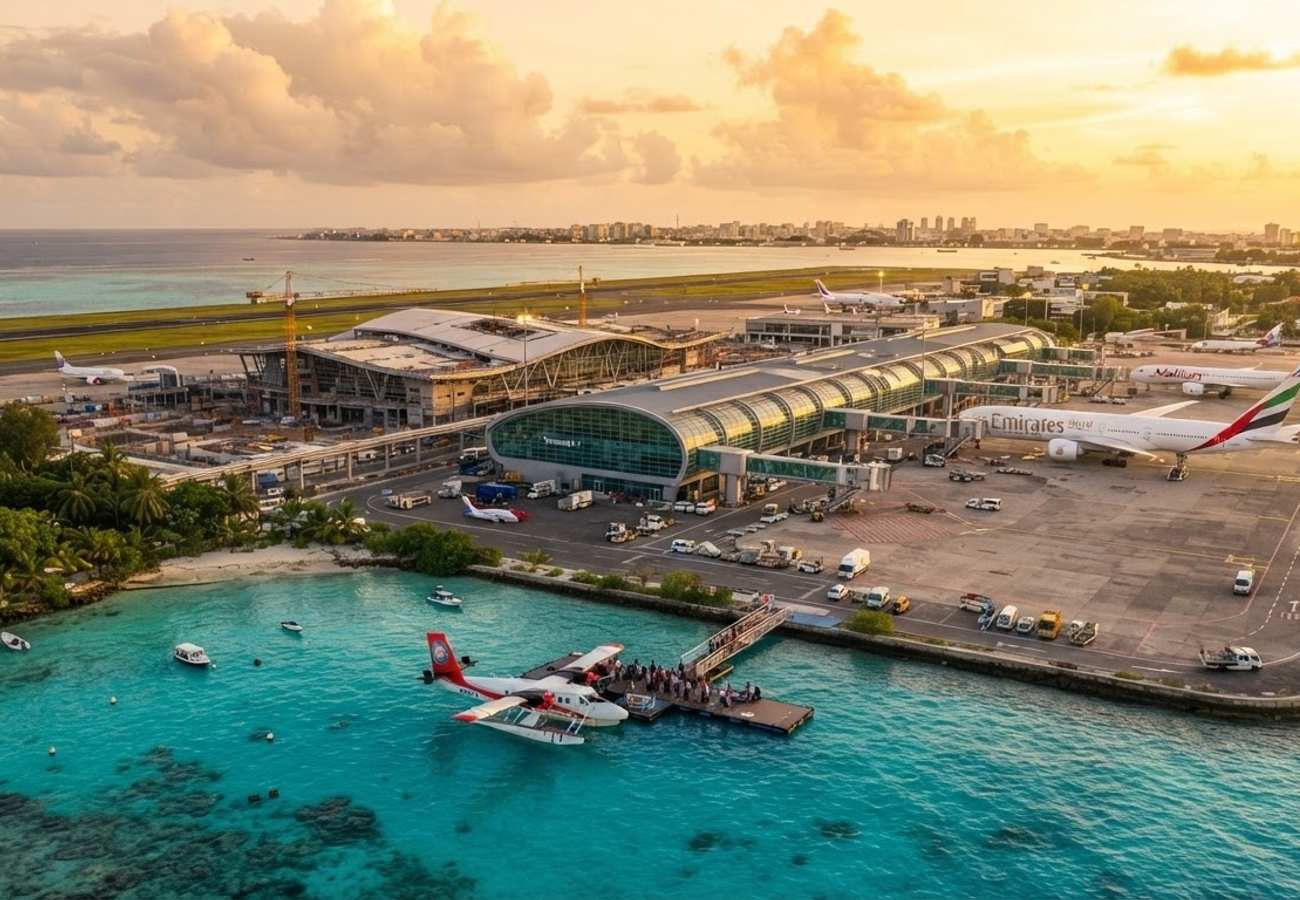
Image generated by AI
The layout of Velana International Airport has fundamentally shifted in 2026, moving international traffic to a new facility and repurposing the old hub for domestic flights. Understanding these distinctions is essential to avoid transfer delays in Malé.
Navigating the 2026 Terminal Shift
As of mid-2026, Velana International Airport operates under a restructured system to accommodate increasing passenger volumes. The most significant change is the introduction of the new Terminal 1, which now serves as the primary gateway for all scheduled international arrivals and departures.
This facility, which opened in phases following July 2025, features expanded immigration halls and larger check-in areas. Passengers arriving from global hubs via carriers such as Emirates, Qatar Airways, Singapore Airlines, Turkish Airlines, British Airways, or Condor will exclusively use Terminal 1.
Conversely, the building that previously served as the international hub has been rebranded as Terminal 2. This facility is now the dedicated center for domestic aviation. All flights operated by Maldivian (Q2), Manta Air (NR), and Villa Air (VP) to regional atolls are managed here.
The Three-Point Transit System
To simplify the airport's complex layout, travelers should categorize their movement based on these three distinct zones:
- Terminal 1: All long-haul and regional flights entering or exiting the Maldives.
- Terminal 2: All land-based domestic flights moving between Malé and regional airports.
- Noovilu Seaplane Terminal: A separate facility on the opposite side of the runway for all floatplane operations.
Terminal 1: International Arrivals and Departures
Upon landing at Terminal 1, passengers utilize air-conditioned jet bridges or short walks to reach immigration. During peak "bank" arrival periods—where multiple wide-body aircraft land simultaneously—immigration queues typically range from 15 minutes to over an hour.
Following customs, guests are met by resort representatives in the baggage claim area. For those heading to luxury resorts in areas like the Baa Atoll, staff typically manage luggage coordination immediately to streamline the transition to domestic or seaplane transfers.
For departures, Terminal 1 houses all international check-in rows. Economy passengers are advised to arrive approximately three hours before their flight to navigate security and exit formalities. While most facilities have migrated to the new terminal, some lounges still operate temporarily within the old complex.
Terminal 2: Domestic Connections and Regional Hubs
Terminal 2 facilitates short-haul flights to regional airports, including Gan, Hanimaadhoo, Kooddoo, Kaadedhdhoo, and Dharavandhoo. These flights often represent the second leg of a resort transfer, followed by a speedboat journey.
Travelers should be aware of strict luggage discrepancies between international and domestic legs. While a flight from Frankfurt may allow 23 kg, a domestic flight to Gan may limit checked baggage to 20 kg. Overweight fees are common at Terminal 2, making it advisable to keep heavy electronics in cabin luggage.
Notably, landside services like taxis are now centralized. Domestic passengers arriving at Terminal 2 who require a taxi to Malé must use the shuttle or walk over to the Terminal 1 side to access the main taxi queue.
Seaplane Logistics at Noovilu Terminal
Seaplane transfers do not originate from the main terminals. Instead, they operate from the Noovilu Seaplane Terminal. This facility supports the world's largest seaplane fleet, including Trans Maldivian Airways, Manta Air, and Villa Air.
The transfer process typically follows this sequence:
- Check-in: Occurs at dedicated counters within or adjacent to Terminal 1 immediately after customs.
- Weight Verification: Seaplane limits are strict, often capped at 20 kg for checked luggage and 5 kg for hand baggage.
- Transit: Guests are moved via shuttle bus or a short walk (approximately 5 to 10 minutes) to the Noovilu facility.
- Lounge Access: Most high-end resorts provide private lounge access at Noovilu while guests await their floatplane.
Terminal Comparison Summary
| Feature | Terminal 1 | Terminal 2 | Noovilu Terminal |
|---|---|---|---|
| Primary Use | International Flights | Domestic Flights | Seaplane Transfers |
| Key Airlines | Emirates, Qatar, BA, etc. | Maldivian, Manta, Villa Air | TMA, Manta, Villa Air |
| Key Destinations | Global Hubs | Gan, Hanimaadhoo, etc. | Resort Lagoons |
| Check-in Location | Terminal 1 Hall | Terminal 2 Hall | Terminal 1 Counters $\rightarrow$ Noovilu |
| Typical Luggage Limit | Varies by Airline | Often $\approx$ 20 kg | $\approx$ 20 kg Checked / 5 kg Hand |
Key Takeaways for 2026 Travelers
- International = T1: If you are arriving from outside the Maldives, you are in Terminal 1.
- Domestic = T2: If you are flying to a regional airport (land-based), you move to Terminal 2.
- Seaplanes = Noovilu: Seaplanes have their own terminal; check in at T1 and shuttle to Noovilu.
- Weight Alerts: Be prepared for lower baggage allowances on domestic and seaplane legs compared to international flights.
- Taxi Logic: All main taxi queues are located on the Terminal 1 side of the airport.
Frequently Asked Questions
Do I need to change terminals if I have a domestic connection? Yes. International flights arrive at Terminal 1, while domestic flights depart from Terminal 2. Your resort representative will typically guide you through this transfer.
Where do I go for a seaplane? You check in at the counters near Terminal 1, then take a shuttle bus to the Noovilu Seaplane Terminal.
What happens if my voucher says "International Terminal" but it's 2026? Assume "International Terminal" refers to the new Terminal 1 and "Domestic Terminal" refers to Terminal 2.
Ensure your resort transfer details are confirmed 48 hours before landing to avoid confusion at the terminal counters.
Related Travel Guides
This article is for informational purposes. Flight routes, passenger regulations, visa rules, and transit advisories are subject to change by airlines and aviation authorities. Readers are advised to verify schedules and travel documentation with relevant carriers and border agencies before departure.
Related Stories

European Mass Protests Disrupt Travel Across France, Italy, Belgium, and Turkey in 2026
Global Tourism Spending to Hit US$1.8 Trillion in 2026 as International Arrivals Reach 1.57 Billion