
Uzbekistan Tashkent Khiva Bullet Train Launches 2026: Silk Road Connected
Uzbekistan's Jaloliddin Manguberdi bullet train launches in 2026, connecting Tashkent to Khiva and linking all four UNESCO Silk Road cities by high-speed rail for the first time.

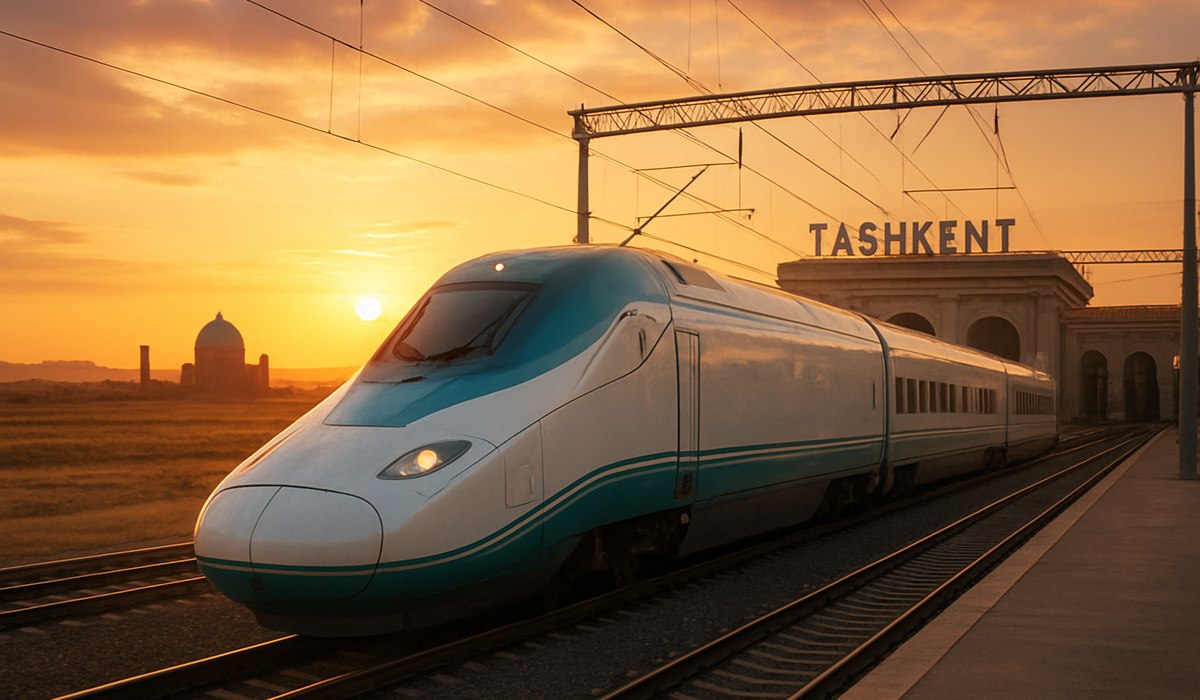
Image generated by AI
Historic Rail Corridor Transforms Central Asian Travel
Uzbekistan's Jaloliddin Manguberdi bullet train launches in 2026, cutting the Tashkent-to-Khiva journey from 14 hours to just 7.5 hours. This landmark service marks the first time all four UNESCO-listed Silk Road cities—Tashkent, Samarkand, Bukhara, and Khiva—connect via a single electrified high-speed network. The 465-kilometer extension uses Hyundai Rotem electric trains capable of 250 kilometers per hour, reshaping overland tourism across Central Asia and positioning Khiva as an accessible must-see destination rather than a remote outpost.
A New High Speed Spine Across the Silk Road Heartland
Uzbekistan is completing its most ambitious rail infrastructure project by extending electrified high-speed service westward into the Khorezm region. The Bukhara–Urgench–Khiva line, fully electrified and equipped with modern signaling, builds seamlessly on the existing Afrosiyob services connecting Tashkent, Samarkand, and Bukhara. Trial operations commenced in late 2025, with commercial launch expected after March 2026.
The Uzbekistan tashkent khiva bullet train represents a watershed moment for Central Asian connectivity. By creating an unbroken fast-rail corridor across western Uzbekistan, the project transforms what was once a fragmented regional network into a cohesive tourist and freight spine. Multilateral financing supported electrification and signaling upgrades, while state investment modernized stations and access infrastructure throughout the corridor.
The service carries the name of Jaloliddin Manguberdi, a medieval commander symbolizing regional resilience, underscoring Uzbekistan's strategic commitment to this transformative project. Transport analysts note this achievement consolidates Uzbekistan's position as Central Asia's rail leader and strengthens Silk Road heritage tourism across the entire corridor.
Technical Specifications and Route Details
The new high speed rail service operates seven-car Hyundai Rotem trainsets engineered for maximum passenger comfort and capacity. These modern electric trains handle speeds up to 250 kilometers per hour, though operational speeds vary across sections due to line geometry and mixed-traffic considerations. Each formation seats significantly more passengers than existing Afrosiyob trains, accommodating forecast surges in tourism and domestic travel.
The 465-kilometer electrified railway spans four major stations: Tashkent, Samarkand, Bukhara, and Urgench, with Khiva as the western terminus. Journey time from Tashkent to Khiva drops to approximately 7.5 hours—matching travel times between many connected European city pairs. This dramatic reduction eliminates the traditional overnight train, making same-day round-trip itineraries feasible for the first time.
Infrastructure investments include upgraded platforms, modern signaling systems, and improved passenger facilities at all stations. The fully electrified line reduces operational emissions and cutting-edge technology ensures reliability across Uzbekistan's challenging terrain and climate conditions.
Tourism and Economic Impact
Khiva's transformation from a difficult final destination to a convenient rail-accessible city reshapes Silk Road tourism fundamentally. For decades, the desert city's remoteness limited visitor numbers despite its incomparable mud-brick architecture and preserved old town. High-speed rail accessibility changes this calculus immediately, positioning Khiva within the practical day-trip radius from Tashkent while maintaining its authenticity.
Tour operators are already restructuring itineraries around new timetables. Sample packages now feature morning departures from Tashkent arriving in Khiva by evening, plus loop journeys combining rail with detours into the Karakalpakstan region. These configurations were impossible with overnight trains but become routine with high-speed service.
National planning documents forecast high-speed passenger volumes doubling by 2030, potentially exceeding three million annual travelers across Uzbekistan. Khiva's share of this growth depends partly on maintaining its historic character while absorbing increased tourist traffic. Government strategies emphasize station upgrades, access roads, and urban improvements designed to enhance visitor experience without compromising the city's cultural integrity. Freight traffic is projected to multiply several times over, easing pressure on congested road corridors and improving agricultural and industrial connectivity for Khorezm producers.
Timeline and Commercial Launch
Commercial operations commence after March 2026 following extensive trial runs and technical validation conducted since late 2025. The Jaloliddin Manguberdi service enters revenue service with full timetable integration, initially operating daily frequencies that scale upward during peak tourism seasons. Ticket pricing, promotional fares, and reservation windows will align with existing Afrosiyob practices, ensuring seamless booking across the integrated corridor.
Early schedules prioritize morning and evening departures accommodating both leisure travelers and business users. As demand stabilizes, additional services will be added during summer months when Silk Road tourism peaks. Station infrastructure across all four cities has been upgraded to accommodate the anticipated surge in passenger throughput, with modern amenities, improved signage, and enhanced accessibility features throughout the network.
How to Book the Best Fare
Booking tickets for the Uzbekistan tashkent khiva bullet train follows straightforward procedures through multiple authorized channels. The official Uzbek Railways website (www.uzrailways.uz) offers direct reservations with payment options accommodating international travelers. International ticket aggregators also facilitate bookings; Trainline provides booking access for travelers in Europe and beyond, simplifying currency conversion and international card payments.
Early booking yields the best fares, especially during peak seasons. Standard promotional fares typically apply to advance purchases made 7-30 days before travel. Round-trip packages combining Tashkent-Samarkand-Bukhara-Khiva segments often provide savings compared to individual tickets. First-class accommodations feature enhanced seating and meal services, while standard-class offers excellent comfort for budget-conscious travelers.
Booking directly through the operator website requires creating an account with valid identification and payment methods. Foreign visitors must provide passport details, though most systems accept international credit cards. Mobile applications make ticket management and modification straightforward, allowing itinerary adjustments up to 24 hours before departure. Group reservations qualify for additional discounts, benefiting tour operators and family travelers.
Key Data: Uzbekistan High Speed Rail Facts
| Metric | Details |
|---|---|
| Train Name | Jaloliddin Manguberdi |
| Route Length | 465 kilometers |
| Maximum Speed | 250 km/h |
| Journey Time (Tashkent–Khiva) | 7.5 hours |
| Previous Journey Time | 14 hours (overnight) |
| Fleet Manufacturer | Hyundai Rotem |
| Train Composition | 7-car electric formations |
| Commercial Launch | 2026 (post-March) |
| Major Stations | Tashkent, Samarkand, Bukhara, Urgench, Khiva |
| UNESCO Cities Connected | 4 (all Silk Road heritage sites) |
| Annual Capacity Forecast | 3+ million passengers by 2030 |
What This Means for Travelers
The launch of the Uzbekistan tashkent khiva bullet train fundamentally enhances Central Asia travel accessibility and itinerary flexibility:
-
Khiva is now a realistic same-day side trip from Tashkent or Samarkand, eliminating multi-day overnight journeys that previously deterred casual visitors.
-
**Loop
Disclaimer
This article is for informational and educational purposes only. It does not constitute legal, financial, or professional advice. While we strive to provide accurate and up-to-date information, travel policies, regulations, and conditions change rapidly. Always verify information with official sources before making travel decisions. Nomad Lawyer makes no representations about the accuracy, reliability, completeness, or suitability of the information provided. Readers should consult qualified professionals for advice specific to their circumstances. The views expressed in this article are those of the author and do not necessarily reflect the views of Nomad Lawyer.
Preeti Gunjan
Contributor & Community Manager
A passionate traveller and community builder. Preeti helps grow the Nomad Lawyer community, fostering engagement and bringing the reader experience to life.
Learn more about our team →