Air Canada and United Airlines Partnership Expansion Could Spike Fares on 10 US-Canada Routes in 2026

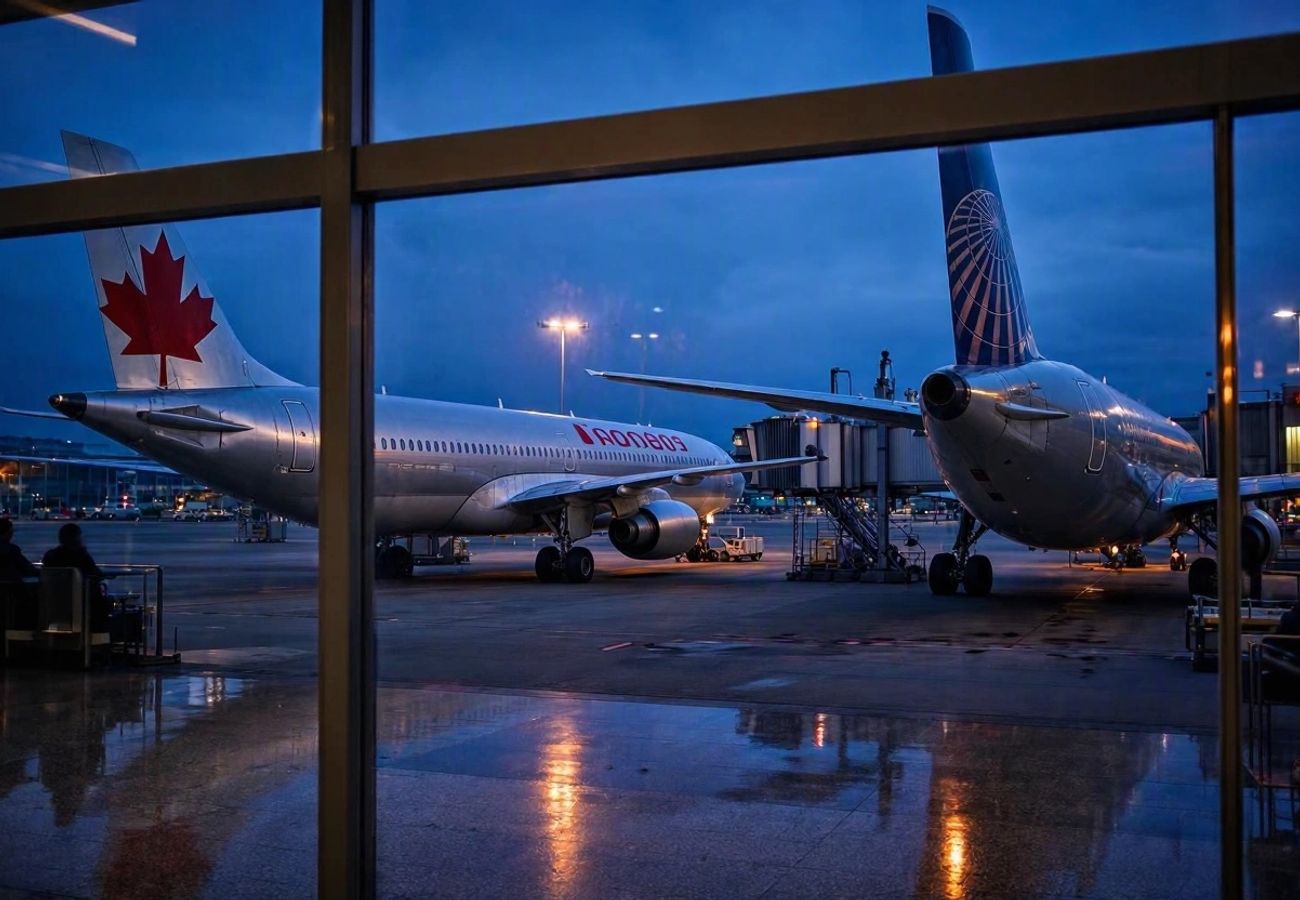
Image generated by AI
[Ottawa, October 28, 2026] — Passengers traveling between the United States and Canada are facing potential fare hikes as Canada's competition watchdog warns that a proposed partnership expansion between Air Canada and United Airlines could stifle market competition.
The Competition Bureau of Canada has issued a formal warning regarding the carriers' bid to renew and broaden their cooperation. While the airlines claim the move will improve connectivity and offer savings on specific itineraries, the Bureau argues that allowing the two giants to coordinate pricing on ten specific cross-border routes could lead to "monopoly or near-monopoly conditions," costing travelers millions of dollars annually.
The Push for Price Coordination
The current operational framework is governed by a 2012 agreement that explicitly prohibits Air Canada and United Airlines from setting prices together, sharing revenue, or exchanging sensitive business data on 14 specific routes. These restrictions were designed to ensure the airlines compete aggressively for passengers, which historically keeps ticket costs lower and service quality higher.
The new proposal seeks to remove these restrictions across ten markets. The Competition Bureau's analysis indicates that on five of these routes, Air Canada and United currently control all nonstop passenger traffic. Removing the 2012 safeguards would allow the carriers to pool revenue, effectively removing the incentive to undercut one another on price.
Impacted US-Canada Flight Routes
The Bureau's simulation analysis predicts that eight of the ten reviewed routes would see material price increases. The most significant spikes are expected on flights connecting Ottawa and Washington, Vancouver and San Francisco, Montréal and Washington, Toronto and Denver, and Toronto and Houston.
The following table details the specific city pairs under review:
| Canadian City | U.S. City | Predicted Fare Impact |
|---|---|---|
| Ottawa | Washington, D.C. | High Increase |
| Vancouver | San Francisco | High Increase |
| Montréal | Washington, D.C. | High Increase |
| Toronto | Denver | High Increase |
| Toronto | Houston | High Increase |
| Montréal | Chicago | Moderate/High Increase |
| Toronto | San Francisco | Moderate/High Increase |
| Toronto | Washington, D.C. | Moderate/High Increase |
| Ottawa | New York | No Material Change |
| Toronto | Cleveland | No Material Change |
The Bureau noted that Ottawa–New York and Toronto–Cleveland are unlikely to see price jumps because only one of the two airlines currently operates nonstop service on those specific paths, meaning there is no direct operating overlap to eliminate.
What This Means for Travelers
For passengers booking flights right now, prices have not yet increased. The proposal is currently under review and requires federal government approval. However, if approved, the impact will be felt in two primary ways:
- Higher Baseline Fares: On the eight high-risk routes, the lack of price competition between the two dominant carriers is expected to drive up the cost of economy and business class tickets.
- Reduced Choice: While the airlines promise "convenient connections," the Bureau warns that the removal of competitive tension often leads to a decline in service quality and fewer options for budget-conscious travelers.
Travelers are encouraged to monitor their bookings for these specific city pairs. If you are planning travel for late 2026 or 2027, locking in fares now may be prudent should the Transport Canada review result in an approval of the pricing coordination.
The Path to Approval
The final decision rests with Transport Minister Steven MacKinnon, who will determine if the arrangement should be approved, approved with specific conditions, or rejected entirely. The review process is considering economic impacts and the validity of the airlines' claims regarding improved flexibility during flight disruptions.
Public consultation is currently open. Canadian citizens and affected travelers can submit their feedback via the official consultation page or by emailing [email protected]. The window for public input closes on November 15, 2026.
FAQ: US-Canada Route Pricing 2026
Are flight prices increasing right now? No. The proposed partnership expansion has not yet been approved. Current fares remain subject to existing competition rules until a final decision is made by the Canadian government.
Which routes will see the biggest price jumps? The Competition Bureau predicts the highest increases for Ottawa–Washington, Vancouver–San Francisco, Montréal–Washington, Toronto–Denver, and Toronto–Houston.
How can I stop these price increases? The Canadian government is accepting public comments until November 15, 2026. Travelers can voice their concerns regarding fare competition through the official Transport Canada consultation channels.
Will this affect all flights to the US? No. The warning specifically targets ten routes. Many other cross-border connections remain unaffected by this specific partnership proposal.
Competition in the skies is the only real shield against skyrocketing fares.
Related Travel Guides
This article is for informational purposes. Flight routes, passenger regulations, visa rules, and transit advisories are subject to change by airlines and aviation authorities. Readers are advised to verify schedules and travel documentation with relevant carriers and border agencies before departure.
Related Stories

United Airlines Expands Economy Meal Preorders to 900-Mile Flights: Route Additions, Menus, and In-Flight Tech

JetBlue Sparks Controversy After Listing 'Donald J. Trump' as Destination on LaGuardia Flight Boards 2026