
Uzbekistan And Kyrgyzstan Unite To Unlock More And Better Regional Travel And Central Asia Border Travel For The Future
Uzbekistan And Kyrgyzstan Unite To Unlock More And Better Regional Travel And Central Asia Border Travel For The Future

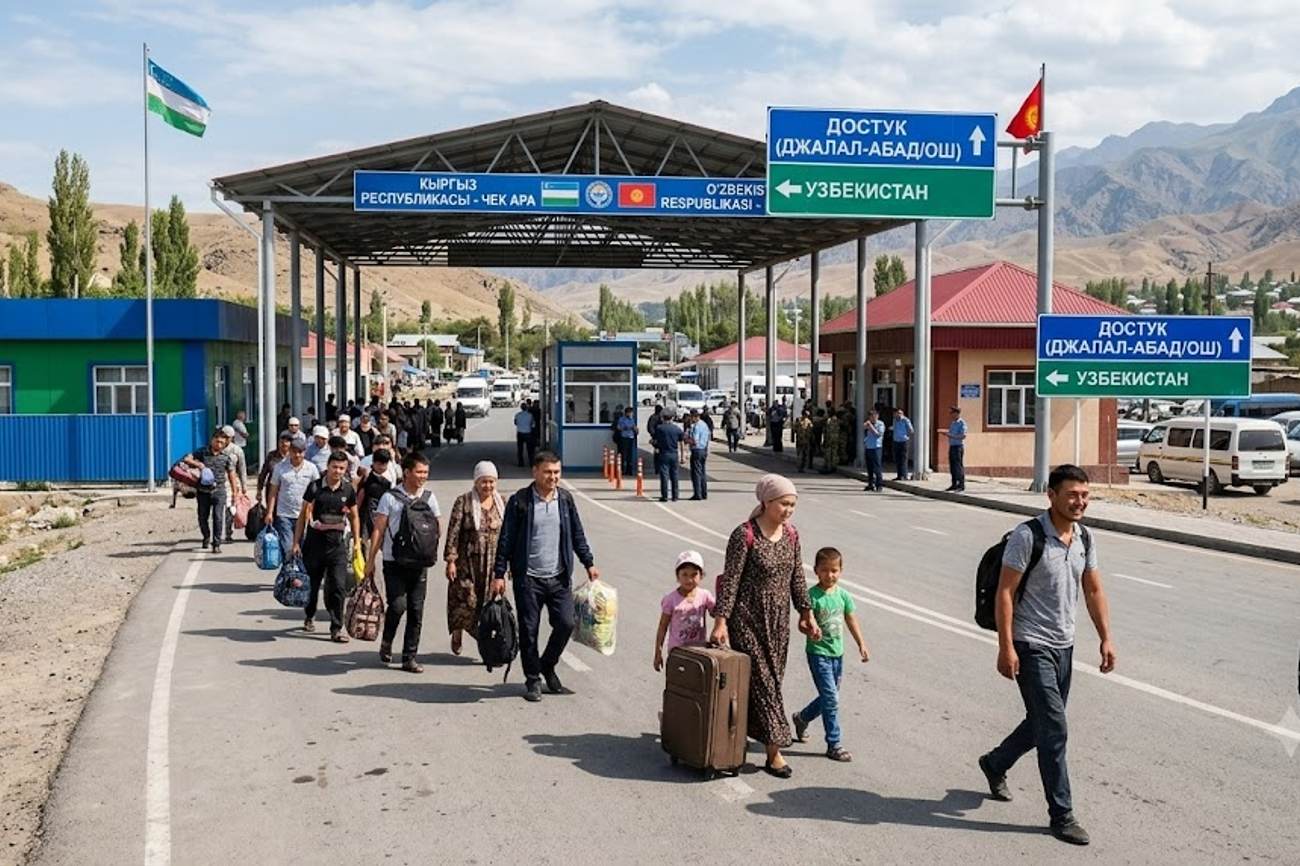
Image generated by AI
Uzbekistan’s foreign tourism arrivals climbed from 6.3 million in early 2025 to 7,749,308 between January and July 2026—a 22.6 percent surge that underscores a massive shift in Central Asian mobility. This growth is not merely a recovery of pre-pandemic levels but a structural expansion of regional movement, with Kyrgyzstan emerging as the primary driver of this volume. The recent diplomatic discussions on July 15, 2026, to synchronize border protocols and create joint tourism routes are a direct response to this data, signaling a transition from bilateral diplomacy to a formalized regional tourism economy.
The Central Asia Connectivity Pivot in Numbers
The scale of movement between Uzbekistan and Kyrgyzstan has reached a threshold where current border infrastructure is becoming a bottleneck for economic growth. Between January and July 2026, Uzbekistan recorded 7,749,308 foreign tourism visitors. The data reveals a heavy regional concentration: Kyrgyzstan alone accounted for 2,177,108 of those arrivals, representing 28.1 percent of Uzbekistan's total foreign tourism market.
The flow is equally aggressive in the opposite direction. From January to June 2026, approximately 3.5 million Uzbek citizens traveled abroad for tourism. Of that total, 1,547,589 entered Kyrgyzstan, meaning 44.2 percent of all Uzbek outbound tourism is concentrated in a single neighboring market.
To manage this volume, the two nations are proposing a 2026–2027 cooperation plan. The strategic focus is divided across four primary operational pillars:
- Tourism Cooperation (30% of the initiative): Establishing a framework for joint routes and professional training.
- Border Connectivity (25% of the initiative): A joint assessment of checkpoints to identify those requiring infrastructure upgrades.
- Organized Group Processing (15% of the initiative): The introduction of a Tourist Group Fast Track to reduce dwell times at borders.
- International Checkpoints (15% of the initiative): Elevating specific crossings to "international status" to allow third-country nationals easier transit.
Comparative Regional Mobility Context
When compared to broader global trends in regional integration, the Uzbekistan-Kyrgyzstan axis is moving toward a "mini-Schengen" model for citizens, though not yet for international tourists. The foundation for this was laid on August 25, 2023, with a protocol that enabled citizens of both nations to travel using only national identity cards for stays up to 60 days, effective September 1, 2023. This was implemented across four specific Uzbek customs posts.
However, a significant data gap exists between the experience of regional citizens and international visitors. While locals bypass passport requirements, foreign nomads and tourists remain subject to full biometric passport controls. The current proposals aim to bridge this gap by expanding the number of international checkpoints, which would shift the market share of arrivals from a few congested hubs to a more distributed network of border crossings.
The following table illustrates the current disparity in travel ease and the projected shift following the proposed 2026-2027 plan:
| Traveler Category | Current Requirement (2026) | Proposed Change (2026-2027) | Impact on Transit Time |
|---|---|---|---|
| Uzbek/Kyrgyz Citizens | National ID Card (up to 60 days) | Sustained ID Card Access | Low/Stable |
| International Tourists | Full Biometric Passport | Expanded International Checkpoints | Moderate Reduction |
| Organized Tour Groups | Standard Queue Processing | Tourist Group Fast Track | High Reduction |
| Multi-Country Itineraries | Separate Booking/Logistics | Joint Regional Routes | High Efficiency Gain |
This shift mirrors patterns seen in the European Union's border liberalizations, where the transition from "checkpoint-centric" travel to "corridor-centric" travel typically results in a measurable increase in per-capita spending as tourists spend less time in transit and more time in destination hubs. According to data trends tracked by the World Tourism Organization (UNWTO), regional integration in emerging markets often leads to a 10-15% increase in multi-destination trip durations.
What This Means for Travelers
For the individual traveler or digital nomad, the July 15 discussions are a signal of intent rather than an immediate change in law. As of now, no new visa or passport arrangements have been implemented. If you are booking travel for the remainder of 2026, you must continue to adhere to existing immigration requirements.
However, the data suggests three actionable shifts for future planning:
- Shift Toward Organized Groups: The proposal for a "Tourist Group Fast Track" means that in 2027, booking through a licensed regional operator may be significantly faster than solo travel. If you prioritize time efficiency over autonomy, wait for the formal launch of these fast-track lanes before booking multi-country tours.
- Diversify Entry Points: The move to grant "international status" to more checkpoints means that the traditional, crowded border crossings may soon have viable alternatives. Travelers should monitor the official list of participating checkpoints to avoid the primary bottlenecks that currently plague the Uzbekistan-Kyrgyzstan border.
- Plan for Longer Stays: The push for joint routes combining Uzbekistan’s historic cities with Kyrgyzstan’s nature destinations suggests a shift toward "slow travel" packages. Travelers should anticipate a rise in integrated 14-to-21-day itineraries that were previously logistically difficult to execute.
For those tracking aviation and transit data via OAG, the increase in ground-border cooperation often precedes an increase in regional flight frequencies as demand for "hub-and-spoke" travel grows.
Forward Projection: The Central Asian Corridor
Based on the current trajectory of 22.6 percent growth in arrivals, the Uzbekistan-Kyrgyzstan partnership is likely a precursor to a broader Central Asian Tourism Zone. The establishment of a permanent tourism working group indicates that this is not a one-off diplomatic gesture but a structural policy shift.
If the 2026–2027 cooperation plan is fully realized, we can project a transition from "bilateral visits" to "regional circuits." This would allow a traveler to enter the region via Tashkent and exit via Bishkek (or vice versa) with minimal friction. The economic incentive is clear: by reducing the "friction cost" of border crossings, both nations can capture a higher percentage of the long-haul tourist market from North America and East Asia, who typically prefer seamless multi-country experiences.
The upcoming November 2026 tourism fair, which will host a Kyrgyz delegation, will likely be the venue where the specific "joint routes" are unveiled. Industry stakeholders should watch for the announcement of specific "certified" tour operators who will be granted access to the fast-track systems.
FAQ: Uzbekistan-Kyrgyzstan Travel 2026
Will visa requirements change for foreigners soon? No. The July 15 discussions focused on border infrastructure and joint routes, not visa waivers. Foreigners must still use passports and follow current visa protocols for both Uzbekistan and Kyrgyzstan.
Is it currently faster to travel in a group than solo? Currently, there is no difference. The "Tourist Group Fast Track" is a proposal for the 2026–2027 plan and is not yet operational.
Can I use an ID card to cross the border? Only if you are a citizen of Uzbekistan or Kyrgyzstan. International travelers must use a biometric passport regardless of the new cooperation agreements.
Which routes are becoming "joint routes"? The specific itineraries have not been published. However, the goal is to link Uzbekistan's urban history centers with Kyrgyzstan's mountain regions. Details are expected after the November 2026 tourism fair.
The data confirms a region in transition, where the border is evolving from a barrier into a bridge for a multi-billion dollar tourism opportunity.
Tags: Uzbekistan-Kyrgyzstan-Tourism-2026, Central-Asia-Border-Connectivity, Uzbekistan-Arrivals-Growth-Rate, Regional-Tourism-Integration-2027, Central-Asia-Fast-Track-Processing
Related Travel Guides
- France And 29 Other European Countries Are Now Waiting To See When The New ETIAS System Will Launch
- Riviera Travel And Others Are The Best Asia Cruise Lines As Cruise Tourism Is Set To Unlock New 2026 Voyages
- Jaci’s Private Lodge Reopens in Madikwe Game Reserve with Expanded Luxury Villa Portfolio 2026
Disclaimer
This article is for informational and educational purposes only. It does not constitute legal, financial, or professional advice. While we strive to provide accurate and up-to-date information, travel policies, regulations, and conditions change rapidly. Always verify information with official sources before making travel decisions. Nomad Lawyer makes no representations about the accuracy, reliability, completeness, or suitability of the information provided. Readers should consult qualified professionals for advice specific to their circumstances. The views expressed in this article are those of the author and do not necessarily reflect the views of Nomad Lawyer.
Raushan Kumar
Founder & Lead Developer
Full-stack developer with 11+ years of experience and a passionate traveller. Raushan built Nomad Lawyer from the ground up with a vision to create the best travel and law experience on the web.
Learn more about our team →