
USA Travel Trends: Unique Stays Replace Traditional Hotels
Treehouses, guest ranches, and desert domes are redefining American tourism as travelers prioritize experiential lodging over traditional hotels.

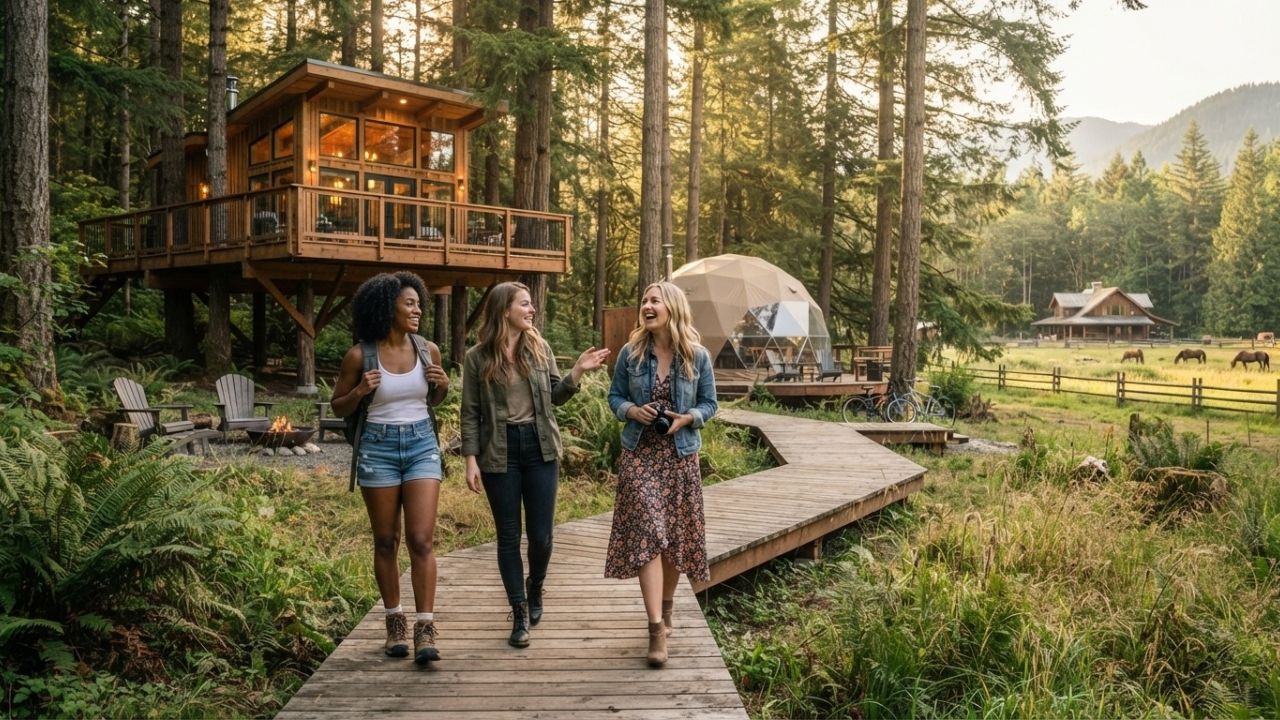
Image generated by AI
From treehouses in Oregon to desert domes in Utah, unique stays are redefining the American hospitality sector as travelers seek immersive lodging experiences. Ten distinct US destinations show how accommodation has become the primary driver for leisure travel itineraries.
The evolution of modern travel shows a steady shift toward sustainable, low-impact tourism. Rather than visiting multiple crowded destinations in a few days, travelers are choosing to stay longer in single locations to engage with local communities.
This behavioral shift provides a major traffic boost for retail operators located along key highway corridors and metropolitan peripheral routes.
Red Rock Safaris: Glamping Domes and Safari Tents in Moab
Moab, Utah, has emerged as a major hub for luxury glamping and experiential lodging. Located near the entries of Arches and Canyonlands National Parks, the area draws outdoor enthusiasts who want to remain immersed in the desert environment throughout their stay.
Instead of traditional hotels, visitors are booking luxury safari tents, geodesic domes, and boutique campsites.
These properties offer views of the red rock scenery, enabling stargazing and outdoor dining while maintaining high hospitality standards.
Western Heritage Lodges: Cowboy Ranch Immersion in Jackson
In Jackson, Wyoming, travelers are choosing guest ranches and cowboy-style lodges that celebrate the heritage of the American West. These properties offer immersive, multi-day experiences where visitors participate in the daily operations of working ranches.
Guests can ride horses across high-mountain trails, fish for native trout in rivers, and watch regional wildlife like elk and bison.
By integrating Western traditions with premium amenities, Jackson guest ranches allow visitors to connect with the local heritage and natural environment.
Canopy Escapes: Treehouses and Mountain Cabins in Gatlinburg and Cave Junction
Gatlinburg, Tennessee, located beside Great Smoky Mountains National Park, has made mountain cabins and treehouses a core part of its travel market. These elevated retreats offer privacy, forest views, and spacious layouts that attract families and small groups.
Similarly, Cave Junction, Oregon, has become famous for its treehouse resorts built high in the Pacific Northwest forests.
These elevated structures provide a new perspective on the forest canopy, with visitors traveling specifically to sleep among the old-growth trees.
Wellness Domes and Desert Retreats: Sedona and Mariposa Eco-Lodges
Sedona, Arizona, utilizes its famous red rock canyons to offer wellness retreats, eco-lodges, and stargazing domes focused on quiet relaxation. Visitors choose these properties to participate in yoga, meditation, and astronomy sessions under the dark desert skies.
Near Yosemite National Park, the gateway community of Mariposa, California, has expanded its outdoor hospitality with Airstream trailers and modern cabins.
These options provide travelers with comfortable base camps that complement their hikes through the national park.
Floating Horizons: Houseboats and Maritime Stays in Page and Bar Harbor
Page, Arizona, offers a unique water-based lodging model through houseboat rentals on Lake Powell. These houseboats serve as both accommodation and transport, allowing families to navigate canyon walls and anchor in private coves.
On the East Coast, Bar Harbor, Maine, preserves its maritime heritage through lighthouse inns and traditional coastal cottages near Acadia National Park.
These properties offer ocean views and historical details, providing a personal look into New England's coastal past.
Tiny Homes and Vineyard Cottages: Texas Hill Country Rural Getaways
Fredericksburg and Wimberley show how smaller communities can compete in the travel market by offering boutique lodging rather than large-scale hotel developments.
Fredericksburg features vineyard cottages and winery estates where guests enjoy local culinary specialties and rural scenery.
Wimberley offers tiny homes, Airstream retreats, and riverside cabins along the Blanco River.
These properties encourage slow travel, giving visitors a quiet base to explore the local shops and parks of the Texas Hill Country.
Traveler Advisory and Unique Lodging Reservation Tips
To help you organize your experiential lodging journey through the United States:
- Book Well in Advance: Unique stays like Oregon treehouses and Moab domes have limited inventory; reserve your dates 6 to 12 months ahead, particularly for peak summer travel.
- Verify Amenities and Access: Some off-grid treehouses or desert domes have limited cellular coverage and require walking up dirt trails; check access details with operators.
- Review National Park Entry Rules: If staying near parks like Arches or Yosemite, verify if you need separate timed-entry permits to access park roads from your lodge.
- Local Culinary Specialties:
- Utah Scones: Try traditional deep-fried dough served with honey butter when visiting Moab.
- Smoked Salmon: Sample fresh hot-smoked salmon when traveling through the Pacific Northwest.
- Prepare for Stargazing: Many glamping sites are located in dark-sky regions; bring headlamps with red-light modes to preserve night vision during stargazing.
Future Projections for Experiential Hospitality and Eco-Lodge Expansion
The growing demand for unique stays highlights the need to build sustainable, low-impact lodging in sensitive environments. By promoting eco-lodges and solar-powered glamping sites, destinations can expand their travel economies while protecting natural resources.
Over the coming decade, investments in off-grid utilities and low-impact building techniques will enhance destination resilience. By maintaining high design standards and collaborating with local conservation groups, the experiential lodging sector ensures that visitors can travel responsibly for generations to come.
Data Table
| Destination Market | Primary Accommodation Type | Adjacent Natural Attraction | Key Travel Segment Benefits |
|---|---|---|---|
| Moab, Utah | Geodesic domes, safari tents | Arches & Canyonlands National Parks | Stargazing, red rock views, outdoor immersion |
| Jackson, Wyoming | Guest ranches, Western lodges | Grand Teton National Park | Horseback riding, fly fishing, wildlife viewing |
| Gatlinburg, Tennessee | Mountain cabins, chalets | Great Smoky Mountains National Park | Family reunions, mountain views, privacy |
| Sedona, Arizona | Wellness domes, eco-lodges | Red Rock State Park | Meditation, astronomy, desert stargazing |
| Mariposa, California | Airstreams, luxury tents | Yosemite National Park | Premium outdoor base camps, modern amenities |
| Cave Junction, Oregon | Elevated forest treehouses | Siskiyou National Forest | Forest canopy views, privacy, adventure stays |
| Page, Arizona | Lake Powell houseboats | Glen Canyon National Recreation Area | Water recreation, mobile canyon base camps |
| Fredericksburg, Texas | Vineyard cottages, ranch stays | Texas Hill Country wine region | Wine tasting, rural scenery, local cuisine |
| Wimberley, Texas | Tiny homes, riverside cabins | Blanco River State Park | River access, slow travel, artisan shopping |
| Bar Harbor, Maine | Lighthouse inns, coastal cottages | Acadia National Park | Ocean views, maritime history, hiking trails |
Key Takeaways
- Experiential Focus: Unique accommodations like treehouses and houseboats are transforming from simple places to sleep into the primary motivation for booking travel.
- Nature Integration: These stays allow travelers to remain close to outdoor environments, including national parks, rivers, and coastal paths.
- Regional Economic Support: Experiential lodging encourages tourists to stay longer in smaller, rural communities, benefiting local merchants.
FAQ
Q: Are glamping tents and desert domes warm enough for winter travel? A: Most premium glamping properties feature pellet stoves, electric heaters, or heated blankets, but travelers should confirm seasonal availability with operators.
Q: Do I need a special license to operate a houseboat on Lake Powell? A: No special marine license is required; rental marinas provide safety briefings and operating instructions before handing over the keys.
Q: Are treehouse accommodations suitable for young children? A: Safety guidelines vary by property; some treehouses have age restrictions due to high suspension bridges and ladders.
Related Travel Guides
Disclaimer
This article is for informational and educational purposes only. It does not constitute legal, financial, or professional advice. While we strive to provide accurate and up-to-date information, travel policies, regulations, and conditions change rapidly. Always verify information with official sources before making travel decisions. Nomad Lawyer makes no representations about the accuracy, reliability, completeness, or suitability of the information provided. Readers should consult qualified professionals for advice specific to their circumstances. The views expressed in this article are those of the author and do not necessarily reflect the views of Nomad Lawyer.
Kunal K Choudhary
Co-Founder & Contributor
A passionate traveller and tech enthusiast. Kunal contributes to the vision and growth of Nomad Lawyer, bringing fresh perspectives and driving the community forward.
Learn more about our team →