US Wilderness and Road Travel Safety 2026: Alaska, West Virginia, and Regional Risk Guide

While Alaska records an astonishingly low motor vehicle death rate of 9.5 per 100,000 residents, extreme geographic isolation and delayed trauma access drive its overall accidental mortality to 91.4 per 100,000—the highest in the United States. A comprehensive September 2026 research evaluation by Whitley Law Firm reveals how regional public health challenges, mountain topography, rural road networks, and medical infrastructure create starkly different safety profiles across American travel corridors.
For independent road-trippers, backcountry trekkers, and cultural explorers navigating the vast expanse of North America, understanding these underlying factors transforms abstract statistics into actionable expedition planning. Rather than indicating uniform danger, the composite data underscores why logistical preparedness, satellite communications, and route awareness remain indispensable for travelers venturing beyond major metropolitan corridors.
Anatomy of the September 2026 US Accidental Risk Study
The study evaluated accidental mortality through three specific benchmarks: motor vehicle fatalities, drug overdose mortality, and medical malpractice claim indicators, synthesizing these metrics into an age-adjusted accidental death rate. The resulting data highlights how regional conditions alter traveler and resident safety across different geographic zones.
The comparative state rankings establish distinct risk concentrations:
- Alaska (91.4 per 100,000 accidental death rate): Combines a low motor vehicle death rate of 9.5 per 100,000 with a drug overdose mortality rate of 45.1 per 100,000. The state recorded 1.62 medical malpractice claims per 100,000 residents, but registered the highest average financial compensation at approximately $1.015 million ($1.01 million) per claim, reflecting the severe consequences of delayed emergency trauma intervention.
- West Virginia (87.6 per 100,000 accidental death rate): Ranks second overall, driven primarily by the country's highest drug overdose rate at 48.9 deaths per 100,000 residents. The state also registered a motor vehicle fatality rate of 14.5 per 100,000 and 3.67 medical malpractice claims per 100,000 residents.
- New Mexico (79.3 per 100,000 accidental death rate): Experiences a high motor vehicle death rate of 19.2 per 100,000 along with an overdose rate of 37.1 per 100,000. New Mexico also registered the highest malpractice claim rate among the ten states examined, at 8.40 claims per 100,000 residents.
- Tennessee (75.0 per 100,000 accidental death rate): Registered 16.6 motor vehicle fatalities and 35.2 drug overdose deaths per 100,000 residents.
- Oklahoma (74.0 per 100,000 accidental death rate): Recorded 15.7 motor vehicle deaths, 25.5 overdose fatalities, and 2.78 medical malpractice claims per 100,000 residents.
- Mississippi (25.6 motor vehicle deaths per 100,000): Registered the highest highway fatality rate among all highlighted states, alongside an overdose rate of 18.6 per 100,000.
- Maine (35.2 overdose deaths per 100,000): Reflected significant public health pressures matching Tennessee in substance-related mortality.
By consulting resources from Travel Alaska Official Portal and the New Mexico Tourism Department, visitors can match their driving routes and wilderness activities to local safety realities.
What Makes Regional Terrain and Emergency Response Different
The primary driver behind Alaska's elevated accidental mortality index is not highway collisions, but the immense friction of distance. Over 80 percent of Alaska's communities lack road connectivity, meaning that emergency medical services rely entirely on bush planes, helicopters, and maritime vessels. Severe subarctic weather, maritime fog, and mountain passes frequently ground medical flights, creating extended delays before a patient reaches Level 1 trauma facilities in Anchorage or Fairbanks.
In contrast, states like Mississippi and New Mexico face roadway hazards stemming from high-speed rural highways, long stretches of undivided two-lane asphalt, and wildlife crossings. New Mexico's open desert interstates and winding mountain routes across the Sangre de Cristo range present sharp elevation shifts and sudden flash flood risks during monsoon periods.
When exploring remote areas managed by the National Park Service Alaska, travelers enter regions where self-reliance is mandatory. A routine fracture or vehicle breakdown that would be resolved in two hours near a major city can require a multi-day search and rescue operation in the Arctic or interior boreal forests.
Visitor Insider Tips
Navigating high-risk transit corridors and isolated wilderness requires tactical planning and local knowledge.
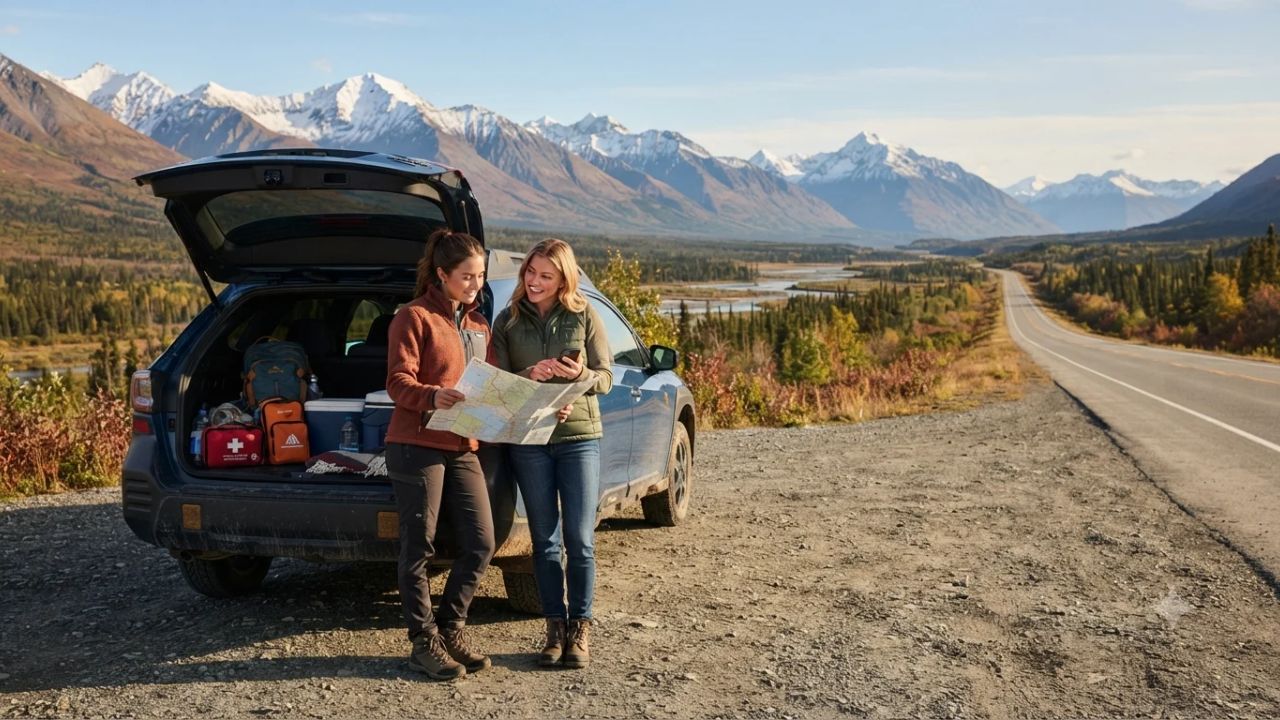
- Carry Dual Satellite Communicators: Cellular coverage drops entirely across vast sections of the Dalton Highway in Alaska, US Route 50 in the Great Basin, and rural byways in West Virginia. Carry a dedicated two-way satellite messenger (such as Garmin inReach or ZOLEO) with active SOS subscription coverage, and test communication protocols before leaving municipal centers.
- Master High-Speed Rural Driving in New Mexico and Mississippi: Avoid driving long desert or rural stretches after midnight. On rural routes like NM-555 or US-61 in Mississippi, reduce highway speeds by 10 to 15 miles per hour at dusk to account for crossing deer, elk, or agricultural machinery that may lack reflective lighting.
- Emergency Backcountry Medical Evacuation Insurance: Standard travel health policies often exclude specialized wilderness rotary-wing extractions. Secure medical evacuation membership coverage (such as Medjet or Global Rescue) that covers direct transport from remote trailheads to regional trauma centers.
- Cold-Weather Vehicle Kits for Alaska and Appalachian Routes: If driving through West Virginia's Allegheny Mountains or Alaska's Parks Highway between October and April, equip your rental vehicle with dedicated winter tires (not standard all-season rubber), a zero-degree sleeping bag, collapsible shovel, portable jump-starter pack, and 72 hours of calorie-dense rations.
- Local Fuel and Depot Awareness: In rural Alaska and parts of northern New Mexico, gas stations can sit 100 to 240 miles apart and may close early on Sundays. Refuel whenever your tank drops below half capacity, and carry an auxiliary approved five-gallon fuel canister when driving unpaved pioneer roads.
Cultural and Environmental Context
Travel safety statistics intersect directly with regional economic disparities and community health systems. In Appalachia and rural western states, long-standing industrial shifts have created localized economic strain, which directly correlates with elevated substance use statistics documented in the report.
For Indigenous communities in Alaska—including Athabascan, Inupiat, and Yup'ik nations—living in isolated villages means preserving traditional subsistence lifestyles while navigating fragile supply chains and high energy costs. Sustainable, respectful tourism directly benefits these communities when visitors hire local Native guides, respect private tribal lands, and support cultural heritage centers rather than demanding rapid urban-style amenities.
Environmental stewardship also demands strict adherence to Leave No Trace principles. With emergency response teams stretched thin across millions of acres of wilderness, self-reliant travel reduces unnecessary strain on volunteer search-and-rescue teams and municipal first responders.
FAQ: Visiting High-Risk US Travel Regions 2026
Is traveling to Alaska dangerous for independent tourists?
No. Alaska is exceptionally safe for prepared visitors. Its high statistical risk stems from remote village medical logistics and substance mortality rather than violent crime or tourist hazards.
What is the primary safety hazard when road-tripping through New Mexico?
High-speed rural highway driving, sudden mountain weather shifts, and wildlife crossings represent the primary travel risks. Avoid nighttime driving on unlit secondary roads.
How do I prepare for remote driving in West Virginia's mountain corridors?
Check brake pads before driving steep mountain descents, watch for black ice in shaded hollows during winter, and download offline navigation maps prior to departure.
Do standard rental cars include satellite communication in remote states?
Rarely. Most rental vehicles rely on standard cellular signals. Rent or bring your own standalone two-way satellite messaging device for backcountry expeditions.
Approaching vast wilderness routes with disciplined preparation turns daunting geographic distances into remarkable and safe journeys.
Related Travel Guides
This article is for informational purposes. Flight routes, passenger regulations, visa rules, and transit advisories are subject to change by airlines and aviation authorities. Readers are advised to verify schedules and travel documentation with relevant carriers and border agencies before departure.
Related Stories
US Leisure Airlines Shift Strategy: Alaska, Southwest, JetBlue, and Frontier Guide 2026

American Cruise Travel 2027: Record 22.4M Passengers Reshape Caribbean, Alaska, and European Sailings