
US Travel Chaos: Severe Thunderstorms Trigger 3,362 Delays and 99 Flight Cancellations, Paralyzing Dallas, Chicago, Atlanta, and Newark
As brutal thunderstorms and massive terminal congestion severely degrade the American aviation network, United, American Airlines, and Southwest are forced into a chaotic wave of sudden flight cancellations and devastating ground stops.

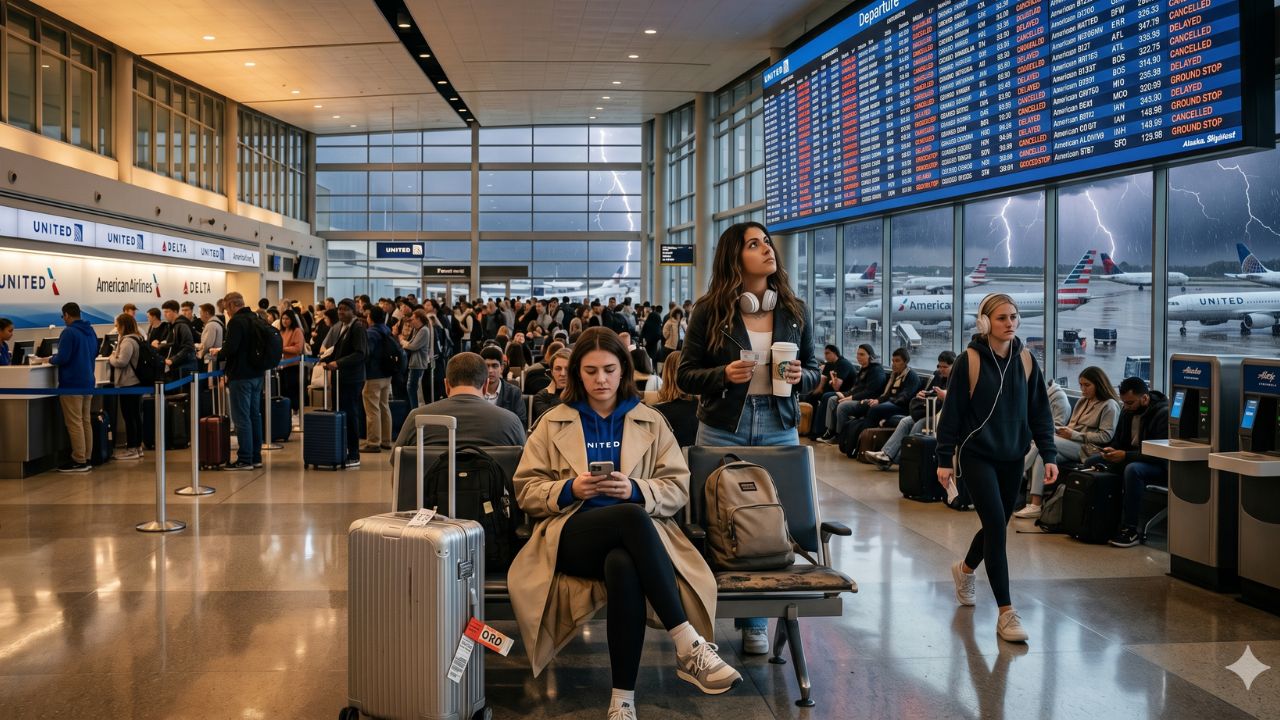
Image generated by AI
A Massive Operational Meltdown Plunges the US into Gridlock
While massive sectors of the global passenger network frequently battle highly unpredictable labor shortages, synchronized logistical bottlenecks, and horrific commercial fleet constraints, sudden, unmanageable extreme weather events remain the absolute most terrifying catalyst for cascading airport disruptions. Delivering highly urgent, breaking airline news, verified North American aviation trackers confirm that a catastrophic operational breakdown has actively generated severe travel chaos across the massive United States domestic aviation network. Today, June 3, 2026, severe travel distress forcefully emerged following a brutal wave of 3,362 massive flight delays and 99 outright flight cancellations that violently tore through Dallas, Chicago, Newark, Atlanta, Boston, Houston, Orlando, and Myrtle Beach.
While desperate travelers usually attempt to navigate sudden, terrifying airport disruptions caused by isolated technical failures, these exclusive aviation updates reveal a highly systemic, incredibly destructive capacity failure resulting from a devastating combination of severe thunderstorms and intense multi-taxi hub congestion. Verified transit data confirms that this massive weather event temporarily shut down critical airspace over Texas and Florida, instantly triggering massive, nationwide ground stops that entirely paralyzed major American legacy carriers. This horrific logistical meltdown is actively destroying the travel itineraries of thousands of incredibly vulnerable passengers, violently stranding corporate commuters and leisure tourists flying with United, American Airlines, Delta, Southwest, Alaska Airlines, and critical regional operators like Envoy Air and SkyWest.
Expanded Overview: The Scale of the Domestic Crisis
The sudden, highly publicized execution of this massive regional operational lockdown serves as an undeniable example of how rapidly a heavily reliant transit network can completely disintegrate under extreme summer weather pressure. The massive disruption has explicitly drawn international attention to the incredibly complex, highly fragile operational ecosystem that links America's major economic centers. For a massive continental region heavily reliant on incredibly robust, high-frequency domestic flight schedules, even a brief period of thunderstorm-induced ground stops requires incredibly precise management by the Federal Aviation Administration (FAA) to prevent total national collapse.
The terrifying reality of this crisis is found in the sheer volume of high-capacity aircraft abruptly knocked out of alignment. By instantly logging 3,461 combined flight disruptions across the United States, airlines are forcing thousands of vulnerable passengers into a terrifying logistical puzzle. This catastrophic reduction instantly paralyzes both inbound and outbound traffic, actively destroying hundreds of incredibly vulnerable connecting itineraries heading to or from major hubs like DFW, ORD, SFO, and EWR. When massive super-hubs simultaneously fail to process traffic, the localized ripple effects violently spiral into a massive, unmanageable wave of terminal congestion nationwide.
Section-Wise Breakdown of the Connectivity Crisis
The Texas and Florida Thunderstorm Meltdown
Dallas-Fort Worth International Airport (DFW) absorbed the absolute most devastating impact of the storm cells, absorbing an incredible 598 delays and 14 cancellations following a massive, prolonged morning ground stop. The neighboring Dallas Love Field also faced terrifying weather-related friction, logging 158 delays and 4 cancellations. In Florida, Orlando International (MCO) was battered by 93 delays and 5 cancellations, while Fort Lauderdale (FLL) endured horrific rolling ground stops. In Texas, Houston (IAH) suffered a massive operational failure, reporting an agonizing 127-minute average ground delay.
East Coast and Midwest Hub Gridlock
The closure of southern airspace sent immediate, terrifying shockwaves into the surrounding northern mega-hubs. Chicago O’Hare International (ORD) recorded 225 delays and 7 cancellations, indicating substantial operational strain driven by both high traffic and re-routed weather impacts. On the East Coast, Newark Liberty International (EWR) handled 77 delays and 12 cancellations, highlighting significant disruption for transatlantic and transcontinental travelers. Hartsfield-Jackson Atlanta (ATL) logged 147 delays and 3 cancellations, while Boston Logan (BOS) struggled violently with multi-taxi congestion, severely delaying departures. On the west coast, San Francisco (SFO) absorbed 169 delays.
The Regional Airline Collapse
The extreme weather actively crushed the massive legacy carriers, but the regional feeder networks were completely devastated. American Airlines suffered an astonishing 601 delays, while Southwest Airlines logged 597. However, regional partners like Envoy Air (American Eagle) suffered 159 delays and 10 cancellations, and SkyWest logged 248 delays and 4 cancellations. Because regional aircraft are frequently pushed to the bottom of the Air Traffic Control priority list during massive weather events, these crucial feeder flights face the highest vulnerability to cascading schedule destruction.
Verified US Aviation Disruption Data
To fully comprehend the massive operational scale and devastating delays dictating this highly volatile national crisis, the following tables explicitly detail the exact, verified flight metrics officially recorded across the impacted airlines and major hubs:
Severe Airline Disruption Metrics
| Affected Airline | Total Delays | Total Cancellations | Impact Profile |
|---|---|---|---|
| American Airlines | 601 Delays | 4 Cancellations | Severe Hub Congestion |
| Southwest Airlines | 597 Delays | 5 Cancellations | Massive Domestic Delays |
| United Airlines | 412 Delays | 17 Cancellations | Highest Cancellation Volume |
| SkyWest | 248 Delays | 4 Cancellations | Severe Regional Feeder Impact |
| Delta Air Lines | 228 Delays | 7 Cancellations | Moderate Network Delay |
| Envoy Air | 159 Delays | 10 Cancellations | High Regional Volatility |
| Alaska Airlines | 45 Delays | 5 Cancellations | Targeted Cancellations |
Severe Airport Disruption Metrics
| US Hub Airport | Total Delays | Total Cancellations | Primary Disruption Catalyst |
|---|---|---|---|
| Dallas-Fort Worth (DFW) | 598 Delays | 14 Cancellations | Severe Thunderstorms / Ground Stop |
| Chicago O’Hare (ORD) | 225 Delays | 7 Cancellations | High Traffic / Weather Ripple Effects |
| San Francisco (SFO) | 169 Delays | 5 Cancellations | West Coast Hub Congestion |
| Dallas Love Field (DAL) | 158 Delays | 4 Cancellations | Severe Thunderstorms |
| Atlanta (ATL) | 147 Delays | 3 Cancellations | Southern Airspace Congestion |
| Orlando (MCO) | 93 Delays | 5 Cancellations | Florida Thunderstorm Ground Stops |
| Newark (EWR) | 77 Delays | 12 Cancellations | East Coast Weather / High Traffic |
Passenger Impact: Navigating the Regional Meltdown
For the modern commuter attempting to navigate this highly volatile American network, the passenger impact of this massive scheduling failure is completely exhausting. Reliable scheduling is the absolute backbone of multi-city itineraries frequently booked by domestic business travelers.
- Anticipate Overwhelming Terminal Congestion: Because massive amounts of seat capacity have been violently deleted from the schedules across Texas and Florida, thousands of passengers are simultaneously dumped back into the terminal departure halls. Security screening and rebooking procedures will take exceptionally longer than usual.
- Alternative Routing is Mandatory: Passengers trapped in the Dallas gridlock are urged to actively search for alternative regional routing, such as Houston Hobby, while maintaining ultimate flexibility with ground transport.
- Contact Carriers Promptly: Passengers must prepare for massive secondary disruptions. Do not wait in massive terminal queues. Immediately utilize official airline mobile apps to review available travel options, request digital rebooking, or secure mandatory emergency accommodation for overnight delays resulting from rolling ground stops.
Conclusion: A Highly Volatile Transit Crisis
The massive, highly publicized operational breakdown across the United States domestic airspace represents a severe, terrifying crisis for the national travel sector. By actively forcing passengers to endure 3,461 critical flight disruptions across the nation's most vital corridors, this severe weather event guarantees an incredibly stressful, highly exhausting travel experience. As operational teams frantically battle this sudden logistical puzzle and severe ATC backlog, passengers are heavily urged to aggressively monitor their bookings, thoroughly understand their carrier’s rebooking policies, and fully expect massive, cascading flight disruptions amidst unprecedented American travel chaos.
Key Takeaways
- Massive Domestic Meltdown: Severe thunderstorms in Texas and Florida caused massive ground stops, violently disrupting operations across the US and triggering 3,362 massive delays and 99 flight cancellations.
- Dallas Hub Shattered: DFW Airport recorded an incredible 598 delays and 14 cancellations, completely paralyzing the massive Texas hub following early morning thunderstorms.
- Airlines Severely Crippled: American Airlines (601 delays) and Southwest Airlines (597 delays) suffered the absolute highest volume of delayed aircraft, while United executed 17 massive cancellations.
- Regional Networks Collapse: Vital regional feeders like Envoy Air and SkyWest suffered massive delays, completely destroying connectivity to smaller American outposts.
- Passenger Survival Tactics: Travelers are aggressively urged to check their flight status in real-time via official airline apps, arrive at least 3 hours early to navigate massive security lines, and actively consider re-routing through alternative, un-impacted regional airports.
Disclaimer: The specific cancellation metrics, delayed flight timelines, and airline operational failures presented in this report are based on verified transit data compiled from FlightAware regarding the US flight disruptions in June 2026. Official airline routing, terminal congestion levels, and local carrier compensation policies are highly volatile and subject to continuous, real-time update based on active FAA directives, fluctuating weather severity, and sudden air traffic control shifts. Prospective passengers are urgently advised to fiercely monitor their specific booking status and verify active flight schedules directly via the airline's official portal prior to airport arrival.
Disclaimer
This article is for informational and educational purposes only. It does not constitute legal, financial, or professional advice. While we strive to provide accurate and up-to-date information, travel policies, regulations, and conditions change rapidly. Always verify information with official sources before making travel decisions. Nomad Lawyer makes no representations about the accuracy, reliability, completeness, or suitability of the information provided. Readers should consult qualified professionals for advice specific to their circumstances. The views expressed in this article are those of the author and do not necessarily reflect the views of Nomad Lawyer.
Kunal K Choudhary
Co-Founder & Contributor
A passionate traveller and tech enthusiast. Kunal contributes to the vision and growth of Nomad Lawyer, bringing fresh perspectives and driving the community forward.
Learn more about our team →