
US Snowstorms Put Holiday Travel Cover Under Pressure as Flight Delay Triggers Decide Claims
US Snowstorms Put Holiday Travel Cover Under Pressure as Flight Delay Triggers Decide Claims

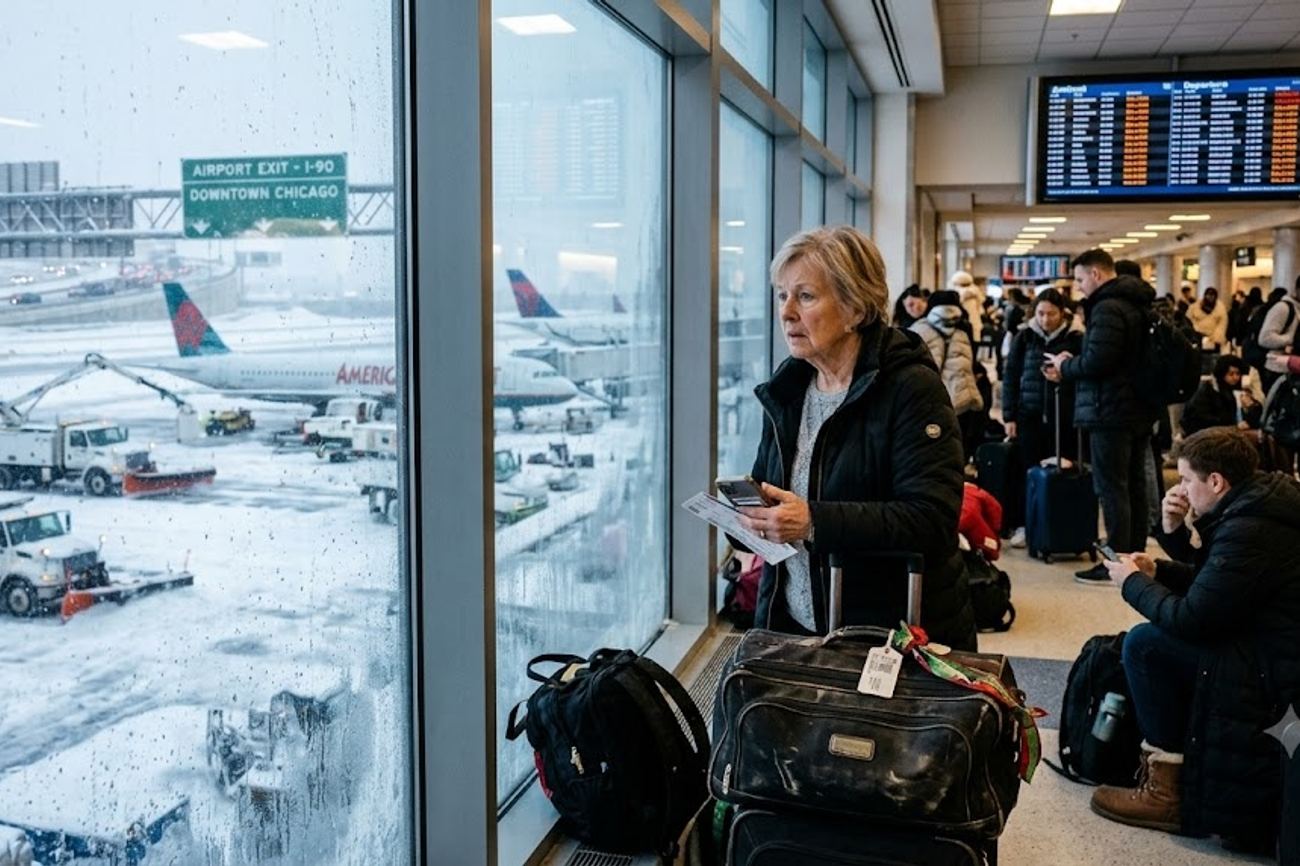
Image generated by AI
title: Navigating the 2026-2027 US Winter Travel Surge description: An insider's guide to surviving the forecasted El Niño winter, understanding the intersection of travel insurance and airline rights, and managing holiday transit in high-snow zones. date: 2024-05-20
A historic-strength El Niño event has a 75% chance of occurring between October and December 2026, signaling a winter that could fundamentally reshape holiday travel across the United States. While many travelers view seasonal forecasts as vague suggestions, the combination of NOAA's climate signals and the Old Farmer’s Almanac’s predictions for above-normal snowfall suggests that the 2026–2027 season will be defined by volatility in the Northeast, the Pacific Northwest, Alaska, the Appalachians, and the Intermountain region.
The Great Winter Shift of 2026-2027
The current trajectory for the coming winter is not merely about "more snow," but about the intensity of climate drivers. NOAA’s Climate Prediction Center confirmed on 10 September that there is a greater than 90% probability of a very strong El Niño during the autumn and winter of 2026–27. For those of us who track regional rhythms, this isn't just a statistic; it is a warning that the traditional "holiday rush" will collide with high-probability weather disruptions.
The challenge for the modern nomad is the gap between a seasonal outlook and a specific storm forecast. While the Old Farmer’s Almanac points to heavy snow in travel-heavy corridors, these are broad trends. The National Weather Service uses a tiered system—outlooks (up to seven days), watches (advance notice), and warnings (high confidence of hazard)—to narrow these trends into actionable data. The friction arises when travelers mistake a general seasonal trend for a specific "insurable event." In the eyes of an insurance provider, a snowy winter is a known climate pattern, but a named blizzard is a specific trigger.
What Makes Winter Transit in the US Unique
Traveling through the US during a strong El Niño year is an exercise in managing "foreseeability." Unlike summer travel, where a flight delay is often a mechanical or staffing issue, winter disruptions are systemic. When the Intermountain region or the Northeast freezes over, it creates a domino effect across the entire national airspace.
The nuance that most travelers miss is the "known-event" exclusion. Travel insurance is not a retroactive safety net; it is a hedge against the unknown. If you purchase a policy after a storm has been named or a specific forecast has dominated the news, that event is no longer "unforeseen." For example, if a storm watch is already active for the East Coast, a policy bought that afternoon may explicitly exclude that specific blizzard. The only way to truly insulate yourself is to secure coverage at the moment of booking, long before the National Weather Service issues a warning.
Furthermore, the experience of a "delay" is subjective, but the reimbursement of one is mathematical. A five-hour delay at a hub like O'Hare or Denver can feel like a catastrophe, especially if it kills a connection. However, most policies operate on strict contractual thresholds—often requiring 6, 12, or even 24 hours of delay before benefits activate. If your flight is pushed from 9am to 2pm, you have suffered a significant disruption, but you likely haven't hit the trigger for a trip-delay claim.
Visitor Insider Tips
To navigate the 2026-2027 winter without losing thousands in out-of-pocket costs, you need to move beyond the brochure and understand the logistics of US winter transit.
Timing and Booking Avoid booking "tight" connections in hubs like Chicago (ORD), Newark (EWR), or Denver (DEN) during December. If you must use these hubs, build in a minimum of four hours between flights. More importantly, buy your travel insurance the same day you book your flights. This eliminates any argument over whether a storm was "foreseeable" at the time of purchase.
The "Refund vs. Reimbursement" Strategy Understand that you have two separate safety nets. First, the US Department of Transportation mandates that if an airline cancels your flight or makes a significant change, you are entitled to a prompt refund if you choose not to take the alternative flight offered. This is a legal right, not an insurance benefit. Second, your private insurance is for the "non-refundable" bits—the prepaid hotel, the tour, or the rental car. Do not waste your insurance claim on something the airline is legally required to refund.
Regional Logistics If you are heading to the Pacific Northwest or Alaska, ensure your rental car agreement explicitly includes 4WD or AWD. In these regions, "above-normal snowfall" often means secondary roads become impassable. Check the National Park Service for road closures before departing your hub city, as insurance rarely covers "access problems" if the road was officially closed and you attempted to drive anyway.
Documentation Etiquette In the US, "itemized receipts" are the gold standard. A credit card statement showing a $200 charge at a hotel is often insufficient for an insurance claim. You need the folio that breaks down the room rate, taxes, and incidental charges. Save every digital PDF and photograph every paper receipt the moment you receive it.
Cultural and Environmental Context
The intersection of high-volume winter tourism and extreme weather events creates a significant strain on local infrastructure. In regions like the Appalachians and the Intermountain West, the influx of "snow-chasers" during an El Niño year often overwhelms small-town resources. This creates a tension between the economic windfall of tourism and the physical capacity of the community to manage road clearing and emergency services.
Moreover, the reliance on large-scale aviation hubs creates an environmental and social bottleneck. When a major storm hits the Northeast, thousands of passengers are stranded in airports, placing immense pressure on local hospitality sectors that are already understaffed. This has led to a push for more sustainable, regional rail options, though these often lack the redundancy of the aviation network during severe weather.
From a preservation standpoint, the increased snowfall predicted for 2026-2027 is a double-edged sword. While it supports the ski economy, it also increases the risk of avalanche activity and environmental degradation in sensitive alpine zones. Travelers are encouraged to follow "Leave No Trace" principles and adhere strictly to UNESCO World Heritage guidelines when visiting protected natural sites in the US to ensure that the surge in winter visitors doesn't permanently damage the ecosystem.
FAQ: Visiting the US Winter 2026-2027
What is the best time to visit to avoid the worst snow? While El Niño increases volatility, the window between late October and early December often avoids the peak blizzard season of January and February. However, always monitor the NOAA Climate Prediction Center for real-time updates.
Do I need a visa for winter travel to the US? Visa requirements depend on your citizenship. Most visitors need an ESTA or a B1/B2 visa. Check the official US Embassy website or the Department of State for the most current entry requirements.
How do I get from major hubs like NYC or Chicago to snowy regions? Domestic flights are fastest, but during severe winters, Amtrak provides a more stable—though slower—alternative for Northeast corridors. Always book "flexible" fares during the 2026-2027 season.
Is it safe for solo travelers during winter storms? Yes, provided you have a reliable communication method and a flexible itinerary. Avoid renting cars in unfamiliar snowy terrain if you are not experienced with winter driving; use professional shuttles instead.
The difference between a winter wonderland and a travel nightmare usually comes down to the date you signed your insurance policy.
#USAWinter2027 #ElNinoTravel #USFlightRights #WinterTravelInsurance #NOAASnowForecast #USHolidayTransit
Related Travel Guides
- Denmark Aligns With US As Greenland Security Deal Reshapes Arctic Travel And Regional Access
- Georgia Attracts Global Tourism Attention as UN Innovation Forum 2027 Highlights Future Travel Technology Growth
- Spain Follows Portugal and a Growing European Cohort as Digital Nomad Tourism Fuels New Travel Demand and Housing Strain
Disclaimer
This article is for informational and educational purposes only. It does not constitute legal, financial, or professional advice. While we strive to provide accurate and up-to-date information, travel policies, regulations, and conditions change rapidly. Always verify information with official sources before making travel decisions. Nomad Lawyer makes no representations about the accuracy, reliability, completeness, or suitability of the information provided. Readers should consult qualified professionals for advice specific to their circumstances. The views expressed in this article are those of the author and do not necessarily reflect the views of Nomad Lawyer.
Preeti Gunjan
Contributor & Community Manager
A passionate traveller and community builder. Preeti helps grow the Nomad Lawyer community, fostering engagement and bringing the reader experience to life.
Learn more about our team →