
Denmark Aligns With US As Greenland Security Deal Reshapes Arctic Travel And Regional Access
Denmark Aligns With US As Greenland Security Deal Reshapes Arctic Travel And Regional Access

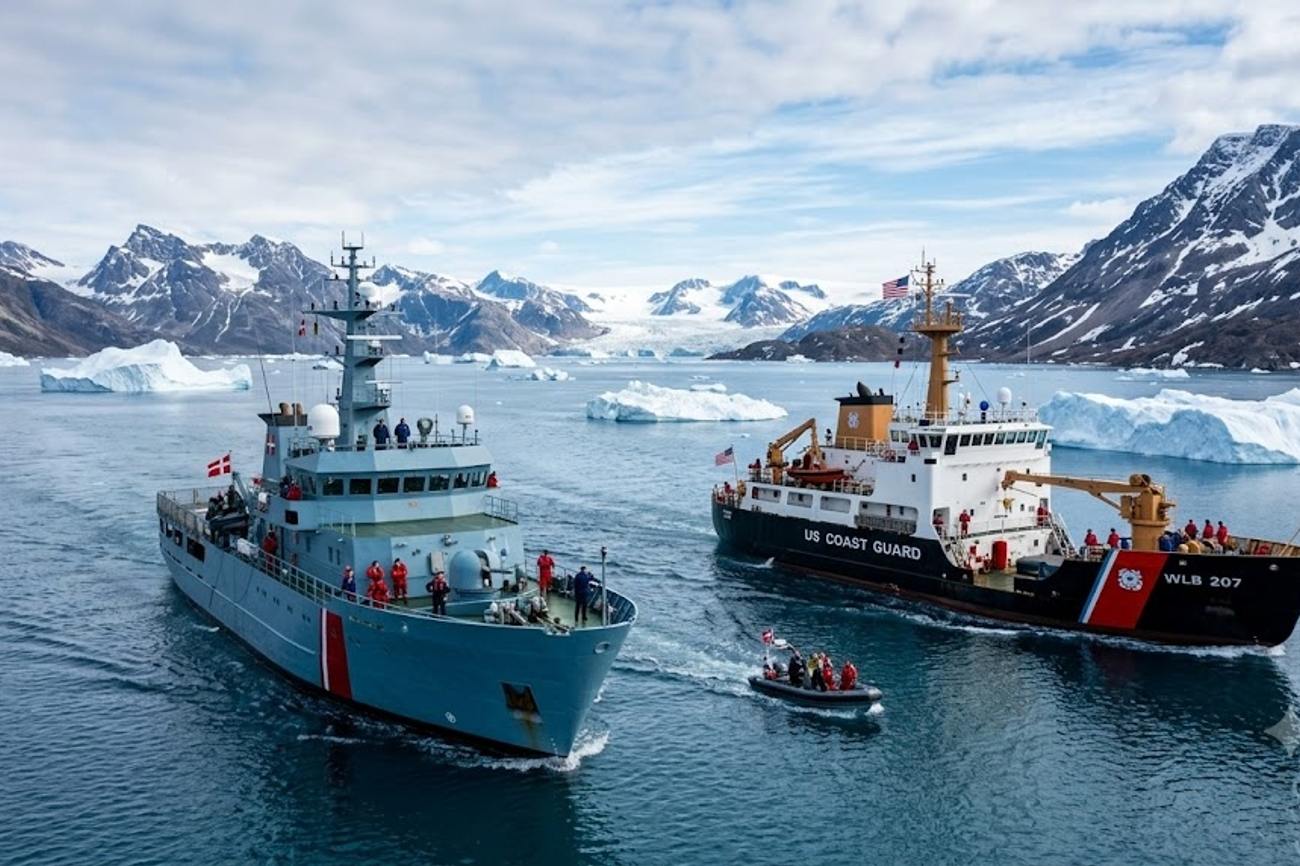
Image generated by AI
Greenland's share of total Arctic tourism photos currently sits at 2.5%, a stark contrast to Iceland's 46.9% dominance in the region. This disparity highlights a massive untapped market in the world's largest island, which now finds itself at the center of a geopolitical shift following the September 18, 2026, security agreement between the United States, Denmark, and Greenland. While the agreement focuses on permanent US control over security and the prevention of adversary military bases, the resulting stability and potential for infrastructure investment signal a pivot point for Arctic accessibility.
The Arctic Security Pivot in Numbers
The agreement announced on September 18, 2026, is not a tourism mandate, but it functions as a catalyst for regional stability. In the Arctic, security and accessibility are inextricably linked; where military infrastructure expands, logistics and transport networks often follow. The current state of Greenlandic tourism is characterized by extreme seasonality and low penetration compared to its neighbors. Data indicates that Greenland's tourism footprint is heavily skewed toward the summer months, with 91.0% of its social media-tracked visitor activity occurring during the warmer season, compared to only 9.0% in winter.
This extreme seasonality is a liability that the current geopolitical alignment may help address. By strengthening the relationship between Washington, Copenhagen, and Nuuk, the territory may see increased investment in dual-use infrastructure—airports and ports that serve both security needs and civilian travel. According to IATA, aviation connectivity in remote regions is the primary driver of tourism growth. If the US security presence leads to upgraded runways or enhanced satellite communications in Greenland, the barrier to entry for high-spend adventure travelers will drop significantly.
Comparative Arctic Market Analysis
When placing Greenland within the broader Arctic context, the data reveals a significant gap in market maturity. While the Norwegian and Finnish Arctic have mastered the "winter economy," Greenland remains a summer-centric destination. The growth patterns in other Arctic hubs, such as Tromsø, provide a blueprint for what Greenland could experience if infrastructure improves. Tromsø Airport saw international traffic surge by 40% in 2025 compared to 2024, reaching nearly 2.4 million total passengers in 2025.
The following table compares the regional distribution of tourism activity (based on photo-unit-day data) and recent aviation growth in established Arctic hubs to illustrate the growth potential for Greenland.
| Arctic Region/Hub | Total Photo Share | Summer vs. Winter Share | Recent Passenger Growth (YoY) |
|---|---|---|---|
| Iceland | 46.9% | 70.0% / 30.0% | N/A |
| Alaskan Arctic | 18.7% | 76.0% / 24.0% | N/A |
| Norwegian Arctic (Tromsø) | 15.2% | 68.2% / 31.8% | 40% (International) |
| Finnish Arctic (Rovaniemi) | 2.8% | 38.7% / 61.3% | 18.4% |
| Greenland | 2.5% | 91.0% / 9.0% | N/A |
The data shows that Finland has successfully inverted the seasonal trend, with 61.3% of its tourism activity occurring in winter. Greenland's current 9.0% winter share represents a massive growth opportunity. If the security agreement facilitates better year-round logistics, Greenland could mirror the 18.4% to 40% growth rates seen in Rovaniemi and Tromsø.
What This Means for Travelers
For the individual traveler, this geopolitical shift does not result in immediate flight increases, but it changes the long-term booking strategy for the North Atlantic. Currently, travel to Nuuk, Ilulissat, and Sisimiut is constrained by limited transport connections and volatile weather. However, the alignment of US and Danish interests suggests a future of increased stability and potentially more robust search-and-rescue and logistics support in the region.
If you are planning an expedition to Greenland in the next 24-36 months, consider the following data-driven advice:
- Prioritize Summer Bookings: With 91.0% of activity concentrated in summer, capacity is tight. Booking 6-9 months in advance is essential to secure limited lodge and flight space.
- Monitor Winter Infrastructure: Keep a close eye on announcements regarding airport upgrades in Nuuk. As seen in Tromsø—where 17 airlines now serve the hub—increased connectivity leads to a rapid diversification of price points.
- Diversify Arctic Itineraries: Given that Iceland holds 46.9% of the regional market share, it remains the most accessible gateway. Travelers should look for multi-stop "Arctic Circle" packages that link Iceland to Greenland to mitigate the risk of weather-related cancellations.
For those tracking the financial viability of Arctic travel, Statista provides ongoing metrics on the rise of "last-chance tourism," which is driving the 374% increase in summer footprints and 634% increase in winter footprints observed in the broader Arctic region between 2006 and 2016.
Projecting the Arctic Trajectory
Based on the trajectory of Tromsø and Rovaniemi, Greenland is positioned for a "catch-up" phase. The security agreement acts as a stabilizer. When the US prevents adversary investments and establishes permanent security control, it reduces the perceived risk for international hotel chains and cruise operators to invest in fixed assets.
We can project that Greenland will move from a 2.5% regional share toward a 5-7% share within the next decade. The catalyst will be the transition from "expedition travel" (low volume, high cost) to "infrastructure-supported tourism" (medium volume, tiered cost). The current data from Tromsø (626,600 passengers in just January-February 2026) proves that there is a massive global appetite for Arctic winter experiences. If Greenland can shift its winter share from 9.0% to even 20%, the economic impact on Nuuk and surrounding settlements would be transformative.
FAQ: Greenland Security & Travel 2026
Will the security agreement increase flight prices to Greenland? Initially, no. However, if security infrastructure leads to expanded airport capacity, increased competition among carriers—similar to the 17 airlines now serving Tromsø—will likely drive prices down over the long term.
Is it safe to book travel to Greenland given the geopolitical tensions? Yes. The agreement between Denmark, the US, and Greenland is designed to increase regional stability and protect territorial integrity, which generally reduces risk for international visitors.
Which hubs should I use to enter Greenland? Nuuk remains the primary gateway, but travelers should monitor connections through Iceland and Denmark, as these regions currently dominate the Arctic tourism share at 46.9% and 15.2% respectively.
When is the best time to visit based on current data? Summer remains the peak period, accounting for 91.0% of current visitor activity. However, the growth in winter tourism across the Arctic (up 634% in some sectors since 2006) suggests that winter is becoming a viable, less crowded alternative.
The Arctic is shifting from a frontier of exploration to a corridor of strategic stability, and the data suggests the travel boom is only beginning.
#GreenlandTourismGrowth #ArcticAviationData #USDenmarkSecurityAgreement #NuukInfrastructure #ArcticSeasonalShift2026
Related Travel Guides
- Georgia Attracts Global Tourism Attention as UN Innovation Forum 2027 Highlights Future Travel Technology Growth
- Spain Follows Portugal and a Growing European Cohort as Digital Nomad Tourism Fuels New Travel Demand and Housing Strain
- Poland Stands Alongside Germany and More in Europe’s New Sleep Tourism Wave Transforming Holidays
Disclaimer
This article is for informational and educational purposes only. It does not constitute legal, financial, or professional advice. While we strive to provide accurate and up-to-date information, travel policies, regulations, and conditions change rapidly. Always verify information with official sources before making travel decisions. Nomad Lawyer makes no representations about the accuracy, reliability, completeness, or suitability of the information provided. Readers should consult qualified professionals for advice specific to their circumstances. The views expressed in this article are those of the author and do not necessarily reflect the views of Nomad Lawyer.
Kunal K Choudhary
Co-Founder & Contributor
A passionate traveller and tech enthusiast. Kunal contributes to the vision and growth of Nomad Lawyer, bringing fresh perspectives and driving the community forward.
Learn more about our team →