
US Snowstorms Put Holiday Travel Cover Under Pressure as Flight Delay Triggers Decide Claims
With NOAA forecasting a 90% chance of a strong El Niño for winter 2026–2027, holiday travelers face strict insurance delay triggers, known-event exclusions, and DOT refund rules.

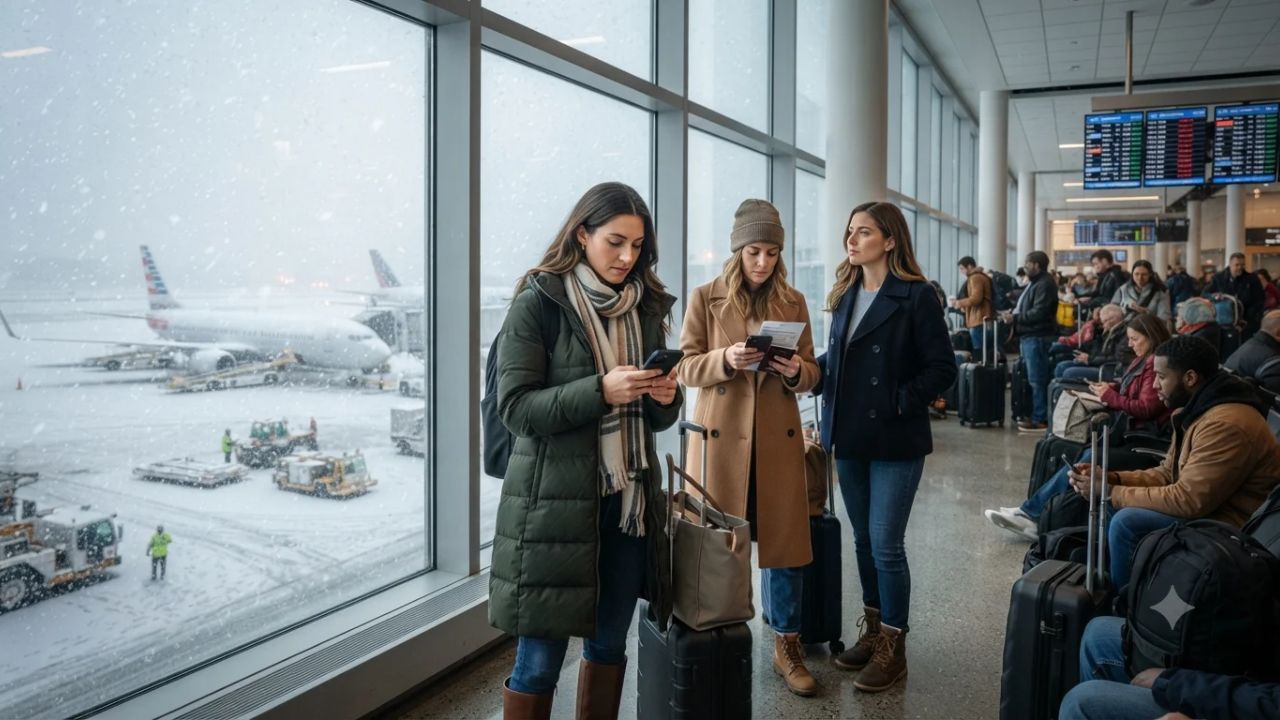
Image generated by AI
A 90% probability of an intensified El Niño system colliding with a 75% likelihood of historic-strength atmospheric conditions between October and December 2026 has placed American holiday travel networks on high alert. Forecasts released on 10 September by the NOAA Climate Prediction Center indicate that the 2026–2027 winter season will drive elevated precipitation patterns across the United States, corroborating projections from the Old Farmer’s Almanac that anticipate above-normal snowfall across the Northeast, Appalachians, Intermountain West, Pacific Northwest, and Alaska. Yet as millions of passengers prepare holiday itineraries through major aviation gateways like Boston Logan, New York JFK, and Chicago O'Hare, a dangerous gap remains between passenger expectations and insurance reality. Securing a winter travel insurance policy does not guarantee an automatic payout when blizzards disrupt air corridors; instead, private underwriting contracts, rigid delay hour triggers, and federal regulatory distinctions enforced by the U.S. Department of Transportation (DOT) decide who absorbs the financial blow of winter cancellations.
Forecasting vs. Foreseeability: When Weather Disruptions Void Policy Coverage
The core tension in winter travel insurance claims centers on the contractual boundary between generalized climate projections and legally defined "foreseeable events." The National Association of Insurance Commissioners (NAIC) consistently cautions consumers that travel insurance operates as named-peril protection rather than an open-ended safety net. Underwriters evaluate claims strictly on whether the underlying incident was sudden, accidental, and completely unforeseen at the precise moment the policy was purchased.
This distinction becomes decisive when tracking severe winter storms. A long-range projection—such as NOAA's September assessment of El Niño or the seasonal regional snowfall tables issued by the Old Farmer's Almanac—acts as a broad statistical probability rather than an insurable event. Travelers can legally purchase coverage while these seasonal climate signals exist without voiding their protection. However, the legal environment shifts rapidly once the National Weather Service (NWS) initiates localized alerts. NWS operational forecasts provide up to seven days of situational awareness, followed by hazardous weather outlooks, watches, and formal winter storm warnings.
Major underwriters, including Travel Guard, enforce strict known-event exclusions once a specific atmospheric disturbance is identified, named, or assigned a public storm tracking bulletin. A traveler who books a flight in August and buys insurance simultaneously remains protected if a December blizzard grounds their aircraft. Conversely, a traveler who books the same flight, observes an approaching blizzard on the five-day weather forecast, and hastily buys a policy 48 hours prior to departure will routinely see their claim denied under the known-event doctrine.
| Operational Weather Status | Underwriting Coverage Eligibility | Practical Traveler Action |
|---|---|---|
| Broad Seasonal Climate Outlook | Full baseline coverage remains accessible | Purchase policy at initial flight deposit to lock in protection |
| 7-Day Hazardous Weather Outlook | Standard coverage generally valid | Verify policy language regarding named weather systems |
| Winter Storm Watch Issued | Foreseeability triggers begin activating | Policies purchased at this stage risk immediate claim denial |
| Winter Storm Warning Active | Event classified as imminent or occurring | Newly purchased policies will strictly exclude the active storm |
| Flight Officially Grounded | Retroactive insurance strictly prohibited | Rely exclusively on federal DOT carrier refund protections |
Contractual Triggers: Why Flight Delay Hours Outweigh Snowfall Totals
Many air passengers mistakenly assume that severe snowfall at an airport automatically validates a travel delay or cancellation claim. In insurance adjudication, the physical volume of snow on a runway is irrelevant; what matters is whether the disruption meets the exact hourly threshold written into the policy certificate.
Trip-delay coverage is engineered to reimburse reasonable out-of-pocket expenses—such as emergency hotel lodging, local taxi transfers, and meals—incurred when an itinerary is delayed by a covered hazard. However, policies impose strict minimum delay durations that frequently conflict with real-world travel disruptions. A policy may mandate a minimum delay of six, eight, or twelve consecutive hours before benefits activate. Consider a passenger scheduled on a 09:00 departure who experiences a weather-induced rolling delay that pushes takeoff to 14:00. Although losing five hours can cause missed rail connections, forfeit rental car reservations, and ruin non-refundable ski passes, a policy with a six-hour trigger will reject the claim entirely.
| Coverage Element | Institutional Provider | Operational Governance and Limitations |
|---|---|---|
| Statutory Ticket Refund | Operating Airline (via DOT) | Mandatory prompt cash refund if carrier cancels or significantly changes schedule and passenger rejects rebooking |
| Controllable Care (Hotels/Meals) | Operating Airline | Discretionary under airline customer commitments; carriers universally classify winter storms as uncontrollable weather |
| Trip-Delay Expense Benefit | Private Travel Insurer | Reimburses itemized food and lodging only after crossing strict contractual hour thresholds (typically 6 to 12 hours) |
| Trip Cancellation / Interruption | Private Travel Insurer | Reimburses unused, non-refundable prepaid costs; requires complete cessation of services by common carrier |
| Standard CFAR Upgrade | Private Travel Insurer | Reimburses 50% to 75% of trip cost; requires policy purchase within 14 to 21 days of initial deposit |
| Allianz Cancel Anytime Option | Allianz Partners | Reimburses up to 80% of prepaid losses; mandates coverage within 14 days of booking and cancellation 30+ days prior to travel |
The evidentiary standard for proving an insurance claim during winter airport shutdowns is demanding. Underwriters require contemporaneous documentation showing the formal cause of delay, exact timestamps, and itemized receipts. Bank statements reflecting lump-sum charges are regularly rejected by claims examiners. Travelers must present individual, itemized bills for food and lodging alongside official carrier disruption letters indicating the precise cancellation rationale.
Expert Analysis: Dissecting the Fault Lines Between DOT Mandates and Private Underwriting
The fundamental vulnerability facing holiday travelers during the 2026–2027 winter season lies in the widespread confusion between statutory airline consumer rights and private underwriter indemnification. For travelers booking holiday air travel, the direct consequence is that accepting an airline's customer service gesture can inadvertently forfeit thousands of dollars in commercial insurance recoveries.
Under binding Department of Transportation regulations, when a commercial airline cancels a flight or executes a significant schedule alteration—regardless of whether the catalyst is a mechanical failure or a historic blizzard—the passenger possesses an absolute right to a prompt cash refund if they decline the carrier's alternative routing. However, many stranded passengers accept rebooking vouchers or rescheduled departures three days later, believing their private travel insurance will compensate them for the lost vacation time. Once a passenger accepts alternative transportation, their right to a statutory ticket refund vanishes.
The pricing pressure this creates on private households is substantial. When winter storms sweep through complex airspace hubs, hotel room rates in airport perimeters surge dramatically. Because major carriers classify blizzards as uncontrollable force majeure events under their contracts of carriage, airlines bear zero statutory obligation to provide complimentary hotel vouchers or meal stipends. The passenger must shoulder these upfront charges directly. If their private insurance policy carries an eight-hour threshold and their flight was delayed by seven hours before finally departing, the traveler remains entirely uncompensated.
To circumvent rigid cancellation criteria, many travelers look toward Cancel For Any Reason (CFAR) riders. While standard cancellation policies strictly forbid canceling simply because an impending storm threatens to dampen a holiday, CFAR endorsements restore subjective decision-making. Yet CFAR is not a blanket panacea. Industry standards established by the NAIC confirm that CFAR riders rarely reimburse 100% of expenditures, typically capping recovery between 50% and 75% of non-refundable outlays. In addition, specialized products like Allianz Partners' Cancel Anytime tier mandate strict timing rules: travelers must insure their entire non-refundable itinerary within 14 days of their initial deposit and maintain a 30-day buffer before trip commencement.
Regional geography amplifies these systemic risks across the continental United States. Mountain transit hubs serving Aspen, Vail, and Salt Lake City face prolonged de-icing holds and runway closures that easily exceed insurance delay thresholds, whereas high-density Northeast corridors like Philadelphia and New York face cascading slot controls where flights suffer repeated minor delays that fail to cross policy payout lines. Navigating this environment demands that travelers decouple regulatory remedies from private insurance mechanisms, establishing clear evidentiary paper trails from the initial weather alert to the final baggage reclaim.
Key Takeaways
- Unprecedented Climate Pressures: NOAA's Climate Prediction Center projects an intensified El Niño event with a greater than 90% probability for winter 2026–2027 and a 75% chance of historic intensity between October and December, increasing snow risks across Northern US transit routes.
- Foreseeability Nullifies Claims: Insurance policies exclude disruptions caused by named storms or active National Weather Service watches and warnings in effect prior to the policy purchase date.
- Rigid Hourly Delay Triggers: Trip-delay reimbursements require disruptions to exceed contractual thresholds—frequently set at 6 to 12 hours—meaning shorter rolling delays will not qualify for expense reimbursement.
- DOT Cash Refund Rights: Federal rules mandate full cash refunds when airlines cancel flights and passengers decline rebooking, operating completely independently from private insurance claims.
- CFAR Financial Caps: Cancel For Any Reason riders offer subjective flexibility but limit recovery to 50% to 80% of prepaid costs and enforce strict purchasing deadlines within 14 days of the initial trip deposit.
FAQ: US Winter Travel Insurance and Flight Disruptions 2026
Does a NOAA seasonal winter forecast void travel insurance coverage?
No. Broad seasonal climate outlooks do not constitute a specific foreseeable event. Travelers can purchase travel insurance under normal underwriting guidelines until a specific winter storm is officially named or placed under a National Weather Service warning.
Can I get a cash refund from the airline if a blizzard cancels my flight?
Yes. Under US Department of Transportation regulations, passengers are entitled to a prompt cash refund for the unused airfare if the carrier cancels the flight and the passenger declines the offered alternative travel arrangements.
Will travel insurance pay for a hotel during a 5-hour weather delay?
Generally no. Most private travel insurance policies require a continuous travel delay of at least six to twelve hours before trip-delay benefits activate to reimburse emergency lodging, local transit, and meal expenses.
How does Cancel For Any Reason (CFAR) coverage handle winter storms?
CFAR allows travelers to cancel itineraries due to bad forecasts, but typically reimburses only 50% to 75% of prepaid costs and must be purchased within 14 to 21 days of making the first trip payment.
[Mastering the contractual boundary between airline regulatory duties and private underwriter thresholds is the only foolproof buffer against severe winter travel insolvency.]
Related Travel Guides
Cathay Pacific Celebrates Skytrax Success With World’s Best Cabin Crew and Lounge Recognition
Japan Airlines Sets New Green Aviation Milestone With CORSIA Carbon Removal Partnership
10 Best Airline Lounges at JFK Airport: Complete Terminal Guide 2026
Disclaimer
This article is for informational and educational purposes only. It does not constitute legal, financial, or professional advice. While we strive to provide accurate and up-to-date information, travel policies, regulations, and conditions change rapidly. Always verify information with official sources before making travel decisions. Nomad Lawyer makes no representations about the accuracy, reliability, completeness, or suitability of the information provided. Readers should consult qualified professionals for advice specific to their circumstances. The views expressed in this article are those of the author and do not necessarily reflect the views of Nomad Lawyer.
Raushan Kumar
Founder & Lead Developer
Full-stack developer with 11+ years of experience and a passionate traveller. Raushan built Nomad Lawyer from the ground up with a vision to create the best travel and law experience on the web.
Learn more about our team →