
US Embassy Issues Security Travel Alert for Qatar Warning Passengers of Regional Airspace Closures and Doha Flight Cancellations
The US Embassy in Doha has issued a security travel alert for Qatar warning travelers of potential flight cancellations, airspace closures, and transit delays.

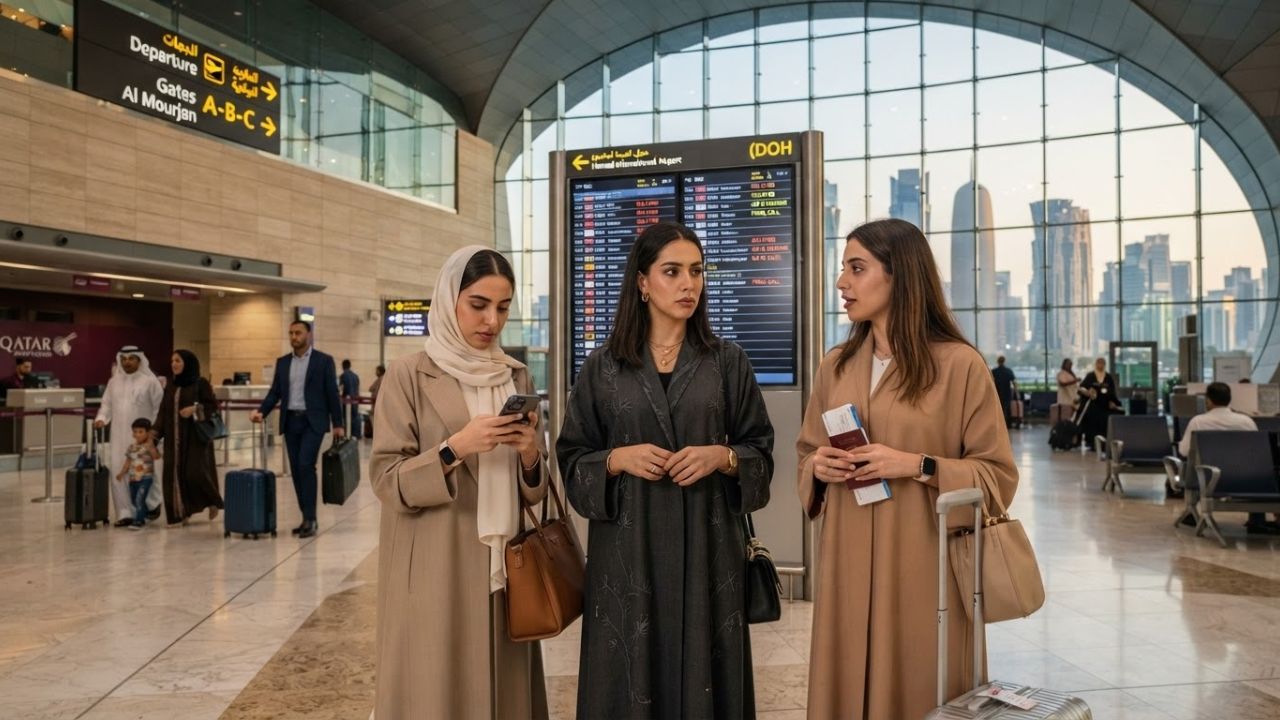
Image generated by AI
The U.S. Embassy in Doha issued an active security travel alert on September 1, 2026, advising U.S. citizens and international travelers in Qatar and across the broader Middle East region to remain extra vigilant. The official notice warns of unpredictable air travel disruptions, including sudden flight cancellations, airspace restrictions, modified flight paths, and missed transit connections through Hamad International Airport.
Middle East Security Tensions and Doha Aviation Advisory Parameters
[DOHA, Qatar, Sept. 2, 2026] — A security advisory published by the U.S. Embassy in Qatar urges international passengers traveling through or residing in Qatar to maintain heightened awareness. The alert cites ongoing geopolitical instability across the Middle East that creates an uncertain security environment capable of rapid escalation.
While the bulletin clarifies that travel to Qatar has not been suspended, aviation authorities and international carriers like Qatar Airways are closely monitoring regional airspace stability. Regulatory bodies including the Federal Aviation Administration (FAA) and the International Air Transport Association (IATA) routinely evaluate corridor safety, which can trigger immediate route adjustments.
Doha serves as a primary global gateway, routing millions of passengers annually between Asia, Europe, Africa, and the Americas. Because transcontinental flight paths converge over the Gulf region, tactical airspace restrictions or security re-evaluations exert immediate downstream pressure on worldwide flight schedules.
Passengers navigating the region face several distinct operational hazards:
- Unannounced Flight Cancellations: Rapidly shifting risk assessments may prompt carriers to ground flights or revise departure slots.
- Airspace Closures and Rerouting: Avoiding restricted flight corridors increases flight duration and fuel stop requirements.
- Cascading Connection Failures: Delays on incoming feeder flights jeopardize tight transfers at Doha's hub.
- Extended Airport Dwell Times: Additional security screening and altered flight boarding windows expand passenger wait times.
Transit Disruption Matrix & Operational Impact Breakdown
| Disruption Factor | Primary Operational Impact | Affected Routes & Corridors | Mandatory Passenger Action |
|---|---|---|---|
| Airspace Restrictions | Dynamic flight path alterations & extended air time | Gulf transit corridors to Europe & Asia | Track live flight radars & airline advisory feeds |
| Flight Cancellations | Sudden schedule suspensions by major carriers | Intercontinental legs through Doha (DOH) | Confirm carrier rebooking waivers prior to airport transit |
| Missed Connections | Inability to clear tight long-haul transfer windows | Secondary feeder flights to North America & Africa | Extend minimum layover buffers to at least 3-4 hours |
| Terminal Congestion | Increased dwell times & gate holds at Hamad International | All departing & transiting international flights | Arrive at departure hubs 3.5 hours before scheduled takeoff |
| Documentation Checks | Heightened passport control and security screening | All international transit passengers | Keep physical passports & transit visas readily accessible |
Traveler Logistics Guide & Transit Contingency Protocol
Navigating international transit hubs during security advisories requires proactive itinerary management and strict adherence to official guidance. Travelers routing through Doha should implement key transit safeguards:
- Optimize Layover Windows: Standard 60-to-90-minute layovers carry elevated risk during periods of airspace uncertainty. Rebook itineraries to ensure a minimum connection buffer of 3 to 4 hours at Hamad International Airport.
- Monitor Real-Time Airline Notifications: Rely directly on official airline mobile apps and passenger notification systems rather than third-party aggregators. Ensure passenger contact details are updated in your booking profile to receive instantaneous SMS and email updates.
- Understand Carrier Waiver Rights: Review ticket change and cancellation terms. During official security alerts, airlines frequently activate flexible rebooking policies allowing passengers to adjust travel dates or reroute without penalty fees.
- Verify Digital Transit Regulations: International transit passengers remaining within the airside transit zone at Hamad International Airport do not require a Qatari entry visa. However, if extended delays necessitate exiting the airport, travelers must verify eligibility via Qatar's entry requirements or the Smart Traveler Enrollment Program (STEP) for U.S. citizens.
- Maintain Essential Supplies in Carry-On Baggage: Store vital medications, universal electronic chargers, physical travel documents, and a 48-hour reserve of essential toiletries in carry-on luggage to mitigate baggage separation during flight diversions.
Strategic Infrastructure Impact & Regional Connectivity Assessment
Qatar has positioned Doha as one of the world's most sophisticated aviation hubs. Hamad International Airport handles high-density international transit traffic, providing seamless links between eastern and western hemispheres. Consequently, security advisories in the Gulf ripple across global logistics networks.
When regional airspace accessibility is restricted, commercial airlines must adjust flight tracks, often burning additional jet fuel and adding technical stops. This operational friction impacts passenger capacity, air freight throughput, and international tourism sentiment.
For long-haul travelers, flexibility remains the single most critical asset. Maintaining alternative routing options and staying informed through verified government advisories allows passengers to mitigate unexpected schedule changes effectively.
Essential Travel Alert Summary
- U.S. Security Alert Issued: Issued on September 1, 2026, advising heightened vigilance for travelers in Qatar and the Middle East.
- Aviation Operational Risks: Potential flight cancellations, airspace closures, and schedule modifications flagged across regional routes.
- Global Hub Vulnerability: Doha's position as a cross-continental connector means regional airspace changes affect worldwide travel.
- Passenger Action Required: Travelers should verify flight statuses before leaving for the airport and expand transit layover windows.
Frequently Asked Questions
Has all international travel to Qatar been suspended?
No. Travel to Qatar remains open. The U.S. Embassy alert advises travelers to maintain heightened awareness, prepare for potential disruptions, and monitor airline updates closely.
What should Qatar Airways transit passengers do?
Passengers connecting through Doha should check their flight status on the official airline app, verify ticket change policies, and ensure layover buffers are at least 3 to 4 hours.
Do transit passengers in Doha require an entry visa during delays?
Passengers staying within the airside transit area at Hamad International Airport do not need a visa. If exiting the airport during long delays, travelers must meet standard Qatari entry requirements.
Where can travelers find official security updates for Qatar?
Official security updates are published by the U.S. Embassy in Qatar, national civil aviation authorities, and operating international airlines.
Related Travel Guides
Disclaimer
This article is for informational and educational purposes only. It does not constitute legal, financial, or professional advice. While we strive to provide accurate and up-to-date information, travel policies, regulations, and conditions change rapidly. Always verify information with official sources before making travel decisions. Nomad Lawyer makes no representations about the accuracy, reliability, completeness, or suitability of the information provided. Readers should consult qualified professionals for advice specific to their circumstances. The views expressed in this article are those of the author and do not necessarily reflect the views of Nomad Lawyer.
Raushan Kumar
Founder & Lead Developer
Full-stack developer with 11+ years of experience and a passionate traveller. Raushan built Nomad Lawyer from the ground up with a vision to create the best travel and law experience on the web.
Learn more about our team →