
US National Parks 2026 Access Overhaul: Road Closures, Trail Reroutes, and Reservation Rules

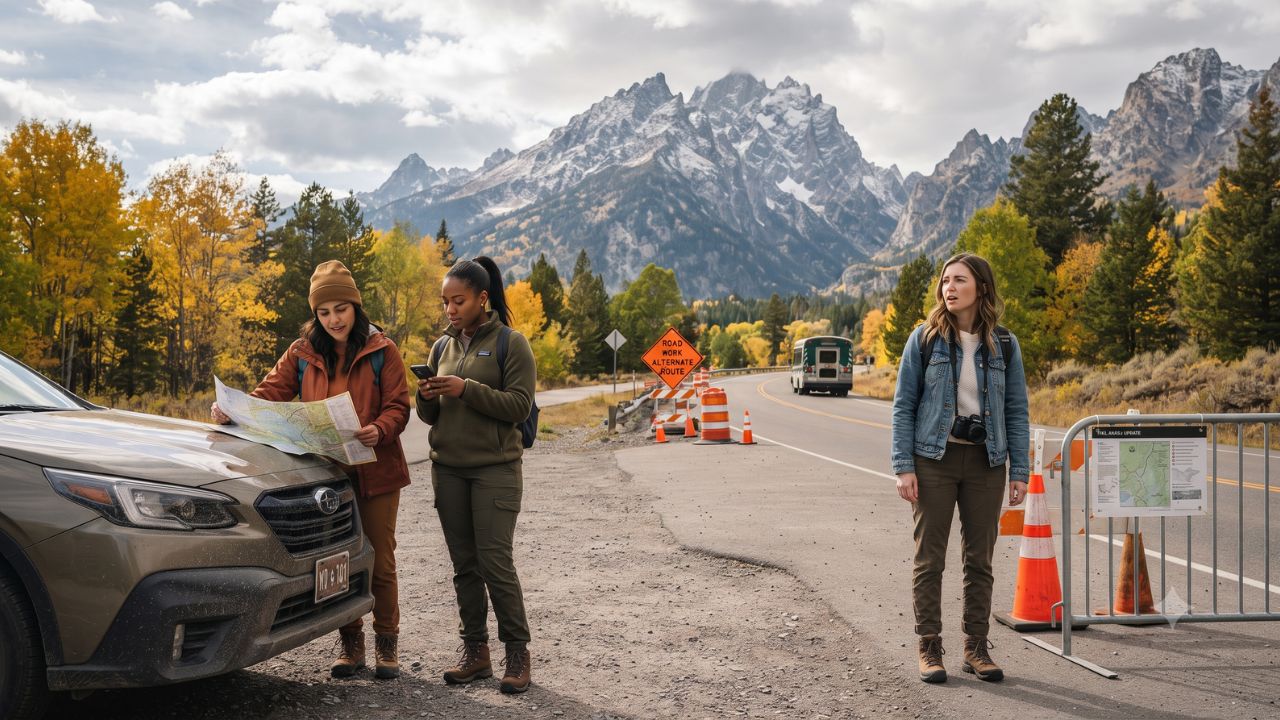
While millions of travelers assume an open national park gate guarantees access to every iconic vista, 2026 marks one of the most sweeping operational overhauls in federal park history, with multi-million-dollar bridge builds, post-wildfire reopenings, and the elimination of entrance reservation systems across several crown-jewel parks. From the completion of Denali's $230 million Pretty Rocks Bridge in Alaska to extensive roadwork in Grand Teton and the rollback of timed entry in Yosemite, Glacier, and Arches, navigating America's protected wilderness now demands real-time tactical awareness.
Park managers at the National Park Service are pivoting from static administrative quotas toward dynamic congestion management and extensive capital reconstruction. Whether you are aiming for alpine summits in the Pacific Northwest or planning autumn drives through the Rockies, understanding these localized road, trail, and shuttle adjustments makes the difference between an effortless expedition and hours stuck behind construction barricades.
Park-by-Park Access and Construction Blueprint
The operational landscape varies dramatically across state lines. In Wyoming, Grand Teton National Park presents one of the most concentrated access bottlenecks of the season. Moose-Wilson Road remains closed between Moose and the Laurance S. Rockefeller Preserve from 8 September through 15 November 2026. Coupled with the closure of Death Canyon Road and its primary trailhead into 2027, hikers must seek alternative starting points. Furthermore, simultaneous roadwork at the Teton Park Road Roundabout and highway construction on U.S. 26/89/191 near Moran Junction (running October through December) add compounding 20-minute delays to standard driving routes.
In the Pacific Northwest, Mount Rainier National Park is managing long-term structural work alongside wildfire recovery. The replacement of Fryingpan Creek Bridge—a major project extending into late 2029—has closed the Summerland Trailhead and parking area, forcing hikers onto Wonderland Trail connectors while causing 30-minute delays on White River Road. Simultaneously, vehicle access along Sunrise Road remains closed due to the Grand Park 2 and Wonderland Complex fires.
Contrasting these restrictions, Denali National Park in Alaska achieved a major milestone on 27 August 2026 with the opening of the Pretty Rocks Bridge, restoring pedestrian and cyclist access across the historic landslide divide. While autumn private-vehicle access extends to Teklanika through 15 October, public transit buses remain held at East Fork for the rest of 2026, setting the stage for full western bus operations to return in 2027.
| National Park | State | Critical Access Changes | Key Operational Dates | Direct Visitor Impact |
|---|---|---|---|---|
| Grand Teton | WY | Moose-Wilson Road closed; Death Canyon Trailhead closed; Moran Junction highway delays | 8 Sept – 15 Nov 2026 (Moose-Wilson); Moran work through Dec 2026 | Expect 40+ cumulative transit minutes; use alternative Death Canyon trailheads |
| Mount Rainier | WA | Fryingpan Creek Bridge work; Summerland parking closed; Sunrise Road fire closure | Bridge project runs into late 2029; fire restrictions active | 30-minute delays on White River Road; hikers must reroute via Wonderland Trail |
| Denali | AK | Pretty Rocks Bridge completed; pedestrian and cyclist crossing restored | Hiker access open; fall private cars through 15 Oct; buses resume 2027 | Western park road reconnected; transit buses limited to East Fork until 2027 |
| Grand Canyon | AZ | North Rim reopened post-Dragon Bravo Fire; Lipan Point closed for rebuild | Lipan Point closed through 23 Dec 2026; North Rim open for season | Full North Kaibab Trail open for foot travel; Tanner Trail uses detour parking |
| Rocky Mountain | CO | Glacier Gorge Trailhead closed through 8 Oct; Old Fall River Road seasonal shift | Maintenance through 16 Oct; pedestrian-only from 17 Oct; timed entry active | Reroute to Bear Lake for Alberta Falls/The Loch; reserve vehicle timed-entry slots |
| Sequoia | CA | Mineral King Road multiyear reconstruction and delays | Active work through 28 Oct 2026 winter closure | Add 45–60 minutes on Mineral King corridor; main Three Rivers gate unaffected |
| Acadia | ME | Cadillac Summit Road requires dedicated vehicle reservation pass | Mandatory booking through 25 Oct 2026 via Recreation.gov | 30% released 90 days out, 70% released 2 days prior at 10:00 AM ET |
| Zion | UT | Zion Canyon Scenic Drive closed to private cars; mandatory autumn shuttle | Main shuttle period through 24 Oct 2026; next schedule begins 25 Oct | Private vehicles barred from main canyon; park in Springdale and ride transit |
| Yellowstone | WY/MT/ID | Seasonal closures at Dunraven Pass and Beartooth Highway | Dunraven/Beartooth shut ~12 Oct; major interior roads close 31 Oct 2026 | High-elevation passes close early; North to Northeast corridor remains open |
| Yosemite | CA | Advance entrance reservation requirement completely eliminated for 2026 | Active throughout 2026 (including summer and firefall windows) | Open drive-in access; NPS uses temporary real-time gate holds at peak capacity |
| Glacier | MT | Park-wide advance vehicle reservation removed for 2026 | 2026 season; weather-dependent Going-to-the-Sun Road access | Spontaneous entry permitted; dynamic traffic controls active at Logan Pass |
| Arches | UT | Timed-entry reservation mandate dropped for 2026 season | Entire 2026 operating season | Freedom to arrive without tickets; early morning or evening visits advised |
Why Park Policies Are Splitting Between Reservation and Open Entry
The 2026 season highlights a philosophical divergence in national park crowd management. Parks like Yosemite, Glacier, and Arches have abandoned blanket advance vehicle reservation permits. Rather than forcing travelers to compete online months ahead on booking portals like Recreation.gov, these parks now rely on dynamic traffic management—temporarily holding vehicle flow at entrance kiosks or parking lots only when internal saturation thresholds are breached.
Conversely, Rocky Mountain National Park and Acadia have preserved their reservation frameworks. Acadia's Cadillac Summit Road continues requiring dedicated time slots through 25 October 2026 to protect narrow granite switchbacks, releasing 30% of inventory 90 days in advance and 70% rolling out two days prior at 10:00 AM ET. In Zion, the geographic constraint of Zion Canyon makes private driving impossible, requiring the continued operation of the mandatory shuttle system through late October.
Visitor Insider Tips
Maximizing a national park itinerary amid active construction and shifting regulations requires hyper-local route planning:
- Use Bear Lake Trailhead for Glacier Gorge Access: With Rocky Mountain's Glacier Gorge lot closed through 8 October, park at Bear Lake to reach Alberta Falls, Mills Lake, and Loch Vale. Connect via the established bypass trails to avoid turning around at barricades.
- Target Sunrise at Arches and Logan Pass: Without advance reservation gates at Arches and Glacier, parking lots at Delicate Arch and Logan Pass fill before 7:30 AM. Enter before 6:30 AM or after 4:30 PM for open parking stalls and optimal golden-hour photography.
- Set 10:00 AM ET Alarms for Acadia: If you missed the 90-day window for Cadillac Mountain sunrise passes, log into Recreation.gov exactly 48 hours before your planned visit at 10:00 AM Eastern Time when the 70% last-minute batch drops.
- Anticipate Early Yellowstone Snow Gate Closures: Dunraven Pass and the Beartooth Highway close on or around 12 October, but mountain storms frequently shut them days earlier. Always carry chains and verify the North Entrance to Cooke City corridor as your year-round escape route.
Cultural and Environmental Context
The extensive construction across the national park system reflects the urgent need to harden public lands against climate-accelerated hazards. The catastrophic Pretty Rocks landslide in Denali was driven by thawing permafrost beneath the volcanic slope, requiring a $230 million engineering solution to anchor the bridge into solid bedrock.
Similarly, post-fire trail rehabilitation along the Grand Canyon's North Kaibab Trail addresses root system loss and unstable scree following the 2025 Dragon Bravo blaze. By investing in resilient bridges, realigned roadways, and localized traffic metering, park authorities protect fragile subalpine ecosystems from vehicle idling emissions and unmanaged trail braiding, ensuring America's natural heritage endures for future generations.
FAQ: Visiting US National Parks in 2026
Do I need a reservation to enter Yosemite or Glacier in 2026?
No. Both Yosemite and Glacier eliminated general advance vehicle entrance reservations for 2026, though localized traffic meters may temporarily hold cars if parking lots reach capacity.
Is the Denali Park Road open all the way to Kantishna?
Pedestrians and cyclists can cross the newly completed Pretty Rocks Bridge west of East Fork, but public transit buses remain restricted to East Fork through 2026 before full service resumes in 2027.
How do I reach Death Canyon in Grand Teton with the trailhead closed?
Park at the Granite Canyon Trailhead or Taggart Lake parking area and hike the connecting trail networks into Death Canyon, allowing an extra 3 to 5 miles round-trip.
When planning an adventure across America's public lands, cross-checking real-time trailheads and seasonal gate schedules turns complex detours into unforgettable backcountry discoveries.
Related Travel Guides
Disclaimer
This article is for informational and educational purposes only. It does not constitute legal, financial, or professional advice. While we strive to provide accurate and up-to-date information, travel policies, regulations, and conditions change rapidly. Always verify information with official sources before making travel decisions. Nomad Lawyer makes no representations about the accuracy, reliability, completeness, or suitability of the information provided. Readers should consult qualified professionals for advice specific to their circumstances. The views expressed in this article are those of the author and do not necessarily reflect the views of Nomad Lawyer.
Raushan Kumar
Founder & Lead Developer
Full-stack developer with 11+ years of experience and a passionate traveller. Raushan built Nomad Lawyer from the ground up with a vision to create the best travel and law experience on the web.
Learn more about our team →