
New York JFK Crowned America’s Most Stressful Airport as Massive Flight Cancellations, Gridlock, and Severe Airport Disruptions Trigger Brutal Travel Chaos for Corporate Commuters: Latest Airline News
A devastating new assessment ranks America's most stressful airports, revealing how severe flight cancellations, brutal customs delays, and massive travel chaos are destroying the corporate travel experience.

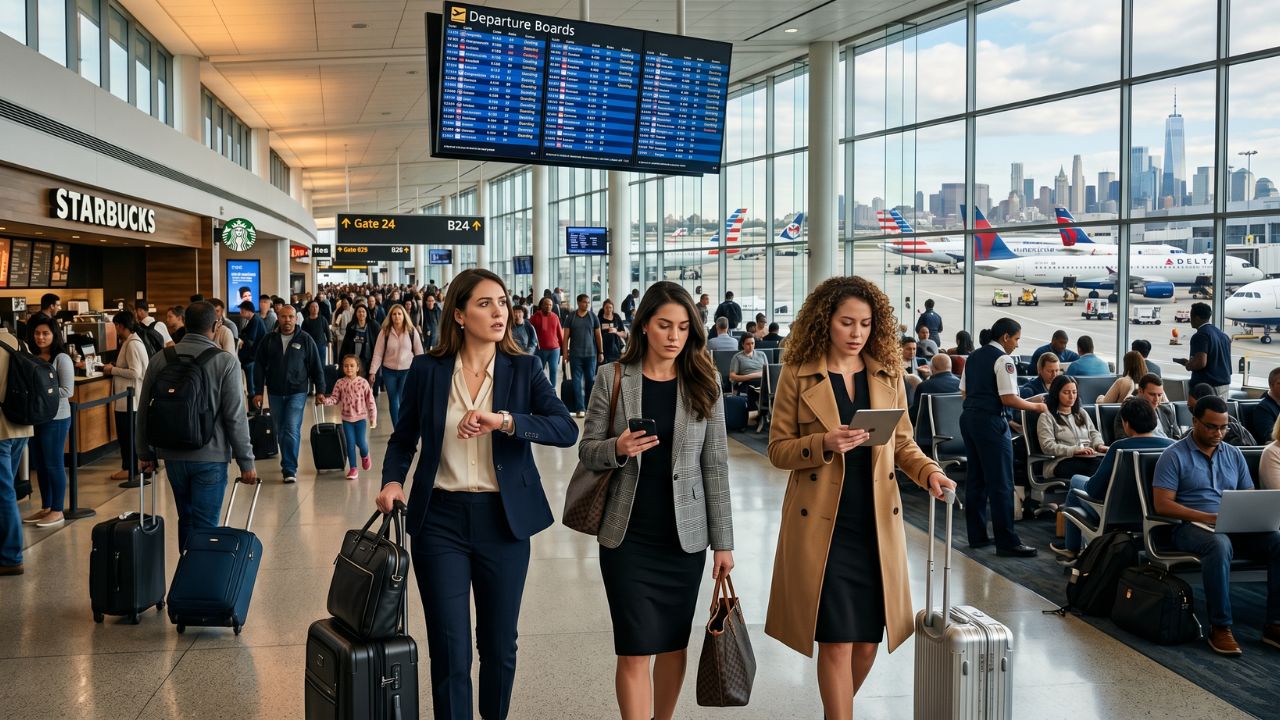
Image generated by AI
In a devastating new operational assessment that mathematically quantifies the severe travel chaos and rolling flight cancellations paralyzing the American domestic network, John F. Kennedy International Airport (JFK) has officially been crowned the most stressful airport in the United States. Published on June 18, 2026, the explosive new corporate travel report proves that simply landing an aircraft is no longer enough; brutal customs delays, catastrophic urban gridlock, and systemic airport disruptions are completely destroying the end-to-end journey for millions of business travelers. Defeating notorious congestion hubs like Newark Liberty, Ontario, Fort Lauderdale, and Chicago O’Hare, JFK represents the absolute peak of modern travel anxiety. As international business traffic surges and desperate executives battle to bypass delayed flights, agonizing 65-minute ground transfers, and chaotic terminals, this definitive ranking of America’s most broken transit corridors stands as the premier headline in today's breaking airline news and absolutely vital global aviation updates.
By introducing direct passenger coordination and dynamic scheduling backups, the regional aviation hubs target growing passenger demand across vital commerce sectors. The choice to coordinate flight departures in phases helps to manage gate capacity, supporting the country's broader regional transportation network.
Context: The Collapse of the End-to-End Corporate Journey
For the millions of global passengers attempting to navigate America's highly concentrated aviation mega-hubs, the sheer scale of the localized operational bottlenecks has transformed routine business commuting into an absolute nightmare.
Historically, corporate travelers defined travel chaos purely by the number of flight cancellations displayed on the departure board. However, this explosive new assessment fundamentally redefines how airport stress is measured. The data proves that an on-time arrival means absolutely nothing if the passenger is subsequently trapped in a brutal 28-minute customs line or stranded in an hour-long traffic jam trying to reach the central business district. Today, airport disruptions are systemic and multi-layered. When massive hubs like JFK and Newark suffer from overlapping crises—simultaneous airspace congestion, understaffed immigration halls, and paralyzed surrounding highways—the airport effectively traps the passenger. For corporate executives managing tightly packed, multi-meeting itineraries, these cascading failures are unacceptable. The inability of America's busiest airports to efficiently process passengers from the runway to the boardroom is actively throttling corporate productivity and redefining the criteria for destination competitiveness.
To view live flight schedules, verify the active delay status of your specific itinerary, or to track active regional airspace restrictions, travelers must consult official aviation directories. For direct booking access into alternative, lower-stress regional hubs that successfully bypass this massive terminal gridlock, travelers should aggressively utilize the official portals for major US airlines. To explore live flight tracking and monitor the exact severity of the cascading bottlenecks causing the flight cancellations you must now actively avoid, passengers can consult the official FlightAware tracking service.
Section-Wise Breakdown: America’s Crisis Corridors
JFK and Newark: The Epicenter of Travel Chaos
The New York metropolitan area officially holds the title for the most excruciating aviation experience in the nation. JFK took the top spot with a massive 8.06 stress score, driven by a brutal 24.6% flight disruption rate and a grueling 65-minute average drive into Manhattan. However, Newark Liberty International Airport (Rank 2) is arguably more volatile in the air. Newark recorded an astonishing 30.0% flight disruption rate—the absolute highest in the entire study. Nearly one-third of all flights experienced delays, cancellations, or diversions, guaranteeing severe airport disruptions for anyone attempting to connect through New Jersey.
Southern California’s Gridlock Trap
Ontario International (Rank 3) and Los Angeles International (Rank 9) perfectly illustrate how ground infrastructure destroys the aviation experience. Both airports recorded an identical, massive 59.8% city congestion level—the highest in the assessment. Even when LAX manages a relatively low 19.6% flight disruption rate, travelers are immediately punished by a 42-minute battle through paralyzed Los Angeles traffic to reach the commercial districts.
The Florida Bottlenecks
Fort Lauderdale-Hollywood (Rank 3), Orlando (Rank 5), and Miami (Rank 7) highlight the strain of surging tourism on business travel. Orlando specifically struggles with international processing, recording the absolute longest average customs wait in the top ten at an agonizing 28.7 minutes. Meanwhile, Fort Lauderdale suffers from a high 25.7% disruption rate combined with a brutal 55-minute ground transfer through congested South Florida highways.
Technical Roster: The Most Stressful U.S. Airports Matrix
To ensure absolute factual accuracy regarding the exact metrics driving this severe travel chaos, the following matrix details the verified operational data from the 2025 assessment. This table is maintained exactly as reported, preserving all specific percentages, times, and stress scores.
Research Snapshot of America’s Highest-Stress Business Airports
| Rank | Airport | State | Flight Disruptions (2025) | Customs Wait (Minutes) | City Congestion | Average Drive to Business District | Stress Score |
|---|---|---|---|---|---|---|---|
| 1 | John F. Kennedy International | New York | 24.6% | 24.8 | 48.8% | 65 mins | 8.06 |
| 2 | Newark Liberty International | New Jersey | 30.0% | 20.7 | 48.8% | 39 mins | 7.99 |
| 3 | Ontario International | California | 22.5% | 21.0 | 59.8% | 60 mins | 7.29 |
| 3 | Fort Lauderdale-Hollywood International | Florida | 25.7% | 20.1 | 46.8% | 55 mins | 7.29 |
| 5 | Orlando International | Florida | 25.3% | 28.7 | 27.9% | 33 mins | 7.02 |
| 6 | Chicago O’Hare International | Illinois | 27.1% | 19.6 | 46.1% | 32 mins | 6.74 |
| 7 | San Francisco International | California | 25.0% | 19.5 | 49.7% | 30 mins | 6.39 |
| 7 | Miami International | Florida | 24.4% | 21.7 | 46.8% | 22 mins | 6.39 |
| 9 | Los Angeles International | California | 19.6% | 25.4 | 59.8% | 42 mins | 6.25 |
| 9 | Seattle-Tacoma International | Washington | 22.1% | 21.9 | 44.9% | 28 mins | 6.25 |
Passenger Impact: The Era of Strategic Rebooking
For the thousands of corporate road warriors desperate for reliable transit, this data completely revolutionizes how business travel is planned and executed across the United States.
The immediate passenger impact is the abandonment of traditional booking logic. A passenger flying into New York can no longer simply pick the cheapest flight; they must actively weigh Newark's terrifying 30.0% chance of flight cancellations against JFK's grueling 65-minute ground transfer. These overlapping airport disruptions mean travelers are forced to physically pad their schedules, frequently arriving a full day before a meeting just to ensure they survive the travel chaos. For major tech and finance executives routing through SFO (25.0% disruptions) or O'Hare (27.1% disruptions), the loss of productivity caused by sitting in holding patterns or customs lines represents a massive, hidden financial cost to their corporations.
Industry Analysis: Efficiency as a Competitive Weapon
Aviation industry analysts view this explosive stress report as definitive proof that American aviation infrastructure is failing to scale alongside surging post-pandemic demand.
Analysts note that destinations are directly losing lucrative corporate conferences because their airports are too chaotic. If an event organizer sees that Orlando forces international delegates to stand in a 28.7-minute customs line, they will move the event to a more efficient city. Industry experts warn that airports can no longer simply build bigger terminals; they must aggressively invest in automated digital border processing and dedicated, high-speed rail links to the city center. If massive hubs like JFK and Newark fail to integrate their runway operations with local ground transport, they will continue to bleed premium business travelers to smaller, highly efficient regional airports capable of offering disruption-proof connectivity.
Actionable Advice for Surviving American Hubs
If you are navigating the highly volatile US domestic network this summer, execute this strategic planning checklist to fully bypass regional travel chaos:
- Avoid Newark for Tight Connections: Do not book a short layover at Newark Liberty. With an industry-worst 30.0% flight disruption rate, the mathematical probability of a delayed inbound flight ruining your connection is simply too high.
- Pre-Clear Customs Digitally: If flying internationally into Orlando (28.7 min wait) or LAX (25.4 min wait), you must possess Global Entry or utilize Mobile Passport Control apps. Standing in the standard immigration line at these high-stress hubs guarantees massive delays.
- Fly Off-Peak to Defeat Gridlock: When flying into Ontario or LAX, your flight arrival time must avoid Southern California rush hour. A 60-minute transfer into the city easily doubles if you land at 5:00 PM, creating severe secondary travel chaos.
- Utilize Rail Over Ride-Share: When arriving at JFK, strongly consider utilizing the AirTrain and subway/LIRR connections. Relying on ride-shares through 48.8% city congestion to Manhattan is a massive logistical risk for tightly scheduled meetings.
FAQ: US Airport Stress & Travel Chaos
Why is JFK ranked the most stressful airport in America?
John F. Kennedy International Airport earned the top stress score (8.06) because it perfectly combines a high flight disruption rate (24.6%) with a brutal 65-minute average drive into the business district, creating an inescapable logistical nightmare.
Which American airport has the highest rate of flight cancellations?
Newark Liberty International Airport recorded the absolute worst flight disruption rate in the study, with an astonishing 30.0% of operations delayed, canceled, or diverted during 2025.
Does landing on time guarantee you avoid travel chaos?
No. The report proves that severe airport disruptions also include ground failures; for example, Ontario International forces passengers into 59.8% city congestion, guaranteeing travel stress long after the aircraft has landed.
The Reality of Systemic Aviation Failure
The historic operational assessment of America's highest-stress airports proves definitively that relying on massive legacy hubs is the ultimate catalyst for systemic physical travel chaos. By mathematically confirming the brutal delays at JFK, Newark, and O'Hare, the data provides global commuters with a stark warning: booking a flight into a top-tier US airport guarantees exposure to severe terminal gridlock. As archaic infrastructure desperately struggles to process surging passenger volumes—triggering massive customs queues, rolling flight cancellations, and excruciating urban traffic—travelers must accept a critical new reality: avoiding brutal travel anxiety requires aggressively analyzing end-to-end journey metrics, pre-planning ground transport, and ruthlessly avoiding the nation's most mathematically disrupted aviation corridors.
Key Takeaways
- JFK is Number One: John F. Kennedy International Airport is officially the most stressful US airport (8.06 score) due to overlapping airspace and ground transport failures.
- Newark's Massive Disruptions: Newark Liberty recorded a terrifying 30.0% flight disruption rate, leading the nation in operational unreliability.
- Customs Gridlock: Orlando International forces arriving international passengers to endure the longest average customs wait in the top ten (28.7 minutes).
- California Traffic Traps: Both Ontario and LAX feature brutal 59.8% city congestion levels, completely destroying post-flight travel efficiency.
- Passenger Survival: Business travelers must actively utilize automated immigration apps and off-peak flight scheduling to bypass the massive airport disruptions paralyzing America's biggest hubs.
Related Travel Guides
Massive Travel Chaos Paralyzes Chicago O'Hare with 1,425 Disruptions
Disclaimer
This article is for informational and educational purposes only. It does not constitute legal, financial, or professional advice. While we strive to provide accurate and up-to-date information, travel policies, regulations, and conditions change rapidly. Always verify information with official sources before making travel decisions. Nomad Lawyer makes no representations about the accuracy, reliability, completeness, or suitability of the information provided. Readers should consult qualified professionals for advice specific to their circumstances. The views expressed in this article are those of the author and do not necessarily reflect the views of Nomad Lawyer.
Kunal K Choudhary
Co-Founder & Contributor
A passionate traveller and tech enthusiast. Kunal contributes to the vision and growth of Nomad Lawyer, bringing fresh perspectives and driving the community forward.
Learn more about our team →