
US Department of State Maintains Level 4 Do Not Travel Warning for Ukraine Amid 2026 Missile Escalation
The United States government continues to enforce its highest travel alert for Ukraine as nationwide drone and missile strikes intensify across civilian infrastructure in 2026.

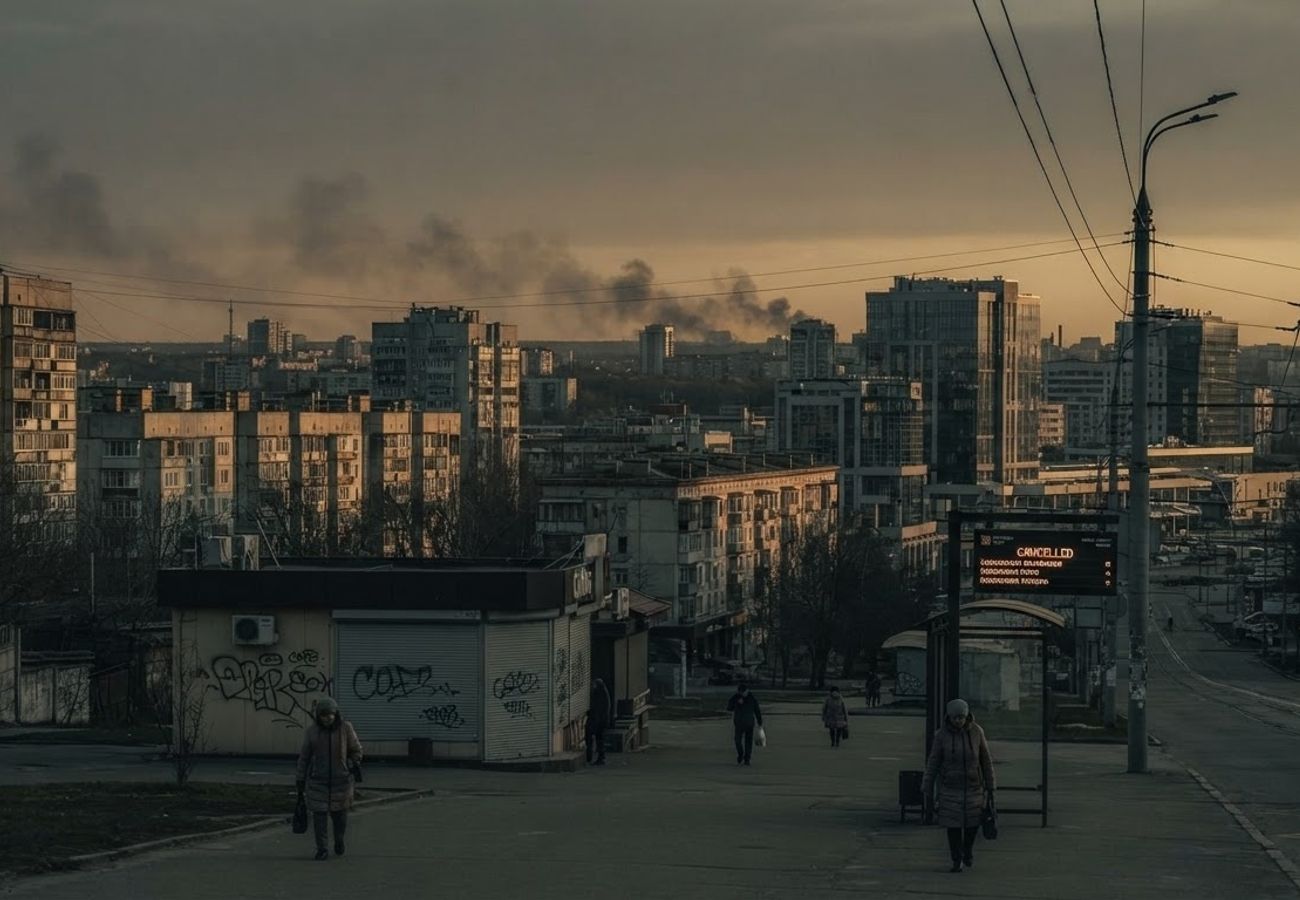
Image generated by AI
The United States government is maintaining its most severe "Do Not Travel" alert for Ukraine as long-range missile and drone campaigns escalate across the country and national airspace remains strictly closed.
This high-alert status reflects a volatile security environment where civilian infrastructure is frequently targeted, and the ability of the U.S. government to provide emergency consular services to its citizens is severely restricted.
State Department Reinforces Level 4 Warning for Ukraine
The U.S. Department of State has reaffirmed that Ukraine remains a Level 4 "Do Not Travel" destination, the peak of its four-tier safety system. In a security update issued on August 28, 2026, officials reiterated that American citizens should avoid entering the country for any reason. This directive is driven by the persistent dangers of the Russia-Ukraine war, which continue to threaten non-combatants and critical national infrastructure.
While the overall alert level has not changed, the latest guidance introduces updated language regarding armed conflict and civil unrest. Specifically, the State Department highlights the increased prevalence of long-range drone strikes, the danger of unexploded ordnance, and strict movement restrictions imposed by martial law.
The security situation is so precarious that U.S. government personnel are prohibited from traveling outside of Kyiv without explicit special authorization. Furthermore, family members of these employees are barred from accompanying them due to the extreme risks associated with the current conflict.
Consular Limitations and Emergency Service Constraints
For those who ignore the advisory, the U.S. government warns that its capacity to provide emergency assistance is almost non-existent outside the capital. Industry reports indicate that the combination of active checkpoints, strict curfews, and the sudden collapse of transport links makes it nearly impossible for consular officials to reach citizens in distress.
Even for individuals who have formally registered their presence in Ukraine via the Smart Traveler Enrollment Program (STEP), the government cannot guarantee safety or evacuation. The volatility of the front lines and the unpredictability of aerial bombardments create a logistical environment where traditional diplomatic assistance is functionally neutralized.
Intensification of Aerial Strikes on Civilian Infrastructure
The decision to keep the warning at Level 4 coincides with data from international monitoring bodies showing a surge in attacks throughout 2026. United Nations human rights monitors have documented a significant rise in civilian casualties during the first half of the year, attributing this to the frequent deployment of heavy weaponry and long-range missiles in densely populated urban centers and along primary transit corridors.
Russian military strategy has increasingly focused on Ukraine's energy sector, targeting power grids, warehouses, and transportation hubs. These strikes often cause secondary devastation to residential apartment blocks and commercial districts. Independent risk analysts point out that the evolution of reconnaissance and strike drones has expanded the "danger zone" far beyond the active front lines, meaning cities previously viewed as safe are now subject to medium- and long-range bombardment.
Recent aerial barrages have hit multiple cities within a matter of hours, overwhelming air defenses and triggering prolonged sirens that halt economic activity and disrupt daily life. There is also a growing concern among international observers that missiles straying off course near international borders could lead to dangerous miscalculations with neighboring sovereign states.
Logistics of Overland Entry and Airspace Restrictions
Ukraine's airspace remains closed under martial law, meaning no commercial flights are operating into or out of the country. For those who must enter, the only viable options are overland routes through neighboring European nations.
Current transit patterns typically involve flying into regional hubs in Poland, Slovakia, Hungary, Romania, or Moldova, and then proceeding via train, bus, or private vehicle to the border. Once at the frontier, travelers must cross on foot or by vehicle before securing onward transport within Ukraine.
However, officials warn that border conditions are erratic. Long queues, rigorous security screenings, and sudden changes in curfew regulations can trap travelers at the border. Additionally, all border crossings into Russia and Belarus are closed to regular traffic, and the regions bordering these countries are considered high-risk zones due to active military operations.
Global Consensus on Ukraine Travel Risks
The U.S. position is mirrored by other major Western governments. The United Kingdom’s Foreign, Commonwealth & Development Office maintains a blanket advisory against all travel to Ukraine, citing the systemic nature of missile strikes on rail nodes, industrial sites, and residential areas.
Similarly, Australia’s Smartraveller service classifies the threat level as "extremely high," noting that the security environment is highly volatile. Australian officials emphasize that basic services can disappear without warning and that on-the-ground consular support is severely limited.
A critical financial warning shared by several governments is the status of travel insurance. Most standard policies explicitly exclude coverage for incidents occurring in war zones or areas of active hostilities. This means any individual entering Ukraine does so without a safety net, facing potentially catastrophic medical and evacuation costs.
Risk Management for Humanitarian and Essential Personnel
Despite the Level 4 warning, humanitarian workers, volunteers, and those with immediate family ties continue to enter the country. For these individuals, security analysts recommend a rigorous risk-mitigation strategy:
- Contingency Planning: Establishing pre-arranged evacuation routes and multiple communication channels.
- Specialized Insurance: Securing high-risk insurance products that specifically cover conflict zones and war-related injuries.
- Operational Vigilance: Recognizing that attacks are often timed to coincide with symbolic dates or peak transport hours.
International monitors expect high-intensity fighting and aerial campaigns to persist through the end of 2026. For the average traveler, the message from the U.S. government is clear: the risk of death, injury, or detention is too high to justify any non-essential visit.
The volatility of the region ensures that the "Do Not Travel" status will likely remain in place until a comprehensive ceasefire is achieved.
Related Travel Guides
Disclaimer
This article is for informational and educational purposes only. It does not constitute legal, financial, or professional advice. While we strive to provide accurate and up-to-date information, travel policies, regulations, and conditions change rapidly. Always verify information with official sources before making travel decisions. Nomad Lawyer makes no representations about the accuracy, reliability, completeness, or suitability of the information provided. Readers should consult qualified professionals for advice specific to their circumstances. The views expressed in this article are those of the author and do not necessarily reflect the views of Nomad Lawyer.
Kunal K Choudhary
Co-Founder & Contributor
A passionate traveller and tech enthusiast. Kunal contributes to the vision and growth of Nomad Lawyer, bringing fresh perspectives and driving the community forward.
Learn more about our team →