
United States and Latin American Travelers Drive Heritage Tourism Boom Across France's 15 Historic Châteaux and Regional Rail Corridors
France's historic châteaux experience record international demand as travelers from the US, Brazil, Canada, and Mexico explore regional rail and heritage circuits.

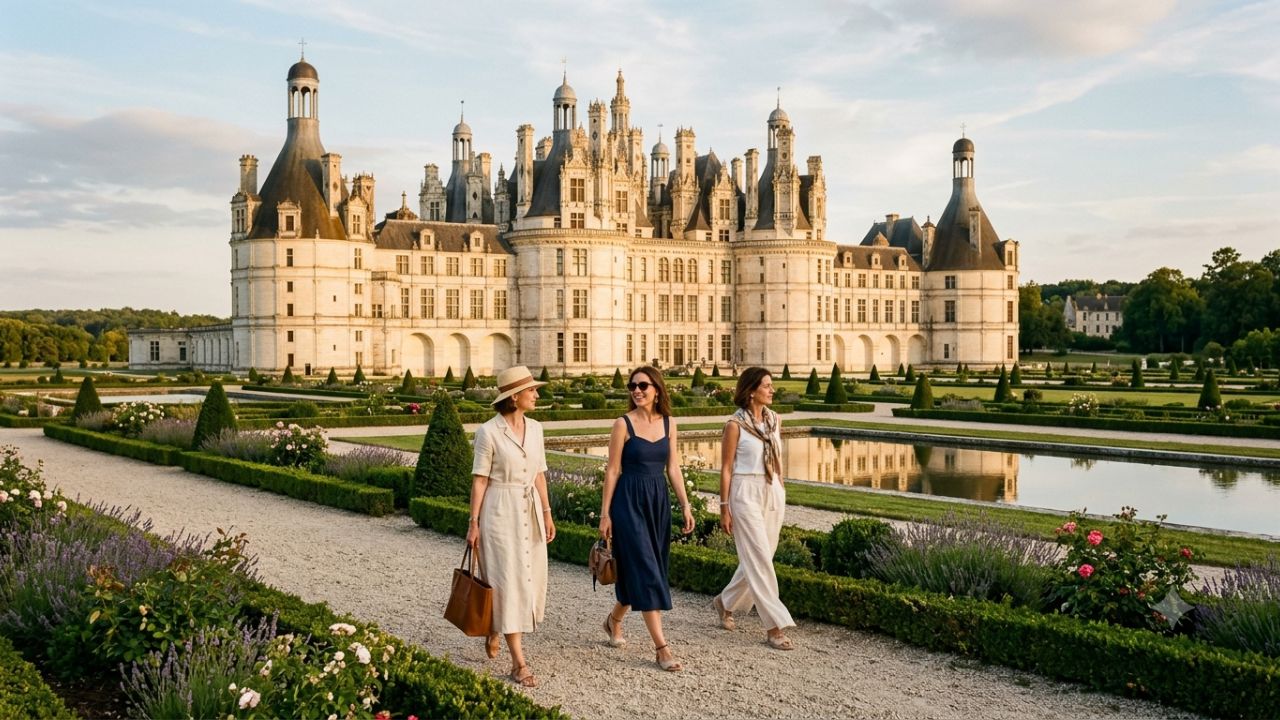
France is experiencing a surge in international cultural tourism as long-haul travelers from the United States, Brazil, Canada, and Mexico venture beyond Paris to explore 15 historic châteaux connected by scenic regional rail corridors.
Backed by strong momentum from 2025—which saw France welcome 102 million international visitors and generate €77.5 billion in foreign tourism receipts—the French Ministry of the Economy and national tourism development agency Atout France are actively encouraging international guests to distribute travel spending across regional territories.
From the gilded state apartments of Versailles and Renaissance marvels of Chambord to medieval Cathar fortresses in Occitanie and maritime redoubts in Normandy, France's historic castle network offers travelers a compelling reason to trade single-city Paris holidays for multi-week regional itineraries.
===================================================================================
          FRANCE HISTORIC CHÂTEAUX TOURISM: 2026 BENCHMARK OVERVIEW
===================================================================================
 [GLOBAL INBOUND FOUNDATION: 2025 OFFICIAL BENCHMARKS]
  * Total International Arrivals: 102 million (+2.0% vs. 100M in 2024).
  * Foreign Tourism Revenue: €77.5 billion (+9.0% YoY).
  * International Overnight Stays: 743 million across all hospitality sectors.
  * Commercial Accommodation Nights: 261.2 million foreign stays.
  * Average Foreign Expenditure: ~€760 per stay.

 [PRIMARY LONG-HAUL SOURCE MARKETS]
  * United States: 5.5M arrivals (+10%), €7.3B spent (+17%); Jan–Aug 2026 air +2.3%.
  * Brazil: Leading Latin American market; >€1.2B revenue; 10–14 day typical stays.
  * Canada: 14.2M non-US trips (+9.2%); France 2nd most popular non-US destination.
  * Mexico: ~400,000 visitors, ~1.0M nights; strong affinity for medieval fortresses.
===================================================================================
France Tourism 2026: Macro Inbound Receipts and Regional Dispersal
Official economic indicators published by the French government in 2026 demonstrate the expanding scale of the nation's visitor economy.
Rather than concentrating spending exclusively within Île-de-France, national tourism planners are prioritizing geographic dispersal, using iconic châteaux to channel visitor traffic into smaller towns, vineyard valleys, and rural departments.
| National Tourism Indicator | 2025 Verified Performance | Comparison vs. 2024 | Strategic Relevance to Castle Tourism |
|---|---|---|---|
| International Arrivals | 102.0 million visitors | Up from 100.0 million (+2.0%) | Establishes broad base for regional dispersion |
| Foreign Tourism Revenue | €77.5 billion | Up 9.0% year-on-year | Premium cultural tours drive higher spend |
| Total International Overnights | 743.0 million nights | Steady growth across regions | Encourages multi-day provincial rail circuits |
| Commercial Lodging Nights | 261.2 million nights | Strong provincial occupancy | Boosts heritage châteaux hotels and gîtes |
| Average Foreign Spend | ~€760 per stay | Expanding spend per trip | Long-haul visitors spend 2.5x the average |
| Metropolitan Air Arrivals | Down 0.7% (Jan–Aug 2026) | Modest long-haul stabilization | Highlights shift toward longer domestic stays |
| Collective Lodging Nights | Up 1.1% (Jan–Jul 2026) | Positive domestic/regional shift | Confirms deeper travel into French provinces |
The contrast between stable air arrivals (down 0.7% in the first eight months of 2026) and expanding collective accommodation nights (up 1.1% through July) indicates that overseas travelers are extending their durations of stay, favoring immersive regional circuits over rapid weekend city breaks.
Long-Haul Source Markets Driving French Heritage Journeys
Four primary long-haul markets across North and South America are shaping demand for French castle tourism, each exhibiting distinct demographic preferences, transit habits, and regional interests.
LONG-HAUL SOURCE MARKET EXPEDITION PROFILES
| Entity / Facility | Delays | Cancellations | Details |
|---|---|---|---|
| SOURCE MARKET | ARRIVAL VOLUME | EXPENDITURE VOLUME | PREFERRED CHÂTEAU CIRCUIT |
| United States | 5.5 Million (2025) | €7.3 Billion (2025) | Versailles, Loire Valley, |
| (+10% YoY) | (+17% YoY) | Chantilly art estates | |
| Brazil | Leading Latin Market | >€1.2 Billion | Chambord, Chenonceau, |
| 3rd Long-Haul Global | (2026 Profile) | Burgundy (Clos de Vougeot) | |
| Canada | 14.2M Global Non-US | CAD 6.9B (Q3 Global) | Normandy (Gaillard), |
| (+9.2% YoY) | France #2 Destination | Nantes (Ducs de Bretagne) | |
| Mexico | ~400,000 Visitors | ~1.0M Overnights | Carcassonne, Quéribus, |
| (2024 Benchmark) | (2024 Benchmark) | Les Baux-de-Provence |
United States: High-Yield Exploration of Royal and Renaissance Estates
The United States represents France's most lucrative long-haul visitor market. According to Atout France's market analysis released in September 2026, American travelers contributed €7.3 billion to the French economy in 2025 across 5.5 million individual visits.
Spending by American guests expanded by 17% year-on-year, outpacing their 10% volume growth and underscoring a pronounced appetite for luxury accommodations, private heritage guides, and gastronomic dining.
Aviation data confirms this momentum: air arrivals from the United States grew by an additional 2.3% during the January–August 2026 window compared with the same period in 2025.
American holidaymakers traditionally anchor their vacations in Paris, pairing visits to the Palace of Versailles with direct train connections into the Loire Valley:
- The Classical Royal Arc: Combining the State Apartments and Hall of Mirrors at Versailles with the equestrian estates of Château de Chantilly in Hauts-de-France.
- The Renaissance Heart: Boarding regional trains toward Blois and Tours to explore the double-helix staircase of Chambord and the arches of Chenonceau spanning the River Cher.
- Horticultural Pilgrimages: Traveling to Château de Villandry to observe restored Renaissance ornamental gardens and organic kitchen plots.
Brazil: Premium Wine Estates, Literature, and Extended Itineraries
Brazil stands as France's foremost Latin American source market and its third-largest long-haul market worldwide outside Europe.
Atout France's July 2026 market evaluation highlights that Brazilian travelers exhibit above-average vacation lengths, averaging 10 to 14 days abroad. This extended window makes them an ideal audience for multi-region rail itineraries that link royal history with premium culinary and viticultural experiences.
With Brazilian visitor expenditure exceeding €1.2 billion in official market profiles, travelers from São Paulo and Rio de Janeiro are leading demand for combined castle and wine estate tours:
- Loire and Burgundy Pairing: Connecting Loire Renaissance châteaux (Chambord and Chenonceau) with the historic winemaking heritage of Château du Clos de Vougeot in Burgundy.
- Provençal Literary Circuits: Venturing south to Château de Grignan in the Drôme Provençale, exploring its Renaissance corridors and connections to 17th-century French epistolary writer Madame de Sévigné amid lavender and vineyard surroundings.
- Active Heritage Pursuits: Integrating electric bicycle rentals along the Loire à Vélo trail network to access boutique wine cooperatives.
Canada: Historical Connections Across Normandy, Brittany, and Nantes
Canada remains an essential long-haul pillar for French tourism, sustained by deep historical, cultural, and linguistic bonds.
Statistics Canada data incorporated into Atout France's June 2026 evaluation indicates that Canadian residents completed 14.2 million trips to destinations outside the United States in 2025, representing a 9.2% increase over 2024.
During the third quarter of 2025, France maintained its rank as the second-most-visited international destination outside North America for Canadians, surpassed only by Italy. Canadian foreign travel expenditures exceeded CAD 6.9 billion during that single quarter.
Canadian itineraries frequently focus on regional fortresses that bridge maritime defense and national history:
- Normandy's Medieval Bulwarks: Visiting Château Gaillard, perched high above the Seine river bend at Les Andelys, tracing the Anglo-Norman fortifications erected by Richard the Lionheart.
- The Breton Duchy: Journeying to Nantes to tour the Château des Ducs de Bretagne, which houses the Nantes History Museum examining regional maritime commerce.
- Romantic Literary Pilgrimages: Exploring Château de Combourg in eastern Brittany, celebrated as the childhood home of François-René de Chateaubriand and the birthplace of French Romantic literature.
Mexico: Medieval Strongholds, Ramparts, and Mountain Citadels
Mexico represents an expanding source of cultural travelers with an enthusiasm for architectural history and fortress engineering.
Atout France's verified market baseline records approximately 400,000 Mexican travelers visiting France in 2024, generating approximately one million overnight stays from an outbound pool of 18.8 million international trips.
Mexican visitors demonstrate a distinct preference for dramatic medieval military architecture and southern European history:
- The Fortified City of Carcassonne: Exploring the double defensive walls and turrets of Château Comtal de Carcassonne in Occitanie, a masterwork of medieval urban engineering restored by Eugène Viollet-le-Duc.
- Cathar Mountain Redoubts: Hiking to the dizzying limestone crags of Château de Quéribus, one of the famous "Five Sons of Carcassonne" that guarded the historic border with Aragon.
- Limestone Spurs of Provence: Discovering the dramatic ruined fortress of Château des Baux-de-Provence, set against the arid limestone cliffs of the Alpilles.
- Basque Coast Eclecticism: Traveling southwest to Château-Observatoire Abbadia in Hendaye, marveling at its neo-Gothic facade and 19th-century astronomical instruments overlooking the Atlantic Ocean.
Complete Guide to France's 15 Iconic Châteaux
France's official tourism portal, Explore France, curates an exceptional portfolio of 15 iconic châteaux representing distinct architectural eras, regional traditions, and cultural experiences.
===================================================================================
                  FRANCE'S 15 ICONIC CHÂTEAUX REGIONAL MATRIX
===================================================================================
 [ÎLE-DE-FRANCE & HAUTS-DE-FRANCE]
  1. Palace of Versailles: Sun King's royal epicenter; Grand Trianon; formal gardens.
  2. Château de Chantilly: Condé art museum, equestrian stables, Le Nôtre grounds.

 [CENTRE-VAL DE LOIRE & PAYS DE LA LOIRE]
  3. Château de Chambord: François I's Renaissance marvel; double-helix stair.
  4. Château de Chenonceau: The Ladies' Château; river gallery over the Cher.
  5. Château de Villandry: Masterpiece of 6 formal Renaissance ornamental gardens.
  6. Château des Ducs de Bretagne: Flamboyant Gothic ducal fortress in central Nantes.

 [NORMANDY & BRITTANY]
  7. Château Gaillard: Richard the Lionheart's 12th-century military stronghold.
  8. Château de Combourg: Cradle of French Romantic literature; Chateaubriand park.

 [BURGUNDY, ALSACE & AUVERGNE-RHÔNE-ALPES]
  9. Château du Clos de Vougeot: Monastic winemaking seat; ancient oak presses.
 10. Château du Haut-Koenigsbourg: High Alsace mountain redoubt; Vosges vistas.
 11. Château de Grignan: Renaissance palace; Madame de Sévigné literary legacy.

 [OCCITANIE, PROVENCE & BASQUE COUNTRY]
 12. Château Comtal de Carcassonne: UNESCO medieval fortress with 52 towers.
 13. Château de Quéribus: Perched Cathar mountain bastion 728 meters above sea.
 14. Château des Baux-de-Provence: Medieval clifftop citadel overlooking Alpilles.
 15. Château-Observatoire Abbadia: Neo-Gothic Atlantic manor and scientific haven.
===================================================================================
1. Château de Chambord (Centre-Val de Loire)
Commissioned in 1519 by King François I following his military triumphs in northern Italy, Chambord stands as the supreme monument of the French Renaissance. Its architectural silhouette features hundreds of chimneys, turrets, and gables framing the legendary double-helix staircase attributed to Leonardo da Vinci. Beyond its 426 rooms, the estate encompasses a walled game park spanning 5,440 hectares—equivalent in area to central Paris—along with five hectares of newly restored organic vegetable and permaculture plots.
2. Palace of Versailles (Île-de-France)
The global gold standard of absolute monarchy, Versailles was transformed by King Louis XIV from a humble hunting lodge into the seat of French political power in 1682. Highlights include the 73-meter Hall of Mirrors, the King's Grand Apartments, and André Le Nôtre's formal gardens populated by classical fountains, canals, and mythological statuary. Visitors can also explore the Petit Trianon and the rustic Queen's Hamlet (Hameau de la Reine) created for Marie Antoinette.
3. Château de Chenonceau (Centre-Val de Loire)
Known as Le Château des Dames due to the succession of visionary women who designed and protected it—including Diane de Poitiers, Catherine de' Medici, and Louise Dupin—Chenonceau features a graceful two-story gallery bridge spanning the waters of the River Cher. The estate boasts contrasting Renaissance gardens, a historic working farm, and seasonal canoe rentals that permit visitors to paddle directly beneath its arches.
4. Château de Villandry (Centre-Val de Loire)
Acquired in 1906 by Joachim Carvallo and Ann Coleman, Villandry is celebrated globally for its six meticulously restored Renaissance gardens arranged across terraced levels. These include the Ornamental Kitchen Garden (Potager decoratif), where nine squares of geometric boxwood hedges contain rotating varieties of vegetables and flowers, the Water Garden, the Sun Garden, and the contemplative Garden of Crosses.
5. Château des Ducs de Bretagne (Nantes / Pays de la Loire)
Positioned in the heart of Nantes, this 15th-century fortified castle was built by François II and his daughter Anne of Brittany, twice Queen of France. Behind its granite moats and defensive ramparts lies a residential palace of white tuffeau stone in the Flamboyant Gothic style. The castle houses the contemporary Nantes History Museum, guiding visitors through regional maritime trade, industrialization, and colonial shipping records.
6. Château de Chantilly (Hauts-de-France)
Owned by the Institut de France and established by Henri d'Orléans, Duke of Aumale, Chantilly houses the Musée Condé, which displays France's second-largest collection of antique paintings after the Louvre, featuring masterpieces by Raphael, Poussin, and Delacroix. The 115-hectare estate incorporates Anglo-Chinese gardens, classic French parterres, and the 18th-century Great Stables (Grandes Écuries), the largest equine palace in Europe.
7. Château Gaillard (Les Andelys / Normandy)
Erected in 1196 by King Richard I of England (Richard the Lionheart) in just two years, Château Gaillard sits atop high chalk cliffs guarding the confluence of the Seine and Gambon rivers. Its concentric walls, machicolated towers, and ditch fortifications resisted King Philippe Auguste's siege in 1204. Today, its dramatic limestone ruins offer panoramic vistas over the Seine valley.
8. Château du Haut-Koenigsbourg (Orschwiller / Grand Est)
Perched at an altitude of 757 meters along a rocky spur in the Vosges mountains, Haut-Koenigsbourg overlooks the Upper Rhine Plain and the Black Forest. Originally constructed in the 12th century, the fortress underwent complete restoration between 1900 and 1908 under German Emperor Wilhelm II. Visitors discover medieval defensive drawbridges, living quarters decorated with hunting murals, and a battery tower housing historic artillery replicas.
9. Château du Clos de Vougeot (Burgundy / Bourgogne-Franche-Comté)
Founded in the 12th century by Cistercian monks who recognized the unique terroir of the surrounding vineyards, Clos de Vougeot serves as the spiritual home of Burgundy's viticultural heritage. The enclosed 50-hectare walled vineyard (clos) contains a 16th-century Renaissance manor, the ancient monastic dormitory, and four monumental 12th-century wooden wine presses with oak screw beams still intact.
10. Château Comtal de Carcassonne (Occitanie)
Enclosed within the double perimeter walls of the Cité de Carcassonne—a UNESCO World Heritage site featuring 52 defensive towers—the 12th-century Château Comtal served as the fortress of the Trencavel viscounts. Travelers can walk the wooden hoardings along the upper ramparts, examine Romanesque stonework, and tour the lapidary museum tracing the violent Crusades against the Cathars.
11. Château-Observatoire Abbadia (Hendaye / Nouvelle-Aquitaine)
Commissioned between 1864 and 1884 by Basque explorer and polymath Antoine d'Abbadie, this neo-Gothic jewel was designed by architect Eugène Viollet-le-Duc. Standing on clifftops overlooking the Bay of Biscay, the residence blends medieval romanticism with a functional astronomical observatory equipped with a meridian circle telescope utilized for mapping celestial coordinates.
12. Château de Grignan (Drôme / Auvergne-Rhône-Alpes)
Rising on a rocky promontory in the Drôme Provençale, Grignan was transformed during the 16th century into one of the most sophisticated Renaissance residences in southeastern France. Celebrated as the setting for the correspondence between Madame de Sévigné and her daughter, the Countess of Grignan, the château features grand reception halls, stone balustrades, and sweeping views across fields of lavender and hillside vineyards.
13. Château de Combourg (Brittany)
Dating from the 11th century and fortified in the 14th and 15th centuries with four massive round towers, Combourg was purchased in 1761 by the father of François-René de Chateaubriand. The fortress served as the brooding, isolated setting that inspired the writer's Romantic sensibilities. Visitors explore period-furnished salons, the haunted Cat Tower (Tour du Chat), and 25 hectares of English parkland designed by Denis Bühler.
14. Château de Quéribus (Cucugnan / Occitanie)
Perched atop a narrow limestone needle at an elevation of 728 meters, Quéribus was the final Cathar sanctuary to fall to royal French forces in 1255, eleven years after the fall of Montségur. Its polygonal keep, Gothic pillar hall, and cisterns stand as testament to extreme military architecture, providing 360-degree views stretching from the Mediterranean coast to the Pyrenean peaks.
15. Château des Baux-de-Provence (Provence-Alpes-Côte d'Azur)
Occupying a barren limestone plateau in the Alpilles mountains, this medieval citadel once housed the independent Princes of Baux, who claimed descent from the biblical magus Balthazar. The ruined fortress encompasses siege machine replicas (trebuchets and catapults), the 13th-century Keep (Donjon), and underground caves overlooking the olive groves and vineyards of the Val d'Enfer.
| Château Name | Department / Region | Dominant Epoch | Signature Attribute | Closest Rail Gateway |
|---|---|---|---|---|
| Chambord | Loir-et-Cher / Centre | High Renaissance | Da Vinci double-helix staircase | Blois-Chambord (TER) |
| Versailles | Yvelines / Île-de-France | Classical Baroque | Hall of Mirrors & Le Nôtre Park | Versailles Château Rive Gauche (RER C) |
| Chenonceau | Indre-et-Loire / Centre | Renaissance Bridge | Two-story river gallery over Cher | Chisseaux / Chenonceaux (TER) |
| Villandry | Indre-et-Loire / Centre | Renaissance Terraces | Six geometric ornamental gardens | Tours / Saint-Pierre-des-Corps (TGV) |
| Ducs de Bretagne | Loire-Atlantique / Pays | Flamboyant Gothic | Fortified ramparts & city museum | Nantes Station (TGV) |
| Chantilly | Oise / Hauts-de-France | Renaissance & 19th C | Musée Condé & Great Stables | Chantilly-Gouvieux (TER) |
| Château Gaillard | Eure / Normandy | Medieval Military | Anglo-Norman Seine cliff fortress | Gaillon-Aubevoye / Vernon (TER) |
| Haut-Koenigsbourg | Bas-Rhin / Grand Est | Medieval Mountain | Restored Imperial mountain fort | Sélestat (TER + Shuttle) |
| Clos de Vougeot | Côte-d'Or / Burgundy | 12th C Monastic | Historic oak wine presses | Beaune / Dijon (TGV/TER) |
| Carcassonne Comtal | Aude / Occitanie | 12th C Medieval | Rampart walks & 52 city towers | Carcassonne (TGV/Intercités) |
| Abbadia | Pyrénées-Atlantiques | 19th C Neo-Gothic | Clifftop astronomical observatory | Hendaye (TGV/TER) |
| Grignan | Drôme / Auvergne | Renaissance Palace | Madame de Sévigné literary salon | Montélimar (TGV + Regional Bus) |
| Combourg | Ille-et-Vilaine / Brit. | Feudal Gothic | Cradle of French Romanticism | Combourg (TER) |
| Quéribus | Aude / Occitanie | Cathar Citadel | 728-meter clifftop stone bastion | Perpignan (TGV + Road Transfer) |
| Les Baux | Bouches-du-Rhône | Medieval Feudal | Alpilles limestone ruined keep | Avignon TGV (TGV + Shuttle) |
Traveler Logistics Guide: Navigating French Castle Circuits by Rail
Exploring France's châteaux by train offers an environmentally sustainable, stress-free alternative to vehicle rentals. National rail operator SNCF (Société Nationale des Chemins de fer Français) maintains frequent high-speed (TGV inOui) and regional (TER) connections linking Parisian terminals with provincial gateways.
===================================================================================
               INTERMODAL CHÂTEAUX TRAVEL LOGISTICS CHECKLIST
===================================================================================
 [TICKETING & ADVANCE RESERVATIONS]
  * Purchase TGV rail tickets 90 days in advance via SNCF Connect for lowest fares.
  * Versailles: Timed-entry passport ticket MANDATORY; book 3–4 weeks ahead in summer.
  * Chambord & Chenonceau: Pre-book digital tickets to bypass peak gate queues.

 [TRANSFER HUBS & CONNECTION WINDOWS]
  * Paris Departure Stations:
    - Montparnasse: TGV trains to Tours (1h 15m), Nantes (2h), and Hendaye (4h 45m).
    - Gare d'Austerlitz: Regional Intercités/TER to Orléans and Blois-Chambord.
    - Gare du Nord: TER services to Chantilly-Gouvieux (25 mins).
    - Gare de Lyon: TGV to Avignon (2h 40m) and Dijon (1h 35m).
  * Minimum Transfer Layovers: Allow 45 minutes between connecting regional trains.

 [MULTI-MODAL & ACTIVE TRANSIT]
  * "La Loire à Vélo": 900-km dedicated cycle network linking Blois, Tours, and Saumur.
  * Local Navettes (Seasonal Shuttles):
    - Blois Station to Chambord & Cheverny: Rémi Shuttle Bus (€3 per journey).
    - Sélestat Station to Haut-Koenigsbourg: Navette d'Alsace (€2.50 return).
===================================================================================
The 7-Day Official Loire Valley Rail Itinerary
In January 2025, Explore France published a seven-day train-and-bicycle itinerary through the Loire Valley that eliminates the need for rental automobiles:
- Day 1: Paris to Orléans: Depart Paris Gare d'Austerlitz aboard an Intercités service, arriving in Orléans in 1 hour and 6 minutes. Explore the Gothic Sainte-Croix Cathedral and historic Renaissance mansions.
- Day 2: Orléans to Blois: Board a regional TER train along the Loire riverbank, reaching Blois-Chambord station in 37 minutes. Tour the Royal Château de Blois, which showcases four distinct architectural styles (Gothic, Flamboyant, Renaissance, and Classical).
- Day 3: Blois to Château de Chambord: Connect via the seasonal Navette Châteaux shuttle bus (running from Blois station) or cycle along designated greenways through the Sologne forest (16 kilometers) to Chambord.
- Day 4: Blois to Tours & Amboise: Take a 20-minute TER train from Blois to Amboise to visit the royal château and Leonardo da Vinci's final manor at Château du Clos Lucé. Continue 15 minutes onwards to Tours.
- Day 5: Tours to Château de Chenonceau: Board a local TER railcar from Tours or Saint-Pierre-des-Corps to Chenonceaux station (25 minutes), situated a brief 400-meter stroll from the castle entrance gates.
- Day 6: Tours to Château de Villandry: Rent a touring bicycle in Tours and follow the flat Loire à Vélo towpath west for 15 kilometers along the Cher and Loire rivers directly into the gardens of Villandry.
- Day 7: Tours to Azay-le-Rideau and Return to Paris: Complete the circuit with a short regional hop to Château d'Azay-le-Rideau before boarding a direct TGV from Saint-Pierre-des-Corps back into Paris Montparnasse (1 hour and 15 minutes).
| Transit Segment | Transit Mode | Journey Duration | Operational Frequency | Traveler Advice |
|---|---|---|---|---|
| Paris Austerlitz – Orléans | Intercités Rail | 1 hour 06 mins | Hourly departures | Avoid peak commuter evening slots |
| Orléans – Blois-Chambord | Regional TER Train | 37 minutes | Every 30–60 mins | Scenic river views on left side |
| Blois Station – Chambord | Navette Châteaux Bus | 35 minutes | Hourly (Seasonal) | Runs March to November; €3 fare |
| Paris Montparnasse – Tours | TGV inOui Rail | 1 hour 15 mins | Multiple daily runs | Connects via Saint-Pierre-des-Corps |
| Tours – Chenonceaux | Regional TER Train | 25 minutes | 6–8 daily departures | Chenonceaux station is at park gates |
| Tours – Villandry | Cycling / Bus Shuttle | 45m bike / 25m bus | On demand / seasonal | Flat cycling route along Loire à Vélo |
| Paris Nord – Chantilly | Regional TER Train | 25 minutes | Every 20–30 mins | 15-min wooded walk from station |
| Paris Montparnasse – Carcassonne | TGV + Intercités | 5 hours 15 mins | 4–6 daily services | Transfer at Bordeaux or Toulouse |
International Customs and Schengen Transit Guidance (2026)
Visitors traveling from the United States, Brazil, Canada, and Mexico should prepare for evolving European border management protocols:
- Passport Validity: French border police enforce the Schengen regulation requiring third-country passports to remain valid for at least three months beyond the intended departure date from the Schengen zone, with the document issued within the previous 10 years.
- ETIAS Digital Authorization: Eligible travelers from visa-exempt nations (including US, Canadian, Mexican, and Brazilian passport holders) must obtain an approved ETIAS (European Travel Information and Authorisation System) clearance prior to boarding transatlantic flights. The electronic authorization is linked directly to the traveler's passport and remains valid for three years or until passport expiration.
- VAT Refund Verification (PABLO): Travelers purchasing luxury goods, fine art, or case-lot wines during château visits can claim a 12% to 20% value-added tax refund. Receipts must be validated at electronic PABLO kiosks located at French international airports (Paris-CDG, Paris-Orly) prior to checking baggage.
Infrastructure and Regional Economic Impact Assessment
The development of structured château tourism circuits directly addresses one of France's primary structural tourism challenges: extreme geographic concentration.
Historically, more than 50% of foreign visitor spending has remained concentrated within the Paris metropolitan area and select segments of the French Riviera.
HERITAGE TOURISM REGIONAL ECONOMIC MULTIPLIER
| Category / Entity | Details / Impact |
|---|---|
| ECONOMIC COMPONENT | STRUCTURAL EFFECT ON PROVINCIAL COMMUNITIES |
| Accommodation Spending | Diverts room nights to regional boutique hotels & inns |
| Culinary & Wine Commerce | Direct cellar-door sales at cooperative vineyards |
| Transport Utilization | Sustains rural TER branch lines and seasonal shuttles |
| Cultural Employment | Supports specialized stone masons, horticulturists |
| Environmental Stewards | Funds reforestation, biodiversity, organic agriculture |
Economic Dispersal Across Provincial Communities
When international visitors commit to multi-day itineraries across the Loire Valley, Occitanie, or Burgundy, their expenditure permeates local supply chains:
- Hospitality Beyond Capital Cities: Long-haul travelers staying in provincial towns like Blois, Amboise, Beaune, or Sélestat patronize family-operated hotels, bed-and-breakfasts (chambres d'hôtes), and heritage castle hotels, elevating regional revenue per available room (RevPAR).
- Support for Agricultural and Artisanal Sectors: Estate gift shops, vineyard cooperatives, and rural markets capture significant spend on local cheese, charcuterie, and wine. Clos de Vougeot, for example, serves as a high-visibility platform for small-scale Côte de Nuits wine producers.
- Rail Revenue and Concession Viability: Increased passenger numbers on regional TER trains justify continued public investment in secondary rail lines, ensuring provincial connectivity remains robust for local residents.
Environmental Stewardship and Sustainable Estate Management
France's historic châteaux are increasingly functioning as centers for environmental education and sustainable land management:
- Chambord's Permaculture and Forest Conservation: Château de Chambord manages the largest enclosed nature reserve in Europe. In recent years, the estate created a five-hectare organic market garden that supplies fresh produce to local restaurants and food banks while eliminating chemical pesticides across its woodlands.
- Villandry's Organic Horticulture: Since 2009, the gardening teams at Château de Villandry have practiced 100% biological pest control, replacing chemical treatments with beneficial insects and natural plant decoctions to protect the delicate flora of its Renaissance plots.
- Electric and Active Mobility Infrastructure: Major estates have installed extensive electric vehicle charging hubs and secure bicycle storage facilities, seamlessly integrating with regional cycling networks like La Loire à Vélo and La Véloscénie.
By combining historic architectural preservation with modern rail infrastructure and sustainable land stewardship, France is redefining castle tourism for 21st-century international travelers.
Frequently Asked Questions
Which French châteaux can be easily visited by train from Paris without a car?
The Palace of Versailles (via RER C) and Château de Chantilly (via TER from Gare du Nord) are reached within 25 to 45 minutes. In the Loire Valley, Blois, Chenonceau, and Amboise feature nearby stations connected by regional trains.
How much did international tourism contribute to the French economy in 2025?
According to official figures released by the French Ministry of the Economy and Atout France, international tourism generated €77.5 billion in foreign receipts in 2025 across 102 million visitor arrivals, reflecting a 9% year-on-year revenue increase.
Do travelers need to book tickets in advance for French châteaux?
Yes. Advance timed-entry ticket reservations are mandatory for the Palace of Versailles throughout the year. Booking online in advance is also highly recommended for Château de Chambord and Château de Chenonceau during peak spring and summer months to avoid ticket queues.
What is the best rail route for exploring the Loire Valley châteaux?
Explore France's official 7-day rail circuit begins in Paris, taking travelers to Orléans (1 hour 06 mins), Blois-Chambord (37 mins), and Tours (20 mins), connecting to Chenonceau and Villandry via local rail, bicycle greenways, or dedicated shuttle buses.
Related Travel Guides
Disclaimer
This article is for informational and educational purposes only. It does not constitute legal, financial, or professional advice. While we strive to provide accurate and up-to-date information, travel policies, regulations, and conditions change rapidly. Always verify information with official sources before making travel decisions. Nomad Lawyer makes no representations about the accuracy, reliability, completeness, or suitability of the information provided. Readers should consult qualified professionals for advice specific to their circumstances. The views expressed in this article are those of the author and do not necessarily reflect the views of Nomad Lawyer.
Naina Thakur
Contributor & Travel Specialist
Travel enthusiast and legal writer covering visa regulations, responsible tourism, and cultural journeys across global destinations.
Learn more about our team →