
Día de los Muertos 2026 Cross-Border Guide: Eight Epic Destinations Across Mexico and the United States

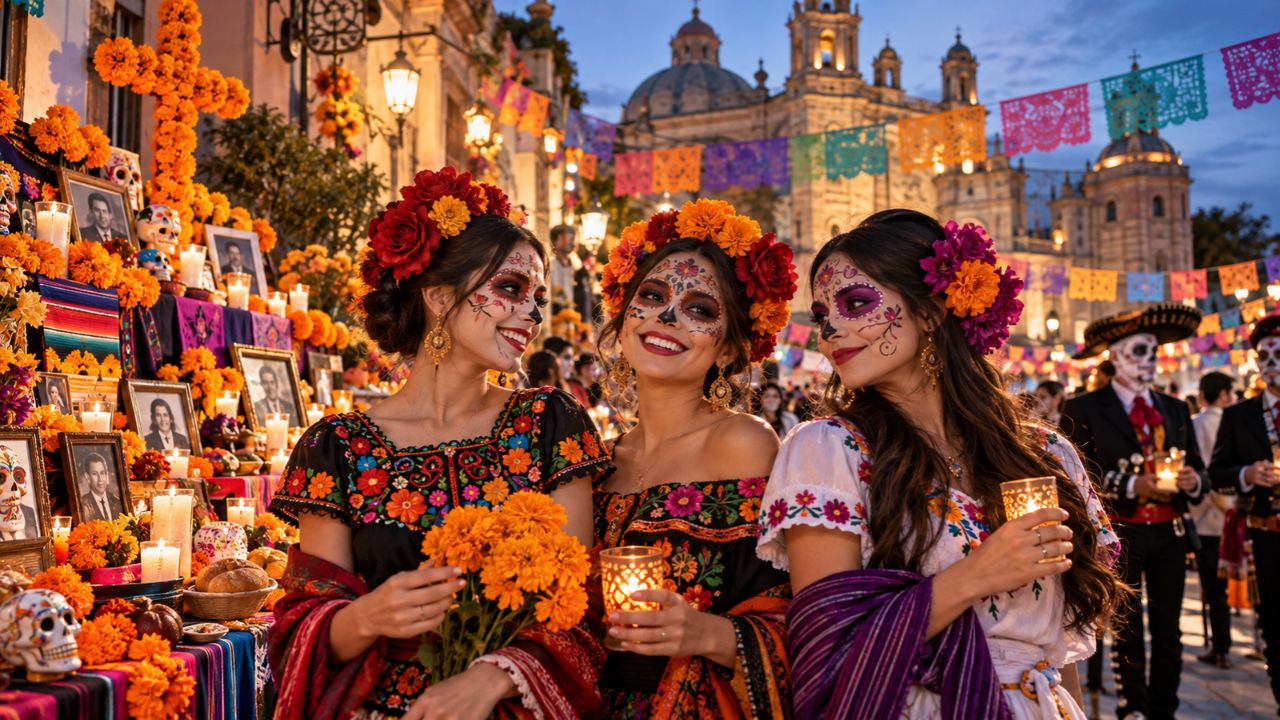
Inscribed on the Representative List of the Intangible Cultural Heritage of Humanity in 2008 following its foundational 2003 proclamation, Día de los Muertos expands across eight anchor destinations in Mexico and the United States from 20 October through 2 November 2026. Rooted in pre-Hispanic cosmologies synthesized with Catholic traditions, the multi-day observance honors deceased ancestors through illuminated graveside vigils, monumental public ofrendas, and theatrical community processions.
While core family rituals remain concentrated between 31 October and 2 November, regional festivals and public exhibits now open earlier across North America. From the sacred lakeside night watches of Michoacán to major urban displays in Los Angeles and San Antonio, the 2026 calendar illustrates how a deeply personal indigenous ritual has evolved into a transnational cultural corridor.
Spiritual Foundations: Syncretism and UNESCO Recognition
The philosophical core of Día de los Muertos diverges fundamentally from secular Western autumn holidays. As cataloged by UNESCO Intangible Cultural Heritage, the indigenous festivity dedicated to the dead represents a temporary reunion between living families and the souls of their departed kin.
Altars (ofrendas) are constructed with strict symbolic geometry:
- Cempasúchil Marigolds: Golden flowers whose pungent scent and vivid petals form pathways guiding souls from the spiritual plane to ancestral homes.
- Salt and Water: Elements placed on altars to quench the thirst of travelling souls and purify their spiritual journey.
- Pan de Muerto: Traditional sweetened anise bread adorned with crossed-bone dough shapes, representing the cycle of mortality.
- Copal Incense: Aromatic resin burned to cleanse negative energy and carry ancestral prayers upward.
Rather than framing mortality as a tragic finality, the tradition celebrates memory, family continuity, and intergenerational dialogue, combining indigenous rituals with All Saints' and All Souls' Day calendars.
Comparative Itinerary: Eight Iconic Día de los Muertos Gateways
The execution of Día de los Muertos varies dramatically by geography, ranging from intimate indigenous cemetery ceremonies to high-tech urban spectacles.
| Destination & Region | Country | Confirmed 2026 Dates | Focal Ceremonial Setting | Cultural Distinctiveness | | :--- | :--- | :--- | :--- | :--- | :--- | | Oaxaca City & Etla Valley | Mexico | Late Oct – 02 Nov 2026 | Historic center streets & San Agustín Etla | Street comparsas, floral sand tapestries, and theatrical muerteadas | | Mexico City & Mixquic | Mexico | 28 Oct – 02 Nov 2026 | Zócalo plaza, Xochimilco & San Andrés Mixquic | Grand civic parade, monumental altar, and La Alumbrada cemetery vigil | | Mérida & Pomuch | Mexico | Late Oct – 02 Nov 2026 | General Cemetery to San Juan plaza & Pomuch | Maya Hanal Pixán ("food for souls") and ancestral Choo Ba'ak bone-cleansing | | Guanajuato City | Mexico | 28 Oct – 02 Nov 2026 | University staircase & subterranean tunnels | 8th annual festival, massive monumental altar, and Japanese Bon Odori exchange | | Pátzcuaro & Janitzio | Mexico | 31 Oct – 02 Nov 2026 | Lake Pátzcuaro & Janitzio Island cemetery | Sacred Purépecha midnight candlelight vigils on family burial plots | | Guadalajara & Jalisco | Mexico | Starts 20 Oct 2026 | Parque Ávila Camacho & metropolitan plazas | 7th edition of Calaverandia theme park and regional Festival de las Almas | | Los Angeles, California | USA | 24 Oct – 02 Nov 2026 | Olvera Street, Hollywood Forever & Grand Park | 17 art installations at Grand Park, Olvera Street novenario processions | | San Antonio, Texas | USA | 23–25 Oct & 24–25 Oct 2026 | Hemisfair park grounds & Historic Market Square | Muertos Fest featuring 80+ altars, live poetry, and outdoor music stages |
Official tourism promotions coordinated through Visit Mexico emphasize regional diversity. In southern Mexico, Oaxaca's Etla Valley is renowned for muerteadas—all-night brass-band street performances in communities like San Agustín Etla. In the capital, Mexico City balances its massive Zócalo parade with La Alumbrada in San Andrés Mixquic on 2 November, where the village cemetery is illuminated entirely by thousands of votive candles.
In the Yucatán Peninsula, Maya traditions redefine the season through Hanal Pixán ("food for the souls"). Mérida's Paseo de las Ánimas sees thousands dressed in white huipiles and guayaberas walking from the General Cemetery to San Juan arch. Nearby in Campeche, the village of Pomuch performs the ancestral Choo Ba'ak, where families respectfully unearth, clean, and re-wrap ancestral bones in embroidered linens—a practice formally protected by Campeche state heritage decrees.
Guanajuato City hosts its 8th Day of the Dead Festival from 28 October to 2 November 2026, draping the historic University of Guanajuato's monumental stone steps in an immense multi-tiered altar, while staging artistic performances inside its subterranean roadway tunnels. The 2026 edition introduces international cultural diplomacy, hosting traditional Japanese Bon Odori ancestor dance performances.
Across the northern border, Visit San Antonio coordinates Texas's largest gathering, Muertos Fest at Hemisfair from 23 to 25 October 2026, displaying over 80 community altars. In California, Los Angeles blends traditional Mexican heritage with contemporary Chicano art, presenting 17 major installations at Gloria Molina Grand Park (24 October–2 November), alongside celebrations at Hollywood Forever Cemetery on 24 October and Olvera Street from 25 October to 2 November.
Cultural Etiquette and Cemetery Protocol
The expansion of international tourism around Día de los Muertos creates acute tension between public celebration and private mourning, particularly in indigenous villages:
- Sacred Versus Performative Space: In Janitzio, Mixquic, and rural Oaxaca, cemetery vigils are deeply personal family obligations. Travelers must never step on graves, touch ofrenda offerings, or interrupt prayer circles.
- Photography Ethics: Flash photography inside cemeteries during night vigils is widely considered offensive. Observers should ask explicit permission before photographing family altars or mourning relatives.
- Alcohol Restrictions: Many traditional indigenous communities strictly prohibit public alcohol consumption within churchyards and cemetery perimeters, regardless of festivities on exterior town streets.
Expert Analysis: Overtourism, Commercialization, and Infrastructure Strains
The commercial ascent of Día de los Muertos illustrates the double-edged sword of global heritage tourism.
For travelers booking trips to high-density hubs like Oaxaca City or Lake Pátzcuaro, the direct consequence is severe infrastructure compression. Hotel capacity in central Oaxaca reaches 100% occupancy months in advance, driving private short-term rental tariffs up by 250% to 400% over standard low-season rates. In Michoacán, ferry lines to Janitzio Island can experience multi-hour queues, overwhelming narrow island footpaths and local wastewater systems.
The pricing pressure this creates means early flight reservations are mandatory. Direct flights into Oaxaca (OAX) and Morelia (MLM) see seat inventories lock out weeks before late October. Budget-conscious travelers increasingly opt for secondary hubs like Guanajuato or Guadalajara, where higher hotel inventories and multi-day festival programming offer better price-to-experience ratios.
Furthermore, commercialization has triggered internal debate within Mexico. Ticketed theme parks like Guadalajara’s Calaverandia represent the commercial monetization of sacred ritual, appealing to domestic urban families while drawing criticism from cultural purists. In contrast, grassroots initiatives in Texas and California demonstrate how diaspora populations use public parks to protect cultural memory and educate multi-generational Mexican-Americans.
Key Takeaways
- UNESCO Protected Heritage: Inscribed by UNESCO in 2008 after a 2003 proclamation, Día de los Muertos honors ancestral memory through indigenous spiritual syncretism.
- Eight Anchor Hubs: The 2026 circuit spans Oaxaca, Mexico City, Mérida/Pomuch, Guanajuato, Pátzcuaro, Guadalajara, Los Angeles, and San Antonio.
- Diverse Regional Rites: Traditions range from Maya Hanal Pixán and Pomuch Choo Ba'ak bone-cleansing to Purépecha midnight cemetery vigils in Janitzio.
- Urban and Theme Developments: Modern adaptations include Guanajuato's tunnel festivities, Guadalajara’s 7th edition of Calaverandia (from 20 October), and San Antonio’s 80-altar Muertos Fest.
- Strict Visitor Protocols: Travelers must respect cemetery boundaries, avoid flash photography during midnight vigils, and secure lodging months in advance.
FAQ: Día de los Muertos 2026 Travel
When do the main Día de los Muertos events take place in 2026?
The principal religious and family observances occur from 31 October through 2 November 2026, though major public festivals in cities like San Antonio and Guadalajara begin as early as 20–23 October.
Where can I experience traditional midnight cemetery vigils?
The most renowned sacred cemetery vigils take place on Janitzio Island in Lake Pátzcuaro, Michoacán, and in San Andrés Mixquic (La Alumbrada) on the outskirts of Mexico City.
What is the Maya celebration of Hanal Pixán?
Hanal Pixán ("food for the souls") is the Yucatec Maya Day of the Dead tradition celebrated in Mérida and surrounding communities, featuring distinctive regional foods, white traditional attire, and the Paseo de las Ánimas.
Can tourists participate in US Día de los Muertos events?
Yes. Major events like San Antonio’s Muertos Fest at Hemisfair and Los Angeles's Grand Park exhibitions are free and open to the public, welcoming visitors to view community altars and attend cultural performances.
Related Travel Guides
- Carson City Autumn Events and Nevada Day Statehood Parade Guide 2026
- Colorado Christmas Markets Alpine Food Trail Guide 2026
- Dia de los Muertos Mexico USA Destinations Travel Guide Reddit 2026
From the mist-shrouded waters of Lake Pátzcuaro to the historic plazas of Texas and California, the path of golden marigolds proves that love and memory recognize no mortal borders.
Disclaimer
This article is for informational and educational purposes only. It does not constitute legal, financial, or professional advice. While we strive to provide accurate and up-to-date information, travel policies, regulations, and conditions change rapidly. Always verify information with official sources before making travel decisions. Nomad Lawyer makes no representations about the accuracy, reliability, completeness, or suitability of the information provided. Readers should consult qualified professionals for advice specific to their circumstances. The views expressed in this article are those of the author and do not necessarily reflect the views of Nomad Lawyer.
Kunal K Choudhary
Co-Founder & Contributor
A passionate traveller and tech enthusiast. Kunal contributes to the vision and growth of Nomad Lawyer, bringing fresh perspectives and driving the community forward.
Learn more about our team →