
US Reroutes All Flights From Ebola-Hit Congo and Uganda to Five Major Airports for Mandatory Health Screening in 2026
The US government enforces mandatory flight rerouting and health screening at JFK, Atlanta, Dulles, Chicago O'Hare, and Houston for passengers from Ebola-affected regions in East Africa.

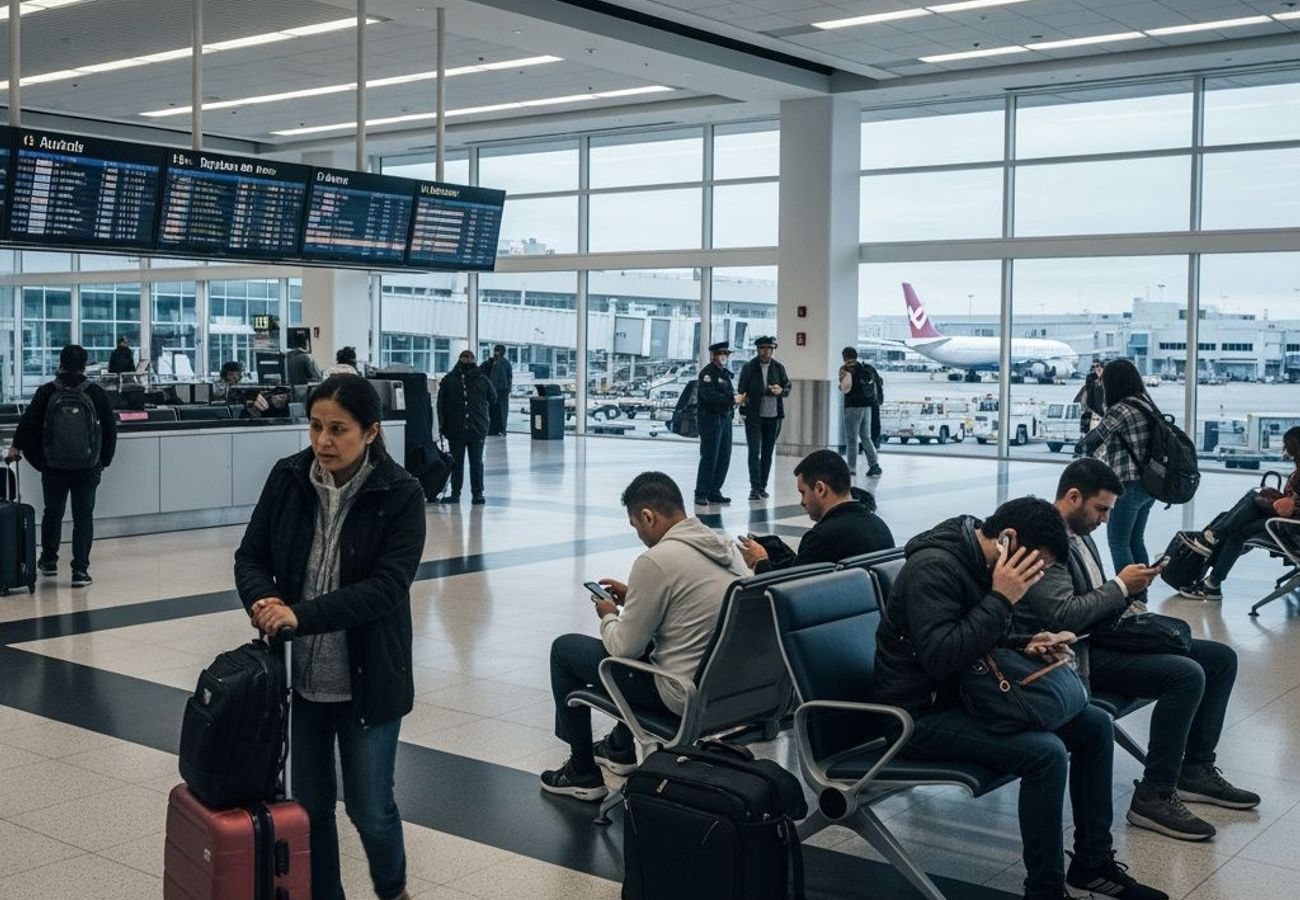
Image generated by AI
The Government's Bold Containment Strategy Takes Flight
The United States government is implementing aggressive border security protocols to prevent atmospheric spread of highly infectious pathogens across American soil. Federal health protection agencies are officially enforcing mandatory flight rerouting procedures, effective immediately. All incoming airline passengers who recently transited through the Democratic Republic of the Congo or Uganda must now land exclusively at five designated federal gateways. This decisive preventive measure ensures specially trained border protection medical units can thoroughly evaluate inbound travelers before they integrate into the general population.
While the current risk to domestic communities remains relatively minimal, global health professionals are taking zero chances regarding containment of hazardous viral outbreaks. The strategy reflects a permanent shift toward predictive, data-driven pandemic prevention—not reactive crisis management.
Why Five Airports? The Logic Behind Central Screening
The urgent operational decision stems from rising caseloads of highly lethal viral strains spreading across East Africa. By centralizing the arrival of high-risk international travelers, the Centers for Disease Control and Prevention can efficiently deploy their specialized bio-surveillance resources to maximum effect.
Deploying complex diagnostic machinery and dedicated quarantine teams across every commercial runway in the country proves logistically impossible. Funneling high-risk transit itineraries through select transport hubs allows the federal government to construct an airtight safety barrier. This proactive defense network catches potential infections long before early symptoms escalate into unmanageable domestic health crises.
Reddit: "Finally, a rational approach to outbreak prevention. Better to inconvenience a few hundred travelers than risk another nationwide lockdown." — r/travel
Past international emergencies proved that fragmented tracking systems allow hidden viral vectors to slip past standard customs checkpoints entirely. Public safety administrators are determined to use this coordinated operational framework to guarantee full compliance with global biological containment standards.
Five Strategic Hubs Now Serve as America's Health Gatekeepers
The Department of Homeland Security selected five massive international aviation networks to handle all incoming high-risk flights. These designated facilities represent the backbone of America's new infectious disease defense:
JFK International Airport in New York anchors the Northeast corridor. Hartsfield-Jackson Atlanta International Airport manages Southeast and African traffic flows. Washington Dulles International Airport controls Mid-Atlantic arrivals. Chicago O'Hare International Airport guards the Midwest gateway. Finally, Houston's George Bush Intercontinental Airport secures the Southern approach.
Each location features state-of-the-art medical isolation wards built specifically to manage highly infectious tropical pathogens. These five airports were selected due to their massive operational capacities and their existing, deeply integrated federal medical support teams. They can absorb sudden schedule disruptions without completely freezing daily regional commuter traffic.
Specialized terminal pathways will guide selected incoming passengers away from standard international arrivals areas, keeping distinct traveler groups completely separated. This infrastructure guarantees that any traveler showing signs of physical distress can be immediately isolated and safely transported to high-security regional biocontainment facilities.
What Happens at the Gate: The Multi-Stage Health Screening Process
Travelers arriving from the monitored African regions must prepare for comprehensive, multi-stage biometric assessments upon arrival. The evaluation process begins the moment passengers step off the aircraft. Digital thermal imaging cameras instantly check for elevated body temperatures using non-contact technology.
Following the initial thermal scan, individuals must complete a mandatory health questionnaire regarding recent travel history and potential exposure points. Specially trained public health officers conduct brief physical interviews to check for secondary symptoms like severe fatigue, unusual bruising, or hemorrhagic indicators.
Passengers must provide verifiable contact information so local tracking authorities can maintain communication throughout the standard 21-day incubation window. Anyone demonstrating a high fever or reporting direct contact with an infected individual will face immediate secondary evaluation in a private terminal clinic.
While these rigorous safety procedures will undoubtedly add significant transit time to long-haul journeys, officials insist they are absolutely necessary to maintain global biosecurity standards. Airlines are working closely with border agents to minimize connection delays for cleared individuals, with most screening processes completing within 2-4 hours.
The Viral Threat: Ebola and Marburg Hemorrhagic Fevers Surge in Central Africa
The African continent is currently battling complex, overlapping outbreaks of both the classic Ebola virus strain and the highly problematic Marburg pathogen. Both aggressive filoviruses cause severe hemorrhagic fevers carrying exceptionally high mortality rates if left untreated.
The virus spreads rapidly through direct contact with contaminated bodily fluids, making healthcare environments and dense family units highly vulnerable to localized transmission. Public health systems in central regions are stretched incredibly thin as they work to isolate emerging hotspots in rural communities across the DRC and Uganda.
The situation is further complicated by the fact that early symptoms closely mirror common tropical illnesses like malaria or typhoid fever. This diagnostic confusion often delays effective quarantine protocols, allowing infection to spread silently within unsuspecting household networks. International humanitarian groups are actively deploying experimental vaccines and emergency therapeutic treatments to help contain the spread at its geographic origin.
Despite these massive field efforts, the high volume of modern global travel means localized outbreaks can easily turn into international threats without strict border monitoring. For official guidance on this evolving situation, consult the CDC Travel Guidelines to stay informed on necessary compliance measures. You can also review US Embassy Health Alerts regarding arrival restrictions.
Holiday Travel Plans: Will This Disrupt Your Summer or Winter Getaway?
Mainstream commercial aviation experts reassure the general traveling public that standard domestic and transatlantic holiday itineraries will remain completely unaffected. The specialized screening mandates apply exclusively to individuals whose journeys originated within, or passed through, the specific monitored zones in East Africa.
Because this demographic represents a very small percentage of daily US customs volume, overall terminal operations will continue running smoothly. Regular holiday crowds traveling between Europe, Asia, and the Americas will notice almost no difference in their standard airport routines.
Major commercial airlines are proactively updating their booking systems to automatically reroute affected passengers well ahead of their scheduled departure dates. Travel agencies are advising clients with complex African connections to check their flight statuses frequently for sudden gate or itinerary alterations. By isolating the screening infrastructure to specific terminal wings, airport authorities ensure that general tourism transit flows remain unhindered.
This careful balance allows the nation to maintain maximum economic activity while simultaneously enforcing top-tier biological defense measures. Business travelers connecting through major hubs should experience no delays beyond standard international arrival processing times.
The Future of Aviation Security: Data-Driven Predictive Prevention
This aggressive border enforcement campaign reflects a permanent shift toward predictive, data-driven international pandemic prevention methods. Global health departments are no longer waiting for a virus to cross ocean borders before activating emergency security infrastructure.
Modern biosecurity relies heavily on real-time data sharing between international hospitals, commercial airlines, and national border authorities. This interconnected surveillance system allows governments to spot emerging threats and establish protective airport screening lines within mere hours of an outbreak notification.
Continuous investment in advanced terminal diagnostic technology will ensure that future health screeners can detect complex viral strains almost instantly. The aviation industry is fundamentally transforming into a frontline defense mechanism against global pandemics—not merely a transportation network.
This is the new normal: airports as biosecurity fortresses, not bottlenecks.
Related Travel Guides
Disclaimer
This article is for informational and educational purposes only. It does not constitute legal, financial, or professional advice. While we strive to provide accurate and up-to-date information, travel policies, regulations, and conditions change rapidly. Always verify information with official sources before making travel decisions. Nomad Lawyer makes no representations about the accuracy, reliability, completeness, or suitability of the information provided. Readers should consult qualified professionals for advice specific to their circumstances. The views expressed in this article are those of the author and do not necessarily reflect the views of Nomad Lawyer.
Kunal K Choudhary
Co-Founder & Contributor
A passionate traveller and tech enthusiast. Kunal contributes to the vision and growth of Nomad Lawyer, bringing fresh perspectives and driving the community forward.
Learn more about our team →