
Over 3,900 US Flight Delays and 320 Cancellations Hit Hubs as Hurricane Isaias and FAA Holds Collide
A nationwide aviation bottleneck grounds 329 flights and delays 3,936 services as Hurricane Isaias shuts Florida Panhandle airports while FAA ground delays hit Boston, SFO, and Chicago.

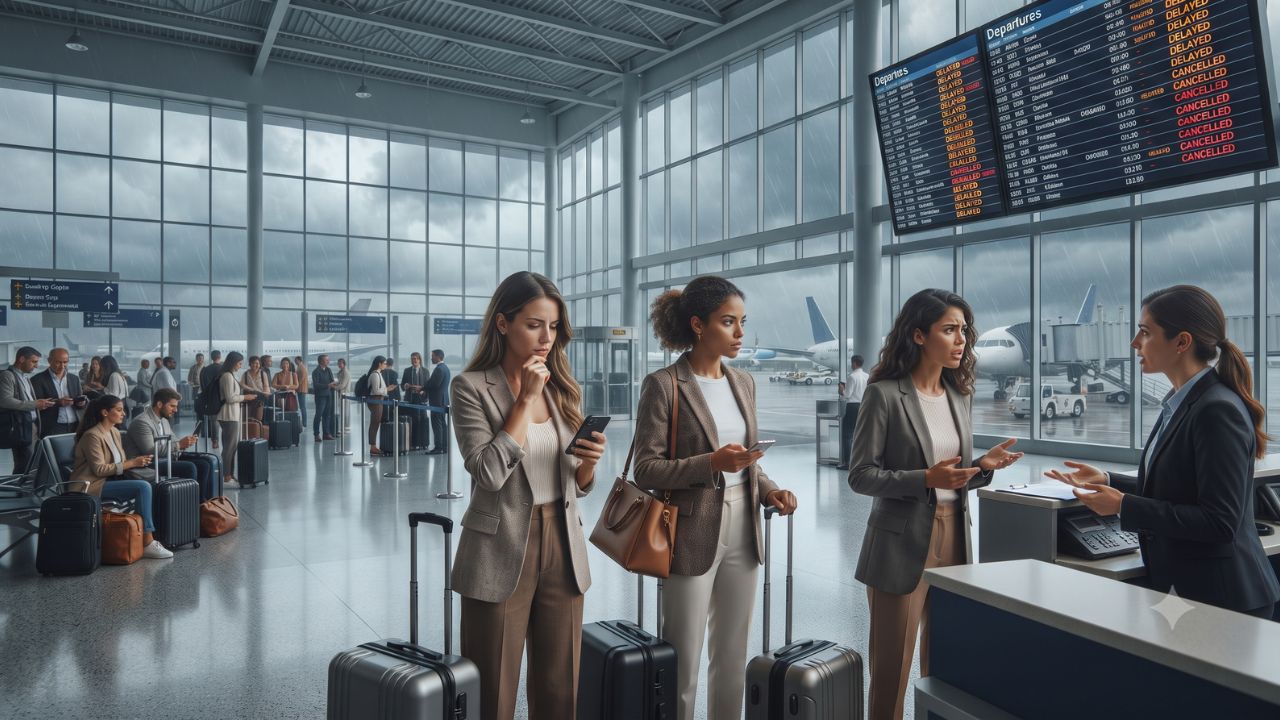
Southwest Airlines absorbed 1,322 flight delays in a single afternoon—affecting nearly 30% of its national schedule—as high-frequency aircraft turnarounds collided with coast-to-coast air traffic management holds and hurricane shutdowns. Verified real-time tracking data captured on October 9, 2026, at 2:46 PM Eastern Time via FlightAware reveals that 3,936 flight delays and 329 outright cancellations struck the United States aviation network in a compounding nationwide gridlock.
The disruption was driven by two distinct operational pressures: severe tropical weather in the Southeast alongside multiple localized Federal Aviation Administration (FAA) ground delay programs. While Hurricane Isaias—intensifying toward a Category 3 landfall on the Florida Panhandle—forced precautionary shutdowns across regional beach gateways, simultaneous crosswind constraints in New England, an air show hold in San Francisco, and an emergency ground delay at Chicago O’Hare created widespread domino delays across domestic networks.
Coast-to-Coast FAA Ground Holds and Panhandle Airport Closures
The geographic distribution of cancellations and delays illustrates how isolated regional constraints quickly destabilize national flight schedules:
- Florida Panhandle Hurricane Closures: Destin–Fort Walton Beach (VPS) suffered 78 cancellations as the airport shut down ahead of Hurricane Isaias, while Pensacola International (PNS) logged 74 cancellations and Northwest Florida Beaches International (ECP) reported 47 cancellations and two delays.
- Northeast Wind Programs: Boston Logan International (BOS) recorded 373 delays and 13 cancellations under an FAA ground delay advisory citing strong crosswinds, resulting in average ground delays of 88 minutes per aircraft.
- West Coast Airspace Restrictions: San Francisco International (SFO) absorbed 303 delays and five cancellations under an air show airspace hold (59-minute average delay), while San Diego International (SAN) logged 288 delays and three cancellations due to severe gate volume metering (55-minute average delay).
- Midwest and Texas Hub Metering: Chicago O’Hare (ORD) recorded 278 delays (10% departure delay rate, 9% arrival delay rate) and seven cancellations following an emergency aircraft response. Austin-Bergstrom (AUS) implemented a formal FAA ground stop due to gate volume, logging 127 delays. Dallas Fort Worth (DFW) recorded 14% departure delays, while Houston Bush Intercontinental (IAH) posted 90 delays and 25 cancellations.
- Southeast Mega-Hub Strains: Charlotte Douglas (CLT) logged 183 delays (12% departure delays) and 33 cancellations, while Hartsfield–Jackson Atlanta (ATL) absorbed 171 delays and 53 cancellations.
Airline Network Vulnerabilities: Point-to-Point vs. Hub-and-Spoke
The operational breakdown revealed stark contrasts between airline business models:
- Southwest Airlines: Logging 1,322 delays (29% delay rate), the carrier absorbed the highest delay volume nationwide. Because Southwest relies on a high-utilization point-to-point route model, delays at constrained airports like San Diego and Austin cascade uncontrollably across downline flights throughout the day.
- American Airlines Group: American recorded 642 mainline delays (17%) and 20 cancellations. Combined with regional subsidiaries PSA Airlines (36 delays / 4%, 40 cancellations / 5%) and Envoy Air (48 delays / 4%, 18 cancellations / 1%), the American Airlines group totaled 726 delays and 78 cancellations.
- Delta Air Lines: Delta posted the highest individual cancellation tally among mainline carriers with 49 cancellations (1%) alongside 261 delays (7%), heavily driven by coastal weather ripples through Atlanta.
- United Airlines & Allegiant Air: United maintained low cancellations (19 flights / 8% delay rate, 286 delays), while leisure-focused Allegiant Air recorded the highest cancellation rate nationwide at 6% (35 cancellations, 19 delays) due to heavy route concentration in Florida.
Airport Operations and FAA Ground Advisory Breakdown
The table below outlines the delay counts, cancellations, and specific FAA ground advisories across key impacted airports on October 9, 2026:
| Airport Hub | Code | Flight Delays | Flight Cancellations | Primary FAA Advisory / Operational Driver | Average Delay Duration |
|---|---|---|---|---|---|
| Boston Logan | BOS | 373 | 13 | Ground Delay Advisory (Severe crosswinds) | 88 minutes average |
| San Francisco | SFO | 303 | 5 | Ground Delay Advisory (Fleet Week air show hold) | 59 minutes average |
| San Diego | SAN | 288 | 3 | Ground Delays (Airport volume & runway metering) | 55 minutes average |
| Chicago O'Hare | ORD | 278 | 7 | Departure Delay Advisory (Aircraft emergency response) | 15+ minutes (increasing) |
| Charlotte Douglas | CLT | 183 | 33 | Hub rotation congestion (12% departure delays) | Variable slot holds |
| Atlanta Hartsfield | ATL | 171 | 53 | Downstream storm routing & volume (8% arrival delays) | Variable gate holds |
| Austin-Bergstrom | AUS | 127 | 4 | FAA Ground Stop (Gate and apron volume constraints) | Indefinite hold window |
| Houston Intercontinental | IAH | 90 | 25 | Regional thunderstorms (7% departure delays) | Variable departure holds |
| Destin–Fort Walton Beach | VPS | — | 78 | Complete airport closure (Hurricane Isaias) | Indefinite storm shutdown |
| Pensacola International | PNS | — | 74 | Complete airport closure (Hurricane Isaias) | Indefinite storm shutdown |
| NW Florida Beaches | ECP | 2 | 47 | Regional tropical storm disruptions | Precautionary ground halts |
Visitor Insider Tips for Domestic Flight Disruptions
- Identify Point-to-Point Downline Exposure: If flying carriers with dense point-to-point networks like Southwest or Allegiant on high-disruption days, track your specific tail number's morning flight path. If your aircraft began its day in a delayed slot at SAN or AUS, afternoon departures in secondary cities will inherit cumulative delays.
- Leverage Same-Day Rebooking Policies: Under US Department of Transportation consumer guidelines, when major carriers issue severe weather waivers, passengers can switch to alternative flight times or adjacent departure airports (e.g., swapping Fort Lauderdale for Miami, or Providence for Boston) without paying fare differences.
- Request Interline Re-routing During Hub Gridlock: If flying legacy carriers like American, Delta, or United and your flight is canceled, immediately approach a customer service agent or phone reservation line to request rebooking on partner carriers rather than waiting 24 hours for internal fleet availability.
- Secure Meal and Hotel Vouchers for Controllable Delays: While hurricane weather is non-compensable, FAA delays caused by mechanical emergencies or airline crew staffing fall under controllable carrier disruptions, entitling passengers to complimentary airport meal vouchers and hotel accommodations for overnight layovers.
Environmental and Airspace Resilience in Modern Aviation
The vulnerability of the American airspace network underscores the delicate equilibrium between airport capacity and extreme weather events. As atmospheric warming increases the intensity of late-season tropical cyclones like Hurricane Isaias, coastal airports face greater frequencies of mandatory shutdowns to protect terminal ground equipment and passenger safety.
Simultaneously, metropolitan hubs operating at near-capacity thresholds have virtually zero tolerance for localized disruptions. When severe wind in Boston or an air show in San Francisco constrains runway arrival rates, the resulting holding patterns force aircraft to burn excess jet fuel and increase airspace carbon footprints. Enhancing NextGen satellite navigation and flexible route management remains vital to safeguarding passenger mobility against increasing environmental shocks.
FAQ: US Flight Disruptions October 2026
Which airline experienced the highest number of flight delays?
Southwest Airlines recorded the highest delay volume nationwide with 1,322 flights delayed, representing a 29% delay rate across its domestic network.
Why were airports closed in the Florida Panhandle?
Destin–Fort Walton Beach (VPS) and Pensacola (PNS) were closed as a precautionary safety measure ahead of Category 3 Hurricane Isaias landfall.
What caused major delays at Boston Logan and San Francisco?
Boston Logan experienced an 88-minute average delay due to strong wind ground delay programs, while San Francisco suffered 59-minute holds due to an air show airspace closure.
Can I get a full refund if my flight is canceled due to FAA ground stops?
Yes. Under US Department of Transportation rules, if an airline cancels your flight for any reason and you choose not to travel on alternative rebooked flights, you are entitled to a full cash refund.
When modern skies reach capacity, the wisest travelers stay ahead of the schedule by watching the national airspace map.
Related Travel Guides
Disclaimer
This article is for informational and educational purposes only. It does not constitute legal, financial, or professional advice. While we strive to provide accurate and up-to-date information, travel policies, regulations, and conditions change rapidly. Always verify information with official sources before making travel decisions. Nomad Lawyer makes no representations about the accuracy, reliability, completeness, or suitability of the information provided. Readers should consult qualified professionals for advice specific to their circumstances. The views expressed in this article are those of the author and do not necessarily reflect the views of Nomad Lawyer.
Kunal K Choudhary
Co-Founder & Contributor
A passionate traveller and tech enthusiast. Kunal contributes to the vision and growth of Nomad Lawyer, bringing fresh perspectives and driving the community forward.
Learn more about our team →