
Over 670 Flight Cancellations and 3,470 Delays Strike Major Asian Hubs from Riyadh to Delhi
Escalating Middle East airspace restrictions, monsoon weather in southern China, and heavy congestion across India trigger 4,150 flight disruptions across Asia.

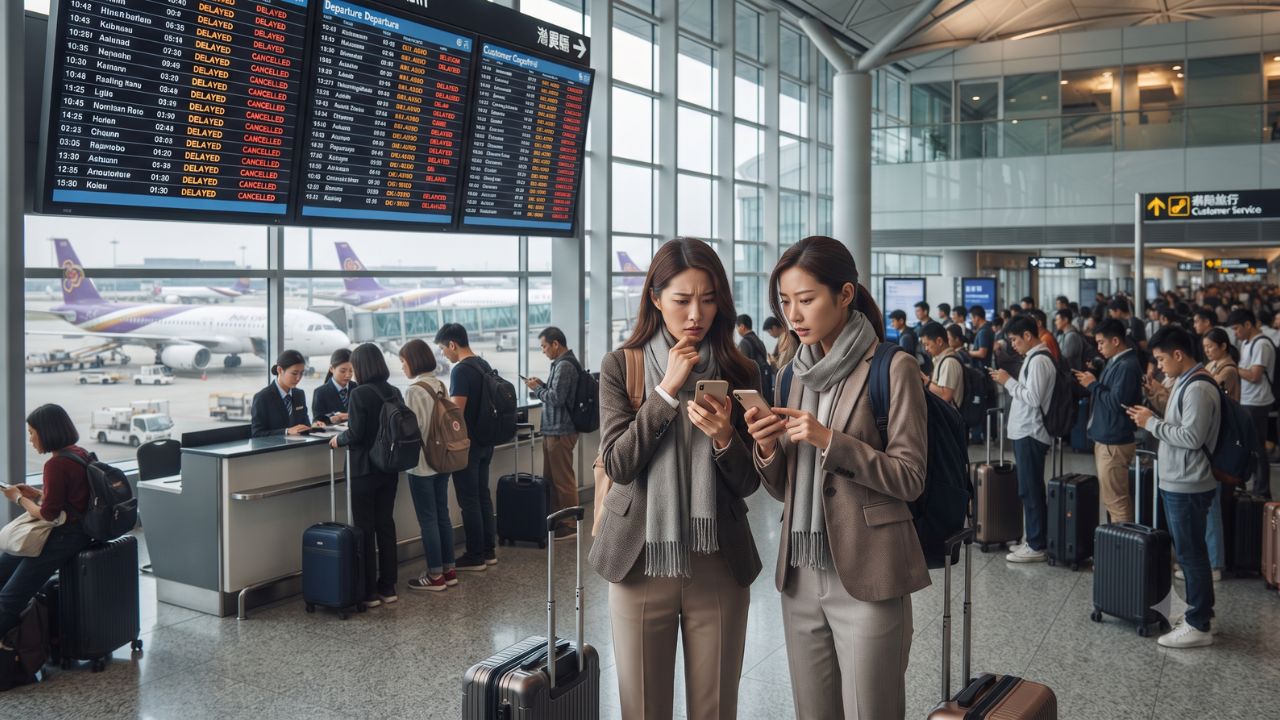
A single security incident at Riyadh’s King Khalid International Airport, paired with expanded European conflict-zone airspace advisories, triggered a cascading shockwave that grounded 671 flights and delayed 3,479 services across the Asian continent in 24 hours. Verified aviation data compiled on October 9, 2026, at 3:23 PM Eastern Time (October 10 at 3:25 AM China Standard Time) via FlightAware and local correspondents confirms that 4,150 total disruption events battered transit passengers from Istanbul and Dubai to Guangzhou and Jakarta.
The widespread schedule breakdown stems from a compounding mix of geopolitical friction, localized severe weather, and severe air traffic congestion. Following an October 8 missile strike that targeted King Khalid International Airport in Riyadh—resulting in three fatalities and aircraft damage—the European Union Aviation Safety Agency (EASA) expanded its Gulf conflict-zone advisory across Saudi Arabia, the United Arab Emirates, Qatar, Bahrain, Kuwait, and Oman, forcing international carriers to reroute around strategic corridors.
Geopolitical Friction, Chinese Weather, and South Asian Congestion
The disruption pattern reflects three distinct operational pressures across the continent:
- Middle Eastern Airspace Avoidance: Riyadh (RUH) recorded the continent’s highest cancellation count with 108 grounded flights (14% origin cancellation rate) and 292 delays. Regional hubs absorbed severe ripple effects: Dubai (DXB) logged 220 delays and 33 cancellations, Jeddah (JED) recorded 188 delays and 25 cancellations, Istanbul Airport (IST) registered 278 delays and 26 cancellations, and Hamad International in Doha (DOH) saw 115 delays.
- Adverse Meteorological Conditions in China: Low cloud layers and reduced visibility across southern and southwestern China restricted runway capacity. Shenzhen Bao’an (SZX) suffered 40 cancellations and 56 delays, Guangzhou Baiyun (CAN) logged 29 cancellations and 80 delays, Beijing Capital (PEK) recorded 30 cancellations and 45 delays, while Shanghai Pudong (PVG) reported 165 delays. Regional secondary airfields saw extreme cancellation spikes, including Nantong (NTG) at 15% destination cancellations and Wuxi (WUX) at 7%.
- Subcontinental Traffic Backlogs: India’s Indira Gandhi International Airport in Delhi (DEL) recorded the highest individual delay count of any airport globally, with 429 delayed flights. Mumbai (BOM) reported 166 delays and nine cancellations, while low-cost carrier IndiGo logged 480 delays (21% of operations) as aircraft rotations broke down.
Airline Impact and Flight Cancellation Analysis
The table below breaks down the operational impact across major international and regional airports, tracking flight delays, cancellation counts, and peak disruption percentages:
| Airport Hub | Airport Code | Country | Reported Delays | Reported Cancellations | Origin / Dest Cancellation Rate | Primary Disruption Factor |
|---|---|---|---|---|---|---|
| Indira Gandhi Int'l | DEL | India | 429 | 5 | Heavy subcontinental backlog | Severe runway slot congestion |
| King Khalid Int'l | RUH | Saudi Arabia | 292 | 108 | 14% / 14% | Missile attack & EASA security warnings |
| Soekarno-Hatta Int'l | CGK | Indonesia | 294 | 15 | 1% / 0% | Aircraft rotation delays across Southeast Asia |
| Istanbul Airport | IST | Türkiye | 278 | 26 | 1% / 1% | Middle East rerouting & European flow controls |
| Dubai International | DXB | UAE | 220 | 33 | 3% / 3% | Gulf airspace restrictions & flight rescheduling |
| King Abdulaziz Int'l | JED | Saudi Arabia | 188 | 25 | 3% / 2% | Saudi airspace diversions |
| Chhatrapati Shivaji | BOM | India | 166 | 9 | 0% / 1% | Indian domestic rotation bottlenecks |
| Shanghai Pudong | PVG | China | 165 | 10 | 0% / 0% | East Asian traffic metering |
| Sabiha Gökçen Int'l | SAW | Türkiye | 129 | 12 | 0% / 1% | Regional low-cost feeder delays |
| Hamad International | DOH | Qatar | 115 | 10 | 0% / 1% | Persian Gulf corridor rerouting |
| Guangzhou Baiyun | CAN | China | 80 | 29 | 1% / 1% | Low visibility & low cloud base ceiling |
| Shenzhen Bao'an | SZX | China | 56 | 40 | 3% / 3% | Southern China severe convective weather |
| Beijing Capital | PEK | China | 45 | 30 | 2% / 2% | Northern corridor air traffic restrictions |
| Ta'if Regional | TIF | Saudi Arabia | — | — | 25% Origin cancellations | Arabian Peninsula regional flight suspensions |
Airline Fleet Disruptions Across Key Carriers
Individual carrier operations mirrored the geographic bottlenecks. Across 34 monitored airlines, carriers logged 2,591 cumulative delays and 434 cancellations:
- IndiGo: Led all carriers in delays with 480 flights held (21% of its network schedule).
- Turkish Airlines: Recorded 280 delays (17%) and 23 cancellations due to prolonged diversions avoiding southern airspace corridors.
- Saudia: Registered 196 delays (37%) and 49 cancellations (9%) following the security emergency in Riyadh.
- Emirates & Qatar Airways: Logged 113 delays (20 cancellations) and 102 delays (10 cancellations) respectively.
- Chinese Carriers: Shenzhen Airlines suffered 96 cancellations (13% of its entire fleet schedule), while Air China reported 40 cancellations and China Eastern logged 117 delays.
- Regional Operators: Pegasus Airlines logged 152 delays, Air India recorded 130 delays, Vietnam Airlines posted 110 delays (29%), and Batik Air reported 94 delays (30%).
Visitor Insider Tips for Handling Asian Flight Disruptions
- Audit Connection Windows at Mega-Hubs: If transiting through Dubai (DXB), Doha (DOH), Istanbul (IST), or Delhi (DEL), avoid tight 60-to-90-minute layovers. Extend scheduled transit buffers to at least three to four hours to prevent missed intercontinental connections caused by flight rerouting.
- Track Aircraft Inbound Rotations: Use real-time flight tracking apps to check where your specific aircraft is arriving from rather than relying solely on airport departure boards. If the inbound tail number is grounded in Riyadh, Shenzhen, or Mumbai, your departure will suffer cascading delays.
- Leverage Duty of Care Regulations: Under standard international carriage conventions supported by the International Air Transport Association, passengers experiencing cancellations or delays exceeding six hours are entitled to airline-provided meal vouchers, basic communications, and hotel accommodation for overnight disruptions.
- Retain Written Records for Travel Insurance: Request a formal written Flight Delay/Cancellation Certificate from airline gate agents or customer service counters. Travel insurance policies require official airline verification citing the exact operational cause (weather, security, or air traffic control) to process reimbursement claims for emergency lodging.
Geopolitical Realities and Interconnected Air Corridors
The vulnerability of modern international aviation lies in its rigid spatial interdependence. When high-altitude transit corridors over the Middle East or Southern China experience restrictions, long-haul flights must carry additional fuel reserves, divert around closed flight information regions (FIRs), and absorb narrow departure slots.
This spatial compression strains ground operations thousands of miles away. An aircraft held on the apron in Riyadh disrupts crew duty-hour limits in Istanbul, causes gate holdovers in Delhi, and eventually strands transit passengers in Southeast Asia. For travelers navigating intercontinental crossroads, acknowledging these geopolitical realities is essential for maintaining flexible travel plans.
FAQ: Asian Flight Disruptions October 2026
Which airports recorded the most cancellations and delays?
Indira Gandhi International Airport in Delhi recorded the highest number of delays (429), while King Khalid International Airport in Riyadh registered the highest cancellations (108).
Why are flights being rerouted across the Middle East?
The European Union Aviation Safety Agency (EASA) expanded conflict-zone safety advisories across Gulf airspace following security incidents in Saudi Arabia, forcing airlines to adjust flight paths.
What caused the high cancellations at Chinese airports?
Adverse weather conditions, including low cloud ceilings and reduced visibility across southern China, triggered major schedule cancellations at Guangzhou, Shenzhen, and Beijing.
Are passengers entitled to compensation for security-related flight delays?
Security-related airspace closures and military conflicts are classified as extraordinary circumstances, exempting airlines from cash penalties, though carriers must provide meals and hotel accommodation.
In an interconnected sky, a single diverted route over the desert echoes across every runway from Europe to the Pacific.
Related Travel Guides
Disclaimer
This article is for informational and educational purposes only. It does not constitute legal, financial, or professional advice. While we strive to provide accurate and up-to-date information, travel policies, regulations, and conditions change rapidly. Always verify information with official sources before making travel decisions. Nomad Lawyer makes no representations about the accuracy, reliability, completeness, or suitability of the information provided. Readers should consult qualified professionals for advice specific to their circumstances. The views expressed in this article are those of the author and do not necessarily reflect the views of Nomad Lawyer.
Kunal K Choudhary
Co-Founder & Contributor
A passionate traveller and tech enthusiast. Kunal contributes to the vision and growth of Nomad Lawyer, bringing fresh perspectives and driving the community forward.
Learn more about our team →