Uzbekistan Tourism 2026: Tashkent Airport Passenger Surge Outpaces European Hubs Along the Modern Silk Road

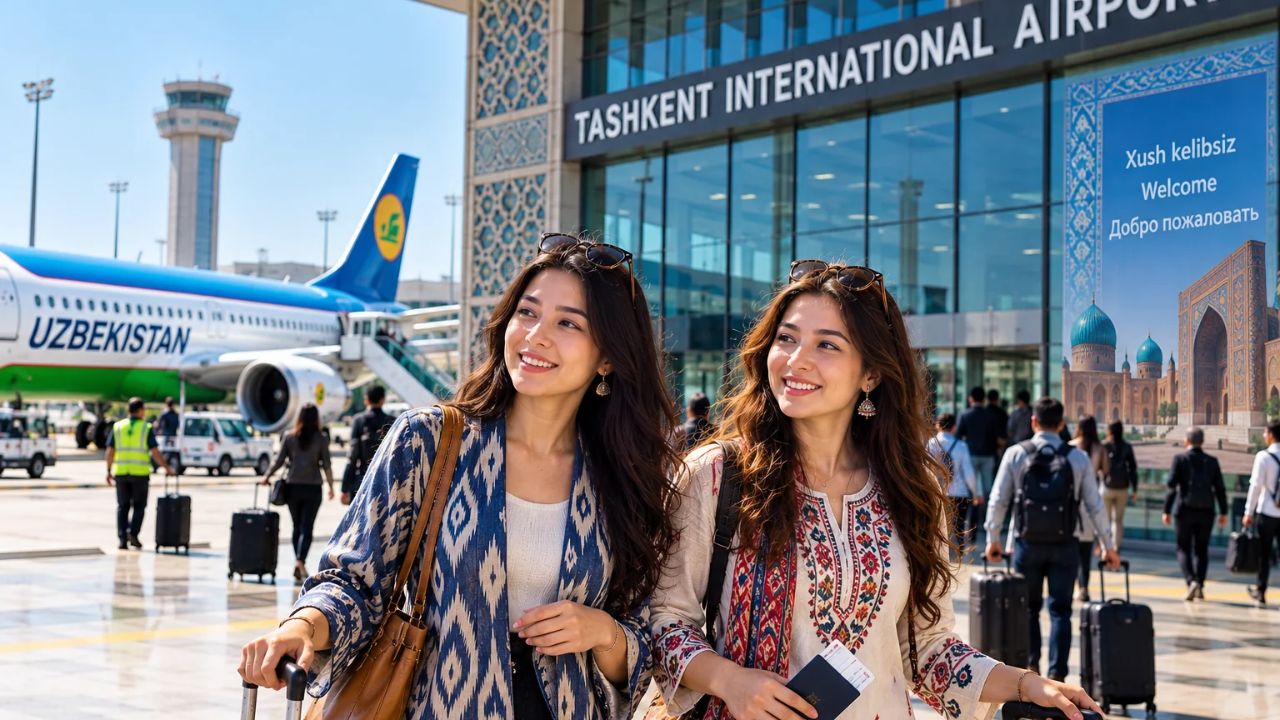
While passenger traffic growth across European airport networks slowed to a modest 3.1% in late summer 2026, aviation traffic across Uzbekistan climbed by 10.5% in August, driven by a 16.6% year-on-year surge at Tashkent International Airport that outpaced established hubs in Venice and Ankara. Released by Airports Council International Europe, the August 2026 traffic report positions Tashkent as the third-fastest growing large airport (handling between 10 million and 25 million passengers annually) across the reporting organization's international monitoring network, trailing only Tirana (+20.7%) and Tel Aviv (+19.5%). This air travel boom across Central Asia reflects sweeping aviation deregulation, expanded international flight links, and growing global interest in the historic trading sanctuaries of the Silk Road.
The Central Asian Aviation Surge: Tashkent Outpaces European Gateways
Uzbekistan's double-digit aviation expansion marks an accelerating shift in Eurasian transport connectivity. The national airport network's 10.5% August passenger expansion significantly outperformed the 6% average recorded across non-EU+ airports and nearly quadrupled the wider European network's 3.1% benchmark. This follows an equally robust first half of the year: figures from Uzbekistan Airports compiled by UzDaily show that the country's airports processed approximately 8.15 million passengers between January and June 2026—a 16% rise over the same period in 2025—alongside a 33% surge in commercial air cargo volumes.
Within Central Asia and neighboring markets, Uzbekistan's performance stands at the forefront of regional air recovery. Uzbekistan's 10.5% growth rate comfortably surpassed Kazakhstan (+8.1%), Georgia (+6.2%), Türkiye (+4.4%), and Azerbaijan (+2.1%). While specific markets such as North Macedonia (+34.8%), Montenegro (+28.6%), and Slovakia (+61%) logged sharp localized recoveries, mature markets in Western Europe saw contraction, with France, Austria, and Iceland recording passenger declines, and Russia dropping 21.3% within the reporting network.
Passenger Traffic Growth and Airport Performance Breakdown (August 2026)
The table below outlines comparative passenger performance metrics across Tashkent, regional peers, and wider European benchmarks for August 2026:
| Airport / Aviation Market | Passenger Traffic Change (YoY August 2026) | Market Category / Comparative Context |
|---|---|---|
| Tashkent International Airport | +16.6% growth | Ranked 3rd among large airports (10M–25M passengers) |
| Tirana International Airport (Albania) | +20.7% growth | Ranked 1st in large airport category |
| Tel Aviv Ben Gurion (Israel) | +19.5% growth | Ranked 2nd in large airport category |
| Ankara Esenboğa (Türkiye) | +13.3% growth | Ranked 4th in large airport category |
| Venice Marco Polo (Italy) | +12.7% growth | Ranked 5th in large airport category |
| Large Airport Category Average | +4.8% growth | Baseline for airports handling 10M–25M passengers |
| Total Uzbekistan Airport Network | +10.5% growth | Exceeded non-EU+ (+6%) and total Europe (+3.1%) |
| Kazakhstan Airport Network | +8.1% growth | Regional Central Asian peer market |
| Uzbekistan H1 Performance (Jan–Jun 2026) | +16.0% (8.15M passengers) | National total accompanied by +33% cargo increase |
| Samarkand International Airport (Historical) | +36.6% (1.38M in 2024) | High-growth gateway to Silk Road monuments |
The Living Silk Road: Modern Rail and Aviation Networks
What distinguishes traveling through Uzbekistan today is the harmonization of modern aviation with high-speed rail. Arriving international travelers land at Tashkent and board the Spanish-built Afrosiyob high-speed train, which cuts across the Kyzylkum Desert to Samarkand in just two hours and fifteen minutes, and continues onward to Bukhara.
In Samarkand, the monumental tiled madrasahs of Registan Square, the turquoise-ribbed dome of Gur-e-Amir, and the terraced mausoleums of Shah-i-Zinda represent the zenith of Timurid architecture. Samarkand's own international airport handled 1.38 million passengers in 2024—a 36.6% surge over 2023—and continues to expand direct charters from the Gulf, Europe, and East Asia. Further west, the UNESCO World Heritage Centre protects the historic centers of Bukhara and Khiva's walled citadel of Itchan Kala, where mud-brick ramparts, minarets, and ancient trading domes remain intact.
Modernizing Infrastructure: The New Tashkent Airport Project
To sustain this passenger influx, the Uzbek government enacted regulatory reforms, including simplified airline operating licenses, subsidies for aircraft maintenance facilities, and bilateral open-skies agreements. In October 2025, construction began on an entirely new international airport serving Tashkent, designed with an initial phase capacity of approximately 20 million passengers annually.
While the existing airport continues to handle near-capacity operations, public-private partnerships are modernizing terminal lounges, baggage sorting facilities, and customs halls. Supported by promotional programs from the Uzbekistan Tourism Board, the country provides visa-free access to citizens from over 90 nations, while streamlined electronic visas accommodate travelers from other global markets.
Visitor Insider Tips: Navigating Trains, Etiquette, and Silk Road Bazaars
Traveling independently through Uzbekistan requires practical timing and local knowledge of administrative and cultural norms:
- Reserve Afrosiyob Train Tickets Exactly 45 Days Ahead: The high-speed Afrosiyob train is the most comfortable way to travel between Tashkent, Samarkand, and Bukhara. However, seats sell out within minutes of being released online through Uzbekistan Railways (Uztemiryollari). Book precisely 45 days before your travel date, or arrange seat bookings through a licensed local agency.
- Keep Your Hotel Registration Slips Safe: By Uzbek law, foreign travelers must be registered with immigration authorities. Hotels print an official registration slip (propiska) upon check-in with a scannable QR code. Keep every single paper slip inside your passport pouch; border control officers routinely audit these slips upon departure at Tashkent International Airport.
- Time Your Lunch for Central Asian Plov: In Uzbekistan, wedding-style plov (rice pilaf simmered with tender lamb, yellow carrots, raisins, and chickpeas in massive iron cauldrons) is prepared exclusively for lunchtime. Visit the Besh Qozon (Central Asian Plov Centre) in Tashkent or Osh Markazi in Samarkand between 11:30 and 13:00; by 14:00, the giant cauldrons are scraped clean.
- Explore Tashkent's Underground Palaces: Tashkent's Soviet-era metro network features chandelier-lit stations decorated with marble carvings, blue glazed ceramics, and cosmonaut bas-reliefs. Buy a contact-free ticket for 2,000 UZS and explore Kosmonavtlar, Alisher Navoi, and Mustaqillik Maydoni stations during mid-morning off-peak hours.
- Respect Sacred Spaces and Local Customs: When entering historic mosques and functioning madrasahs, dress modestly by covering shoulders and knees. Remove shoes when entering carpeted prayer chambers. Greeting locals with a gentle hand over your heart accompanied by "Assalomu alaykum" is warmly appreciated.
Cultural and Environmental Context: Sustainable Heritage Preservation
The rapid expansion of mass international tourism brings significant economic revitalization to handicraft communities, ceramic workshops in Rishtan, and silk weavers in Margilan. However, high visitor footfall also exerts structural pressure on centuries-old mud-brick structures and fragile mosaic tilework.
In Khiva's Itchan Kala and Bukhara's Lyabi-Hauz, local conservation bodies are monitoring humidity levels and structural wear caused by tour groups. Concurrently, broader climate dialogues focus on water scarcity and the environmental rehabilitation of the Aral Sea basin in Karakalpakstan. Sustainable tourism initiatives emphasize dispersing travelers away from overcrowded landmark plazas into village homestays in the Nuratau Mountains and desert yurt camps, ensuring that tourism revenue directly benefits rural families while safeguarding Uzbekistan's architectural treasures for generations to come.
FAQ: Visiting Uzbekistan in 2026
How fast is passenger traffic growing at Tashkent International Airport? According to ACI Europe, Tashkent International Airport recorded a 16.6% year-on-year passenger traffic increase in August 2026, ranking third among large international airports.
Do international tourists need a visa to visit Uzbekistan? Citizens from more than 90 countries enjoy visa-free entry for up to 30 days. Travelers from other nations can obtain an electronic visa (e-visa) through official government portals.
What is the best way to travel between Tashkent, Samarkand, and Bukhara? The Afrosiyob high-speed train connects Tashkent to Samarkand in 2 hours and 15 minutes, and reaches Bukhara in under 4 hours, offering the fastest and most scenic overland transit.
What is the registration requirement for foreign visitors in Uzbekistan? Foreign visitors must retain accommodation registration slips (propiska) provided by registered hotels, as these paper or electronic receipts may be checked by border officials upon departure.
Where ancient Silk Road domes meet the surging flight paths of modern Central Asia, Uzbekistan welcomes travelers to experience history unfolding in majestic real time.
Related Travel Guides
The 10 Best Silk Road Architectural Gems and Tea Houses in Uzbekistan, According To Reddit (Coming Soon)
This article is for informational purposes. Flight routes, passenger regulations, visa rules, and transit advisories are subject to change by airlines and aviation authorities. Readers are advised to verify schedules and travel documentation with relevant carriers and border agencies before departure.
Related Stories

Euless Food Tourism 2026: Paris Baguette Opens in Glade Parks Near DFW Airport with Artisan Breads and Pastries

New Westminster Halloween 2026: Haunted Heritage Lantern Tours, Riverfront Quayside Parties, and the Firehall Pumpkin Smash