
70 Million Americans Surge Toward July 4th Travel as Cruise Holidays Boom to Bypass Summer Travel Chaos and Airport Disruptions: Tourism News
As severe travel chaos and rolling flight cancellations threaten summer aviation, over 70 million Americans pivot toward cruise holidays for Fourth of July travel across Miami, Galveston, and Los Angeles.

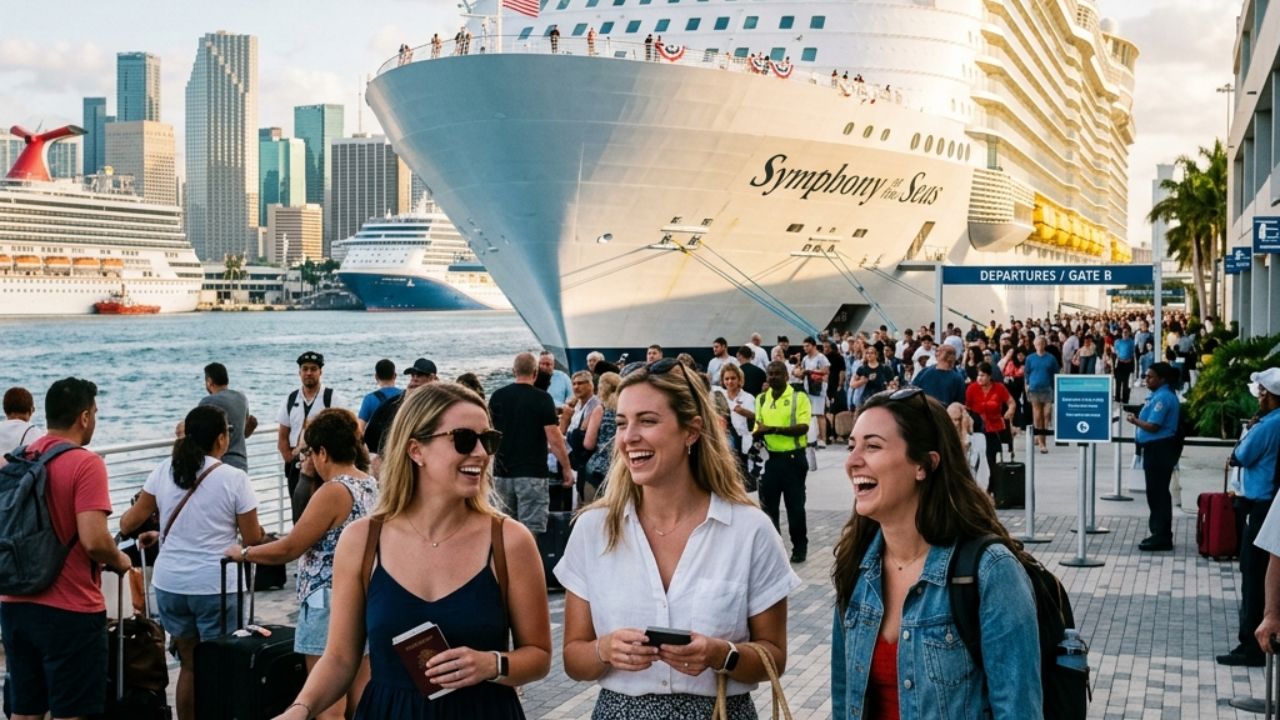
Image generated by AI
In a massive, structural shift defining the peak summer tourism season, the United States is witnessing a historic Fourth of July travel surge driven by a fierce desire to avoid the compounding travel chaos infecting the domestic transit network. Reported on June 20, 2026, as millions of vacationers actively monitor the latest airline news regarding severe airport disruptions and rolling flight cancellations, cruise holidays have aggressively emerged as the fastest-growing segment of the Independence Day travel market. With AAA projections confirming over 70 million Americans will move across the country during this holiday period, millions are actively abandoning the volatility of air travel in favor of all-inclusive maritime departures out of Florida, California, Texas, and the East Coast. This massive pivot toward cruise tourism explicitly highlights how passengers are aggressively attempting to bypass the logistical nightmares dominating current aviation updates, seeking predictability across Caribbean, Alaskan, and Mexican waters.
By introducing direct passenger coordination and dynamic scheduling backups, the regional aviation hubs target growing passenger demand across vital commerce sectors. The choice to coordinate flight departures in phases helps to manage gate capacity, supporting the country's broader regional transportation network.
Context: Escaping the Aviation Meltdown
For the US tourism and hospitality industry, the sudden dominance of cruise travel during the Fourth of July window represents a massive consumer rebellion against the unreliability of the domestic aviation network.
Historically, the Independence Day period remains one of the absolute busiest travel windows in the United States. According to national travel forecasts referenced by the US National Travel and Tourism Office, demand continues to grow aggressively despite rising fuel costs and wildly fluctuating airfare prices. However, modern travelers are acutely aware that the US aviation system buckles under the pressure of 70 million travelers. A single summer thunderstorm over a major hub can trigger cascading flight cancellations that leave families stranded in terminal gridlock for days. To entirely bypass this extreme logistical stress, American tourists are increasingly flocking to cruise travel due to its highly predictable, bundled pricing model. By combining accommodation, entertainment, and transportation into a single, highly controlled maritime package, cruise lines have successfully capitalized on traveler anxiety, offering a guaranteed vacation that cannot be destroyed by an overwhelmed air traffic control center.
To view live flight schedules, verify the active departure status of your specific domestic itinerary, or to track potential route restorations prior to embarking on a cruise, travelers must consult official aviation directories. For direct updates regarding how massive operational failures might impact your current flight to massive ports in Miami or Los Angeles, travelers should aggressively utilize the official digital portals of their respective airlines. To explore live flight tracking and monitor the exact severity of the cascading bottlenecks paralyzing the broader US airspace, passengers can consult the official FlightAware tracking service.
Section-Wise Breakdown: The Maritime Travel Shift
Road Dominance vs. Cruise Expansion
According to official AAA travel projections, while the massive volume of 70 million travelers makes this one of the highest-volume events of the year, multi-modal travel distribution is shifting rapidly. Road trips continue to dominate domestic mobility due to affordability, but they are increasingly plagued by highway congestion and fuel spikes. Meanwhile, air travel demand remains steady despite high ticket prices and the constant threat of delays. However, cruise travel is undeniably the fastest-growing leisure segment. Travelers are choosing the structured vacation experience of a cruise precisely to eliminate the stress of planning multiple logistics across congested highways and failing airports.
The Major Departure Ports
To support this massive maritime surge, cruise destinations are heavily leveraging established infrastructure across major US coastal hubs. Terminals in Florida (specifically Miami and Port Canaveral), Texas (Galveston), and California (Los Angeles) are experiencing massive, record-breaking passenger volumes during the holiday week. These massive port facilities serve as the primary gateways for travelers abandoning traditional air-and-hotel packages.
High-Demand Destinations
The destinations driving this tourism boom are heavily concentrated in three regions. Caribbean cruises remain the absolute most popular option, driven by short sailing durations, warm-weather appeal, and massive capacity. Simultaneously, Alaska cruises are seeing an aggressive surge from travelers seeking nature-based experiences to escape the summer heat, while routes into Mexico provide vital capacity for ships departing from Texas and California.
Technical Roster: The July 4th Travel Matrix
To ensure absolute factual accuracy regarding the exact volume of travelers, the primary transport modes, and the specific maritime hubs driving this massive tourism expansion, the following matrix details the verified travel data:
US Fourth of July Travel Logistics Matrix
| Travel Parameter | Verified Tourism Metric |
|---|---|
| Total Projected Travelers | Over 70 Million Americans (AAA Forecast) |
| Dominant Travel Mode | Road / Car Travel |
| Fastest-Growing Segment | Cruise Travel |
| Major US Departure Ports | Miami, Port Canaveral, Galveston, Los Angeles |
| Primary Cruise Destinations | Caribbean, Alaska, Mexico |
Data strictly reflects the verified AAA holiday projections and US National Travel and Tourism Office forecasts published on June 20, 2026.
Passenger Impact: The All-Inclusive Shield
For the millions of families attempting to execute a flawless Fourth of July vacation, the immediate impact of choosing a cruise is the massive reduction in financial and logistical anxiety.
Travelers are increasingly drawn to cruise vacations because they completely eliminate the uncertainty of fluctuating hotel prices, sudden airfare increases, and volatile fuel costs. Unlike air travel, which aggressively penalizes passengers with hidden baggage costs and dynamic pricing algorithms, cruise packages offer fixed, upfront pricing. This simplifies budgeting for large families and group travelers. Furthermore, once a passenger boards a ship in Galveston or Port Canaveral, they are completely shielded from the outside world. There are no rental car shortages, no overbooked hotels, and no desperate searches for available restaurants. The cruise provides a highly controlled travel environment that structurally prevents the sheer exhaustion that typically accompanies peak summer holiday logistics.
Industry Analysis: The Experience-Driven Economy
Tourism analysts monitoring the massive surge in Fourth of July cruise bookings note that this shift reflects a broader, permanent transformation in how Americans purchase leisure travel.
Government tourism data and AAA reports consistently show that Americans continue to prioritize leisure travel even during periods of extreme economic uncertainty. However, the definition of value has shifted. Cruise tourism perfectly aligns with the global trend where travelers increasingly seek all-in-one, "experience-driven" vacation solutions that reduce planning complexity. Analysts emphasize that cruise operators have successfully marketed their ships not just as transportation to the Caribbean or Alaska, but as the destination itself. As operators aggressively expand fleets and introduce mega-ships featuring onboard water parks and Broadway-style entertainment, this segment is expected to play an increasingly dominant role in permanently shaping seasonal travel patterns across the United States.
Actionable Advice for Navigating Peak Cruise Season
Because reaching your departure port still requires navigating the congested US transit network, you must execute this strategic survival checklist:
- Never Fly on Embarkation Day: If you are flying into Miami, Port Canaveral, Galveston, or Los Angeles to catch your cruise, absolutely never book your flight for the same day the ship departs. Severe travel chaos and routine flight cancellations practically guarantee you will miss the boat. Always fly into your port city at least 24 to 48 hours early.
- Audit Port Parking Availability: If you are joining the millions driving to the port to avoid air travel entirely, do not assume terminal parking will be available upon arrival. During the Fourth of July surge, official port garages sell out weeks in advance. Pre-book your parking space digitally, or utilize off-site, third-party lots that offer shuttle services directly to the terminal.
- Leverage the Fixed Budget: To truly benefit from the cost predictability of a cruise, actively pre-purchase all necessary add-ons (Wi-Fi packages, drink packages, shore excursions) before boarding. Purchasing these items onboard often incurs premium, dynamically adjusted holiday pricing.
FAQ: Fourth of July Cruise Travel
How many Americans are traveling for the Fourth of July?
According to official AAA travel projections, over 70 million Americans are expected to travel during the Independence Day period, making it one of the highest-volume travel events of the year.
Why are cruise holidays growing so fast this summer?
Cruise travel is the fastest-growing leisure segment because it offers a highly predictable, bundled pricing model (accommodation, meals, entertainment) that shields travelers from fluctuating airfares and hotel shortages.
Which US ports are driving this massive cruise expansion?
The holiday travel surge is being heavily supported by major departures out of massive coastal hubs, specifically Miami and Port Canaveral in Florida, Galveston in Texas, and Los Angeles in California.
The Reality of Summer Holiday Logistics
The massive, 70-million-strong travel surge surrounding the Fourth of July proves definitively that Americans refuse to abandon their summer holidays, despite the grueling reality of modern transit. By aggressively shifting toward cruise tourism, millions of travelers are actively proving that they value the predictability of the ocean over the volatility of the airport. Yet, as families eagerly head toward massive terminals in Florida, Texas, and California to escape the travel chaos, they must accept a critical new reality: surviving the peak summer season requires extreme logistical foresight. Securing an all-inclusive maritime vacation is only half the battle; successfully arriving at the port before the ship sails requires a complete refusal to trust same-day aviation scheduling.
Key Takeaways
- Massive Travel Volume: AAA projects that over 70 million Americans will travel during the Fourth of July holiday period in 2026.
- Cruise Segment Boom: Cruise holidays have emerged as the fastest-growing travel segment, driven by travelers seeking all-inclusive predictability.
- Bypassing Transit Chaos: The bundled pricing model of cruises shields families from volatile airfares, fluctuating hotel costs, and airport disruptions.
- Major Departure Hubs: The massive maritime surge is heavily concentrated at ports in Miami, Port Canaveral, Galveston, and Los Angeles.
- High-Demand Destinations: The Caribbean, Alaska, and Mexico remain the absolute most popular cruise routes for US domestic and international leisure travelers.
Related Travel Guides
Massive Travel Chaos Paralyzes Chicago O'Hare with 1,425 Disruptions
Disclaimer
This article is for informational and educational purposes only. It does not constitute legal, financial, or professional advice. While we strive to provide accurate and up-to-date information, travel policies, regulations, and conditions change rapidly. Always verify information with official sources before making travel decisions. Nomad Lawyer makes no representations about the accuracy, reliability, completeness, or suitability of the information provided. Readers should consult qualified professionals for advice specific to their circumstances. The views expressed in this article are those of the author and do not necessarily reflect the views of Nomad Lawyer.
Kunal K Choudhary
Co-Founder & Contributor
A passionate traveller and tech enthusiast. Kunal contributes to the vision and growth of Nomad Lawyer, bringing fresh perspectives and driving the community forward.
Learn more about our team →