
U.S. Bioluminescent Tourism Guide: Glowing Bays and Beaches
Bioluminescent tourism grows across America, highlighting glowing waters in Puerto Rico, Florida, California, and Washington.

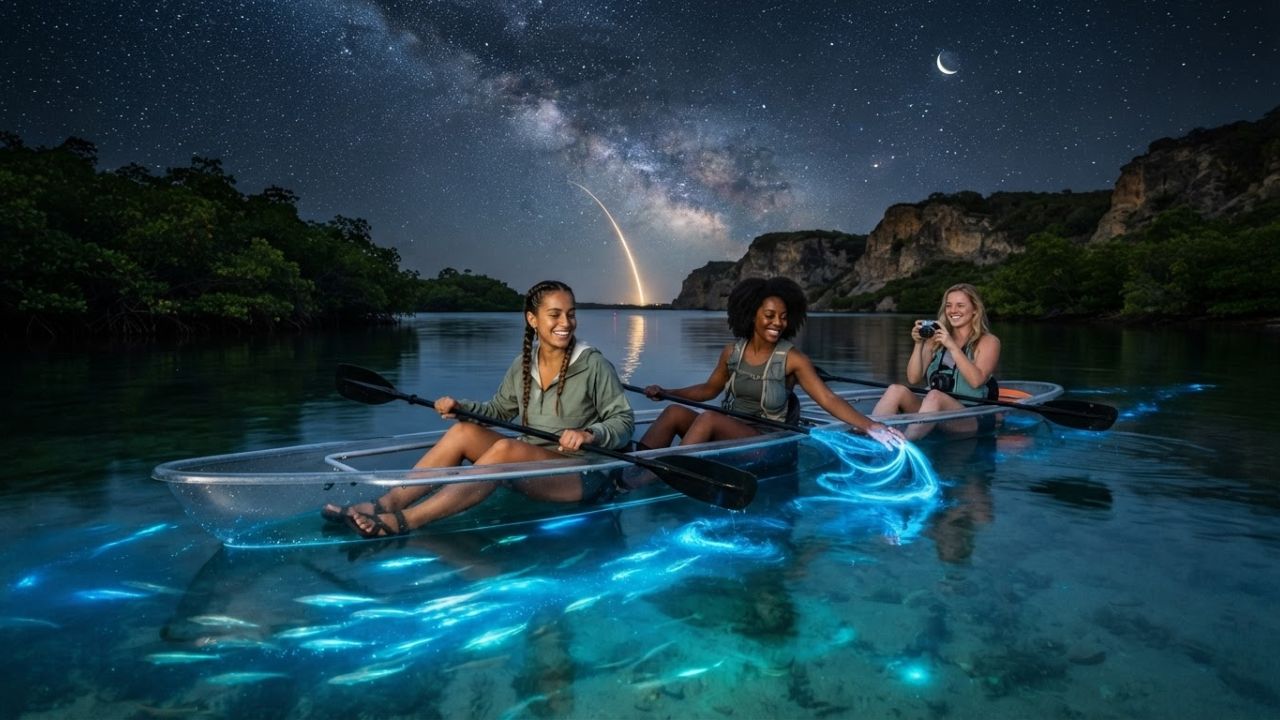
Image generated by AI
This comprehensive U.S. bioluminescent tourism guide details the top glowing bays and beaches across the nation. Driven by a rising interest in night tourism, travelers are heading to protected lagoons in Puerto Rico, Florida, California, and Washington to witness dinoflagellates lighting up the water.
Aviation and eco-tourism metrics indicate that night excursions support local guide services, kayak rentals, and regional hospitality networks. Marine bioluminescence occurs when microscopic organisms emit light when water moves, creating glowing trails behind kayaks, paddleboards, and swimming fish.
Record-Breaking Tropics: Puerto Rico’s Glowing Bays
Puerto Rico hosts two of the most popular bioluminescent destinations in North America:
- Mosquito Bay (Vieques): Holds the Guinness World Record as the brightest bioluminescent bay in the world. The calm, protected waters of this natural reserve support millions of dinoflagellates year-round.
- Laguna Grande (Fajardo): Bounded by mangrove forests, travelers navigate narrow water tunnels before reaching the open lagoon. The close proximity to San Juan makes Fajardo a key destination for eco-tourism groups.
Both locations enforce strict rules, including restrictions on swimming and chemical sunscreens, to protect the fragile marine balance.
Space Coast Summer Blooms: Titusville, Florida
In the continental United States, Titusville serves as a major destination for summer bioluminescence. Plankton blooms occur in the Indian River Lagoon, Mosquito Lagoon, and Banana River during the warm summer months.
Kayakers routinely see fish, dolphins, and manatees leaving blue trails. The area offers a unique combination: paddlers can sometimes watch rocket launches from the nearby Kennedy Space Center while floating in glowing water. In winter, bioluminescent comb jellies replace the summer plankton, providing year-round night tours.
Pacific Surf and Bay Kayaking: California
California offers two distinct styles of night-time marine exploration:
- San Diego Coast: Seasonal red tides cause crashing waves to glow blue at night along beaches like La Jolla Shores, Torrey Pines, Del Mar, Carlsbad, and Scripps Pier. The events are seasonal and depend on algae concentrations.
- Tomales Bay (Point Reyes): A sheltered bay in northern California offering calm water. Guided night tours take kayakers beneath dark skies, where minor paddle movements trigger blue sparkles.
Pacific Northwest Marine Life: Friday Harbor, Washington
Friday Harbor, located on San Juan Island, combines day-time whale watching with night-time bioluminescent kayaking during summer.
The cool climate, quiet coves, and scenic pine shorelines make the San Juan Islands a popular destination for eco-tourists. The seasonal plankton blooms allow travelers to watch orca pods during the day and paddle through glowing water after sunset.
Flight Gateways and Lunar Alignment Passenger Rights
For travelers planning flights to bioluminescent destinations:
- Airport Connections: Access San Juan (SJU) for Puerto Rico, Orlando (MCO) for Florida, San Diego (SAN) for southern California, San Francisco (SFO) for Point Reyes, or Seattle (SEA) for Friday Harbor.
- Lunar Cycle Planning: Bioluminescence is best viewed during a new moon (darkest skies). Travelers should check lunar calendars before booking tickets.
- US DOT Delay Refund Protection: If a domestic or international flight is canceled or delayed by more than three hours, and the passenger chooses to cancel, they are entitled to a full cash refund.
- Controllable Delay Services: If a delay is caused by controllable airline issues, carriers must provide meal vouchers after three hours and free hotel lodging if the delay extends overnight.
U.S. Bioluminescent Tourism Destination Specifications
| Location Gateway | Primary Water Body | Seasonal Peak | Access Requirements | Flight Hub Gateways |
|---|---|---|---|---|
| Vieques, PR | Mosquito Bay | Year-Round (Peak summer) | Guided clear-bottom kayak tours | San Juan (SJU) |
| Fajardo, PR | Laguna Grande | Year-Round | Mangrove kayak permits required | San Juan (SJU) |
| Titusville, FL | Indian River Lagoon | Summer (Plankton) / Winter (Jellies) | State park entry passes | Orlando (MCO) |
| San Diego, CA | La Jolla Shores, Scripps Pier | Seasonal (Summer/Autumn red tides) | Open public beaches | San Diego (SAN) |
| Point Reyes, CA | Tomales Bay | Summer and Autumn | Guided night kayak bookings | San Francisco (SFO) |
| Friday Harbor, WA | San Juan Island Coves | Summer months | Ferry or flight connection | Seattle (SEA) |
Why This Matters
For travelers on this route, the real impact is that scheduling trips during a full moon will result in high sky brightness that renders the bioluminescence invisible, making it necessary to align flight bookings with the new moon phase. From a logistical perspective, this means that tourists visiting Tomales Bay should book guide services months in advance, as local parks restrict independent night launches to protect nesting waterbirds. Paddlers should wear windproof jackets, as night temperatures on Tomales Bay and Friday Harbor drop rapidly even during summer.
Industry Outlook
National park services are installing low-emission LED lighting along public docks to reduce local light pollution around glowing bays. As regional airports upgrade check-in portals, traveler processing times will decrease. Over the next year, expect tour operators to launch mobile apps providing real-time plankton bloom maps using satellite water temperature logs. This digital system will help travelers schedule bookings during peak glowing periods.
Related Travel Guides
Disclaimer
This article is for informational and educational purposes only. It does not constitute legal, financial, or professional advice. While we strive to provide accurate and up-to-date information, travel policies, regulations, and conditions change rapidly. Always verify information with official sources before making travel decisions. Nomad Lawyer makes no representations about the accuracy, reliability, completeness, or suitability of the information provided. Readers should consult qualified professionals for advice specific to their circumstances. The views expressed in this article are those of the author and do not necessarily reflect the views of Nomad Lawyer.
Preeti Gunjan
Contributor & Community Manager
A passionate traveller and community builder. Preeti helps grow the Nomad Lawyer community, fostering engagement and bringing the reader experience to life.
Learn more about our team →