
Kansas Tourism Profiles Six Travel Regions Highlighting Wild West History and Underground Strataca Museum
Explore the diverse travel opportunities in Kansas. Discover Wild West history in Dodge City, space artifacts in Hutchinson, and rolling hills in the Flint Hills.

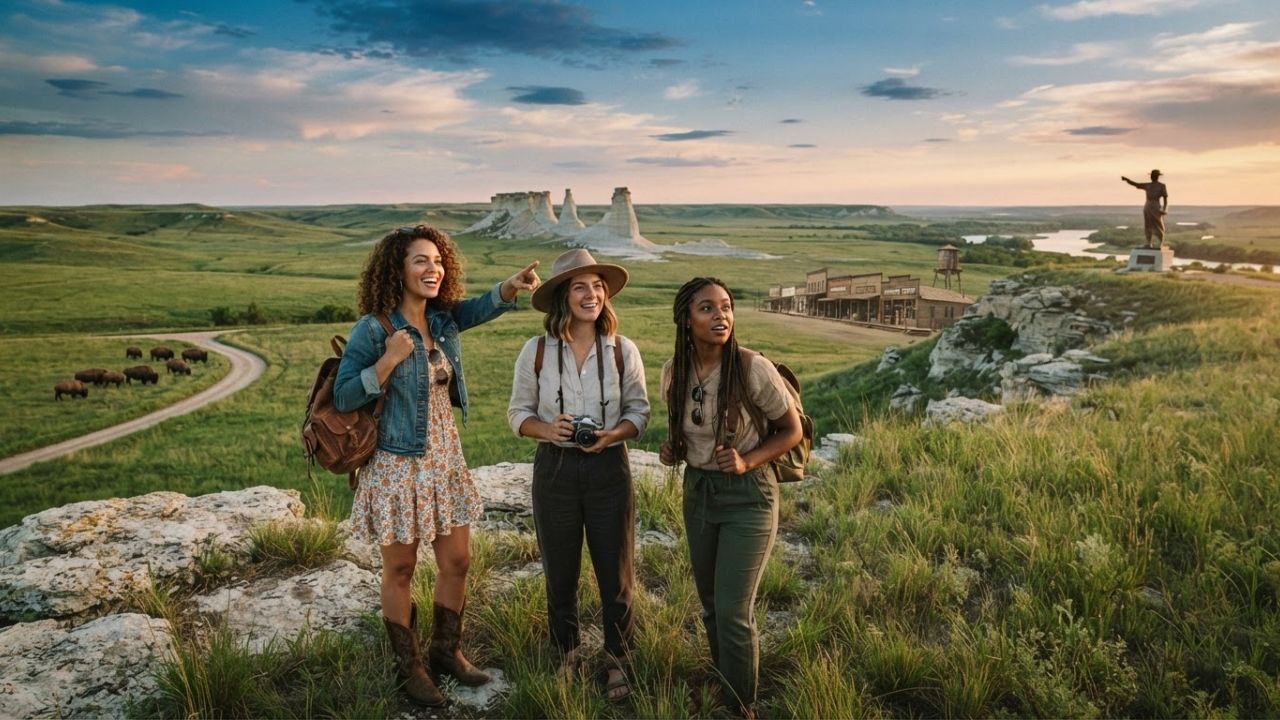
Image generated by AI
This comprehensive Kansas travel guide explores how the heart of America is emerging as an underrated destination. With six distinct Kansas tourism regions, the state offers Wild West heritage, dramatic geological formations, and underground wonders that challenge its reputation as flat farmland.
Located in the center of the United States, Kansas has established a travel network that connects historic cowboy settlements with modern metropolitan centers. While historically recognized for agricultural production, the state is recording growing visitor numbers by promoting its distinct ecological features and aviation museums.
Travelers can access six regional tourism territories, each presenting a different historical or natural profile. From the capital in Topeka to the rolling hills of the tallgrass prairie, regional itineraries combine frontier history with outdoor activities.
Exploring the Six Tourism Regions Across the Prairie State
The state's tourism board coordinates promotion across six geographic divisions:
- Northeast Kansas: Home to the state capital, Topeka, alongside Lawrence, Leavenworth, Atchison, and Kansas City. The region focuses on historic government landmarks, university campuses, and scenic riverside trails.
- North Central Kansas: Showcases rural heritage and historic towns, including Salina, Abilene, and Concordia, providing quiet driving routes and local heritage museums.
- Northwest Kansas: Features geological formations like Monument Rocks, rich fossil excavation sites, birdwatching corridors, and designated dark-sky stargazing parks.
- Southwest Kansas: Preserves frontier trails and cowboy history, centered around the historic streets and Boot Hill Museum in Dodge City.
- South Central Kansas: Anchored by Wichita, the state's largest city, which combines aviation museums with family gardens and science centers.
- Southeast Kansas: Characterized by wooded lakes, historic coal mining structures, and outdoor recreation areas.
Wichita’s Modern Tourism Infrastructure and Aviation Legacy
Wichita serves as the state’s primary urban gateway. Historically recognized as an aviation manufacturing center, the city has expanded its family attractions and cultural landmarks.
Travelers can visit the Sedgwick County Zoo, one of the nation’s largest zoological parks, or explore interactive science exhibits at Exploration Place. The Botanica Wichita gardens offer themed floral displays, while the historic Old Cowtown Museum reconstructs life in the late nineteenth century.
Near the downtown riverfront, the 44-foot-tall Keeper of the Plains monument stands at the confluence of the Arkansas and Little Arkansas rivers, serving as a tribute to the region's Native American heritage.
Historic Capitals and Frontier Towns
Topeka, the capital city, offers travelers access to civil rights history at the Brown v. Board of Education National Historical Park. Visitors can tour the Kansas State Capitol building, known for its grand architecture and historic murals.
To the east, the university town of Lawrence features a walkable downtown district along Massachusetts Street, populated by local bookstores, music venues, and cafes.
In the west, Dodge City remains a central attraction for Wild West history. The Boot Hill Museum and reconstructed Front Street exhibit historical artifacts from the cattle drive era, supported by seasonal historical performances.
Tallgrass Prairie Preserves and Geological Formations
The Tallgrass Prairie National Preserve protects one of the last remaining expanses of the tallgrass prairie ecosystem in North America. Located in the Flint Hills region, the preserve offers hiking trails where visitors can observe free-roaming bison herds and native wildflowers.
The Flint Hills feature rolling limestone hills, offering scenic driving routes and panoramic sunset views.
West of the hills, geological formations include Monument Rocks, featuring towering chalk pyramids formed millions of years ago. Nearby, Little Jerusalem Badlands State Park offers views of limestone cliffs, while Mushroom Rock State Park displays balance rocks shaped by natural erosion.
Frontier Military Forts and African American Heritage
The National Park Service maintains several historic sites across the state:
- Fort Larned National Historic Site: Features a preserved mid-nineteenth-century military post that protected travelers on the Santa Fe Trail.
- Fort Scott National Historic Site: Reconstructs military barracks and details the era of westward expansion and civil war border conflicts.
- Nicodemus National Historic Site: Preserves the history of the oldest remaining town established by African Americans after the Civil War.
State Parks and Water Reservoirs
The state government manages 28 state parks, offering camping, boating, and fishing:
- Wilson Lake: Known for its clear waters and surrounding hiking trails.
- Milford Lake: The largest reservoir in the state, offering extensive fishing and wildlife viewing.
- El Dorado Lake and Cheney Reservoir: Popular spots for sailing, camping, and family holiday activities.
Hiking routes across the Konza Prairie allow wildlife enthusiasts to spot white-tailed deer, wild turkeys, bald eagles, and bison in their natural habitat.
Underground Mines and Space Exploration Archives
Hutchinson hosts two highly distinct science attractions:
- Strataca: The Underground Salt Museum allows visitors to descend 650 feet below the surface into an active salt mine, showcasing geology and historical mining tools.
- Cosmosphere: Houses one of the world's largest collections of US and Russian spaceflight artifacts, including original spacecraft capsules.
Kansas Regional Tourism and Key Destinations
| Tourism Region | Key Municipal Gateways | Primary Historical & Natural Attractions | Geographic Character |
|---|---|---|---|
| Northeast | Topeka, Lawrence, Leavenworth, Atchison, Kansas City | State Capitol, Brown v. Board National Historic Site, Massachusetts Street | River valleys and urban centers |
| North Central | Salina, Abilene, Concordia | Local heritage museums, historic farming communities | Quiet rural plains |
| Northwest | Colby, Goodland | Monument Rocks, fossil excavation sites, dark-sky stargazing parks | High plains and chalk formations |
| Southwest | Dodge City, Garden City | Boot Hill Museum, Front Street, historic cowboy routes | Arid plains and frontier heritage |
| South Central | Wichita, Hutchinson | Sedgwick County Zoo, Strataca Salt Museum, Cosmosphere space archives | Busiest urban and aviation center |
| Southeast | Pittsburg, Coffeyville | Historic coal mining sites, state parks, fishing reservoirs | Wooded hills and lakes |
Why This Matters
For travelers, this means that midwestern itineraries can be expanded beyond major highway transits to include specialized geological hikes and history museums. From a logistical perspective, the distribution of regional attractions allows road trippers to plan multi-day loops without long driving gaps. Travelers should visit the Tallgrass Prairie during late spring to see active bison calving, and book Strataca tickets in advance due to daily elevator capacity limits.
Industry Outlook
State tourism boards are investing in electric vehicle charging infrastructure along historic byways to support eco-tourism and road travel. As regional airports expand flight connections to Wichita, transit times for coastal travelers will decrease. Over the next year, expect parks to implement automated trail pass booking systems to manage visitor impacts on fragile tallgrass ecosystems. This digital transition will support conservation efforts.
Related Travel Guides
Disclaimer
This article is for informational and educational purposes only. It does not constitute legal, financial, or professional advice. While we strive to provide accurate and up-to-date information, travel policies, regulations, and conditions change rapidly. Always verify information with official sources before making travel decisions. Nomad Lawyer makes no representations about the accuracy, reliability, completeness, or suitability of the information provided. Readers should consult qualified professionals for advice specific to their circumstances. The views expressed in this article are those of the author and do not necessarily reflect the views of Nomad Lawyer.
Preeti Gunjan
Contributor & Community Manager
A passionate traveller and community builder. Preeti helps grow the Nomad Lawyer community, fostering engagement and bringing the reader experience to life.
Learn more about our team →