
US and Australia Achieve Landmark F-35A Weapons Testing Milestone, Accelerating Combat Certification Timeline
Breaking airline news and aviation industry updates for 2026.

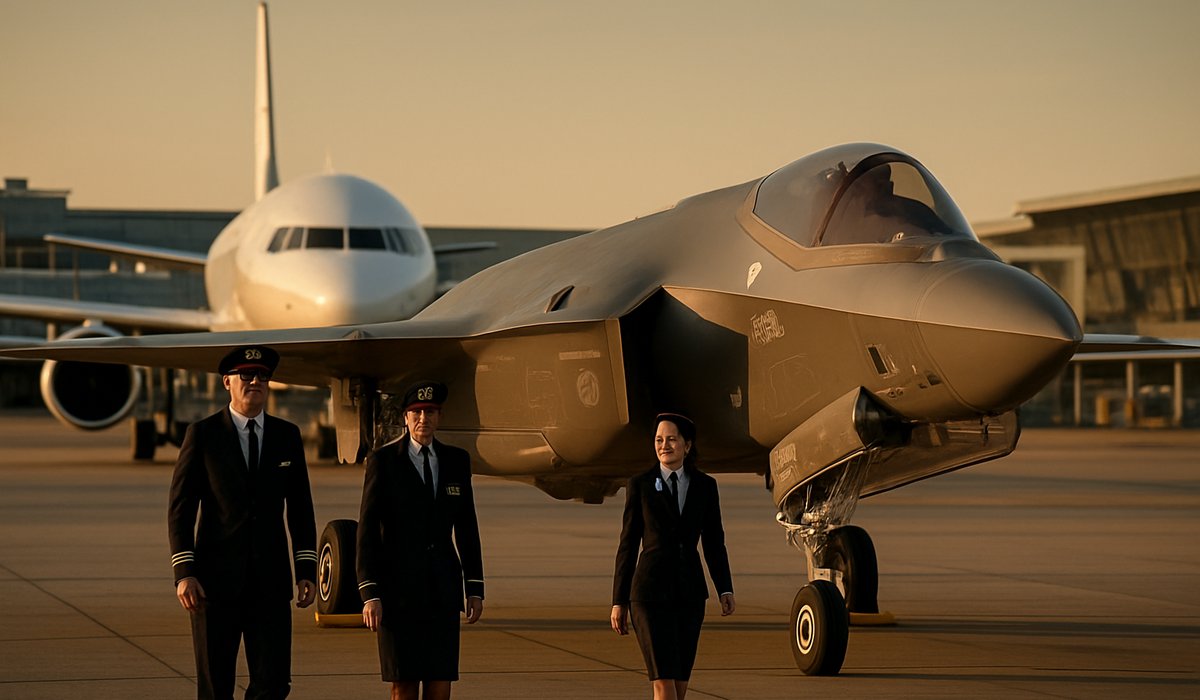
Image generated by AI
US and Australia Achieve Landmark F-35A Weapons Testing Milestone, Accelerating Combat Certification Timeline
Historic joint trial opens pathway for faster integration of advanced armaments on fifth-generation fighter jets
Breaking Through Testing Barriers
The United States and Australia have successfully completed a groundbreaking weapons certification test on the F-35A Lightning II, establishing new protocols that could fundamentally reshape how allied nations validate and deploy advanced armaments on next-generation combat aircraft. The collaborative trial, conducted in late April and officially announced by the Royal Australian Air Force on June 19, represents the first joint deployment of a Weapon Fill Measurement Vehicle (WFMV) test flight on an operational F-35A platform—a technological achievement with significant implications for NATO allies and Indo-Pacific defense partnerships.
What the Test Accomplished
The joint trial gathered unprecedented engineering and performance data essential for accelerating the weapons certification process on fifth-generation fighters. By combining Australian and US military expertise and resources, both nations circumvented traditional testing bottlenecks that have historically extended weapons integration timelines by months or years. The WFMV technology enables engineers to measure and validate weapons loading systems in real-world flight conditions, providing critical safety and compatibility data without requiring full operational deployment.
Defense officials emphasize that this breakthrough enhances allied air combat readiness at a critical moment. As geopolitical tensions reshape global defense priorities—particularly in the Indo-Pacific region—the ability to rapidly certify and integrate new weapons systems directly strengthens deterrence capabilities and operational flexibility across allied air forces.
Accelerating Allied Interoperability
The implications extend beyond bilateral cooperation. By establishing proven testing methodologies that other allied nations can adopt, the US-Australia partnership creates a template for expedited weapons certification across the F-35 global user community. Countries operating the Lightning II—including Canada, Norway, Japan, and South Korea—could benefit from streamlined certification processes, reducing procurement delays and enhancing collective security postures.
The Royal Australian Air Force views this achievement as validation of deepening defense ties with Washington, reinforcing Australia's position as a critical technology partner in an increasingly contested Indo-Pacific theater. The test underscores how advanced military partnerships can innovate operational capabilities at unprecedented pace.
Looking Forward
Industry analysts suggest this development signals a broader shift toward collaborative weapons testing frameworks among allied air forces. As adversaries accelerate military modernization, the traditional sequential approach to weapons certification—once considered thorough and prudent—is increasingly viewed as a strategic vulnerability.
The successful trial establishes proof-of-concept for integrated testing protocols, potentially transforming how coalition partners validate emerging weapons technologies for their fighter inventories.
FAQ: F-35A Weapons Testing and Allied Defense
What is a Weapon Fill Measurement Vehicle (WFMV) and why does it matter? A WFMV measures weapons loading systems during actual flight conditions, providing engineering data that ensures safety and compatibility without full operational deployment. This accelerates certification timelines significantly.
How does this test improve F-35A capability? The joint US-Australia trial establishes new protocols for faster weapons integration, allowing allied nations to deploy advanced armaments more rapidly while maintaining rigorous safety standards.
Which countries can benefit from this testing breakthrough? All F-35 operating nations—including Canada, Norway, Japan, South Korea, and other NATO allies—can potentially adopt these streamlined certification methodologies for their aircraft.
Why is weapons certification speed strategically important now? Accelerated weapons deployment enhances allied deterrence capabilities in contested regions, particularly the Indo-Pacific, where geopolitical competition is intensifying.
What does this mean for Australia's defense modernization? The successful trial positions Australia as a technology innovator within the F-35 partnership, strengthening its strategic alliance with the US and enhancing regional security contributions.
Related Travel Guides
-
Frontier Airlines Flight Diverted After Passenger Attempts to Open Door at Cruising Altitude
-
Boeing 777 Cockpit Engineering: Five Advanced Features Redefining Long-Haul Aviation
External Resources
Disclaimer
This article is for informational and educational purposes only. It does not constitute legal, financial, or professional advice. While we strive to provide accurate and up-to-date information, travel policies, regulations, and conditions change rapidly. Always verify information with official sources before making travel decisions. Nomad Lawyer makes no representations about the accuracy, reliability, completeness, or suitability of the information provided. Readers should consult qualified professionals for advice specific to their circumstances. The views expressed in this article are those of the author and do not necessarily reflect the views of Nomad Lawyer.
Preeti Gunjan
Contributor & Community Manager
A passionate traveller and community builder. Preeti helps grow the Nomad Lawyer community, fostering engagement and bringing the reader experience to life.
Learn more about our team →