
Boeing 777 Cockpit Engineering: Five Advanced Features Redefining Long-Haul Aviation
Breaking airline news and aviation industry updates for 2026.

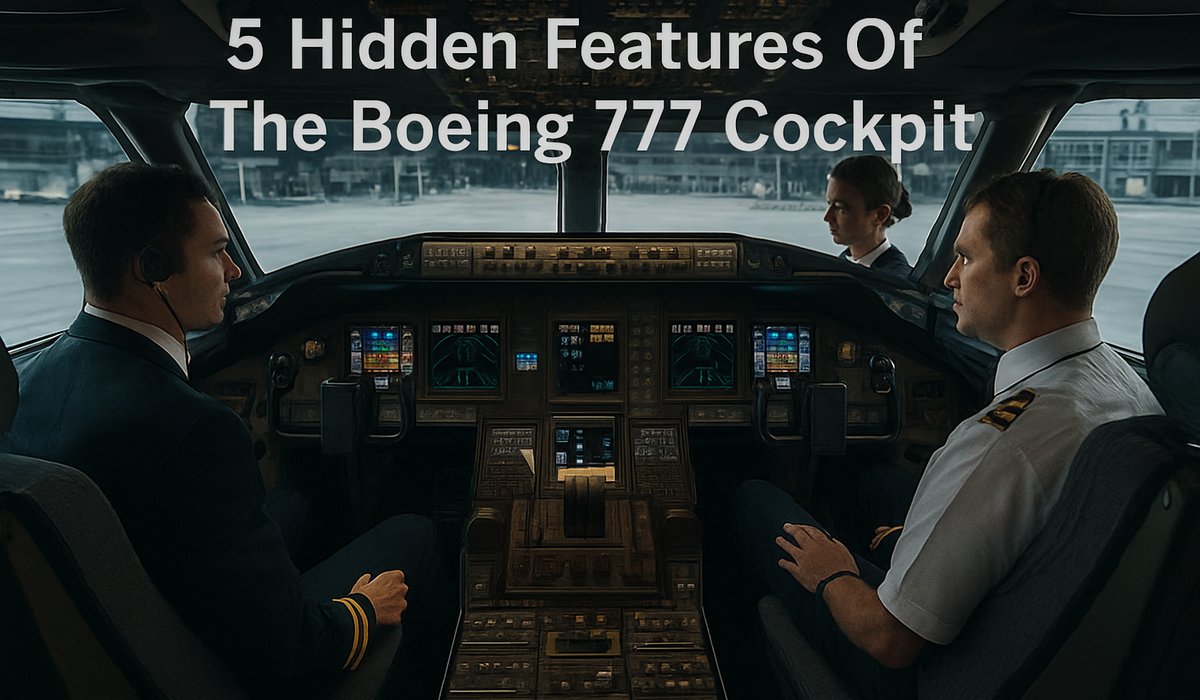
Image generated by AI
Boeing 777 Cockpit Engineering: Five Advanced Features Redefining Long-Haul Aviation
Inside the flight deck innovations that have made the world's most-ordered widebody aircraft an industry standard for two decades
A Technological Game-Changer Takes Flight
The Boeing 777 has established itself as the aviation industry's most prolific widebody aircraft, with nearly 1,800 examples delivered since its 1995 debut. This twin-engine giant has fundamentally reshaped modern commercial aviation, accumulating nearly 2,500 total orders across three distinct generations—including the forthcoming 777X variant still under development. The aircraft's cockpit represents a crucial arena of technological advancement that has enabled operators to confidently deploy these aircraft on extended transoceanic routes, a feat that fundamentally altered industry operating standards.
Pioneering the Twin-Engine Long-Haul Revolution
When Boeing introduced the 777, the aviation sector faced a pivotal moment. The aircraft challenged the prevailing assumption that true intercontinental flights required four engines, instead proving that advanced twin-engine design could deliver superior efficiency, reduced operational costs, and comparable safety margins. This strategic shift unlocked new route possibilities for carriers worldwide, directly influencing the contemporary fleet composition seen across major airlines today.
The 777's cockpit innovations—from integrated avionics systems to automated flight management capabilities—provided the technological foundation supporting this operational transformation. These advances significantly reduced pilot workload on extended missions while simultaneously improving navigation precision and weather-detection capabilities.
The 777X: Expanding Commercial Possibilities
The upcoming 777-9 variant represents the latest evolution of this platform, positioning itself as the largest commercial aircraft currently available for order. This newest generation builds upon the proven foundation of its predecessors while introducing enhanced cockpit systems, improved fuel efficiency, and extended range capabilities that open additional transoceanic markets.
Industry analysts note that the 777X's advanced flight deck features continue the lineage of cockpit innovation that has defined the entire 777 family. These technological enhancements directly support operational efficiency metrics that influence airline profitability and route viability—critical factors in an industry where fuel costs remain a significant expense line item.
Shaping Industry Standards
The 777's dominance in the widebody market reflects not merely successful aircraft engineering, but rather a comprehensive approach to cockpit design that prioritizes pilot efficiency, passenger comfort integration, and operational flexibility. Airlines operating competing platforms have increasingly recognized these advantages, with the 777's order book continuing to expand despite intense competition from Airbus alternatives.
Frequently Asked Questions
What makes the Boeing 777 cockpit fundamentally different from competitors? The 777's flight deck emphasizes integrated digital systems and automation that reduce pilot workload while maintaining precise control during extended oceanic operations.
How has the 777 influenced modern airline route planning? The aircraft's proven twin-engine reliability on long-haul routes has enabled carriers to operate previously uneconomical transoceanic paths, directly impacting airline profitability.
What advantages does the 777X cockpit offer over earlier variants? The newest generation features enhanced avionics, improved fuel monitoring systems, and advanced weather detection capabilities designed for contemporary operational demands.
Why do airlines continue ordering the 777 despite Airbus competition? Proven reliability, operational efficiency, and a comprehensive cockpit design ecosystem provide measurable cost advantages throughout an aircraft's service life.
How does cockpit technology influence overall aviation costs? Advanced flight deck systems enable fuel-efficient operations and reduce maintenance requirements, directly lowering per-flight operating expenses passed through to passenger fares.
Related Travel Guides
Disclaimer
This article is for informational and educational purposes only. It does not constitute legal, financial, or professional advice. While we strive to provide accurate and up-to-date information, travel policies, regulations, and conditions change rapidly. Always verify information with official sources before making travel decisions. Nomad Lawyer makes no representations about the accuracy, reliability, completeness, or suitability of the information provided. Readers should consult qualified professionals for advice specific to their circumstances. The views expressed in this article are those of the author and do not necessarily reflect the views of Nomad Lawyer.
Raushan Kumar
Founder & Lead Developer
Full-stack developer with 11+ years of experience and a passionate traveller. Raushan built Nomad Lawyer from the ground up with a vision to create the best travel and law experience on the web.
Learn more about our team →