America's Most Surprising Airport Amenities: SFO, Chattanooga, and Denver Travel Guide 2026–2027

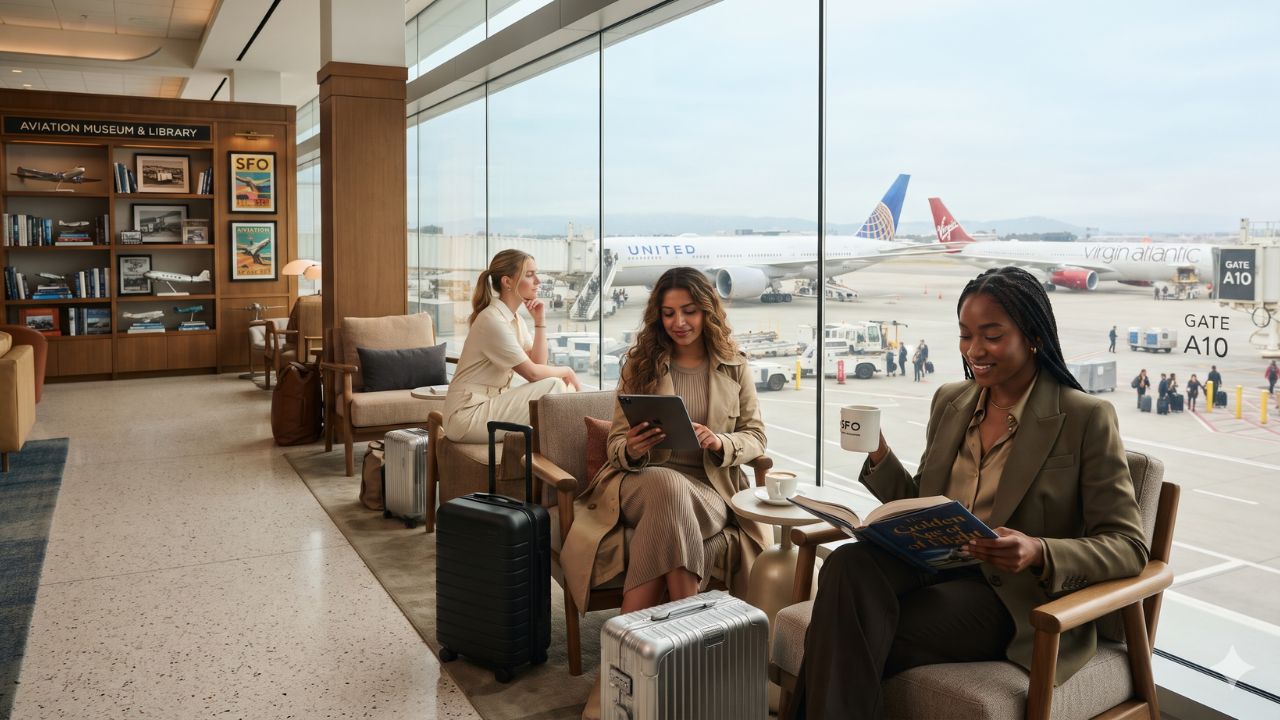
While most passengers view long airport layovers as an endurance test of cramped gate seating and overpriced bottled water, travelers passing through San Francisco International Airport can browse an accredited, climate-controlled aviation research library or slip into a quiet yoga studio without spending a single dollar. Across the United States—from an honor-system bookstore in regional Chattanooga to a 34,000-acre airfield in Denver offering open-air Rocky Mountain observation decks—American airports are evolving into cultural institutions that blend public art, literary exchanges, and wellness spaces, celebrated by travelers exploring Visit California.
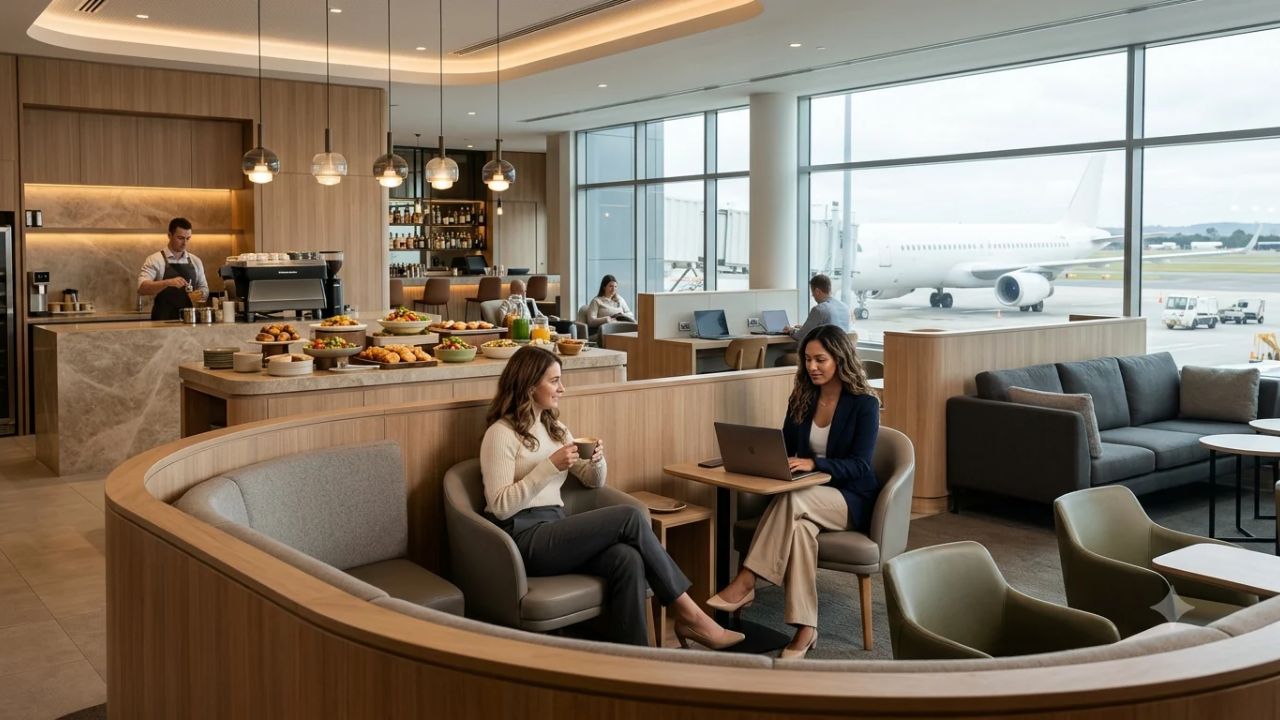
This architectural and experiential transformation responds to the reality of modern commercial flying. Extended layovers, schedule delays, and early security arrivals mean passengers regularly spend hours inside terminal corridors. Rather than confining customer service to duty-free stores and fast-food counters, innovative airport authorities have reimagined terminal space to support relaxation, personal productivity, and cultural discovery.
The Airport Revolution: When Gateways Become Cultural Destinations
The evolution of American airport terminals marks a distinct break from mid-century transit architecture. For decades, passenger circulation prioritized boarding efficiency and retail transactions. Today, progressive airport directors treat terminals as the physical front door of their host region, incorporating regional culinary traditions, localized literature, and biophilic architectural finishes.
San Francisco International Airport (SFO), Dallas Fort Worth International Airport (DFW), Denver International Airport (DEN), and Hartsfield-Jackson Atlanta International Airport (ATL) illustrate how mega-hubs balance staggering connecting volumes with dedicated hospitality zones. Concurrently, regional hubs like Tennessee’s Chattanooga Metropolitan Airport (CHA) prove that creating memorable, tranquil passenger environments does not require billions of dollars in terminal square footage.
| Airport Gateway | Code / State | Primary Cultural / Reading Facility | Specialized Wellness & Passenger Amenities | Standout Architectural Feature | | :--- | :--- | :--- | :--- | :--- | :--- | | San Francisco International | SFO / California | SFO Aviation Museum & Library | Dedicated yoga rooms, sensory accessibility room | Outdoor SkyTerrace & on-site Grand Hyatt | | Chattanooga Metropolitan | CHA / Tennessee | SkyLib honor-system reading lounge | Quiet regional reading spaces, natural lighting | Intimate terminal setting free from boarding queues | | Seattle–Tacoma International | SEA / Washington | Little Free Library book exchanges | Live acoustic music stages, Pacific Northwest lounges | Glass-walled Central Terminal looking toward Mount Rainier | | Portland International | PDX / Oregon | Independent local bookshop kiosks | Regional culinary markets, quiet relaxation nooks | Locally sourced Douglas fir mass-timber roof | | Minneapolis–Saint Paul | MSP / Minnesota | Curated independent bookstores | Dedicated children's play areas, quiet rooms | Direct link to InterContinental MSP Hotel | | Hartsfield-Jackson Atlanta | ATL / Georgia | National and regional book retail | Private Minute Suites sleep cabins, interfaith chapels | Plane Train loop connecting 7 concourses | | Dallas Fort Worth | DFW / Texas | Comprehensive news and books retail | Two complimentary yoga studios, nursing suites | 24-hour Skylink high-speed terminal train | | Denver International | DEN / Colorado | Tattered Cover bookstore outposts | Open-air outdoor observation decks, pet relief zones | White fiberglass peaked-roof Jeppesen Terminal |
Literary Escapes and Historical Archives: SFO, Chattanooga, and Seattle
At San Francisco International Airport, the crown jewel of cultural amenities is the SFO Museum and Aviation Library, housed on the departures level of the International Terminal Main Hall. Operating as the only accredited museum located inside an international airport, its research collection preserves over 140,000 historical aviation artifacts, historical flight attendant uniforms, vintage route maps, and aircraft design documents. Beyond the library, SFO provides dedicated yoga rooms in Terminals 2 and 3 equipped with mats, a specialized sensory room for neurodiverse passengers, and an outdoor SkyTerrace atop Terminal 2 providing unobstructed airfield views.
In southeastern Tennessee, Chattanooga Metropolitan Airport introduces an unexpectedly intimate literary concept known as SkyLib. Operating as an honor-system reading room and bookstore, SkyLib invites travelers to browse donated paperbacks, settle into comfortable leather armchairs, and either purchase a title on the honor system or leave a novel they finished during their trip.
Further northwest, Seattle–Tacoma International Airport (SEA) pairs Little Free Library book-sharing kiosks with live acoustic musical performances featuring regional Pacific Northwest singer-songwriters. Meanwhile, Portland International Airport (PDX) anchors its newly renovated central lobby with regionally sourced Douglas fir mass timber, local independent bookstores, and micro-restaurants serving farm-to-table cuisine from the Willamette Valley.
Physical Scale vs. Passenger Comfort: How America's Largest Hubs Move Travelers
While regional airports focus on intimacy, America's largest airport complexes face the challenge of transporting millions of passengers across vast physical expanses. Denver International Airport (DEN) leads the nation in physical land area, spanning 53 square miles (approximately 34,000 acres) across six operational runways. Despite its colossal scale, Denver International Airport incorporates outdoor observation decks on Concourse B and the Westin hotel plaza where travelers can breathe fresh mountain air, while an underground automated train system connects the Jeppesen Terminal to Concourses A, B, and C.
Dallas Fort Worth International Airport (DFW) spans 26.9 square miles (17,183 acres) across seven runways and five active passenger terminals. DFW solves terminal distances through its elevated 24-hour Skylink people mover, which circles the airport perimeter inside security; journeys between its farthest stations take roughly nine minutes, allowing passengers with long layovers to visit yoga studios in Terminal D or dine in alternative terminals without clearing TSA security checkpoints again.
| Airport Complex | Physical Area | Airfield Layout | Passenger Transit System | Notable Scale Feature |
|---|---|---|---|---|
| Denver International (DEN) | 53 sq miles (34,000 acres) | 6 active runways | Underground concourse train | Largest US airport by land area; outdoor decks |
| Dallas Fort Worth (DFW) | 26.9 sq miles (17,183 acres) | 7 active runways; 5 terminals | 24-hour elevated Skylink train | Max 9-minute ride between farthest terminal gates |
| Southwest Florida (RSW) | Approx. 21.2 sq miles | Commercial terminal & reserve | Traditional walking concourses | Large environmental reserve; single terminal |
| Orlando International (MCO) | Approx. 20.7 sq miles | 4 active runways | Automated people mover & Brightline | On-site atrium Hyatt Regency; intercity rail link |
| Washington Dulles (IAD) | Approx. 17.5 sq miles (11,184 acres) | 4 active runways | AeroTrain and mobile lounges | Historic Saarinen terminal; mobile lounge transport |
| Houston Intercontinental (IAH) | Approx. 15–17 sq miles | 5 active runways | Underground subway & airside Skyway | Multi-level inter-terminal transit systems |
| Salt Lake City (SLC) | Approx. 12 sq miles | Multi-concourse complex | Moving walkways along Concourse A | Concourse A measures 3,691 feet (1.13 km) long |
| Chicago O’Hare (ORD) | Approx. 11–12 sq miles | 8 active runways | Automated Airport Transit System (ATS) | High-capacity airfield; Terminal 3 yoga studio |
In Utah, Salt Lake City International Airport (SLC) features a linear Concourse A measuring 3,691 feet (1.13 kilometers) in length. To assist passengers traversing more than a kilometer of gate space, moving walkways, curated art installations depicting Wasatch mountain geology, and localized dining options line the concourse.
Visitor Insider Tips: Finding Quiet Sanctuaries in Busy US Terminals
- Access SFO’s Aviation Library Before Security: SFO's Aviation Museum & Library sits landside in the pre-security International Terminal Main Hall. If you arrive early for a domestic or international departure, leave your heavy luggage with the skycap and spend 45 minutes touring historical flight exhibits before passing through TSA checkpoints.
- Utilize DFW’s Terminal D Yoga Room for Layover Stretching: At Dallas-Fort Worth, skip the crowded gate bars and take the Skylink to Terminal D. Near Gate D40, a dedicated complimentary yoga room provides clean exercise mats, privacy partitions, and ambient lighting far from terminal noise.
- Step Outside at Denver’s Concourse B Observation Deck: If delayed at Denver International, walk to the western tip of Concourse B. Push through the exterior doors to access the open-air deck equipped with patio seating, pet relief areas, and unhindered sightlines of the Colorado Front Range.
- Book Private Sleep Cabins at Atlanta: Hartsfield-Jackson Atlanta International Airport features Minute Suites in Concourse B and Concourse T. These private, soundproof dayrooms feature daybeds, workstations, and high-speed internet, bookable by the hour for travelers needing restful sleep during multi-hour connections.
- Savor Local Roasters Instead of Chain Coffee: In Portland (PDX), skip commercial fast-food stands and order an espresso from local roasters under the mass-timber canopy. In Seattle (SEA), local seafood bars in the Central Terminal serve wild-caught Pacific king salmon and Dungeness crab cakes.
Cultural and Environmental Context: Biophilic Design and Wellness Architecture
The introduction of museums, outdoor terraces, and yoga spaces marks an important architectural transition toward biophilic terminal design. For decades, airport environments induced sensory overload: sterile fluorescent lighting, reflective tile floors, blaring public-address systems, and sealed glass facades completely detached travelers from natural rhythms.
Today, airport architects deliberately incorporate natural elements to lower traveler heart rates and mitigate flight anxiety. Portland International Airport's new 9-acre timber canopy sourced logs exclusively from responsibly managed regional tribal and family forests within 300 miles of the airport. At SFO, sensory rooms provide dimmed, adjustable lighting and tactile wall textures for children with autism and passengers experiencing cognitive fatigue. By integrating natural daylight, non-toxic wood materials, and acoustic baffling, modern American terminals demonstrate that sustainable, human-centered architecture can coexist with heavy commercial aviation infrastructure.
FAQ: Exceptional US Airport Amenities 2026–2027
Does San Francisco Airport have a public museum and library?
Yes. SFO features an accredited Aviation Museum & Library in the pre-security International Terminal Main Hall, open to travelers free of charge.
What is Chattanooga Airport’s SkyLib?
SkyLib is a dedicated reading lounge and honor-system bookstore at Chattanooga Airport (CHA) where passengers can read, borrow, or donate paperbacks.
Which US airport is the largest by land area?
Denver International Airport (DEN) is the largest US airport by physical land area, covering 53 square miles (approximately 34,000 acres) with six operational runways.
How long is the longest concourse at Salt Lake City Airport?
Concourse A at Salt Lake City International Airport (SLC) measures approximately 3,691 feet (1.13 kilometers) from end to end.
[Far beyond departure gates and boarding queues, America's most thoughtful airports prove that the journey can be just as inspiring as the destination.]
Related Travel Guides
This article is for informational purposes. Flight routes, passenger regulations, visa rules, and transit advisories are subject to change by airlines and aviation authorities. Readers are advised to verify schedules and travel documentation with relevant carriers and border agencies before departure.
Related Stories
US Airport Construction Guide: Road Closures, Pickups, and Shuttles at LAX, JFK, Denver, and Houston
Miami-Based Airport Transportation Expands Across Five Continents: Global Airport Transfer Guide 2026–2027