
Airport Access Cost Index 2026: Rail, Rideshare, and Parking Fares Across JFK, LAX, and SFO

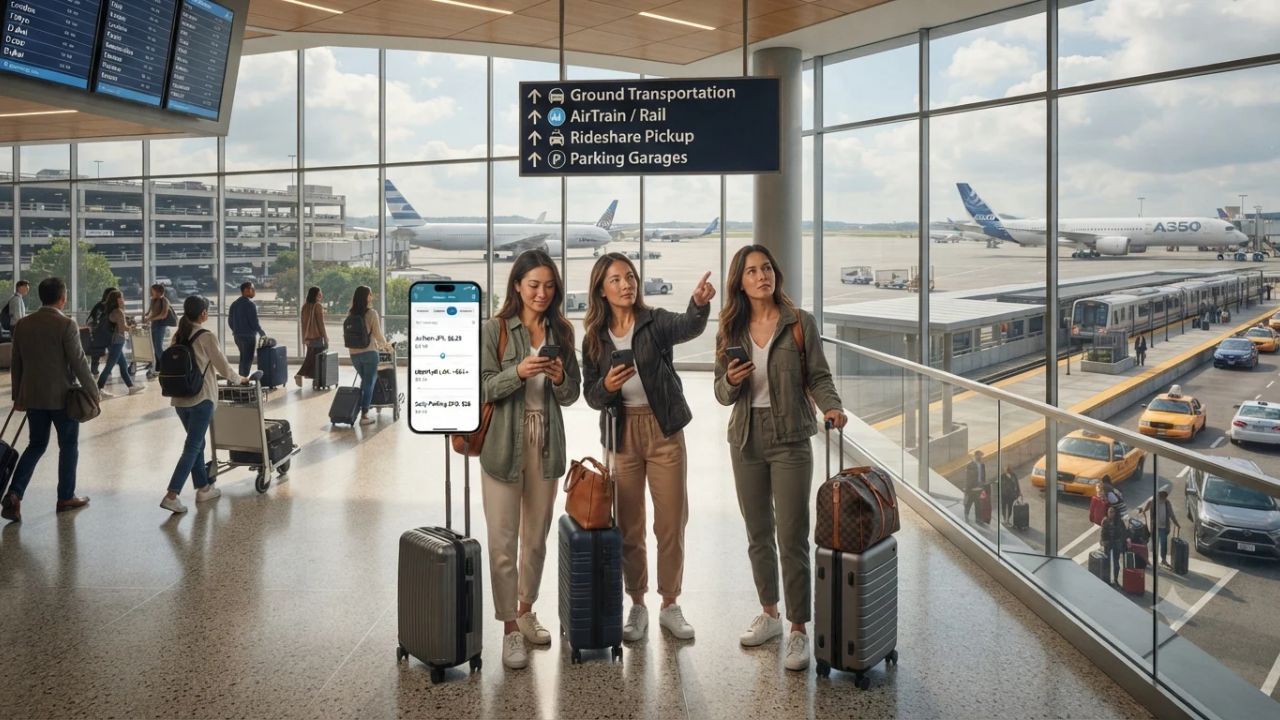
While over three million travelers pass through United States airports every single day, public transit mode share ranges between a modest four percent and nineteen percent, largely because the cost to reach a departure gate can vary from zero dollars in Boston to over thirty dollars in New York. A comprehensive 2026 analysis of airport connectivity across America's largest aviation gateways reveals stark disparities in public transit fares, airport rail surcharges, and long-term parking fees. From Boston Logan's zero-fare downtown bus link and Miami's $2.25 Metrorail to New York JFK's dedicated $8.75 AirTrain supplement, the price of the first and final mile often dictates the true budget and convenience of modern air travel.
The Hidden First-Mile Expense: Why Airport Transit Economics Matter
Travelers routinely spend weeks hunting for discounted airfares, only to see those savings erased by thirty-dollar terminal parking rates, highway toll congestion, or unexpected airport train surcharges.
According to a nationwide review by the U.S. Government Accountability Office (GAO), twenty-three of America's thirty-one large-hub airports now provide direct rail connections. Yet rail access alone does not guarantee high passenger adoption. Mode share remains suppressed at airports that impose punitive transfer penalties, complex multi-ticket requirements, or lengthy terminal shuttle connections.
New York's JFK serves as a prime example of transit fare layering. While the standard New York City subway ride costs $3.00, boarding the AirTrain at Jamaica or Howard Beach adds an $8.75 surcharge, creating an $11.75 base transit fare per person.
However, JFK features a group fare discount: the first rider pays $8.75, while subsequent passengers pay $4.50 each up to a maximum cap of $26.75 for five travelers ($22.25 for a family of four). Across the river, Newark Liberty (EWR) imposes an identical $8.75 AirTrain fee for riders without eligible NJ Transit or Amtrak tickets, while passengers bound for Terminal A face an additional fifteen-minute walk or bus transfer because the legacy monorail does not directly serve the new terminal.
US Airport Access Comparison: Fares, Rail Systems, and Parking Rates
Contrasting America's primary aviation hubs reveals how municipal transit design directly shapes passenger choices and terminal curb congestion.
At Washington Dulles (IAD), a landmark $6.01 billion infrastructure investment (supported by $1.876 billion in federal TIFIA loans and $900 million in Capital Investment Grants) extended the Silver Line directly to the terminal, allowing passengers to walk 600 feet indoors to trains departing for central Washington via Washington Metropolitan Area Transit Authority for $6.75 on weekdays and just $2.25 to $2.50 on weekends.
| Airport Gateway | City Center Link & Transit Mode | Single Public Transit Fare | Daily Economy Parking Rate | Key Operational Advantage |
|---|---|---|---|---|
| Boston Logan (BOS) | Downtown Boston via MBTA Silver Line SL1 | Free from airport | $29 (advance) to $37/day | Zero-fare connection to South Station Amtrak & Red Line |
| Miami International (MIA) | Downtown Miami via Metrorail Orange Line | $2.25 (free transfers) | $25/day | Runs every 15 minutes; free MIA Mover link to terminal |
| Seattle-Tacoma (SEA) | Downtown Seattle via Sound Transit Link | $3.25 | $34/day | Predictable 35–40 minute ride bypassing I-5 traffic |
| Chicago O'Hare (ORD) | Chicago Loop via CTA Blue Line | $5.00 from airport | $15–$24/day | 24-hour direct subway connectivity from lower concourse |
| Los Angeles (LAX) | Downtown LA via Metro + LAX Transit Center | $1.75 (free 2-hr transfer) | $35/day | Connects to K Line and regional bus network via free shuttle |
| San Francisco (SFO) | Downtown San Francisco via BART | $10.50–$11.00 | $25–$36/day | Direct platform inside International Terminal concourse |
| New York JFK | Midtown Manhattan via Subway + AirTrain | $11.75 ($3 sub + $8.75 AirTrain) | $35–$42/day | Group AirTrain rates capped at $26.75 for 5 riders |
| Washington Dulles (IAD) | Downtown Washington via Silver Line | $6.75 ($2.25 weekends) | $14–$19/day | 600-foot indoor pedestrian tunnel to Metro platform |
International comparisons highlight contrasting global tariff models. London Heathrow offers Underground journeys from £5.50, the Elizabeth line for £15.50, and advance Heathrow Express tickets from £10.00, while imposing a £7.00 vehicle drop-off charge.
Paris applies a flat €14.00 airport regional rail ticket for CDG and Orly, Frankfurt operates a dedicated €6.90 airport zone tariff, and Singapore Changi integrates direct contactless MRT payment into Terminals 2 and 3.
Visitor Insider Tips for Beating Airport Access Costs
- Take Advantage of Boston Logan's Free Silver Line SL1: When landing at Boston Logan, do not buy a transit pass or hail a rideshare. Walk to the terminal curb and board the MBTA Silver Line SL1 bus for free. The bus takes you straight into South Station, where transfers to the subway Red Line and regional Amtrak rail are entirely free.
- Utilize JFK Group AirTrain Discounts for Families: When traveling with family or companions through JFK, buy your AirTrain tickets together at the Jamaica or Howard Beach ticketing booths to trigger the group rate ($8.75 for the first rider and $4.50 for each additional rider), saving up to $17.00 per group.
- Ride the Long Island Rail Road from Jamaica for Faster JFK Transit: Instead of taking the multi-stop E train subway from Jamaica to Midtown Manhattan, transfer directly from the AirTrain to the Port Authority of New York and New Jersey partner LIRR lines. Trains reach Grand Central Madison or Penn Station in just twenty minutes.
- Park at Suburban Logan Express Satellite Lots in Boston: If driving to Boston Logan from New England suburbs, avoid the $37.00 daily terminal garage fee. Park at Logan Express satellite stations in Braintree, Framingham, Woburn, or Danvers for just $7.00 per day, riding the $9.00 luxury motorcoach directly to terminal departures.
- Use Miami's Free MIA Mover to Reach Rental Cars and Metrorail: Terminal travelers at Miami International Airport can board the elevated, zero-fare MIA Mover people mover on the 3rd floor to reach the Miami Intermodal Center, connecting directly to the $2.25 Orange Line Metrorail in under four minutes.
Environmental Urbanism and Decarbonizing Airport Transit
The evolution of airport ground transportation reflects a critical intersection of urban planning, environmental stewardship, and carbon mitigation. Single-occupancy vehicles and idling rideshare fleets remain major contributors to urban air pollution and roadway gridlock surrounding metropolitan airports.
By investing in high-frequency electrified rail extensions like Washington Dulles's Silver Line and Los Angeles's new LAX/Metro Transit Center, transit agencies encourage millions of travelers to transition toward low-carbon public transit.
In Boston, the Logan Express network carried over 2.7 million riders in 2025, significantly cutting vehicle exhaust emissions across the Boston Harbor tunnel corridors. Moving forward, transparent transit pricing and seamless contactless ticketing will remain essential to building sustainable, accessible airport ecosystems that benefit travelers and local residential communities alike.
FAQ: Airport Access Costs and Public Transit 2026
What is the cheapest way to travel from Boston Logan to downtown Boston?
The MBTA Silver Line SL1 bus is completely free from all Boston Logan airport terminals directly into South Station, with free onward transfers to the subway Red Line.
How much does the JFK AirTrain cost in 2026?
The single AirTrain JFK fare is $8.75. However, group tickets allow up to five passengers to ride for a combined total of $26.75 ($4.50 for each additional rider after the first).
How much does the Washington Dulles Silver Line Metro train cost?
The weekday standard fare from Dulles to Metro Center in downtown D.C. is $6.75, while weekend and late-night fares range between $2.25 and $2.50.
Which major US airport offers the cheapest city rail connection?
Los Angeles (LAX) offers standard Metro fares at $1.75 with a free terminal shuttle, followed closely by Miami (MIA) with a $2.25 Metrorail Orange Line fare.
True travel wisdom begins before you board: navigating the rails and transit corridors with local savvy turns the costliest airport commute into a seamless start to your journey.
Related Travel Guides
Disclaimer
This article is for informational and educational purposes only. It does not constitute legal, financial, or professional advice. While we strive to provide accurate and up-to-date information, travel policies, regulations, and conditions change rapidly. Always verify information with official sources before making travel decisions. Nomad Lawyer makes no representations about the accuracy, reliability, completeness, or suitability of the information provided. Readers should consult qualified professionals for advice specific to their circumstances. The views expressed in this article are those of the author and do not necessarily reflect the views of Nomad Lawyer.
Raushan Kumar
Founder & Lead Developer
Full-stack developer with 11+ years of experience and a passionate traveller. Raushan built Nomad Lawyer from the ground up with a vision to create the best travel and law experience on the web.
Learn more about our team →