
Caracas Airport Resumes Partial Operations After Historic Earthquake Devastation
Simón Bolívar International Airport reopens in Maiquetía with a 10,000-square-meter modular terminal handling 2,168 daily travelers after a 10-week shutdown.

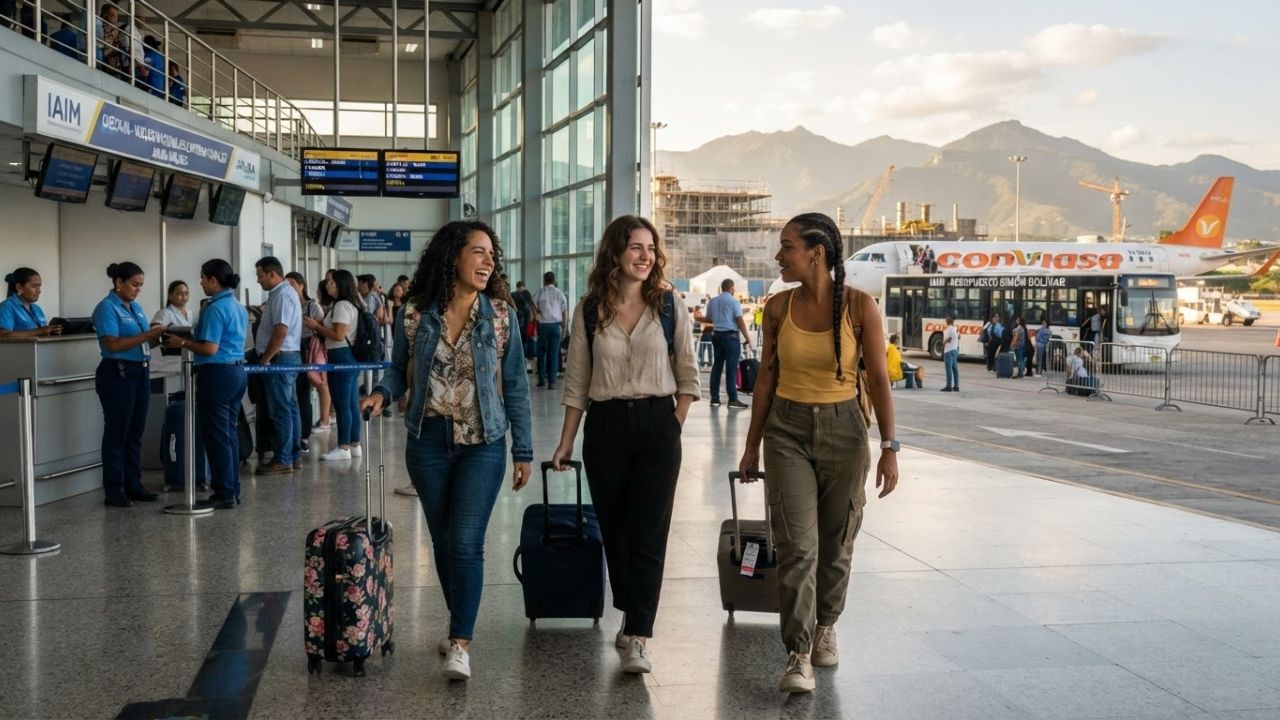
Image generated by AI
Following a devastating nearly ten-week closure triggered by historic 7.2 and 7.5 magnitude earthquakes, Venezuela’s primary international gateway—Simón Bolívar International Airport in Maiquetía—has officially resumed commercial flight operations through a specialized 10,000-square-meter temporary passenger complex.
The Local Trend: Phased Aviation Rebirth at Caracas's Primary Air Gateway
Venezuela has marked a decisive recovery milestone with the partial resumption of commercial air operations at Simón Bolívar International Airport (CCS), located in Maiquetía along the Caribbean coastline of La Guaira state, approximately 20 kilometers north of the Caracas metropolitan core. The facility had been forced to suspend all regular passenger flights after two powerful earthquakes on June 24, 2026—measuring 7.2 and 7.5 in magnitude, representing the most destructive seismic events in the country in more than a century—inflicted severe structural damage on runways, navigation control towers, boarding gates, and cargo terminals.
During the nearly ten-week shutdown, international air corridors were rerouted to regional airfields in Carabobo (Valencia) and Anzoátegui (Barcelona). While these secondary airports preserved emergency air links, their limited apron capacity and lengthy highway transfers created heavy logistics friction. The phased reopening of Maiquetía restores direct air connectivity to Venezuela's capital region.
Modular Terminal Architecture and Operations
To restart air traffic without waiting for the full reconstruction of permanent terminals, aviation engineers constructed a modular passenger processing facility:
- 10,000-Square-Meter Temporary Complex: Erected within the airport's former central parking area, the modular terminal accommodates approximately 2,168 travelers per day with dedicated check-in desks, climate-controlled waiting lounges, free Wi-Fi, medical aid stations, and passenger service counters.
- Tarmac Bus Transfers: Departing and arriving passengers are processed within the modular terminal and transferred directly to aircraft stands via dedicated airfield shuttle buses, keeping passenger foot traffic clear of active runway reconstruction zones.
- Returning International Fleets: Initial international operations have commenced with scheduled flights operated by Copa Airlines connecting via Panama City and Air Europa operating from Madrid, Spain. Spanish carrier Iberia and additional regional Latin American operators are preparing to expand flight frequencies as technical capacity grows.
Caracas Simón Bolívar Airport (CCS) Earthquake Recovery Profile (2026)
| Recovery Parameter | Verified Detail & Benchmark | Traveler Operational Context |
|---|---|---|
| Airport Facility | Simón Bolívar International (CCS) | Primary international gateway to Caracas |
| Geographic Location | Maiquetía, La Guaira State (~20 km north) | Coastal transit base connected via highway tunnel |
| Triggering Event | Magnitude 7.2 & 7.5 Earthquakes (June 24) | Strongest tremors in Venezuela in over a century |
| Closure Duration | Nearly 10 Weeks (Suspended passenger flights) | Emergency traffic diverted to Valencia & Barcelona |
| Temporary Terminal Scale | ~10,000 Square meters | Installed inside former primary parking sector |
| Daily Passenger Volume | ~2,168 Travelers per day | Scaled initial throughput during reconstruction |
| Boarding System | Airfield passenger shuttle buses | Bypasses damaged jet bridges and concourses |
| First Returning Airlines | Copa Airlines (Panama) & Air Europa (Spain) | Iberia and domestic fleets restoring service |
Multi-Stage Capacity Restoration Trajectory
Civil aviation authorities have outlined a phased operational ramp-up designed to maintain rigorous flight safety while engineering crews rehabilitate damaged permanent structures:
- Phase 1 (Initial Reopening): Operating at approximately 25% of baseline operational capacity, prioritizing essential international connections and core domestic routes.
- Phase 2 (Medium-Term Horizon): Scaling to approximately 40% capacity within the coming months as secondary taxiways and structural apron areas are certified.
- Phase 3 (Long-Term Milestone): Targeting approximately 60% operational throughput by late 2026 or early 2027 as permanent passenger terminals complete major seismic retrofits.
Destination Specialist Local Insider Tips
Travelers currently planning or taking flights through Caracas during the phased reconstruction phase should keep these essential logistical guidelines in mind:
- Allow 4 Hours for International Check-In: Because passenger processing takes place within modular check-in structures and requires apron bus transfers, arrive at the Maiquetía complex at least 4 hours prior to international scheduled departures.
- Pre-Arrange Authorized Ground Transit to Caracas: Book private hotel transport or pre-screened taxi services (such as official airport black-and-yellow licensed cabs) to navigate the Caracas–La Guaira Highway, allowing extra transit time for mountain tunnel maintenance.
- Carry Physical Cash in US Dollars and Euros: While airport Wi-Fi is functional, regional card terminal connectivity can experience intermittent delays; carry small-denomination US dollar bills ($1, $5, $10, $20) for airport dining and baggage porter services.
- Confirm Baggage Weight Limits with Rebooking Carriers: If your flight was previously rerouted through Valencia or Barcelona and re-accommodated onto returning Copa or Air Europa services, verify checked luggage allowances directly in airline apps before departure.
- Keep Essential Medications in Hand Luggage: In the event of minor flight hold delays on the tarmac, ensure all prescription medications, power banks, and critical travel documents remain securely in personal cabin bags.
Future Outlook
The resumption of commercial aviation at Simón Bolívar International Airport provides an indispensable foundation for economic recovery across La Guaira state and the wider capital district. As permanent reconstruction progresses and capacity scales toward 60% by year-end, Venezuela’s primary aviation hub is successfully restoring the commercial and cultural bridges that link the nation with the global community.
Related Travel Guides
Disclaimer
This article is for informational and educational purposes only. It does not constitute legal, financial, or professional advice. While we strive to provide accurate and up-to-date information, travel policies, regulations, and conditions change rapidly. Always verify information with official sources before making travel decisions. Nomad Lawyer makes no representations about the accuracy, reliability, completeness, or suitability of the information provided. Readers should consult qualified professionals for advice specific to their circumstances. The views expressed in this article are those of the author and do not necessarily reflect the views of Nomad Lawyer.
Raushan Kumar
Founder & Lead Developer
Full-stack developer with 11+ years of experience and a passionate traveller. Raushan built Nomad Lawyer from the ground up with a vision to create the best travel and law experience on the web.
Learn more about our team →