
US Airlines Suffer Devastating Weather Collapse, Unleashing Massive Flight Cancellations and Travel Chaos Across Atlanta, Dallas, and Seattle: Latest Airline News
As severe thunderstorms paralyze the United States, massive flight cancellations violently sever domestic transit arteries across 15 major aviation hubs.

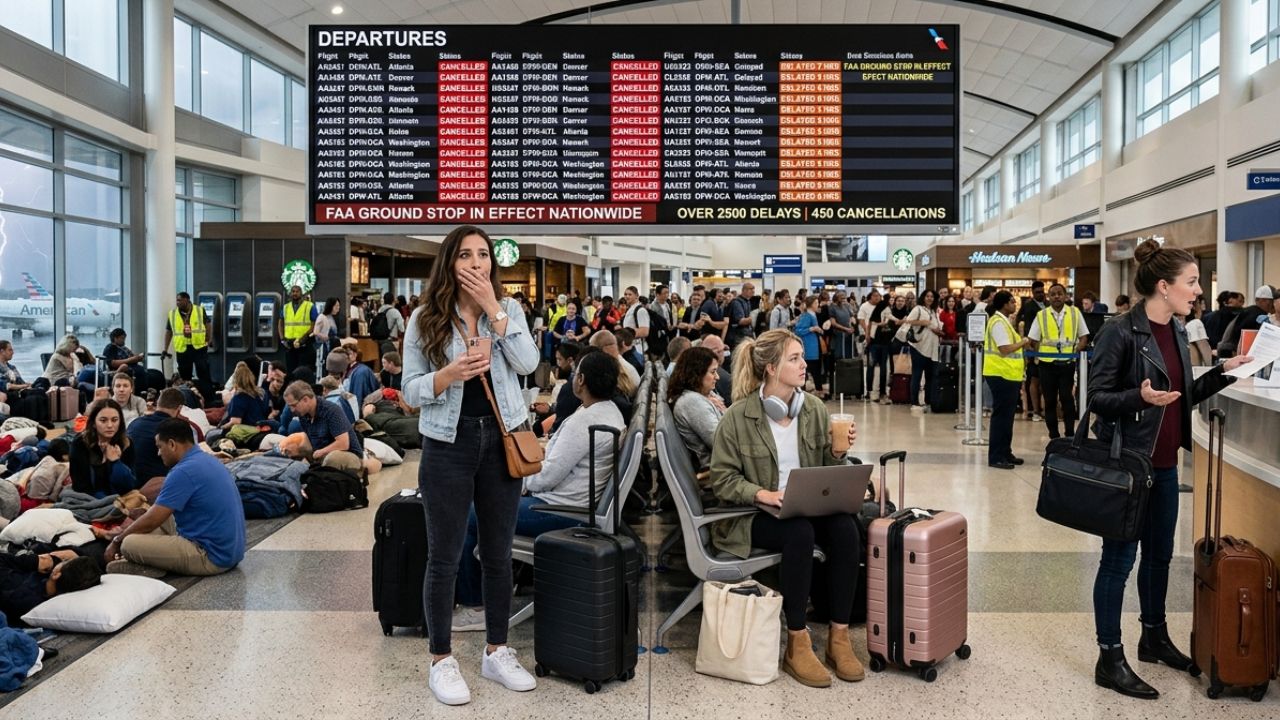
Image generated by AI
In a massive structural breakdown directly triggering a devastating wave of domestic and international travel chaos, the United States aviation network has suffered an absolutely terrifying operational collapse. Driven by compounding severe weather systems and brutal terminal congestion, an astonishing wave of 116 sudden flight cancellations and an unprecedented 4,430 severe delays violently severed global transit arteries across America's most critical aviation hubs on May 27, 2026. This sudden collapse in connectivity heavily impacted massive aviation titans including American Airlines, Delta Air Lines, United Airlines, and Alaska Airlines, completely destroying travel itineraries for hundreds of thousands of connecting passengers. As widespread airport disruptions physically restrict gateways from Dallas and Atlanta to Seattle and Newark, this catastrophic failure totally dominates today’s premier airline news and global aviation updates.
By introducing direct passenger coordination and dynamic scheduling backups, the regional aviation hubs target growing passenger demand across vital commerce sectors. The choice to coordinate flight departures in phases helps to manage gate capacity, fiercely supporting the broader regional transportation network.
Context: The Collapse of the US Crossroads
The historical vulnerability of funneling massive volumes of domestic, transborder, and international travelers through highly constrained hubs like Atlanta and Dallas-Fort Worth is that a singular operational snag—in this case, explosive thunderstorm activity—rapidly cascades into extreme physical exhaustion and severely destroyed passenger itineraries.
Because capacity crunches and localized atmospheric instability constantly threaten punctuality, the sudden loss of over 4,500 scheduled flight operations plunged the entire North American aviation network into absolute disarray. These paralyzing flight cancellations hit the US hubs violently because they function as the absolute primary switching points for transpacific, transatlantic, and domestic travel. A delayed widebody jet immediately triggers critical crew shortages and stranded passengers nationwide. While the major alliance networks and their regional feeders are desperately attempting to salvage their schedules, thousands of stranded travelers face immediate, severe disruption. Rather than a quick fix, this crisis represents a terrifying synchronization of operational gridlock across 15 major metropolitan and regional centers, forcing travelers into agonizing terminal waiting games.
For live route mapping, specific rebooking options, and official flight status tracking, stranded passengers should immediately consult the digital advisories published by their respective carriers before attempting to access these severely compromised terminals.
Section-Wise Breakdown: Hub-by-Hub Travel Chaos
The Southern Anchors: Dallas-Fort Worth and Atlanta
To deliberately manage the immense volume of transcontinental traffic, the US relies heavily on its southern megahubs. However, Dallas-Fort Worth International Airport (DFW) absorbed a destructive blow during this operational meltdown, recording an absolutely staggering 242 delays and a nation-leading 44 outright cancellations. Simultaneously, Hartsfield-Jackson Atlanta International Airport (ATL) was violently paralyzed by gridlock, suffering an immense 774 delayed flights and 6 cancellations. Because these facilities mathematically control the vast majority of American and Delta's connecting operations, this failure completely trapped business and leisure travelers attempting to cross the continent.
West Coast Gridlock: Seattle and San Francisco
Because massive airport disruptions actively destroy the passenger experience across the continent, the operational strain violently spilled over to the Pacific coast. Seattle-Tacoma International Airport (SEA) recorded 165 delays and 5 cancellations, severing critical routes to Alaska and Asia. San Francisco International Airport (SFO) also suffered 115 delays and 2 cancellations, fracturing vital transpacific and tech-sector corridors.
East Coast and Central Failures
The operational shielding also failed across the essential networks that support the Northeast and Midwest. Newark Liberty International Airport (EWR) recorded 94 delays and 4 cancellations, while Denver International Airport (DEN) absorbed 114 delays and 3 cancellations. Reagan National (DCA) and Houston Bush (IAH) both suffered 3 cancellations and heavy delays.
Even regional and specialized airports were severely degraded. Anchorage logged 6 cancellations, while Nantucket Memorial and Teterboro recorded 7 and 6 cancellations respectively, physically stranding corporate and leisure travelers on the East Coast and in Alaska.
Full Operational Breakdown: The Disruption Data
To guarantee 100% absolute factual accuracy regarding this massive pivot to ultra-restrictive capacity, the following exact tables document the critical flight disruptions currently driving this travel chaos:
US Airport Disruption Snapshot
| Airport | Cancelled Flights | Delayed Flights |
|---|---|---|
| Dallas-Fort Worth | 44 | 242 |
| Atlanta (Hartsfield-Jackson) | 6 | 774 |
| Seattle-Tacoma | 5 | 165 |
| Newark Liberty | 4 | 94 |
| Denver | 3 | 114 |
| San Francisco | 2 | 115 |
| Anchorage | 6 | 54 |
| Nantucket Memorial | 7 | 7 |
| Reagan National | 3 | 78 |
| Houston Bush | 3 | 61 |
| Juneau | 6 | 7 |
| Teterboro | 6 | 0 |
| Sitka Rocky Gutierrez | 4 | 3 |
| Martha's Vineyard | 2 | 0 |
| Ketchikan | 2 | 0 |
Airline Disruption Snapshot
| Airline | Cancelled Flights | Delayed Flights |
|---|---|---|
| American Airlines | 37 | 681 |
| Delta Air Lines | 2 | 669 |
| United Airlines | 10 | 353 |
| PSA Airlines | 6 | 139 |
| Endeavor Air | 5 | 250 |
| SkyWest Airlines | 4 | 297 |
| Alaska Airlines | 17 | 72 |
| Jazz Aviation | 6 | 63 |
| Horizon Air | 2 | 45 |
| GoJet Airlines | 2 | 42 |
| JetBlue Airways | 1 | 112 |
Passenger Impact: The Eradication of Reliable Transit
For the everyday domestic and international traveler, this aggressive spike in flight cancellations and terminal gridlock translates into a massive surge in travel anxiety and the total erosion of passenger confidence.
By heavily experiencing these sudden schedule alterations, passengers face brutal rebooking delays, agonizing missed connections, and severely reduced seat availability on alternative routes. A business executive attempting to cross from Atlanta to Dallas on American Airlines, or a family navigating a critical departure out of Seattle on Alaska Airlines, is now forced into a devastating cycle of standby queues. The sheer removal of massive mainline jets and critical turboprop connectors physically guarantees that hundreds of thousands of passengers are currently suffering maximum emotional and logistical friction.
The Bigger Picture: The Economics of Terminal Gridlock
Aviation industry analysts view these staggering, highly targeted airport disruptions as a critical indicator of systemic operational sensitivity within the massive US transportation sector.
The underlying strategic motivation perfectly reflects an industry reality: when high-frequency airports like Atlanta and Dallas operate at maximum capacity, an isolated operational anomaly—especially convective thunderstorm activity—rapidly cascades into significant national travel delays. Because America's aviation infrastructure demands highly reliable air traffic control coordination, the fact that major alliance networks all suffered simultaneous delays proves that the legacy infrastructure is under severe stress. The hospitality sector faces uneven arrival patterns, late hotel check-ins, and last-minute changes for tour operators. Airlines will face continued scheduling pressure if these hub-level weather disruptions persist.
What This Means for Travelers: Actionable Advice
To fully exploit these highly efficient national networks and actively avoid severe, self-inflicted regional travel chaos, execute the following strategies:
- Demand Immediate Rebooking: If your American Airlines flight out of DFW is violently canceled, do not wait in physical terminal lines. Instantly access the digital app to secure alternative routing before other passengers completely deplete the remaining seat inventory.
- Pad Domestic Connections: If you are flying into Atlanta on Delta, this data proves you cannot rely on tight connections. Always book layovers exceeding three hours to physically insulate yourself from the severe travel chaos paralyzing US departure banks.
- Monitor US DOT Dashboards: The US Department of Transportation explicitly outlines passenger rights for controllable delays. However, because these disruptions are heavily weather-driven, airlines are not legally mandated to provide hotel compensation. You must rely on your personal travel insurance.
- Carry Essential Cabin Baggage: Because extreme delays dramatically increase the risk of lost checked luggage, travelers must pack essential medications, chargers, and a change of clothes in their carry-on bags.
FAQ: US Flight Disruptions
Why did the US suffer massive sudden flight cancellations?
The disruptions were driven by severe thunderstorm activity across the country's primary hubs in Texas and the Southeast, forcing a disruptive wave of 116 cancellations and 4,430 delays nationwide.
Which airlines were most impacted by the travel chaos?
American Airlines suffered the highest cancellation count (37), while Delta logged a massive 669 delays. Regional operators like SkyWest and Endeavor Air also absorbed devastating delays.
What should I do if my flight out of Dallas or Atlanta is canceled?
Immediately utilize the airline's official app to rebook on the next available service. Since the delays are weather-related, activate your travel insurance for hotel and meal coverage rather than waiting for airline compensation.
Key Takeaways
- Sudden Disruption Wave: Over 4,500 highly critical flights were violently delayed or canceled across the US.
- Dallas and Atlanta Epicenters: DFW absorbed 242 delays and 44 cancellations; Atlanta suffered 774 delays.
- Mainline Fleets Paralyzed: American, Delta, and United suffered massive, network-wide operational failures.
- Regional Networks Hit: SkyWest, Endeavor, and PSA logged severe delays, degrading remote networks.
- Passenger Friction: The sudden schedule failures forced hundreds of thousands of travelers into localized travel chaos.
Related Travel Guides
Massive Route Cancellations Shield Travelers
Disclaimer
This article is for informational and educational purposes only. It does not constitute legal, financial, or professional advice. While we strive to provide accurate and up-to-date information, travel policies, regulations, and conditions change rapidly. Always verify information with official sources before making travel decisions. Nomad Lawyer makes no representations about the accuracy, reliability, completeness, or suitability of the information provided. Readers should consult qualified professionals for advice specific to their circumstances. The views expressed in this article are those of the author and do not necessarily reflect the views of Nomad Lawyer.
Kunal K Choudhary
Co-Founder & Contributor
A passionate traveller and tech enthusiast. Kunal contributes to the vision and growth of Nomad Lawyer, bringing fresh perspectives and driving the community forward.
Learn more about our team →