
Urban Paleography Surge: Mapping Faded Victorian Ghost Signs Across Global Industrial Cities
Urban paleography groups map faded Victorian painted ghost signs on brickwork across London, Manchester, Philadelphia, Detroit, and Melbourne.

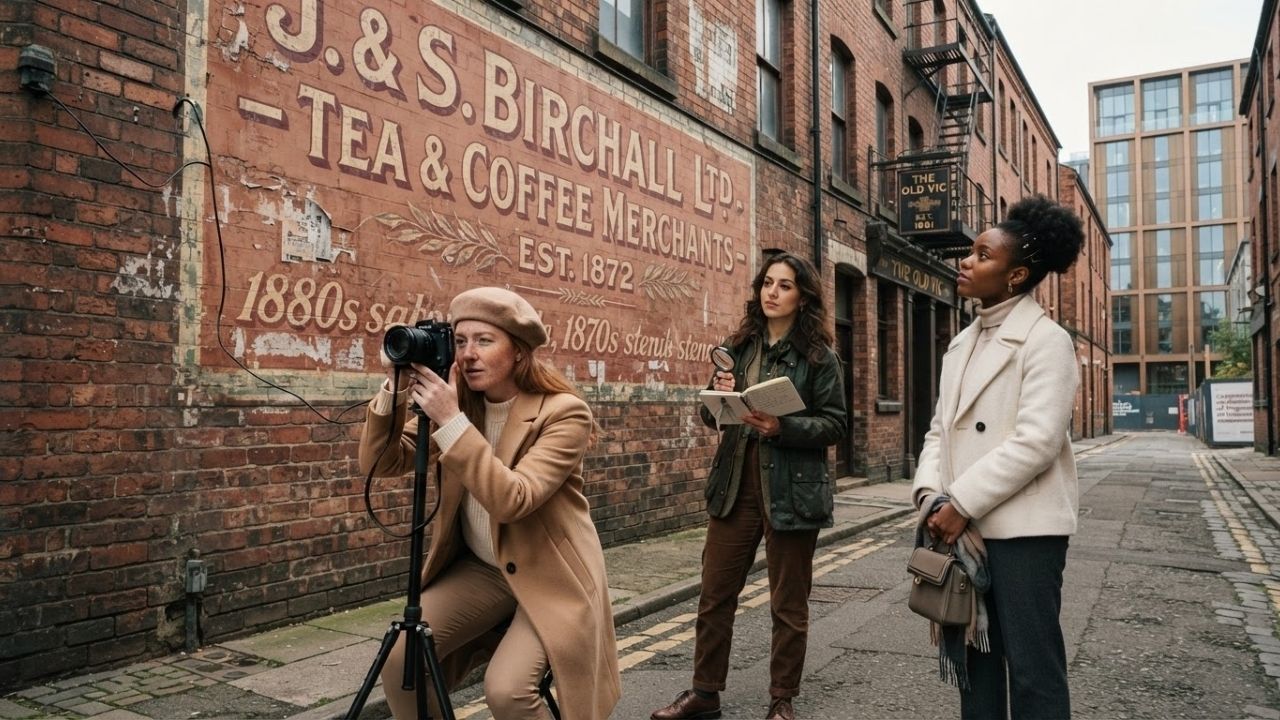
Image generated by AI
A global preservation initiative led by urban paleographers and heritage enthusiasts is mapping faded 19th- and 20th-century "ghost signs"—hand-painted commercial advertising murals preserved on historic brickwork. Digital archivism projects across London, Manchester, Philadelphia, Detroit, Melbourne, and Toronto are cataloging these fragile typographic remnants before modern urban redevelopments permanently erase industrial commercial history.
[LONDON, United Kingdom, Sept. 2, 2026] — Architectural preservationists and typography researchers are spearheading digital mapping projects to archive hand-painted advertising murals known as "ghost signs." These weathered commercial legends—painted directly onto exterior brickwork during the Victorian and early industrial eras—are being cataloged across major cities in the United Kingdom, the United States, Australia, and Canada.
According to conservation frameworks documented by organizations like Historic England and the National Trust for Historic Preservation, urban paleography transforms historic high streets into open-air archives. As rapid urban redevelopment replaces older masonry buildings, international volunteers are using photogrammetry and GPS tagging to document these fading artifacts.
Industrial Craftsmanship: Lead Paints and Pouncing Mechanics
The remarkable longevity of ghost signs stems from specialized signwriting techniques practiced by 19th- and early 20th-century itinerant artisans:
- Lead-Infused Oil Formulations: Signwriters mixed heavy-duty lead-based oil paints engineered to bond deeply with porous clay brickwork, resisting rain and sunlight for over a century.
- Pouncing Pattern Transfer: Artisans transferred paper typography templates onto massive brick facades by dusting charcoal or chalk through pinpricked outlines.
- Mortar Alignment: Painters used the natural horizontal mortar lines of brick masonry as structural grid guides, ensuring precise Roman and serif letter alignment across multi-story buildings.
Deciphering Palimpsests: Multi-Layered Typography on Historic Brickwork
As commercial properties changed ownership over decades, brick walls were frequently repainted with new business promotions. Weathering and pigment erosion now expose multi-tiered "palimpsests"—overlapping visual layers where defunct brands bleed through one another.
By analyzing these multi-layered murals, urban paleographers trace local economic transitions from 19th-century merchant goods (tea, mustard, patent medicine) to early 20th-century industrial manufacturing and maritime shipping routes.
Global Retro Signage Corridors: UK, North America, and Australia
Historic industrial hubs preserve dense clusters of hand-painted advertisements across specialized urban districts:
- United Kingdom (London, Manchester, Sheffield): Features Victorian merchant advertising for tea, mustard, and shipping agencies, characterized by traditional Roman typography and chalk-pounced outlines.
- United States (Philadelphia, St. Louis, Detroit): Showcases industrial manufacturing, patent medicine, local breweries, and automotive dry goods painted in heavy-duty oil pigments.
- Australia (Melbourne, Sydney): Preserves colonial wool-trading, brewing, and maritime agency legends displayed in heavily kerned block letters with shadow-box effects along narrow laneways.
- Canada (Toronto, Old Montreal): Highlights bilingual textile, machinery, and railway distribution signage preserved with breathable mineral conservation coatings.
Regional Distribution of Vintage Commercial Ghost Signs
| Country / Region | Key Urban Centers | Primary Commercial Themes | Historical Signwriting Techniques |
|---|---|---|---|
| United Kingdom | London, Manchester, Sheffield | Tea, mustard, shipping lines, Victorian merchant trade | Pouncing with charcoal/chalk, traditional Roman & serif lettering |
| United States | Philadelphia, St. Louis, Detroit | Patent medicine, local breweries, automotive, dry goods | Heavy-duty lead-infused oil paints, multi-layered palimpsests |
| Australia | Melbourne, Sydney | Wool-trading, brewing, maritime agencies, colonial merchants | Heavily kerned block letters, curved banner arcs, shadow-box effects |
| Canada | Toronto, Old Montreal | Machinery, textiles, bilingual warehousing, railway distribution | Multi-lingual commercial legends, breathable mineral conservation coatings |
Digital Preservation and Conservation Interventions
Because physical ghost signs face natural erosion and building demolition, conservationists employ non-invasive stabilization methods. Rather than repainting over original murals, heritage groups apply breathable mineral consolidants that slow pigment degradation while allowing masonry to release moisture.
Simultaneously, open-source mapping projects allow urban explorers to submit GPS coordinates, high-resolution photographs, and historical business directory entries, creating accessible digital archives under UNESCO World Heritage educational principles.
Industry Impact Analysis: Transforming Historic Alleyways into Open-Air Archives
Heritage tourism boards observe that ghost sign mapping drives foot traffic into historic industrial districts outside traditional tourist zones. Self-guided paleography walking tours encourage visitors to explore inner-city alleyways in Manchester, Melbourne's laneways, and Montreal's warehouse districts, supporting local cafes and independent businesses.
Furthermore, integrating ghost sign documentation into urban planning policies ensures that developers consider historical wall murals during facade restorations.
Why This Matters: Essential Takeaways for Urban Heritage Explorers
For travelers and typography enthusiasts interested in exploring urban ghost signs in 2026, key practical guidelines include:
- Use Open-Source Ghost Sign Maps: Download community-curated digital maps prior to self-guided walking tours in London, Philadelphia, or Melbourne.
- Look for Raking Sunlight: Photograph ghost signs during early morning or late afternoon when side lighting emphasizes faded paint contrast against brick textures.
- Examine High-Gable Brickwork: Focus on upper side gables of Victorian-era buildings where painted signs were originally elevated above street level for maximum visibility.
- Support Local Heritage Preservation: Participate in guided walking tours led by non-profit paleography groups that fund physical sign conservation.
Frequently Asked Questions
What are ghost signs in urban paleography?
Ghost signs are faded, hand-painted commercial advertisements preserved on the exterior brickwork of historic buildings, dating primarily from the 19th and early 20th centuries.
Why have Victorian ghost signs survived for over a century?
They survived because 19th-century signwriters used heavy-duty lead-infused oil paints that bonded directly with porous brick masonry, applied using precise charcoal pouncing templates.
What is a ghost sign palimpsest?
A palimpsest occurs when multiple layers of painted advertisements on the same wall erode over time, causing overlapping defunct logos and text from different eras to bleed through simultaneously.
Which cities have the highest density of preserved ghost signs?
Cities with high concentrations include London, Manchester, Philadelphia, St. Louis, Detroit, Melbourne, Sydney, Toronto, and Old Montreal.
Related Travel Guides
Disclaimer
This article is for informational and educational purposes only. It does not constitute legal, financial, or professional advice. While we strive to provide accurate and up-to-date information, travel policies, regulations, and conditions change rapidly. Always verify information with official sources before making travel decisions. Nomad Lawyer makes no representations about the accuracy, reliability, completeness, or suitability of the information provided. Readers should consult qualified professionals for advice specific to their circumstances. The views expressed in this article are those of the author and do not necessarily reflect the views of Nomad Lawyer.
Raushan Kumar
Founder & Lead Developer
Full-stack developer with 11+ years of experience and a passionate traveller. Raushan built Nomad Lawyer from the ground up with a vision to create the best travel and law experience on the web.
Learn more about our team →